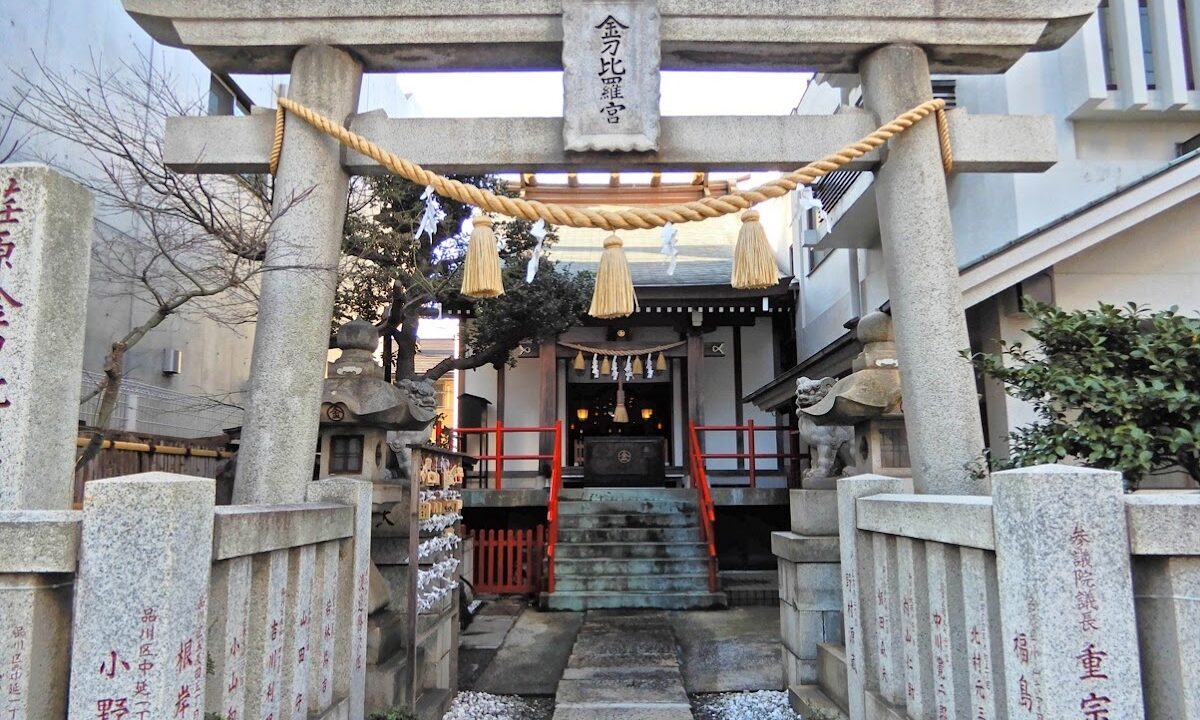
Ebara Kotohira Shrine (Shinagawa Ward, Tokyo) Complete Guide | History, Goshuin (Shrine Seal), Blessings, and Access Information
Ebara Kotohira Shrine, located in Ebara, Shinagawa Ward, Tokyo, is a historic shrine that enshrines a divided spirit of Kotohira-gu Shrine in Shikoku. Affectionately known as “Ebara’s Konpira-sama” by the local people, it is known for its blessings of business prosperity, maritime safety, and family safety. This article provides a detailed introduction to Ebara Kotohira Shrine, including its history, enshrined deities, highlights of the grounds, goshuin information, and access methods.
Overview of Ebara Kotohira Shrine
Ebara Kotohira Shrine is located at 1-16-4 Ebara, Shinagawa Ward, Tokyo. Despite being in a residential area of the city, the shrine grounds maintain a tranquil atmosphere, offering healing and peace to visitors.
Basic Information
- Location: 1-16-4 Ebara, Shinagawa-ku, Tokyo
- Deities Enshrined: Ōmononushi-no-kami, Emperor Sutoku
- Shrine Rank: Former Unranked Shrine
- Founded: An’ei 1 (1772)
- Annual Festival Day: October 10th
The place name Ebara in Shinagawa-ku originates from the former Ebara District of Tokyo Prefecture, and even today refers to a wide area including Shinagawa, Ōta, Meguro, and Setagaya wards. Ebara Kotohira Shrine has long been a center of faith rooted in this historically significant region, attracting the reverence of local residents.
History and Origins of Ebara Kotohira Shrine
Circumstances of Founding
The history of Ebara Kotohira Shrine dates back to the first year of the An’ei era (1772) in the mid-Edo period. At the command of Matsudaira Yorihisa, the lord of Takamatsu Castle at the time, his retainer, Okada Tomojiro Nagakiyo, enshrined a divided spirit of Kotohira Daigongen, the head shrine of Kotohira-gu in Shikoku, in Takamatsu, Sanuki Province (present-day Kagawa Prefecture).
Matsudaira Yorihisa wished for the development of the Takamatsu domain, and in particular, prayed for the prosperity of Takamatsu Port and the safety of maritime traffic. He decided to invite a divided spirit of Kotohira Daigongen, known as the guardian deity of the sea. Okada Tomojiro Nagakiyo, following his lord’s orders, visited Kotohira-gu in Shikoku, formally received the divided spirit, and enshrined it in Takamatsu.
Relocation to Tokyo
Approximately 160 years after its founding, in 1930 (Showa 5), the shrine underwent a major turning point. It was relocated to Ebara-machi, Ebara-gun, Tokyo Prefecture (present-day Ebara, Shinagawa Ward). This relocation was driven by the need for a center of Konpira worship within Tokyo, due to the city’s development and population growth.
Even after the relocation, the shrine continued to attract the faith of local people, and in 1946 (Showa 21), it was officially recognized as a shrine affiliated with the Association of Shinto Shrines. After the turbulent post-war period, Ebara Konpira Shrine became established as an important place of worship in Shinagawa Ward.
History According to the Tokyo Metropolitan Shrine Directory
According to the shrine directory compiled by the Tokyo Metropolitan Shrine Association, Ebara Konpira Shrine is widely revered as a deity of business prosperity, maritime safety, and family safety, having received a divided spirit from Konpira-gu Shrine in Shikoku. While there are several Kotohira Shrines in Tokyo, Ebara Kotohira Shrine is known as a particularly venerable branch shrine.
Deities and Benefits
Ōmononushi-no-kami
Ōmononushi-no-kami, the principal deity of Ebara Kotohira Shrine, is one of the Kunitsukami (earthly deities) appearing in Japanese mythology. Also known as the principal deity of Ōmiwa Shrine in Nara Prefecture, Ōmononushi-no-kami is an ancient object of worship, with Mount Miwa itself considered the sacred object.
Ōmononushi-no-kami is also identified with the Nigimitama (gentle spirit) of Ōkuninushi-no-kami, and possesses diverse divine virtues as a god of nation-building, agriculture, and commerce. In particular, within the Kotohira faith, Ōmononushi-no-kami has been revered as the guardian deity of maritime traffic and a god of business prosperity.
Emperor Sutoku
Emperor Sutoku, the other principal deity, was the 75th Emperor of Japan during the late Heian period. After being defeated in the Hogen Rebellion and exiled to Sanuki Province (Kagawa Prefecture), Emperor Sutoku developed a deep connection with Kotohira Shrine.
Although Emperor Sutoku died in exile in Sanuki, he later became feared as a vengeful spirit, while also being worshipped as a god of maritime safety and the fulfillment of wishes. Kotohira Shrine enshrines Emperor Sutoku as “Iwatamahiko-no-Mikoto,” and Ebara Kotohira Shrine continues this tradition.
Main Benefits
The benefits you can receive at Ebara Kotohira Shrine are as follows:
- Business Prosperity: Business development and success
- Maritime Safety: Safe voyages and fishing operations
- Family Safety: Health and peace for the family
- Traffic Safety: Safe land travel
- Fulfillment of Wishes: Fulfillment of various wishes
The benefit of business prosperity is particularly well-known, attracting many business owners from both within and outside Shinagawa Ward. Furthermore, due to its history of being founded to pray for the development of Takamatsu Port, the benefit of maritime safety is also deeply revered.
Highlights of the Shrine Grounds
Shrine Building
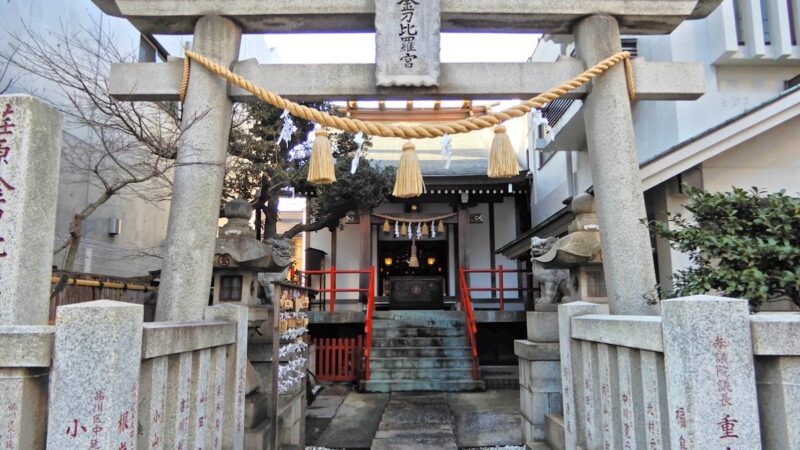
The grounds of Ebara Kotohira Shrine are compactly arranged despite being located in the heart of the city. The shrine building follows traditional shrine architectural styles, exhibiting a simple yet dignified appearance.
The main shrine and the worship hall are integrated into a single structure in the Gongen-zukuri style, and worshippers offer their prayers in front of the worship hall. The shrine’s decorations are understated, but the meticulous craftsmanship is evident in every detail, showcasing the skill of the artisans.
Raw Amethyst Stones
A particularly noteworthy feature of the Ebara Kotohira Shrine grounds is the collection of raw amethyst stones. Large raw amethyst stones are placed in several locations within the grounds, all donated by devotees.
Amethyst has long been believed to possess spiritual power, believed to promote mental stability and ward off evil spirits. The presence of amethyst within shrine grounds is unusual and a distinctive feature of Ebara Kotohira Shrine. Some worshippers touch these amethyst stones while offering prayers.
Komainu (Guardian Lion-Dogs) and Stone Sculptures
Ancient-looking guardian lion-dogs (komainu) stand guard within the shrine grounds. These guardian lion-dogs have protected the shrine since its relocation in the early Showa period, or even earlier, and evoke a sense of historical weight.
Furthermore, stone structures such as a purification fountain and stone lanterns are placed within the shrine grounds, harmoniously arranging the necessary elements of a shrine within a limited space.
Goshuin (Shrine Seal) Information
Issuance of Goshuin
Ebara Kotohira Shrine offers goshuin (shrine seals). The goshuin features the shrine’s name and date of visit written in ink, and stamped with the shrine’s seal. Its simple yet dignified design makes it popular among goshuin collectors.
Issuance Hours and Location
Goshuin are generally issued from 9:00 AM to around 5:00 PM, but the shrine office may be unattended. Therefore, it is recommended to check in advance if you wish to be sure to receive one.
Goshuin are issued at the shrine office. The offering fee is similar to that of most shrines, ranging from 300 to 500 yen. In addition to direct writing in your goshuincho (stamp book), pre-printed goshuin stamps are sometimes available.
Etiquette for Receiving Goshuin Stamps
Goshuin stamps are proof of your visit, not a stamp rally. Always complete your prayers before receiving your goshuin stamp. Also, remember to greet the shrine staff politely and express your gratitude.
Access Methods
Access by Train
Ebara Kotohira Shrine is easily accessible by public transportation.
Nearest Stations:
- Approximately 8 minutes on foot from Togoshi-koen Station on the Tokyu Oimachi Line
- Approximately 10 minutes on foot from Togoshi Station on the Toei Asakusa Line
- Approximately 12 minutes on foot from Ebara-Nakanobu Station on the Tokyu Ikegami Line
Access from Togoshi-koen Station is the closest and most convenient. Exit the station and head southeast. After passing through the residential area, you will arrive at the shrine. Since there are few signs along the way, we recommend using a smartphone map app.
Access by Car and Parking
While access by car is possible, the area around the shrine is a residential neighborhood with narrow roads and no dedicated parking. We recommend using nearby coin-operated parking lots or public transportation.
The Ebara area of Shinagawa Ward is close to the city center, resulting in heavy traffic on both weekdays and weekends. The surrounding roads become particularly congested during New Year’s visits and festivals, so we recommend allowing ample time for your visit.
Nearby Shrines and Temples
There are other shrines and temples worth visiting around Ebara Kotohira Shrine. Shinagawa Ward itself boasts famous shrines such as Shinagawa Shrine and Ebara Shrine, making it a great place for shrine hopping. Furthermore, many temples and shrines are scattered throughout neighboring wards such as Meguro, Ota, and Setagaya, making them ideal for visiting as part of a temple and shrine tour within Tokyo’s 23 wards.
Annual Events and Festivals
Grand Festival
The Grand Festival of Ebara Kotohira Shrine is held annually on October 10th. This is the most important festival for the shrine, and may include a procession of the portable shrine and dedication ceremonies. Local parishioners and devotees gather, making the shrine the liveliest place of the year.
New Year’s Visit
Many worshippers, mainly local residents, visit the shrine for their first shrine visit of the New Year. While not as crowded as larger shrines, it is busier than usual from New Year’s Day through the third day. Many business owners praying for business prosperity are also seen visiting.
Monthly Festivals
Monthly festivals are also held regularly, attended by those who continuously revere the shrine. Gratitude and prayers are offered to the gods amidst the daily activities of the shrine.
About the Kotohira Faith
Relationship with Kotohira Shrine
Ebara Kotohira Shrine is a shrine that enshrines a divided spirit of Kotohira Shrine (Konpira-san), located in Kotohira-cho, Nakatado-gun, Kagawa Prefecture. Kotohira Shrine is the head shrine of approximately 600 Kotohira Shrines and Kotohira Shrines throughout Japan, and is affectionately known as “Konpira-san.”
Konpira Shrine is located on the mountainside of Zozusan and is famous for its 785 stone steps to the main shrine and 1368 steps to the inner shrine. As a god of the sea, it has long attracted the faith of sailors and fishermen, and during the Edo period, “Konpira pilgrimage” became extremely popular among common people.
Kotohira Shrines in Tokyo
Besides Ebara Kotohira Shrine, there are several other Kotohira shrines in Tokyo, including Toranomon Kotohira-gu (Toranomon Kotohira-gu). These shrines all received a divided spirit from Kotohira-gu in Shikoku, demonstrating the spread of Kotohira worship in Edo/Tokyo.
Kotohira worship is deeply rooted in various parts of Tokyo’s 23 wards, including Chiyoda, Chuo, Minato, Shibuya, Shinjuku, Bunkyo, Taito, Sumida, Koto, Nakano, Suginami, Ota, Setagaya, Adachi, Katsushika, and Edogawa wards, and is affectionately known as “Konpira-san” in each region.
Manners and Etiquette for Visiting Shrines
Basic Etiquette for Visiting Shrines
There are basic manners to follow when visiting a shrine. When visiting Ebara Kotohira Shrine, please follow the steps below. 1. Bow before passing through the torii gate: As a sign of respect before entering the sacred area, bow before the torii gate.
- Purify yourself at the water basin: Purify your left hand, then your right hand, then your mouth at the water basin.
- Walk along the edge of the path: The center of the path is considered the path of the gods, so walk along the edge.
- Etiquette in front of the main hall: The basic procedure is two bows, two claps, and one bow.
- Bow upon leaving: When leaving the shrine grounds, turn around and bow once you have passed through the torii gate.
How to pray
In front of the main hall, first quietly place your offering in the offering box and ring the bell if there is one. Then, bow twice (two deep bows), clap twice (two claps), silently state your address and name, pray for your wish, and finally bow once more.
If you have specific wishes, such as business prosperity, safety at sea, or family safety, pray with all your heart. However, don’t forget to express your gratitude to the gods.
History of Shinagawa Ward and the Place Name Ebara
Origins of Shinagawa Ward
Shinagawa Ward is located in the southern part of Tokyo’s 23 wards and flourished as the first post town on the Tokaido road during the Edo period. The current Shinagawa Ward was formed in 1947 (Showa 22) through the merger of Shinagawa Town and Ebara Ward.
Origin of Ebara
The place name “Ebara” is ancient, originating from the Ebara County of the Ritsuryo period. Ebara County was a vast area that once included most of present-day Shinagawa, Meguro, Ota, and Setagaya wards. “E” refers to perilla, which is used to extract oil, and the name is believed to originate from the fact that cultivation was widespread in this region.
The area around Ebara 1-chome, where Ebara Kotohira Shrine is located, is close to the former center of Ebara Town and has developed as a historic residential area.
Summary
Ebara Kotohira Shrine is a historic shrine located in Ebara, Shinagawa Ward, Tokyo, enshrining a divided spirit of Kotohira-gu Shrine in Shikoku. Since its founding in 1772, it has attracted the faith of many people as a deity of business prosperity, maritime safety, and family safety.
Despite being in the heart of the city, it boasts a tranquil precinct, a distinctive amethyst gemstone, and elegant goshuin (shrine stamps), offering plenty to see. Its convenient location within walking distance of Togoshi-Koen Station is another attractive feature.
If you have the opportunity to visit the Shinagawa Ward area, why not pay your respects at Ebara Kotohira Shrine, the historic “Konpira-sama of Ebara”? You can pray for business prosperity and family safety, and enjoy a peaceful time away from the hustle and bustle of the city.
References
- Tokyo Metropolitan Shrine Association, “Tokyo Metropolitan Shrine Directory”
- Shinagawa Ward History Compilation Committee, “Shinagawa Ward History”
- Kotohira Shrine Office, “Kotohira Shrine History”
- Various shrine-related literature and on-site research