Anamori Inari Shrine (Tokyo) Complete Guide | History and Blessings of the Guardian Deity of Haneda Airport
Anamori Inari Shrine, located in Haneda, Ota Ward, Tokyo, is a historic shrine with a history dating back to the Edo period. It was once located within the grounds of Haneda Airport and was known as the largest shrine in the Kanto region, boasting 46,797 torii gates. Even today, it remains a special place of worship, attracting many visitors from both Japan and abroad as the guardian deity of aviation safety.
This article provides a detailed explanation of Anamori Inari Shrine, from its founding to the present day, its deep connection to Haneda Airport, its blessings, highlights, and access methods.
History and Origin of Anamori Inari Shrine
Founding Circumstances and Origin of the Name
Anamori Inari Shrine is believed to have been founded sometime between the Bunka era (1804) and the Bunsei era (1818-1830). At the time, land reclamation was underway in Suzuki Shinden (present-day Haneda Airport), but the coastal embankment frequently collapsed due to rough waves, creating large holes that allowed seawater to flood in.
The villagers, at their wit’s end, consulted with each other and erected a shrine on top of the embankment to enshrine Inari Okami. Miraculously, after that, the damage from wind and waves ceased, and crops began to thrive.
In honor of the divine virtue of Inari Okami, who protects the fields from the damage caused by holes created by wind and waves, the shrine was named Anamori Inari Shrine. This name embodies the meaning of a god who protects people’s lives from the threats of the sea.
Development from the Edo to Meiji Periods
Initially a small shrine, its miraculous blessings gained popularity, and the number of worshippers gradually increased. In the late Edo period, many worshippers came from Edo (present-day Tokyo), and a temple town developed around the shrine.
In the Meiji era, Anamori Inari Shrine was designated a village shrine, establishing its status as a formal Shinto shrine. Around this time, it began to attract widespread devotion as a deity of business prosperity, family safety, and the fulfillment of wishes.
A Fateful Connection to Haneda Airport
An essential aspect of Anamori Inari Shrine’s history is its deep connection to Haneda Airport.
During the Taisho era, the “Japan Flying School” was established near Anamori Inari Shrine. Students dreaming of becoming airplane pilots visited Anamori Inari Shrine to pray for safe flights. This marked the beginning of Anamori Inari Shrine being worshipped as a “guardian deity of the sky.”
On August 25, 1931 (Showa 6), Tokyo Airport, previously located in Tachikawa, relocated and opened at Haneda. The Ministry of Communications’ Aviation Bureau identified the land north of the shrine (near the current maintenance area) as a suitable site for the airport and acquired it. This land was close to central Tokyo, located midway between the Keihin (Tokyo-Yokohama) area, and met the requirements for use as an amphibious airfield.
After the opening of Haneda Airport, the priests of Anamori Inari Shrine performed ceremonies such as the aircraft launch and the groundbreaking of the airport facilities, and the shrine and airport developed together. Geishas from Anamori Monzen-cho would take commemorative photos with Fokker planes in the background, creating a unique atmosphere in Anamori at the time, where the airfield and shrine coexisted.
Post-War Forced Relocation and Move to Current Location
After World War II, Anamori Inari Shrine faced a major turning point. Due to GHQ’s expansion plan for Haneda Airport, the shrine was forced to relocate.
In the late 1940s, along with local residents who were ordered to vacate their homes with a short grace period of only 48 hours, Anamori Inari Shrine was relocated to its current location (5-2-7 Haneda, Ota-ku, Tokyo). This relocation was a great sorrow for the local people, but the shrine was rebuilt as a place of worship in its new location. During the relocation, most of the 46,797 votive torii gates were removed, but many more still line the shrine grounds, evoking its former glory.
Deity and Benefits
Deity: Toyouke-hime no Mikoto
The deity enshrined at Anamori Inari Shrine is Toyouke-hime no Mikoto (also known as Toyouke-bime no Kami). Toyouke-hime no Mikoto is the goddess of food and grains, enshrined at the Outer Shrine of Ise Grand Shrine, and is widely worshipped as the guardian deity of clothing, food, shelter, and industry.
While most Inari shrines enshrine Ukanomitama no Kami, Anamori Inari Shrine is unique in that it enshrines Toyouke-hime no Mikoto as Inari Okami (Great Inari Deity).
Main Benefits
Anamori Inari Shrine is believed to offer the following benefits:
Business Prosperity and Success As a representative benefit of Inari shrines, many business owners and self-employed individuals visit the shrine to pray for business prosperity and success.
Family Safety and Good Fortune The shrine is worshipped as a deity that protects the health and happiness of families and the peace of the home.
Fulfillment of Wishes As evidenced by the waka poem, “O Inari god of Anamori, who surely grants wishes, how revered you are,” the shrine is known for granting wishes.
Aviation Safety and Travel Safety Founded as the guardian deity of the area around the current Haneda Airport, the shrine has attracted worshippers praying for aviation safety since the Taisho era, the dawn of aviation. Aviation personnel and travelers visit to pray for safety. It is particularly revered by airline employees, cabin crew, pilots, and other people working in aviation-related fields.
Traffic Safety
As a deity protecting safe travels, many visitors come to pray for the safety of drivers and commuters/students.
Highlights of the Shrine Grounds
Thousand Torii Gates and Votive Torii Gates
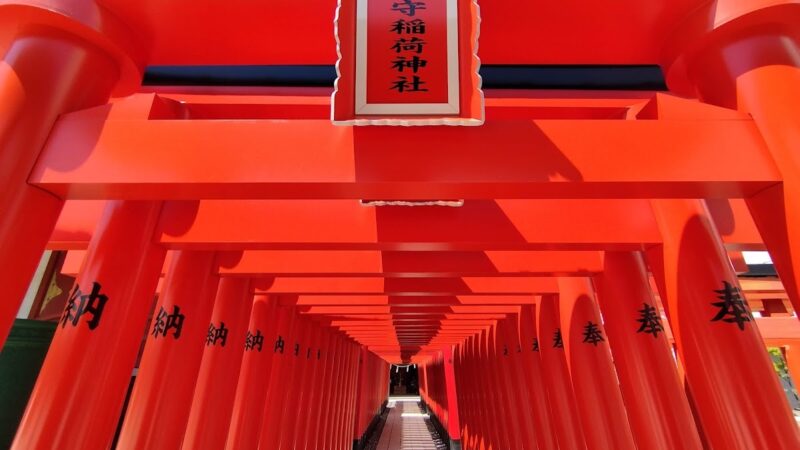
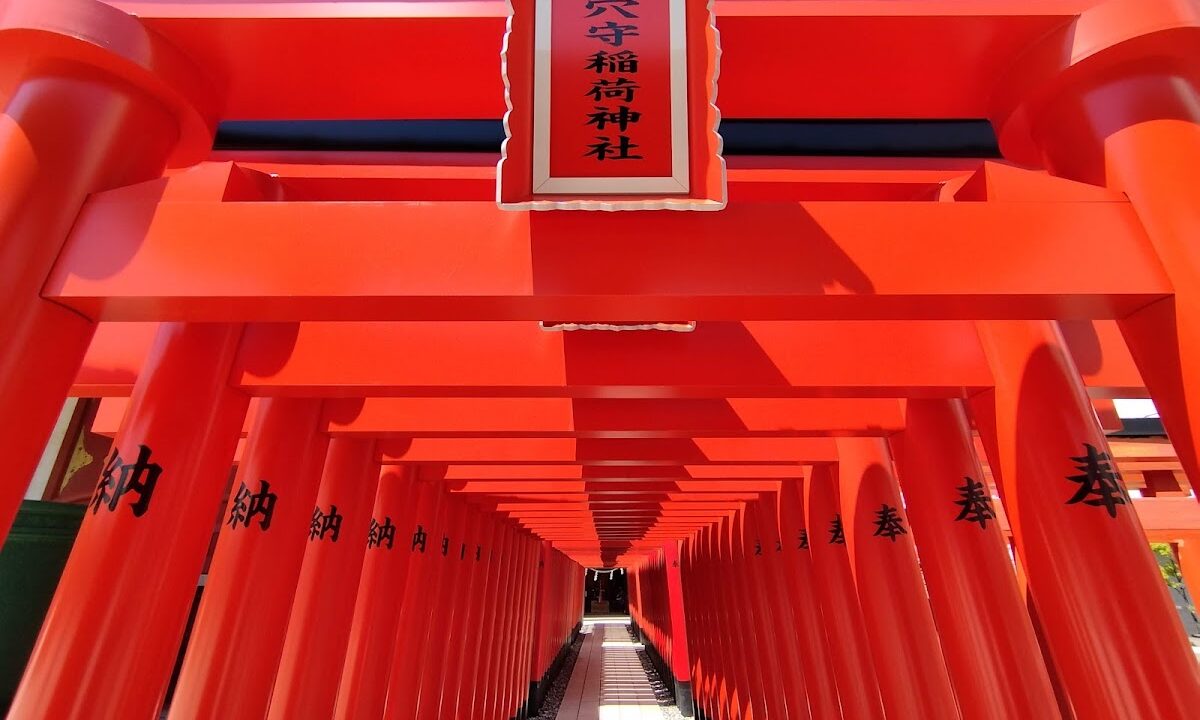
The greatest highlight of Anamori Inari Shrine is the rows of vermilion torii gates lining the grounds. When it was located within Haneda Airport, it boasted 46,797 votive torii gates, earning it the title of “the largest torii shrine in the Kanto region.”
Even today, numerous torii gates stand within the grounds, creating a breathtaking sight. These gates were donated by people whose wishes were granted as a token of gratitude, each one imbued with their hopes and feelings of thanks.
The experience of walking along the path through the torii gates creates a mystical atmosphere, as if being invited to another world.
Main Shrine and Worship Hall
The main shrine and worship hall, rebuilt after the post-war relocation, maintain the traditional style of shrine architecture while possessing a clean and bright atmosphere. Worship is performed using the same ritual as at most shrines: two bows, two claps, and one bow.
Inner Shrine
Behind the main shrine is the inner shrine, offering a more tranquil environment for worship. Surrounded by numerous small torii gates, it exudes a sacred atmosphere.
Beckoning Fox and Guardian Foxes
Several fox statues, characteristic of Inari shrines, are enshrined within the grounds. The guardian foxes in front of the main shrine are particularly impressive, welcoming visitors. There are also statues called “beckoning foxes,” popular with those praying for business prosperity.
Sacred Sand
Anamori Inari Shrine offers sacred sand. This sand is believed to purify the land and ward off misfortune when scattered in the four corners of a house or on the property. It is a particularly popular item for those building a new house or moving.
Annual Events and Festivals
Hatsuumasai Festival (First Horse Day in February)
The Hatsuumasai Festival, the most important festival at Inari Shrine, is held on the first Horse Day in February. This day is considered the day when Inari Okami descended, and it is bustling with many worshippers. People come to pray for business prosperity and a bountiful harvest, and various events are held on the shrine grounds.
Kentosai Festival (Last Friday and Saturday of August)
As a summer tradition, the Kentosai Festival is held on the last Friday and Saturday of August. Numerous lanterns are lit on the shrine grounds, creating a magical atmosphere. It is a rare opportunity for nighttime worship and is popular with locals and tourists alike.
Aviation Safety Prayer Festival (September 20th)
As a festival unique to Anamori Inari Shrine, the Aviation Safety Prayer Festival is held on September 20th. Many aviation personnel and airline representatives attend to pray for safety in the skies. This festival is evidence that Anamori Inari Shrine is worshipped as the “guardian deity of the sky.”
Annual Festival (November 3rd)
The annual festival is held on November 3rd, Culture Day. As the most important festival of the year, it features the dedication of Kagura (sacred dance and music) and various Shinto rituals, attracting many worshippers.
Access and Visiting Information
Location
5-2-7 Haneda, Ota-ku, Tokyo 144-0043
Nearest Station and Access
From Anamori Inari Station on the Keikyu Airport Line
Approximately 3 minutes on foot. As the shrine is named after the station, it is very close to the station and has excellent signage.
From Tenkubashi Station on the Keikyu Airport Line and Tokyo Monorail
Approximately 5 minutes on foot. This station is also convenient if you are coming from Haneda Airport.
From Haneda Airport
From Haneda Airport, it’s just a few minutes by Keikyu Line or Monorail – excellent access. Many people visit the shrine before or after boarding a plane.
Visiting Hours
While entry to the shrine grounds is generally free, the shrine office is open from approximately 9:00 AM to 5:00 PM. If you wish to receive a Goshuin (shrine stamp) or other items, it is recommended to visit within these hours.
Parking
There is a dedicated parking lot for the shrine, but spaces are limited. During busy periods such as New Year’s Day or annual festivals, it is recommended to use public transportation.
Time Required for Visiting
The shrine grounds are not very large, so a basic visit takes about 20-30 minutes. However, if you want to take your time looking at the torii gate or enjoy taking photos, it’s a good idea to allow about an hour.
Goshuin and Items
Goshuin
Anamori Inari Shrine offers standard Goshuin. They are available at the shrine office, and the offering fee is a typical amount. You can bring your own Goshuincho (stamp book) or purchase one on-site.
Main Items Offered
Amulets
A variety of amulets are available, including those for business prosperity, aviation safety, traffic safety, and family safety. The aviation safety amulet, in particular, is a popular item unique to Anamori Inari Shrine.
Sacred Sand
As mentioned above, sacred sand, believed to purify the land and ward off disaster, is a distinctive item offered at Anamori Inari Shrine.
Ema (Votive Tablets)
Ema, on which you can write your wishes and offer them, are also available. Ema designed with airplanes and torii gates make great souvenirs.
Nearby Tourist Attractions
Haneda Airport
Haneda Airport, within walking distance, is one of Japan’s largest airports and a popular tourist spot. You can enjoy watching planes take off and land from the observation deck, and shopping at the various restaurants and shops. Many people visit this place in conjunction with a visit to Anamori Inari Shrine.
Haneda Airport Garden
This complex adjacent to Haneda Airport offers shopping, dining, hot springs, and hotels. It’s ideal for meals and relaxation after visiting the shrine. ### Tenkubashi
The area around Tenkubashi Station is popular with photography enthusiasts as a spot where you can see airplanes from Haneda Airport up close. It’s within walking distance of Anamori Inari Shrine.
Ota Market
Ota Market, one of Tokyo’s central wholesale markets, is known for its trading of flowers and fruits. It’s open to the public, allowing visitors to experience the lively atmosphere of the market in the early morning.
The Modern Significance of Anamori Inari Shrine
Guardian Deity of Tokyo’s Gateway to an International City
Currently, Anamori Inari Shrine is located very close to Haneda Airport, an international gateway to Japan. It has gained international recognition as a shrine visited by foreign tourists visiting Japan and Japanese people traveling abroad to pray for safe journeys.
In fact, within the shrine grounds, worshippers can be seen conversing not only in Japanese, but also in English, Chinese, and Korean, making it an open shrine that attracts worshippers from overseas.
Ties with the Aviation Industry
The deep ties with the aviation industry, which have continued since the early days of aviation, remain strong today. Airlines staff, pilots, cabin crew, mechanics, and other people working in the aviation industry regularly visit the shrine to pray for safety.
Airlines sometimes formally perform safety prayers when introducing new aircraft or before launching new routes, demonstrating that Anamori Inari Shrine continues to fulfill its role as a “guardian deity of the skies.”
Center of the Local Community
Having overcome the difficulties of forced relocation to its current location, Anamori Inari Shrine functions as a spiritual pillar for the Haneda area community. It serves as the center of local festivals and events, deepening the bonds among residents.
Manners and Precautions When Visiting a Shrine
Basic Worship Etiquette
- Bow before passing through the torii gate.
- Avoid walking in the center of the path (the center is the path of the gods).
- Cleanse your hands and mouth at the water basin.
- Bow twice, clap twice, and bow once in front of the main shrine.
- Bow once again at the torii gate when leaving.
Photography
Photography is generally permitted on the shrine grounds, but please refrain from taking pictures inside the main shrine or during religious ceremonies. Also, please be considerate of other worshippers.
Attire
There are no specific dress code requirements, but clean clothing appropriate for a sacred place is desirable.
Summary: A Hidden Gem in Tokyo You Should Visit
Anamori Inari Shrine has a history of over 200 years since its founding in the Edo period, and is a special shrine that has walked hand in hand with Haneda Airport, Japan’s gateway to the sky.
Beginning as a deity protecting fields from holes in the embankment, Anamori Inari Shrine supported the dreams of those aiming for the skies in the early days of aviation, and today, as a guardian deity of the international city of Tokyo, it continues to watch over the safety and happiness of visitors from both within Japan and abroad.
The numerous torii gates lining the shrine grounds are a testament to the gratitude of those whose wishes have been granted, and speak to the shrine’s profound spiritual power. If you have the opportunity to use Haneda Airport or visit Ota Ward in Tokyo, please consider paying a visit.
Anamori Inari Shrine grants various wishes, including business prosperity, family safety, aviation safety, and the fulfillment of personal desires. Understanding its history, tradition, and modern significance will make your visit a deeper experience.
Why not entrust your wishes to the deities of Anamori Inari Shrine in Haneda, Ota Ward, Tokyo—a special place close to both the sky and the sea?