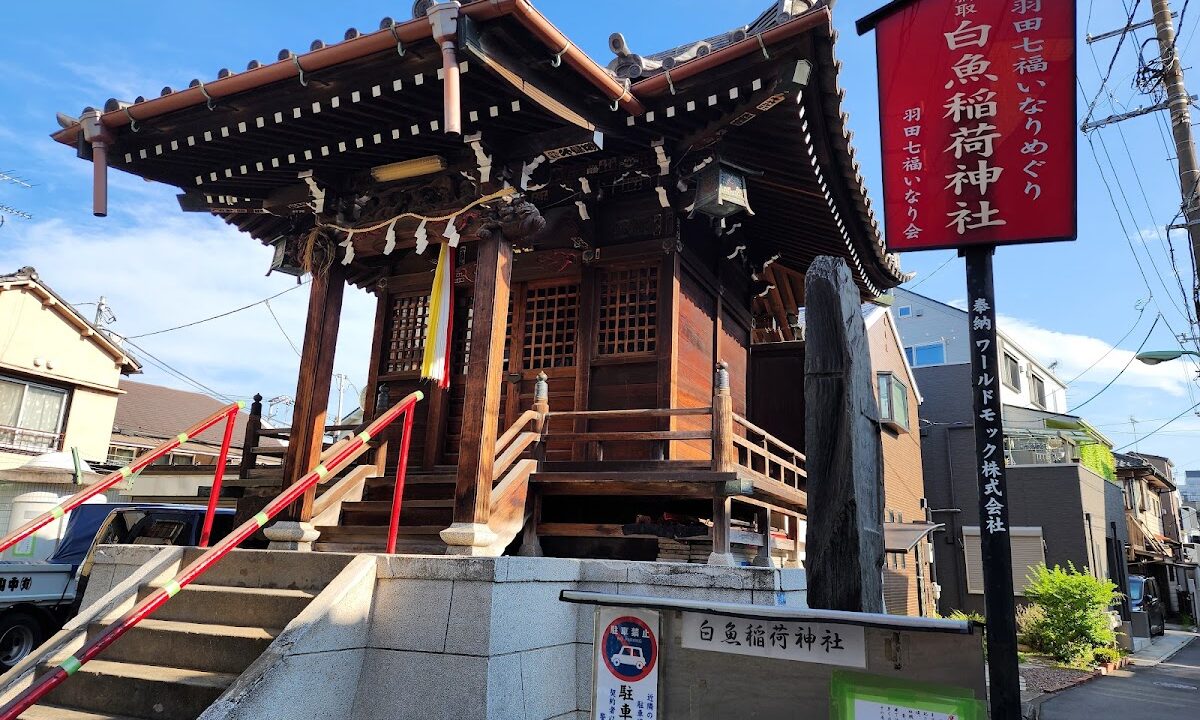
Shirauo Inari Shrine (Tokyo) Complete Guide | History, Benefits, Access, and Visiting Information
Shirauo Inari Shrine is a historic Inari shrine located in Tsukuda, Chuo-ku, Tokyo. It is known as a shrine cherished by the local community, originating from a legend involving Tokugawa Ieyasu and whitebait. This article provides a detailed explanation of Shirauo Inari Shrine’s history, enshrined deities, benefits, access methods, and points to consider when visiting.
What is Shirauo Inari Shrine?
Shirauo Inari Shrine is an Inari shrine located in Tsukuda 2-chome, Chuo-ku, Tokyo. As a subsidiary shrine of Sumiyoshi Shrine, it attracts the faith of the local community.
It is one of the shrines that conveys the history of Tsukudajima, a fishing town that has existed since the Edo period, and is characterized by its unusual history related to the whitebait fish.
Basic Information about the Shrine
- Official Name: Shirauo Inari Shrine
- Location: 2-1-1 Tsukuda, Chuo-ku, Tokyo (within the grounds of Sumiyoshi Shrine)
- Deity Enshrined: Ukanomitama-no-Mikoto
- Shrine Rank: Shrine within the grounds
- Founded: Early Edo period
- Annual Festival Date: Held throughout the year in conjunction with the festival of Sumiyoshi Shrine
History and Origins of Shirauo Inari Shrine
The Legend of Tokugawa Ieyasu and Shirauo
The origins of Shirauo Inari Shrine are linked to an interesting legend involving Tokugawa Ieyasu.
In the early Edo period, when Tokugawa Ieyasu was crossing the Sumida River by boat, fishermen from Tsukudajima presented him with fresh shirauo (whitebait). Ieyasu was impressed by the deliciousness of the shirauo and the fishermen’s spirit, and is said to have granted them special fishing rights.
It is said that Shirauo Inari Shrine was founded to commemorate this event and to pray for the prosperity and safety of the whitebait fishing industry.
History of Tsukudajima and the Fishing Town
Tsukudajima is a land settled by fishermen who migrated from Tsukuda Village in Settsu Province (present-day Osaka Prefecture). By order of Tokugawa Ieyasu, it developed as a fishing town supporting the kitchens of Edo Castle.
Shirauo Inari Shrine is positioned as an important cultural asset that conveys the history of Tsukudajima, and as the center of the lives and faith of these fishermen.
Whitebait Fishing in the Edo Period
During the Edo period, whitebait fishing flourished in the Sumida River and Tokyo Bay, and whitebait was highly prized as a luxury food ingredient from Edo. In particular, the fishermen of Tsukudajima had the privilege of presenting whitebait to the Shogun’s family, and Shirauo Inari Shrine played an important role as a place to pray for the success and safety of their fishing.
Deity and Blessings
Deity: Ukanomitama-no-Mikoto
The deity enshrined at Shirauo Inari Shrine is Ukanomitama-no-Mikoto.
Ukanomitama-no-Mikoto is a widely worshipped deity as the principal deity of Inari shrines, and is known as the god who presides over grains and food. Also written as “Ukanomitama-no-Kami,” this deity is revered as the god of abundant harvests, business prosperity, and industrial development.
Main Benefits
Shirao Inari Shrine is believed to offer the following benefits:
- Business Prosperity: As a representative benefit of Inari, it is believed to bring development and prosperity to businesses.
- Safety at Sea: As the guardian deity of fishing towns, it is believed to bring safety at sea and abundant catches.
- Good Fortune and Prosperity: It is believed to open up good fortune and invite good luck.
- Abundant Harvest: It is believed to bring prosperity to industries related to food, such as agriculture and fishing.
- Family Safety: It is believed to bring health and peace to the family.
- Bountiful Catch: It is believed to be a place of prayer for abundant catches for those involved in the fishing industry.
It is particularly revered by those involved in fishing, the aquaculture industry, and the food and beverage industry.
Highlights of the Shrine Grounds
Relationship with Sumiyoshi Shrine
Shirao Inari Shrine is located within the grounds of Sumiyoshi Shrine in Tsukuda. Sumiyoshi Shrine is the guardian shrine of Tsukudajima and a central shrine in the region. When visiting, it is customary to first pay respects at Sumiyoshi Shrine, and then at Shirauo Inari Shrine, a subsidiary shrine within the grounds.
Features of the Shrine
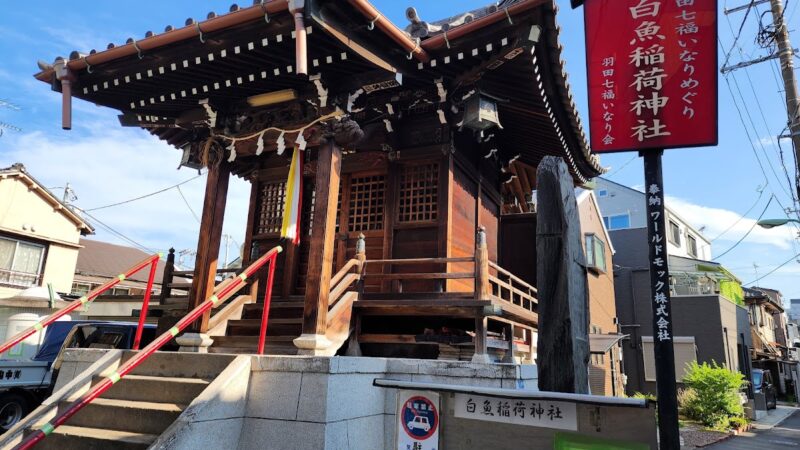
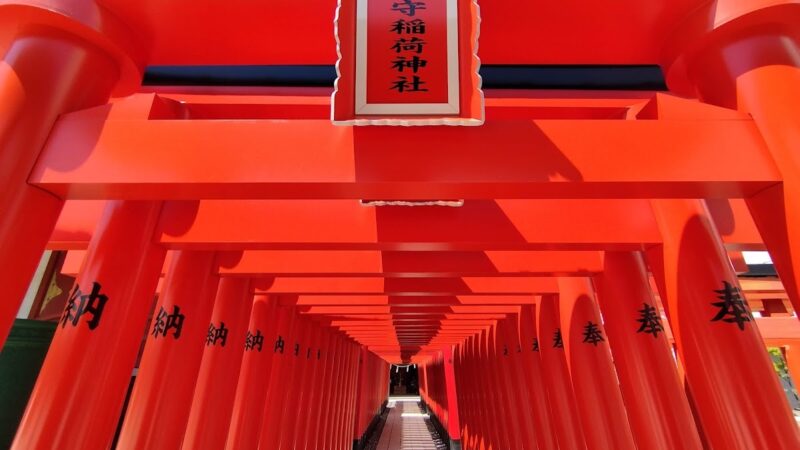
Shirauo Inari Shrine is a small, typical Inari-style shrine. Its distinctive vermilion torii gate and shrine building create an authentic Inari shrine atmosphere.
Although small in scale, it is meticulously maintained, reflecting the deep faith of the local people.
Surrounding Historical Landscape
The area around Tsukudajima is a valuable region that retains traces of the Edo period. In addition to visiting Shirauo Inari Shrine, we also recommend visiting the following sights:
- Birthplace of Tsukudani: Tsukudajima, the island from which the name of Tsukudani originates
- Ishikawajima Lighthouse: A historical building near the mouth of the Sumida River
- Tsukuda Kobashi: A charming little bridge
- Old Townscape: Alleys and buildings dating back to the Edo period
Access Methods
Access by Train
The nearest stations and travel times to Shirauo Inari Shrine are as follows:
Tokyo Metro Yurakucho Line/Toei Oedo Line “Tsukishima Station”
- Approximately 10 minutes on foot from Exit 7
- This is the most convenient access method
Tokyo Metro Hibiya Line/JR Keiyo Line “Hatchobori Station”
- Approximately 15 minutes on foot from Exit A3
Toei Oedo Line “Kachidoki Station”
- Approximately 12 minutes on foot from Exit A2
Walking Route (from Tsukishima Station)
- Exit Tsukishima Station from Exit 7
- Head south along Kiyosumi Street
- Turn left towards Tsukudajima without crossing Tsukuda Bridge
- Head towards Sumiyoshi Shrine in Tsukuda 2-chome
- Shirauo Inari Shrine is located within the grounds of Sumiyoshi Shrine
Access by Bus
Toei Buses are also available:
- Toei Bus “Tsukuda 2-chome” bus stop: Approximately 3 minutes on foot
- Higashi 15 Line (Tokyo Station Yaesu Exit – Fukagawa Depot)
- Mon 33 Line (Toyosu Fisheries Wharf – Kameido Station)
Access by Car and Parking
Access from the Metropolitan Expressway
- Approximately 5 minutes from Fukuzumi IC on the Metropolitan Expressway Route 9 Fukagawa Line
- Approximately 10 minutes from the Ginza Interchange on the Metropolitan Expressway Inner Circular Route.
Parking Information
Sumiyoshi Shrine has a dedicated parking lot for visitors, but the number of spaces is limited, so we recommend using public transportation. There are also several coin-operated parking lots in the surrounding area.
Visiting Hours and Etiquette
Visiting Hours
Shirao Inari Shrine is a subsidiary shrine of Sumiyoshi Shrine, therefore its opening hours are the same as Sumiyoshi Shrine’s:
- Visiting Hours: Open 24 hours a day
- Shrine Office Hours: Approximately 9:00 AM to 5:00 PM
- Goshuin (Shrine Stamp) Reception: At the Sumiyoshi Shrine office (may be unattended depending on the time of day)
Visiting Etiquette
Basic visiting etiquette at Inari shrines:
- Bow before passing through the torii gate
- Purify your body and mind at the temizuya (water basin) (Use the temizuya at Sumiyoshi Shrine)
- First, visit the main hall of Sumiyoshi Shrine
- Proceed to Shirao Inari Shrine
- Bow twice, clap twice, and bow once
- When leaving, turn around and bow once after passing through the torii gate
Points to Note When Visiting the Shrine
- Please pray quietly within the shrine grounds.
- Photography is permitted, but please be considerate of other visitors.
- Please refrain from taking photos inside the shrine building.
- Please take all your trash with you.
About Goshuin (Shrine Seals)
How to Obtain a Goshuin
The goshuin for Shirauo Inari Shrine can be obtained at the Sumiyoshi Shrine office.
- Reception Location: Sumiyoshi Shrine Office
- Reception Hours: Approximately 9:00 AM to 5:00 PM (may vary)
- Offering Fee: Approximately 300-500 yen (at your discretion)
- Note: Goshuin may not be available if a Shinto priest is absent.
About Goshuincho (Shrine Seal Books)
Sumiyoshi Shrine also offers original goshuincho. Some feature designs based on the history and culture of Tsukudajima, making them a memorable keepsake.
Annual Events and Festivals
Shirao Inari Shrine, located within the grounds of Sumiyoshi Shrine, holds its festivals in conjunction with the major festivals of Sumiyoshi Shrine.
Sumiyoshi Shrine Grand Festival (Tsukuda Festival)
- Time: Held once every three years, in early August
- Content: A grand festival considered one of the three great festivals of Edo
- Shirauo Inari Shrine also participates in the festival, and the entire community celebrates together.
Other Annual Events
- Hatsumode (January 1st-3rd): New Year’s visit
- Hatsuumasai (First Horse Day of February): An important festival day for Inari shrines
- Natsukoshi no Harae (June 30th): A Shinto ritual to purify oneself of the impurities accumulated over the past six months
- Autumn Grand Festival (Around October): A celebration of gratitude for the harvest
Nearby Tourist Spots
Nearby spots to visit before or after visiting Shirauo Inari Shrine:
Around Tsukudajima
Sumiyoshi Shrine
- Main shrine of Shirauo Inari Shrine
- As the guardian shrine of Tsukudajima, it boasts a history of approximately 400 years.
Long-established Tsukudani Shops
- Tsukudani shops that have been operating since the Edo period, such as Ten’an Honten and Marukyu
- Famous shops that continue to carry on traditional flavors.
Tsukuda Park
- A waterfront park along the Sumida River
- Enjoy views of the Tokyo Skytree and the opposite bank.
Tsukishima/Tsukiji Area
Tsukishima Monja Street
- 10-minute walk
- Over 70 monjayaki restaurants line the street.
Tsukiji Outer Market
- 15-minute walk
- A wide variety of fresh seafood and ingredients are available.
Hama-rikyu Gardens
- 20-minute walk
- A garden designated as a National Special Place of Scenic Beauty and Special Historic Site.
The Charm of Shirauo Inari Shrine
A Place Where You Can Feel the Romance of History
This is a valuable shrine that conveys the legends that have continued since the time of Tokugawa Ieyasu and the history of Edo’s fishing town. Despite its small size, this shrine holds over 400 years of history.
A Faith Rooted in the Community
As a shrine deeply rooted in the lives of local people, not a tourist attraction, you can experience the true essence of a shrine.
An Urban Oasis
Located in modern Tokyo amidst towering skyscrapers, this shrine offers a peaceful and tranquil experience amidst the serene environment of Tsukudajima, which retains traces of the Edo period.
A Unique History
This Inari shrine, named after the “shirauo” (whitebait) fish, is rare nationwide and possesses value as a shrine with a unique history and culture.
Visitor Feedback
Visitors to Shirauo Inari Shrine have shared the following comments:
- “Although small, the shrine is meticulously maintained, and I felt the deep faith of the local people.”
- “Visiting the shrine after learning about the legend of Tokugawa Ieyasu made the experience even more meaningful.”
- “I visited both Shirauo Inari Shrine and Sumiyoshi Shrine, enjoying a historical stroll through Tsukudajima.”
- “I was able to pray at my own pace in a quiet and peaceful atmosphere.”
Summary
Shirauo Inari Shrine is a historic Inari shrine located in Tsukuda, Chuo-ku, Tokyo. Originating from a legend related to Tokugawa Ieyasu and whitebait, it is a valuable shrine that conveys the history and culture of Tsukudajima, a fishing town that has existed since the Edo period, and is cherished by the local people.
It is believed to bring blessings for business prosperity, maritime safety, and good fortune, and is particularly revered by those involved in fishing and the food and beverage industry.
Conveniently located about a 10-minute walk from Tsukishima Station on the Tokyo Metro, the surrounding area boasts numerous spots where you can experience the charm of Tokyo’s old downtown, including long-established tsukudani (simmered seafood) shops and Tsukishima Monja Street.
Shirao Inari Shrine offers a peaceful retreat from the hustle and bustle of the city, allowing you to immerse yourself in the history and culture of Edo. It’s definitely worth a visit during your Tokyo sightseeing trip.
Visiting it along with Sumiyoshi Shrine and enjoying a historical stroll around Tsukishima will allow you to gain a deeper understanding of Tokyo’s history and culture.