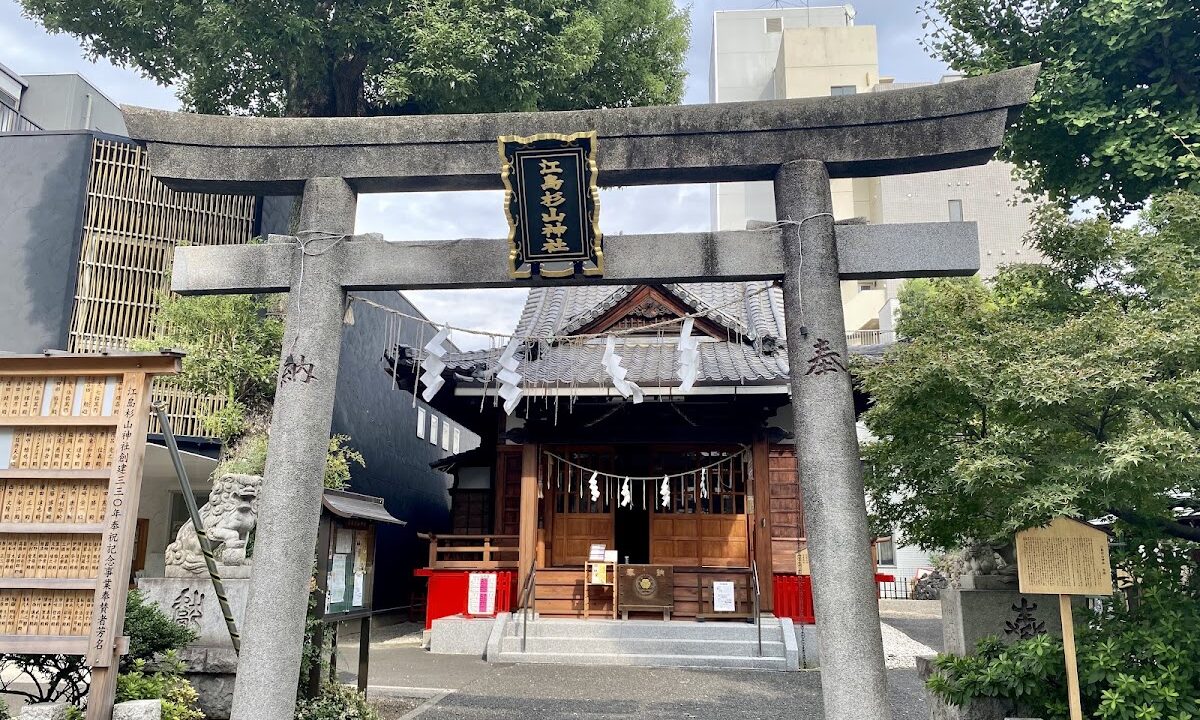
Complete Guide to Ejima Sugiyama Shrine (Sumida Ward, Tokyo): A Shrine Associated with Sugiyama Kengyo, Founder of Japan’s First Educational Facility for the Visually Impaired
Located in Chitose, Sumida Ward, Tokyo, Ejima Sugiyama Shrine is a historically and culturally significant shrine dedicated to Sugiyama Waichi (Sugiyama Kengyo), the founder of the tube acupuncture method during the Edo period, and Benzaiten of Enoshima. Since its founding in 1693 (Genroku 6), this shrine has been deeply involved in the development of welfare for the visually impaired and acupuncture medicine, boasting a unique history unmatched in Japan.
This article comprehensively introduces all the information you need to know before visiting Ejima Sugiyama Shrine, including its detailed history, enshrined deities, highlights within the grounds, information on Goshuin (shrine stamps), and access methods.
Basic Information on Ejima Sugiyama Shrine
Location
1-8-2 Chitose, Sumida-ku, Tokyo 130-0025
Phone Number
03-3863-1308
Nearest Station and Access
- Approximately 7 minutes on foot from the West Exit of Ryogoku Station on the JR Sobu Line
- Approximately 10 minutes on foot from Exit A2 of Morishita Station on the Toei Shinjuku Line
- Approximately 9 minutes on foot from Exit A2 of Morishita Station on the Toei Oedo Line
Shrine Office Hours
9:00 AM – 5:00 PM (Closed on Fridays)
Former Shrine Rank
Village Shrine (Guardian Shrine of Chitose Town)
Annual Festival Date
June 18th (The annual grand festival is held in mid-June)
Official Website
Official information registered with the Tokyo Metropolitan Shrine Association can be found here.
About the Deities Enshrined
The following four deities are enshrined at Enoshima Sugiyama Shrine:
Ichikishima-hime no Mikoto
Known as Benzaiten, the goddess of water and performing arts. A divided spirit was invited from Enoshima Shrine on Enoshima Island, and she is widely worshipped as the goddess of wealth, performing arts, and learning. The divine virtues of Benzaiten, which Sugiyama Waichi perceived during his training on Enoshima, form the foundation of this shrine.
Ukanomitama no Mikoto
The god who presides over food and grains, and is believed to bring blessings of business prosperity and abundant harvests.
Okuninushi no Mikoto
The principal deity of Izumo Taisha Shrine, known as the god of matchmaking, medicine, and good fortune. He is enshrined here in connection with Sugiyama Kengyo’s contributions to medicine.
Sugiyama Waichi Ushi no Mikoto
Sugiyama Waichi Kengyo, the founder of the tube acupuncture method, is enshrined as a deity. His achievements were deified in commemoration of the posthumous conferment of the rank of Senior Fifth Rank in 1924 (Taisho 13).
History of Enoshima Sugiyama Shrine
Life and Achievements of Sugiyama Waichi Kengyo
Indispensable to understanding the history of Enoshima Sugiyama Shrine is the life of its founder, Sugiyama Waichi (1610-1694).
Sugiyama Waichi was born in Ise Province (present-day Mie Prefecture) and lost his sight in childhood. Due to his family’s poverty, he resolved to fast and pray in a cave on Enoshima Island for 21 days. Legend says that on the eve of the completion of his prayers, Benzaiten appeared to him in a dream and bestowed upon him the secrets of acupuncture.
Inspired by this miraculous experience, Sugiyama Waichi dedicated himself to rigorous training, neglecting sleep and meals, and eventually invented a groundbreaking acupuncture technique called “Kanshinho” (tube acupuncture). Kanshinho is a technique where needles are inserted into bamboo tubes, resulting in less pain and more precise insertion. This technique is now the mainstream of acupuncture treatment and is used by acupuncturists worldwide.
Connection with Tokugawa Tsunayoshi
During the Genroku era, Sugiyama Waichi successfully cured the illness of Tokugawa Tsunayoshi, the fifth shogun of the Edo shogunate, through acupuncture treatment. For this achievement, in 1693 (Genroku 6), he was granted a plot of land in Honjo Hitotsume (present-day Chitose, Sumida Ward), measuring approximately 109 meters square.
Tsunayoshi highly valued Sugiyama Waichi’s skill and character, and permitted him to build his own residence and a shogunate residence on this land. Sugiyama Kazuichi was permitted to enshrine a divided spirit of Benzaiten, the goddess of Enoshima, whom he worshipped, in this location, and the construction of the shrine marked the beginning of Enoshima Sugiyama Shrine.
World’s First Educational Facility for the Visually Impaired
Sugiyama Kazuichi established the “Sugiyama-ryu Acupuncture and Massage Training Center” next to his residence. This was the world’s first educational facility for the visually impaired, a groundbreaking initiative that taught the blind the techniques of acupuncture and massage, supporting them in leading independent lives.
Many excellent acupuncturists emerged from this training center, making a significant contribution to the vocational independence of the visually impaired throughout the Edo period. Sugiyama Kazuichi’s achievements are a great accomplishment that can be considered the origin of modern welfare for the visually impaired.
Changes After the Meiji Era
In 1871 (Meiji 4), the Todo-za, a self-governing organization for the blind, was abolished, and the Soroku residence was confiscated. However, because Tokugawa Tsunayoshi treated it as a “historical site,” the shrine was preserved. At this time, the shrine’s name was changed to “Enoshima Shrine.”
In 1924 (Taisho 13), Sugiyama Waichi’s achievements were re-evaluated, and he was posthumously awarded the rank of Junior Fifth Rank. To commemorate this, in 1940 (Showa 15), the shrine’s name was changed to its current “Enoshima Sugiyama Shrine,” and Sugiyama Waichi himself was enshrined as a deity.
In 1993 (Heisei 5), the shrine building was renovated to commemorate the 300th anniversary of its founding, and in 2016 (Heisei 28), the Sugiyama Waichi Museum was opened on the shrine grounds.
Highlights of the Shrine Grounds
Shrine Building
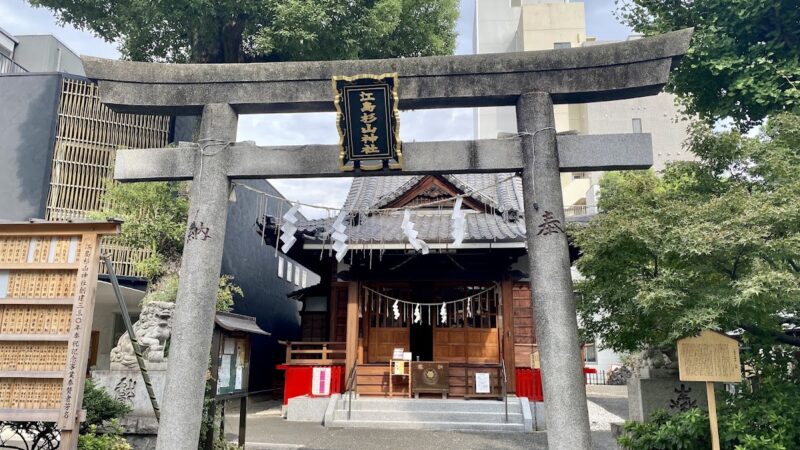
The shrine building, renovated in 1993 (Heisei 5), retains the traditional style of shrine architecture while incorporating a modern, clean design. Worshippers offer prayers to Benzaiten and Sugiyama Kengyo in front of the shrine, praying for academic success, improvement in skills, business prosperity, and other blessings.
Sugiyama Kengyo Memorial Monument
Within the temple grounds stands a stone monument erected to commemorate the posthumous conferment of the rank of Junior Fifth Rank in 1924 (Taisho 13). This monument is known as the world’s only stone monument inscribed with Braille, and is a valuable cultural asset that conveys the achievements of Sugiyama Kengyo, a pioneer in the welfare of the visually impaired.
The monument’s achievements are recorded in Braille, allowing visually impaired individuals to understand the content by touch.
Sugiyama Waichi Museum
Established in 2016 (Heisei 28), the museum displays treasures and materials related to Sugiyama Kengyo. While usually closed to the public, it is sometimes opened on special occasions such as the Ryogoku Nigiwai Festival.
The museum houses valuable historical materials, including acupuncture tools used in the tube acupuncture method, a portrait of Sugiyama Kengyo, and documents from that period.
Benzaiten Statue and Shrine
Within the temple grounds is a small shrine dedicated to Benzaiten, suggesting a connection to Enoshima. Furthermore, the entire shrine grounds are enveloped in a tranquil atmosphere, providing a space where you can forget the hustle and bustle of the city and worship in peace.
About Goshuin (Shrine Seals) and Goshuincho (Shrine Seal Books)
Goshuin
At Ejima Sugiyama Shrine, you can receive beautiful goshuin. The goshuin features the calligraphy and red seal of “Ejima Sugiyama Shrine,” serving as a memento of your visit.
The Benzaiten goshuin sometimes changes monthly, with seasonal designs such as cherry blossoms being particularly popular. Goshuin can be obtained at the shrine office, but please note that the office is closed on Fridays.
Goshuin Offering Fee
Usually around 500 yen (subject to change, please confirm during your visit)
Original Goshuincho (Shrine Seal Books)
Ejima Sugiyama Shrine also offers original goshuincho. Featuring designs inspired by Sugiyama Kengyo and Benzaiten, they are popular as unique souvenirs from this shrine.
Items Offered and Amulets
Ejima Sugiyama Shrine offers the following items:
- Amulet for Academic Success: For academic improvement through the divine virtues of Benzaiten
- Amulet for Improvement of Skills: For those wishing to improve their performing arts or skills
- Amulet for Business Prosperity: For the financial blessings of Benzaiten
- Amulet for Health: An amulet related to the contributions of Sugiyama Kengyo to medicine
- Ema (votive tablet): You can write your wish on it and dedicate it
In addition, there are auspicious items related to Benzaiten and special items for those involved in acupuncture and moxibustion.
Annual Events and Grand Festival
Grand Festival (Around June 18th)
The most important festival at Ejima Sugiyama Shrine is the Grand Festival, held annually in mid-June. This festival, held around the anniversary of Sugiyama Kengyo’s death, features a portable shrine procession and devotional performances, attracting many local residents and acupuncturists.
Other Events
- Hatsumode: New Year’s visit to the shrine
- Setsubun Festival: Around February 3rd
- Ryogoku Nigiwai Festival: The museum may be specially opened to the public
Benefits of Ejima Sugiyama Shrine
Ejima Sugiyama Shrine is believed to offer the following benefits:
- Academic Success and Passing Exams: The Divine Virtue of Benzaiten’s Wisdom
- Improvement of Skills and Arts: Improvement in Music, Performing Arts, and Technology
- Business Prosperity and Increased Financial Fortune: The Divine Virtue of Benzaiten’s Wealth
- Improvement of Medical Professionals’ Skills: Sugiyama Kengyo’s Contribution to Medicine
- Improvement of Welfare for the Visually Impaired: The Legacy of Sugiyama Kengyo
- Matchmaking: The Divine Virtue of Okuninushi-no-Mikoto
- Health and Longevity: Faith as the God of Medicine
The shrine is particularly revered by acupuncturists, masseurs, and those involved in the welfare of the visually impaired, attracting worshippers from all over Japan.
Detailed Access Information
Access by Train
From JR Sobu Line “Ryogoku Station”
Exit the West Exit and proceed west along Keiyo Road. It takes approximately 7 minutes on foot. It is on the opposite side of Ryogoku Kokugikan (sumo arena).
From Morishita Station on the Toei Shinjuku Line and Oedo Line:
Take Exit A2, head south on Kiyosumi Street, and then east on Keiyo Road. It’s approximately a 9-10 minute walk.
Access by Car
It’s about a 5-minute drive from the Ryogoku Exit of the Metropolitan Expressway Route 6 Mukojima Line. However, there is no dedicated parking lot for the shrine, so you will need to use a nearby coin-operated parking lot.
Nearby Parking
- Several coin-operated parking lots are available around Ryogoku Station.
- Rates are approximately 200-300 yen for 30 minutes.
- Public transportation is recommended as it can get crowded on holidays.
Manners and Time Required for Visiting
Proper Way to Visit
- Bow before passing through the torii gate.
- Cleanse your hands and mouth at the water basin.
- Bow twice, clap twice, and bow once in front of the shrine.
- Take a leisurely stroll around the grounds.
- Receive a Goshuin (temple/shrine stamp) (optional).
Time Required
- Visiting only: 15-20 minutes
- Including a stroll around the grounds: 30-40 minutes
- Including waiting time for Goshuin: 40-60 minutes
- Including sightseeing in the surrounding area: Approximately half a day
Nearby Tourist Attractions
There are many attractive tourist spots in the Ryogoku area around Enoshima Sugiyama Shrine.
Ryogoku Kokugikan (Sumo Hall)
Approximately 10 minutes on foot. This is the sacred site where the Grand Sumo Tournament is held, and it also houses a Sumo Museum.
Edo-Tokyo Museum
Approximately 12 minutes on foot. A large museum where you can learn about the history and culture of Tokyo from the Edo period to the present day.
Sumida Hokusai Museum
Approximately 15 minutes on foot. A museum that mainly exhibits the works of Katsushika Hokusai.
Eko-in Temple
Approximately 8 minutes on foot. A family temple for commoners during the Edo period, also known as the grave of Nezumi Kozo (a famous Edo-period thief).
Kira Residence Site
Approximately 10 minutes on foot. The site of the residence of Kira Yoshinaka, famous from the Chushingura story.
Deep Connections with Acupuncture and Moxibustion Practitioners
Ejima Sugiyama Shrine holds special significance for modern acupuncturists and masseurs. The tube acupuncture method is still used worldwide, and the achievements of Sugiyama Kengyo have had an immeasurable impact on the development of acupuncture and moxibustion medicine.
Every year, acupuncture-related organizations, including the National Acupuncture and Massage Association, visit the shrine to pray for improved techniques and the development of the industry. It is also customary for acupuncture school students and newly qualified acupuncturists to visit the shrine when obtaining their qualifications or opening their own practices.
History of Sumida Ward and Ejima Sugiyama Shrine
Sumida Ward is a region where downtown culture flourished from the Edo period, and Ejima Sugiyama Shrine plays an important role in that history. The Honjo area was a place where samurai residences and merchant districts coexisted, and diverse cultures intersected.
The educational facility for the visually impaired opened by Sugiyama Kengyo is a prime example of the advanced welfare policies of Edo and conveys a part of the Tokugawa Shogunate’s cultural policies to the present day.
Relationship with the Tokyo Metropolitan Shrine Association
Ejima Sugiyama Shrine is an official shrine belonging to the Tokyo Metropolitan Shrine Association, registered with an organization that oversees 1,398 shrines in Tokyo. Detailed information is also available on the Shrine Association’s website, where official visiting information can be confirmed.
Summary: Key Points for Visiting Ejima Sugiyama Shrine
Ejima Sugiyama Shrine is especially recommended for the following people:
- Acupuncturists and Medical Professionals: The only shrine dedicated to the founder of the industry
- Students and Exam Takers: The divine blessings of Benzaiten for academic success
- Those Studying Performing Arts and Technical Skills: The blessings for improvement in skills
- Those Involved in Welfare for the Visually Impaired: To commemorate the legacy of Sugiyama Kengyo
- History Enthusiasts: The origin of welfare policies in the Edo period
- Goshuin Collectors: Beautiful limited-edition goshuin
Located in Ryogoku, an area rich in history and culture, Ejima Sugiyama Shrine possesses unique value. As the birthplace of the world-renowned medical technique of tube acupuncture and the origin of welfare for the visually impaired, this shrine offers visitors profound inspiration and learning.
When sightseeing in Tokyo, be sure to visit this historic shrine, within walking distance of Ryogoku Station, and experience the achievements of Sugiyama Kengyo and the divine blessings of Benzaiten. The time spent calming your mind in the tranquil grounds and offering your goals and wishes to the deities will surely be meaningful.
When visiting, please note that the shrine office is closed on Fridays, and it is also recommended to enjoy the special atmosphere during the annual festival. The shrine’s seals and other offerings also make unique mementos.
Enoshima Sugiyama Shrine is a precious cultural heritage that Sumida Ward in Tokyo is proud of, conveying the great achievements of the past while offering many blessings and lessons to us living in the modern age.