Complete Guide to Fukagawa Shinmei-gu Shrine (Koto Ward, Tokyo) | History, Goshuin (Shrine Seals), and the Fukagawa Seven Lucky Gods Pilgrimage
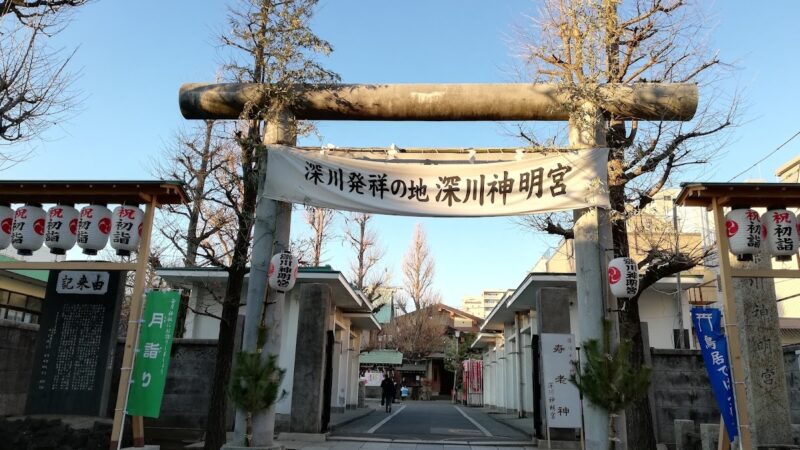
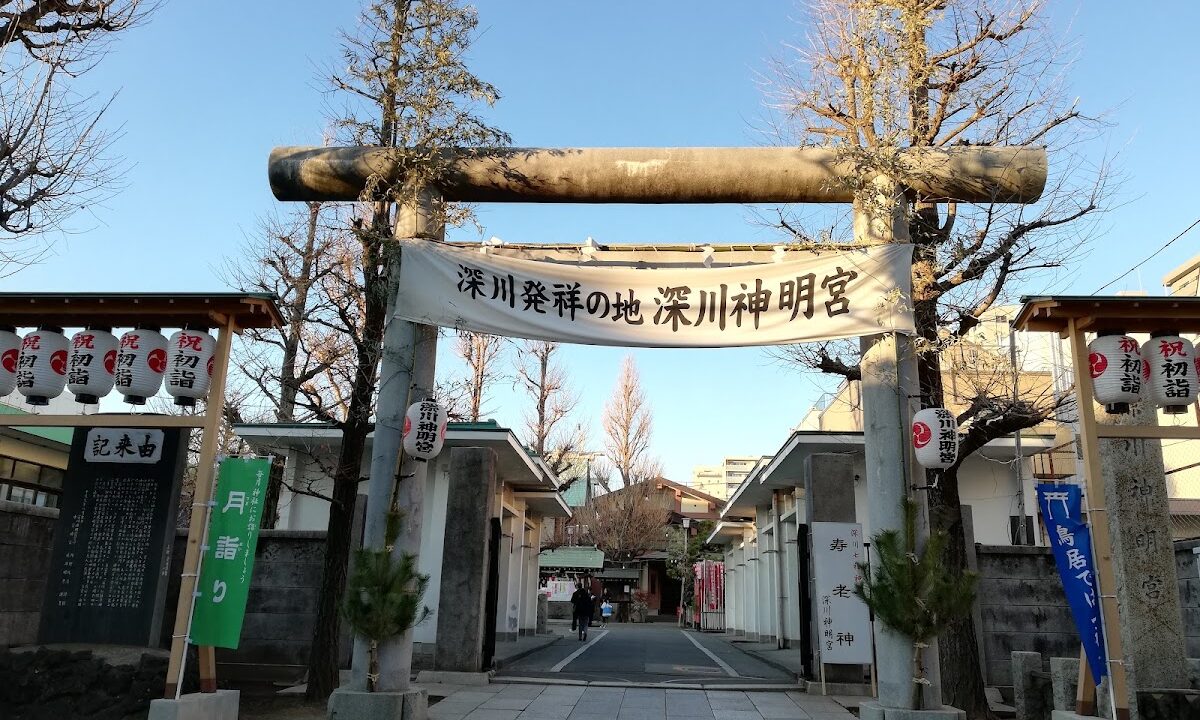
Fukagawa Shinmei-gu Shrine is a historic shrine located in Morishita, Koto Ward, Tokyo. Founded during the Keicho era (1596-1615), it has watched over the Fukagawa area for over 400 years. This shrine is not merely a place of worship; it is also known as the birthplace of the place name “Fukagawa,” making it an indispensable part of Tokyo’s history.
This article comprehensively covers everything you need to know before visiting Fukagawa Shinmei-gu Shrine, including its detailed history, enshrined deities, goshuin information, its connection to the Fukagawa Seven Lucky Gods pilgrimage, access methods, and nearby attractions.
History and Origins of Fukagawa Shinmei Shrine
The Development of Fukagawa and Fukagawa Hachiroemon
Approximately 400 years ago, the area of present-day Fukagawa was a delta overgrown with reeds, a wilderness with almost no inhabitants. A man named Fukagawa Hachiroemon moved to this undeveloped land and began its development. Fukagawa Hachiroemon, said to have been from Settsu Province (present-day northern Osaka Prefecture to southeastern Hyogo Prefecture), moved to this area with his family and began developing the land.
It is believed that the origin of Fukagawa Shinmei Shrine lies in the fact that Fukagawa Hachiroemon enshrined a divided spirit of Ise Grand Shrine, which he revered, in a shrine on his property. This occurred during the Keicho era and is the origin of the founding of Fukagawa Shinmei Shrine.
The Origin of the Place Name “Fukagawa”
An essential part of understanding the history of Fukagawa Shinmei Shrine is the origin of the place name “Fukagawa.” It is said that in this newly settled area, which did not yet have an official place name, Tokugawa Ieyasu recognized the achievements of Fukagawa Hachiroemon and ordered that the place name be changed to “Fukagawa,” which was Hachiroemon’s surname.
This episode demonstrates that Fukagawa Shinmei Shrine is not merely a shrine, but is closely linked to the origins of the Fukagawa region itself. As the “birthplace of the place name Fukagawa,” Fukagawa Shinmei Shrine is central to the region’s historical identity.
Development as the Guardian Shrine of Fukagawa
Initially, Fukagawa Shinmei Shrine began as a private shrine within the residence of Fukagawa Hachiroemon, but its role expanded along with the development of Fukagawa. As the area of Fukagawa developed throughout the Edo period, Fukagawa Shinmei Shrine came to be widely revered as the guardian shrine of Fukagawa.
“Guardian shrine” refers to a shrine that protects an entire region. Fukagawa Shinmei Shrine has served as a center of faith for the people of the Fukagawa area, functioning as a place to pray for the peace and prosperity of the region. Even today, it is affectionately known as “Shinmei-sama” by the locals and enjoys deep reverence.
Shrine Rank and the Tokyo Metropolitan Shrine Association
Fukagawa Shinmei Shrine was formerly ranked as a Gosha (village shrine) under the old shrine ranking system. Gosha was one of the shrine rankings under the old system, positioned above Village Shrines and below Prefectural Shrines. This indicates that Fukagawa Shinmei Shrine was recognized as an important shrine in the region.
Currently, Fukagawa Shinmei Shrine belongs to the Tokyo Metropolitan Shrine Association. The Tokyo Metropolitan Shrine Association is an organization that oversees approximately 1,398 shrines in Tokyo, and Fukagawa Shinmei Shrine is a member.
Deity and Divine Virtues
Amaterasu Omikami
The deity enshrined at Fukagawa Shinmei Shrine is Amaterasu Omikami. Amaterasu Omikami is the supreme deity in Japanese mythology and is known as the personification of the sun. She is also the principal deity enshrined at the Inner Shrine of Ise Grand Shrine.
Fukagawa Hachiroemon invited a divided spirit from Ise Grand Shrine to Fukagawa Shinmei Shrine, which is why Amaterasu Omikami is also enshrined there. The name “Shinmei-gu” itself is a general term for shrines that enshrine Amaterasu Omikami, and Shinmei-gu and Shinmei-sha shrines exist throughout Japan.
Divine Virtues
The divine virtues of Amaterasu Omikami are numerous, but the main ones are listed below:
- National Peace and Security: Her role as the guardian deity of Japan
- Abundant Harvests and Industrial Development: Prayers for a bountiful harvest through her blessings as the sun goddess
- Good Fortune and Prosperity: The power to attract all kinds of good fortune
- Protection from Evil and Disaster: The power to ward off evil spirits and protect from disaster
- Family Safety: Protecting the peace and safety of the family
Many worshippers visit Fukagawa Shinmei Shrine seeking these divine virtues.
Fukagawa Seven Lucky Gods Pilgrimage and Jurojin
What is the Fukagawa Seven Lucky Gods Pilgrimage?
Fukagawa Shinmei Shrine is known as one of the “Fukagawa Seven Lucky Gods Pilgrimage” locations. The Fukagawa Seven Lucky Gods Pilgrimage is a popular pilgrimage route that visits seven temples and shrines scattered throughout the Fukagawa area. Every year during the New Year’s period (January 1st to January 7th), many worshippers visit this route.
The Seven Lucky Gods pilgrimage is a traditional Japanese custom where people pray for happiness throughout the year by visiting seven gods of good fortune. The Fukagawa Seven Lucky Gods pilgrimage is easily accessible from central Tokyo and can be completed in a relatively compact area, making it a popular route for New Year’s visits.
Jurojin
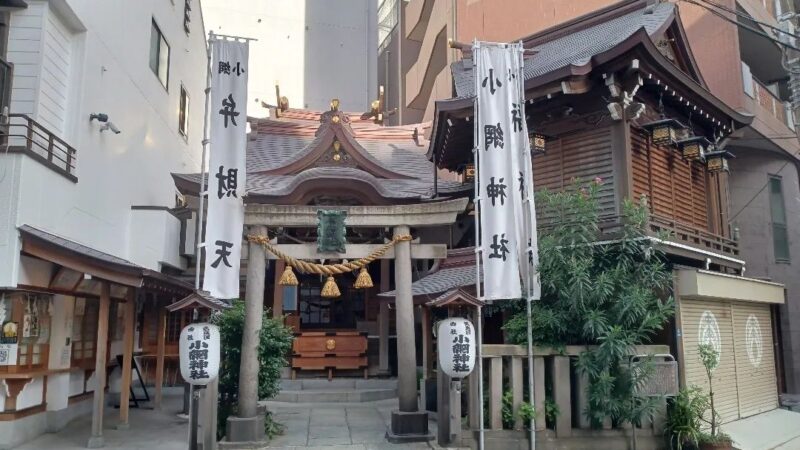
Within the grounds of Fukagawa Shinmei Shrine is the Jurojin Shrine, dedicated to Jurojin, the god of longevity and good health. Jurojin is one of the Seven Lucky Gods and is worshipped as a god who brings long life and good health.
Jurojin is a god originating from Chinese Taoism, often depicted with a long white beard, carrying a staff and scroll, and accompanied by a deer. Fukagawa Shinmei Shrine is a pilgrimage site for Jurojin on the Fukagawa Seven Lucky Gods pilgrimage.
During the Fukagawa Seven Lucky Gods pilgrimage period in January (January 1st to January 7th), in addition to the regular Fukagawa Shinmei-gu shrine stamp, you can also receive a stamp of Jurojin (the god of longevity).
Stamp Information
Regular Stamp
Fukagawa Shinmei-gu shrine offers stamps to visitors. Stamps are seals and calligraphy given by the shrine as proof of worship, and many visitors collect them in their stamp books.
The Fukagawa Shinmei-gu shrine stamp features the shrine’s name, “Fukagawa Shinmei-gu,” the date of visit, and the shrine’s seal. It’s popular for its simple yet dignified design.
Limited-Time Fukagawa Seven Lucky Gods Stamp
As mentioned above, during the Fukagawa Seven Lucky Gods pilgrimage period in January (January 1st to January 7th), a stamp of Jurojin (the god of longevity) is also available. During this period, many worshippers visit, so there may be a waiting time to receive your Goshuin (temple/shrine stamp). We recommend visiting with plenty of time to spare.
Manners when receiving a Goshuin
When receiving a Goshuin, please observe the following manners:
- Complete your worship first: The Goshuin is proof of your worship, so be sure to worship at the main hall first.
- Prepare a Goshuincho (stamp book): Please prepare a dedicated Goshuincho, not a notepad or regular notebook.
- Hand over an open page: It is polite to hand over the page you want written on.
- Prepare the offering: Having small change ready will make things smoother (generally around 300-500 yen).
- Don’t forget to express your gratitude: After receiving your Goshuin, express your thanks.
Annual Festival and Annual Events
Annual Festival
The annual festival of Fukagawa Shinmei Shrine is held every year on August 17th. The annual grand festival is the most important festival of the year for the shrine, and at Fukagawa Shinmei Shrine, the main festival (grand festival) is held grandly once every three years.
During the year of the main festival, a portable shrine procession and various dedication ceremonies take place, and the entire community is enveloped in the excitement of the festival. It is a valuable opportunity to experience the history and culture of the Fukagawa area.
Other Annual Events
Fukagawa Shinmei Shrine holds various annual events in addition to its annual grand festival:
- Hatsumode (January 1st onwards): New Year’s visit and pilgrimage to the Seven Lucky Gods of Fukagawa
- Setsubun Festival (around February 3rd): Setsubun rituals such as bean-throwing
- Natsukoshi no Oharae (June 30th): A Shinto ritual to purify oneself of the impurities accumulated over the past six months
- Shichi-Go-San (November): A visit to celebrate the growth of children
- Toshikoshi no Oharae (December 31st): A Shinto ritual to purify oneself of the impurities accumulated over the past year
These events are deeply rooted in the lives of the local people, and many worshippers visit at each seasonal turning point.
Highlights of the Shrine Grounds
Main Hall and Worship Hall
The main hall and worship hall of Fukagawa Shinmei Shrine possess the beauty of traditional shrine architecture. Visitors first perform the ritual of two bows, two claps, and one bow at the main hall.
Jurojinja Shrine
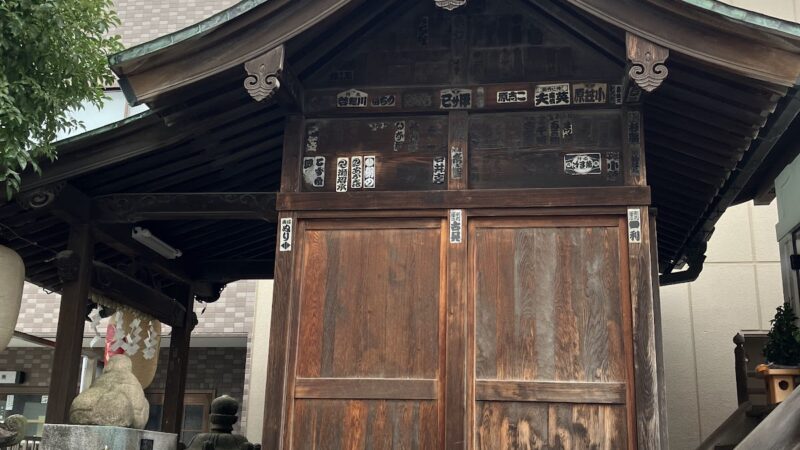
Within the shrine grounds is the Jurojinja Shrine, dedicated to Jurojin, and is a stop on the Fukagawa Seven Lucky Gods pilgrimage. Though small, the shrine has a charming atmosphere, and many visitors come to pray for longevity.
Water Basin
There is a water basin for purifying the body and mind before praying. When praying, please purify your hands and mouth here first before proceeding to the main hall.
Shrine Office
Goshuin (shrine stamps), amulets, and talismans are available at the shrine office. Questions regarding Fukagawa Shinmei-gu Shrine can also be answered at the shrine office.
Access Information
Location
1-3-17 Morishita, Koto-ku, Tokyo 135-0004
Phone: 03-3631-5548
FAX: 03-3631-5564
Access by Train
Fukagawa Shinmei Shrine is easily accessible by public transportation. The nearest stations are as follows:
Morishita Station (Toei Shinjuku Line/Toei Oedo Line)
- Approximately 2 minutes on foot from Exit A7
- This is the most easily accessible station.
Kiyosumi-Shirakawa Station (Tokyo Metro Hanzomon Line/Toei Oedo Line)
- Approximately 6 minutes on foot from Exit B2
- Convenient when visiting Kiyosumi Garden and other attractions.
Access from Morishita Station is the closest, and the shrine is located right outside the station, making it easy to find even for first-time visitors.
Access by Car
Fukagawa Shinmei Shrine has its own parking lot, but spaces are limited, so we recommend using public transportation whenever possible. Especially during peak seasons such as New Year’s Day and the annual festival, surrounding roads can become congested.
If you are visiting by car, please consider using nearby coin-operated parking lots.
Nearby Tourist Attractions
When visiting Fukagawa Shinmei Shrine, exploring the surrounding tourist attractions will allow you to enjoy the history and culture of Fukagawa more deeply.
Fukagawa Edo Museum
Located about a 10-minute walk away, the Fukagawa Edo Museum is a museum that recreates the townscape of Fukagawa during the Edo period in full scale. It’s an ideal spot to learn about the history of Fukagawa.
Kiyosumi Garden
Near Kiyosumi-Shirakawa Station, this metropolitan garden is a strolling garden with a pond and trees, built during the Meiji era. You can enjoy the beautiful scenery of each season.
Fukagawa Fudōdō (Naritasan Tokyo Branch Temple)
One of Fukagawa’s representative temples, it is bustling with many worshippers on the 28th of each month. It is also a stop on the Fukagawa Seven Lucky Gods pilgrimage, dedicated to Ebisu.
Tomioka Hachimangū Shrine
A representative shrine of Fukagawa, known for the “Fukagawa Hachiman Festival,” one of the three great Edo festivals. Many people visit this shrine along with Fukagawa Shinmei-gū Shrine.
Monzen-Nakachō Shopping Street
A shopping street that developed as a temple town for Fukagawa Fudōdō and Tomioka Hachimangū Shrine, it is lined with long-established restaurants and Japanese confectionery shops. You can also enjoy local cuisine such as Fukagawa-meshi.
Points and Manners for Visiting a Shrine
Etiquette for Visiting a Shrine
The basic etiquette for visiting a shrine is as follows:
- Bow before passing through the torii gate.
- Purify your body and mind at the water basin.
- Hold the ladle in your right hand and purify your left hand.
- Switch the ladle to your left hand and purify your right hand.
- Switch the ladle back to your right hand, receive water in your left hand, and rinse your mouth.
- Finally, hold the ladle upright and purify the handle.
- Pray in front of the main hall.
- Bow slightly and place your offering.
- Ring the bell if there is one.
- Bow twice, clap twice, and bow once.
- Bow again at the torii gate when leaving.
Regarding Attire
While everyday clothes are acceptable for visiting a shrine, it’s best to avoid overly casual attire (such as flip-flops and tank tops). For special prayers, slightly more formal attire is preferable.
Regarding Photography
Photography is generally permitted on the shrine grounds, but it may be prohibited inside the main hall or during religious ceremonies. If unsure, please check with the shrine office. Please also be considerate of other visitors.
The Charm of Fukagawa Shinmei Shrine and Reasons to Visit
Fukagawa Shinmei Shrine is not merely a tourist spot; it embodies the history of the Fukagawa area itself. Founded approximately 400 years ago when Fukagawa Hachiroemon pioneered this land and enshrined a divided spirit from Ise Grand Shrine, this shrine is the birthplace of the name “Fukagawa” and is central to the region’s identity.
Despite being in the heart of the city, Fukagawa Shinmei Shrine has a quiet and peaceful atmosphere and is affectionately known as “Shinmei-sama” by locals. It is also known as a pilgrimage site for the Fukagawa Seven Lucky Gods and is bustling with visitors during the New Year.
Its excellent accessibility, just a 2-minute walk from Morishita Station, is another attractive feature. Immerse yourself in the historic atmosphere of Fukagawa, a traditional downtown area, and pay your respects to Amaterasu Omikami and Jurojin, receiving a Goshuin (temple/shrine stamp). Combining this with visits to nearby places like Fukagawa Fudodo, Tomioka Hachimangu Shrine, and Kiyosumi Garden, you can fully enjoy Tokyo’s downtown culture and Edo history.
Savoring local cuisine such as Fukagawa-meshi and strolling through the Monzen-Nakacho shopping street will allow you to fully experience the charm of Fukagawa in a single day. This spot is especially recommended for history buffs, Goshuin collectors, and those who love the atmosphere of downtown Tokyo.
Summary
Fukagawa Shinmei-gu Shrine is a historic shrine founded during the Keicho era by Fukagawa Hachiroemon and is known as the birthplace of the place name “Fukagawa.” With Amaterasu Omikami as its enshrined deity, it has been the guardian shrine of Fukagawa for approximately 400 years, attracting the faith of the local people.
It is also a stop on the Fukagawa Seven Lucky Gods pilgrimage, attracting many worshippers during the New Year. Conveniently located just a 2-minute walk from Morishita Station, the area boasts numerous attractions such as Fukagawa Fudōdō Temple, Tomioka Hachimangū Shrine, and Kiyosumi Garden.
We highly recommend visiting Fukagawa Shinmei-gū Shrine, where you can experience the history and culture of Fukagawa, a traditional downtown area of Tokyo. The tranquil grounds and the time spent reflecting on Fukagawa’s history will surely create a lasting impression.