Sarue Shrine (Tokyo) Complete Guide | Thorough Explanation of History, Goshuin (Shrine Seals), and Access Information
Sarue Shrine, located in Sarue, Koto-ku, Tokyo, is a historic shrine said to have been founded during the Heian period. Known for its legends related to Minamoto no Yoshiie and its shrine building, one of the oldest reinforced concrete structures in Tokyo, it has long been cherished by the local community. This article comprehensively introduces everything you need to know before visiting Sarue Shrine, including its history, highlights, goshuin information, and access methods.
Overview of Sarue Shrine
Sarue Shrine is located at 2-2-17 Sarue, Koto-ku, Tokyo. Formerly a village shrine, it has continuously protected the area as the guardian shrine of the former Sarue village. As a central shrine in the area known as Fukagawa Sarue, it is a historic shrine with a history of over a thousand years.
Basic Information
Location: 2-2-17 Sarue, Koto-ku, Tokyo
Phone Number: 03-3631-2516
FAX: 03-3631-2721
Former Shrine Rank: Village Shrine
Deities Enshrined: Amaterasu Omikami, Ukanomitama no Mikoto
Formerly known as “Sarue Inari,” it was revered as a shrine of Inari worship. After the war, Amaterasu Omikami was enshrined alongside the other deities, resulting in its current form. The shrine grounds cover approximately 300 tsubo (about 990 square meters) and are characterized by their tranquil atmosphere nestled in a quiet residential area.
History and Origins of Sarue Shrine
Origin of Founding and the Legend of Sarutota
The founding of Sarue Shrine dates back to the Kohei era (1058-1065). This period corresponds to the late Heian period, during which the Former Nine Years’ War (1051-1062) was taking place in the Tohoku region.
On their way to an expedition to Oshu, Minamoto no Yoriyoshi and his son Minamoto no Yoshiie were defeated and died in an inlet in this area. Saru no Tōta was a brave warrior who had achieved numerous military feats, but it is said that he lost his life due to exhaustion from the expedition.
Local fishermen respectfully buried this warrior and erected a mound on the shrine grounds to commemorate him. It is believed that the place name “Sarue” and the shrine name originated from this story. Initially built as a small shrine, it was eventually developed into an Inari shrine, and by the Kōhei era, it had grown into a shrine with grounds of over 300 tsubo (approximately 1,000 square meters).
From the Edo Period to the Modern Era
Throughout the Edo period, Sarue Shrine developed as the center of Inari worship in the Fukagawa area. Known affectionately as “Sarue Inari,” it attracted the faith of people praying for business prosperity and abundant harvests. For local fishermen and merchants, it played a vital role as a place of worship deeply integrated into their lives.
In the Meiji era, under the modern shrine system, it was ranked as a village shrine and officially established as the guardian shrine of Sarue Village. From this period onward, its role as a center of the local community became even stronger.
The Great Kanto Earthquake and the Reconstruction of the Shrine
The old shrine building was destroyed by fire in the Great Kanto Earthquake of 1923 (Taisho 12). However, thanks to the enthusiasm of local residents, a new reinforced concrete shrine building was reconstructed in 1931 (Showa 6).
This shrine building, more than 90 years old, remains in use today and is a valuable example of one of the oldest reinforced concrete shrine buildings in Tokyo. Its earthquake-resistant and fire-resistant structure, incorporating lessons learned from the Great Kanto Earthquake, was an advanced attempt for its time.
Post-War Development
After World War II, Sarue Shrine enshrined Amaterasu Omikami, incorporating elements of Ise Shintoism in addition to Inari worship. This led to its development as a shrine accepting a wider range of faiths.
Currently, it welcomes many visitors as an important cultural asset that tells the history of Koto Ward and as a spiritual center for local residents.
Highlights of Sarue Shrine
Reinforced Concrete Shrine Building
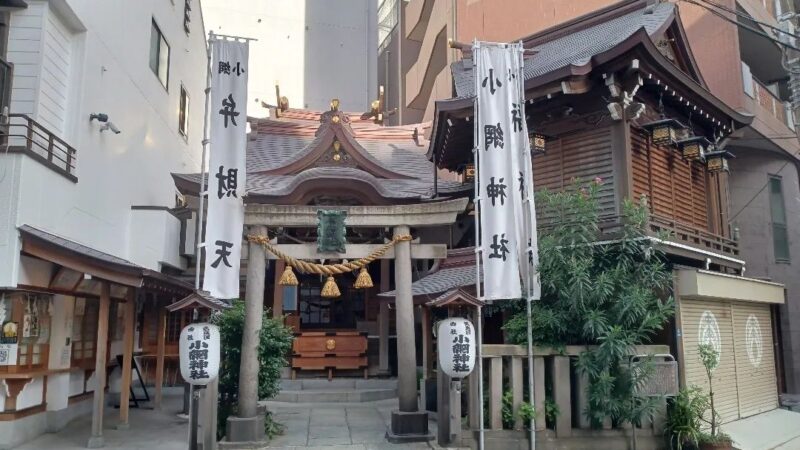
The greatest highlight of Sarue Shrine is its reinforced concrete shrine building, constructed in the early Showa period. Even after more than 80 years, it still stands majestically and possesses high value as a historical building.
Built during the reconstruction period after the Great Kanto Earthquake, this shrine building is a valuable example of incorporating modern architectural techniques while maintaining the design of traditional shrine architecture. Its design, which expresses the beauty of wooden architecture despite being made of concrete, can be said to represent the pinnacle of architectural technology at the time.
Atmosphere of the Shrine Grounds
Located in a residential area, the grounds of Sarue Shrine are enveloped in a tranquil and peaceful atmosphere. It offers a serene environment for worship, far removed from the hustle and bustle of the city.
Within the grounds is a mound dedicated to Sarutota, preserving the history of the shrine’s founding. You can also see stone statues of foxes, which tell the story of its history as an Inari shrine.
Subsidiary Shrine: Batō Kannon Shrine
Within the grounds is a subsidiary shrine dedicated to Batō Kannon. Batō Kannon is worshipped as a protector of livestock such as horses and cattle, and is also revered as a guardian deity of traffic safety. Since September 2017, a Goshuin (shrine stamp) for this Batō Kannon Shrine has also been available.
Goshuin Information
Regular Goshuin
At Sarue Shrine, Goshuin are available at the shrine office window. The regular Goshuin features the calligraphy of “Sarue Shrine” and the shrine’s seal. The offering fee is usually around 300 to 500 yen (this may change, so please check when you visit).
Seasonal and Event-Limited Goshuin (Shrine Seals)
A unique feature of Sarue Shrine is that it offers original, limited-edition goshuin for each season and event. Various designs are available throughout the year for occasions such as New Year’s, the annual festival, and Setsubun (bean-throwing festival).
In particular, special goshuin are sometimes offered during the annual festival. For example, in 2017 (Heisei 29), different stamps were used on odd-numbered and even-numbered days.
Goshuin of Batō Kannon Shrine
Since September 2017 (Heisei 29), goshuin for the subsidiary shrine, Batō Kannon Shrine, have also been available. You can receive them together with the main shrine’s goshuin.
Notes on Receiving Goshuin
Please inquire at the shrine office window regarding goshuin. It is customary to receive a Goshuin (temple/shrine stamp) after completing your prayers. Also, since there are limited-edition Goshuin available only during specific periods, it is recommended to check the shrine’s official website or social media beforehand.
Annual Festival and Other Annual Events
Annual Festival (Early August)
The Sarue Shrine’s annual festival is held on the first weekend of August each year. As the largest festival in the region, it attracts many worshippers and local residents.
Every three years, a Shikinen Taisai (main festival) is held, featuring a relatively large-scale Shinkosai (portable shrine procession). In the year of the main festival, the portable shrine parades through the parish area, enveloping the entire community in festive spirit. While Shinto rituals are also performed in the years of the Kagematsuri (shadow festival), they are smaller in scale than the main festival.
Other Annual Events
In addition to the annual festival, Sarue Shrine holds various Shinto rituals throughout the year.
- Hatsumode (January 1st-3rd): The shrine is bustling with New Year’s visitors.
- Setsubun Festival (around February 3rd): Events such as bean-throwing are held.
- Natsukoshi no Oharae (June 30th): A Shinto ritual to purify oneself of sins and impurities accumulated over the past six months.
- Shichi-Go-San (November): A visit to celebrate the growth of children.
- Toshikoshi no Oharae (December 31st): A Shinto ritual to purify oneself of sins and impurities accumulated over the past year.
Special Goshuin (shrine stamps) may be given out during these events.
Access
Access by Train
It is convenient to use public transportation to reach Sarue Shrine. It is a few minutes’ walk from the nearest station.
From Sumiyoshi Station on the Tokyo Metro Hanzomon Line:
Approximately 2 minutes on foot (approx. 150m) from Exit B1
From Sumiyoshi Station on the Toei Shinjuku Line:
Approximately 2 minutes on foot (approx. 150m) from Exit B1
Sumiyoshi Station is served by both the Hanzomon Line and the Toei Shinjuku Line, making it easily accessible from various parts of central Tokyo. Upon exiting from Exit B1 and heading southwest, you will immediately see the shrine’s torii gate.
From Nishi-Ojima Station on the Toei Shinjuku Line:
Approximately 10 minutes on foot (approx. 800m)
This station is also accessible, but Sumiyoshi Station is closer and more convenient.
Access by Car and Parking
If visiting by car, it’s approximately 10 minutes from the Kinshicho or Ryogoku exits of the Metropolitan Expressway Route 7 Komatsugawa Line. However, there is no dedicated parking lot on the shrine grounds, so you will need to use nearby coin-operated parking lots.
There are several coin-operated parking lots around Sumiyoshi Station, but they can become full during events such as the annual festival, so we recommend using public transportation.
Landmarks in the vicinity
Sarue Shrine is located in a residential area, but it’s close to Sumiyoshi Station, so you shouldn’t get lost. Head southwest from Sumiyoshi Station along Shin-Ohashi Street, and you’ll find it immediately after entering the residential area.
Recommended sightseeing spots near Sarue Shrine
Sarue Onshi Park (approximately 5 minutes on foot)
Near Sarue Shrine is the vast Sarue Onshi Park. During the Edo period, it was the site of a shogunate timber yard, then became an army facility during the Meiji era, and was developed as a park after the war.
The park features a lawn area, playground equipment, tennis courts, and more, making it a popular recreational spot for local residents. In spring, the cherry blossoms are beautiful, making it a popular spot for cherry blossom viewing. It’s an ideal place to stop by before or after visiting the shrine.
Fukagawa Edo Museum (approx. 15-minute walk)
This museum recreates the townscape of Fukagawa during the Edo period in full scale. Row houses, merchant houses, and boat inns are recreated, allowing visitors to experience the daily life of ordinary people in the Edo period. It’s also worth visiting to understand the historical background of Sarue Shrine.
Kiba Park (approx. 10-minute walk)
This is a vast metropolitan park adjacent to the Museum of Contemporary Art Tokyo. Historically a timber collection center, it is now a lush urban oasis. It’s a popular spot for jogging and picnics.
Kiyosumi Garden (approx. 20-minute walk)
This strolling garden, built during the Meiji era, is designated as a scenic spot by Tokyo. Designed by Yataro Iwasaki, it boasts a beautiful landscape with famous stones collected from all over Japan.
Tokyo Skytree (approx. 15 minutes by train)
It’s a few stops from Sumiyoshi Station to Oshiage Station on the Hanzomon Line. As a new landmark in Tokyo, you can enjoy the views from the observation deck and shopping.
Manners and Etiquette for Visiting a Shrine
Basic Manners for Visiting a Shrine
There are basic manners for visiting a shrine. Please follow these steps:
- Bow before passing through the torii gate: This is a courtesy before entering the sacred area.
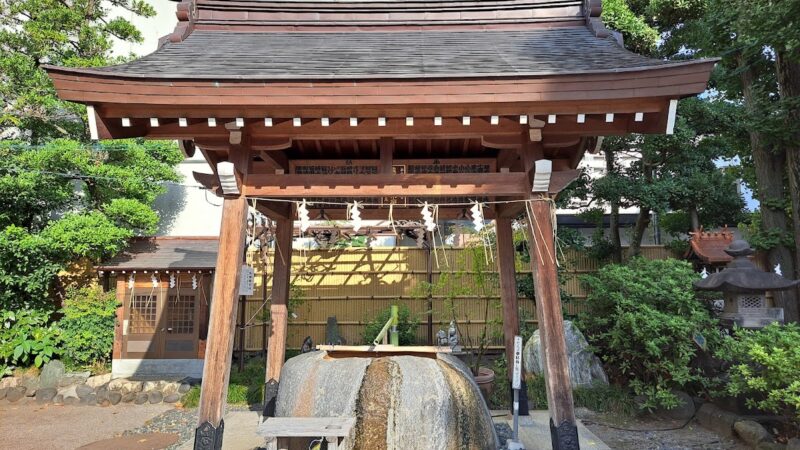
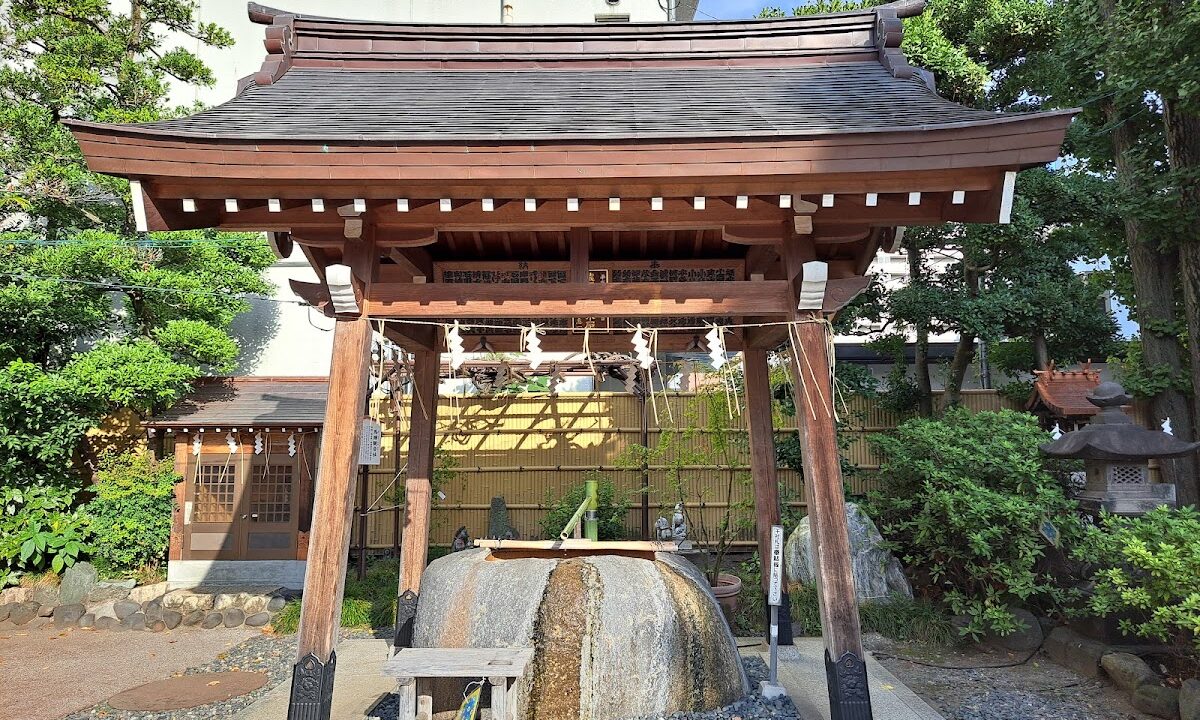
- Purify yourself at the water basin: Purify your left hand, right hand, and mouth in that order.
- Pray in front of the main hall: Two bows, two claps, and one bow is the basic ritual.
- Quietly observe the shrine grounds: Be considerate of other worshippers.
- Bow again at the torii gate when leaving: This is a courtesy when leaving the sacred area.
Manners for Receiving a Goshuin (Shrine Stamp)
A goshuin is given as proof of your visit. Please request one at the shrine office after completing your prayers. Having your goshuincho (stamp book) ready and specifying the page you want will make the process smoother.
When receiving a Goshuin (temple/shrine stamp), politely say, “I would like a Goshuin, please,” and wait quietly while it is being written. After receiving it, say, “Thank you very much.”
History of the Place Name Sarue
The place name “Sarue” is deeply connected to the origin of the shrine. It is said to have been named after the inlet where Sarutota, a retainer of Minamoto no Yoshiie, died.
This area was once an inlet facing Tokyo Bay and was a thriving fishing area. During the Edo period, it developed as part of Fukagawa and became known as a timber collection point. After the Meiji era, it developed as a residential and industrial area, and is now a quiet residential neighborhood.
The place name Sarue still remains as a town name in Koto Ward, and is used in the names of various facilities and places in the area, such as Sarue Onshi Park and Sarue Shopping Street. The fact that the story of a warrior from a thousand years ago has been passed down as a place name to the present day gives a sense of the weight of the region’s history.
Summary
Sarue Shrine is a representative shrine of Koto Ward, Tokyo, with a history of over 1,000 years since its founding in the Heian period. It boasts many attractions, including legends surrounding Sarutota, a retainer of Minamoto no Yoshiie, one of the oldest reinforced concrete shrine buildings in Tokyo, and seasonal limited-edition goshuin (shrine stamps).
Its convenient location, just a 2-minute walk from Sumiyoshi Station, makes it easily accessible. Situated in a quiet residential area, it offers a peaceful environment for worship, away from the hustle and bustle of the city.
The shrine also features a variety of annual events, including its grand festival, and plays a central role in the local community. When visiting Koto Ward, be sure to stop by Sarue Shrine and experience its 1,000-year history and the faith of the local people.
Nearby, there are many spots to enjoy history and nature, such as Sarue Onshi Park and the Fukagawa Edo Museum. Combining a visit to the shrine with exploring these attractions will allow you to fully experience the charm of Koto Ward.