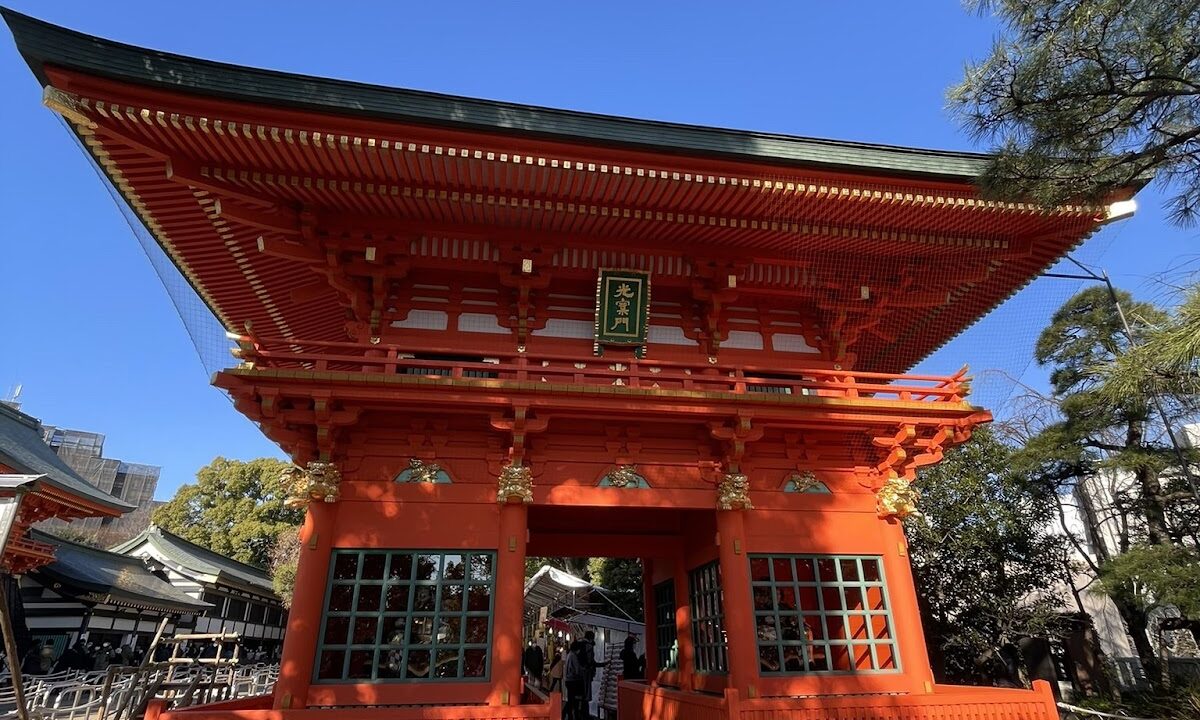
Anahachimangu Shrine (Tokyo) Complete Guide | The Ichiyo Raifuku Amulet and a Famous Waseda Shrine with 900 Years of History
Anahachimangu Shrine, located in Nishi-Waseda, Shinjuku-ku, Tokyo, is a venerable shrine boasting a history of over 900 years. It is nationally known for its “Ichiyo Raifuku Amulet,” distributed only for a limited time from the winter solstice to Setsubun (the day before the beginning of spring), attracting many worshippers praying for financial prosperity and business success. This article provides a thorough explanation of everything you need to know before visiting Anahachimangu Shrine, including its history, enshrined deities, details of the Ichiyo Raifuku Amulet, access information, and goshuin (shrine stamp) information.
History and Origins of Anahachimangu Shrine
Circumstances of its Founding and its Connection to Minamoto no Yoshiie
Anahachimangu Shrine’s founding dates back to the 5th year of Kohei (1062). It is said that when Minamoto no Yoshiie (Hachiman Taro Yoshiie), who suppressed the Oshu Rebellion (the Former Nine Years’ War), returned victorious, he followed the precedent of Yamato Takeru and enshrined his helmet and sword in this place, inviting the Hachiman deity to reside here.
Minamoto no Yoshiie was a warrior known as Hachiman Taro and had a deep faith in Hachiman. Believing his victory to be due to the protection of Hachiman, Yoshiie built this Hachiman shrine in gratitude, which is the origin of Anahachiman Shrine.
Origin of the Name “Anahachiman”
The unique name “Anahachiman” originates from an event in the early Edo period. In 1641, during the Kan’ei era, a monk from Hojo-ji Temple, the then-administered temple, was clearing the foot of the mountain to the south when he discovered a cave. It is said that a gilded bronze statue of Amida Buddha was found inside the cave, and that’s how the shrine came to be called “Anahachiman.”
This discovery caused a great sensation at the time, and the shrine has since become widely known as “Anahachimangu.”
Deep Connection to Takadanobaba
Anahachimangu was once also called “Takada Hachimangu.” This name originates from its reverence as the guardian deity of Takadanobaba. Even today, the “Takadanobaba Yabusame” (mounted archery) held every October is a vital religious event of Anahachimangu, and is designated as an Intangible Folk Cultural Property of Tokyo, a traditional event dating back to the Edo period.
The name Takadanobaba itself also has a deep connection to Anahachimangu. During the Edo period, this area was used as a training ground for the Shogun’s equestrian activities, and Anahachimangu played an important role as its guardian deity.
Role as the Guardian Shrine of Ushigome
Anahachimangu, along with Akagi Shrine, has been revered by the local people as the guardian shrine of Ushigome. Although its former rank was a village shrine, its sphere of influence extended widely, and it has held an important position as a spiritual pillar of the region from the Edo period to the present day.
Deities and Divine Virtues
Main Deities
The deities enshrined at Anahachimangu Shrine are the following three:
Emperor Ōjin
The 15th Emperor, widely worshipped as Hachiman-sama. He is revered as the god of military success, victory in competitions, and national protection.
Emperor Chūai
The 14th Emperor, and father of Emperor Ōjin.
Empress Jingū
Empress of Emperor Chūai, and mother of Emperor Ōjin. She is worshipped as the goddess of safe childbirth, child-rearing, and protection of women.
Divine Virtues
The main divine virtues of Anahachimangu Shrine are as follows:
- Increased Financial Fortune and Business Prosperity: Particularly famous for the Ichiyo Raifuku amulet
- Victory and Career Advancement: A god of military fortune associated with Minamoto no Yoshiie
- Protection from Evil and Good Fortune
- Protection from Insects: Known for prayers for the healthy growth of children
- Safe Childbirth and Child-Rearing: The divine virtues of Empress Jingu
Ichiyo Raifuku Amulet | The Only Financial Fortune Amulet in Japan
What is Ichiyo Raifuku?
“Ichiyo Raifuku” refers to the period after the winter solstice when the days begin to lengthen, signifying a shift towards good times after a series of misfortunes, and the arrival of a new year. It originates from the Chinese classic “I Ching” and represents the idea of yang reviving from the extreme of yin.
The Ichiyo Raifuku amulet at Anahachimangu Shrine, based on this philosophy, has a long tradition dating back to the Edo period as an amulet for praying for financial luck and business prosperity.
Distribution Period and Hours
The Ichiyo Raifuku amulet is distributed for a limited time only, from the winter solstice to Setsubun (February 3rd). This period is short, lasting about a month and a half each year, and attracts many worshippers from all over Japan.
- Distribution Period: Winter Solstice (December 21st or 22nd) to Setsubun (around February 3rd)
- Distribution Hours: 9:00 AM to 5:00 PM (Open year-round)
- Offering Fee: 1,000 yen (Price may change)
The shrine is especially crowded on the winter solstice, New Year’s Eve, New Year’s Day, and Setsubun, and you may have to wait for several hours. If you want to avoid the crowds, weekdays from mid-to-late January are recommended.
Types and Methods of Placing Amulets
There are three types of Ichiyo Raifuku amulets:
- Pocket Amulet: Carry it in your wallet or bag.
- Wall Amulet: Place it on the wall of your home or shop.
- Amulet with Stand: Place it on a shrine or shelf.
Date, Time, and Direction for Placing/Placing
There are strict rules for placing the Ichiyo Raifuku amulet:
- Date for Placing: At midnight (the moment the date changes) on either the winter solstice, New Year’s Eve, or Setsubun (the day before the beginning of spring).
- Direction: The auspicious direction for that year, or either west, north, or east.
- Height: Higher than eye level.
- Orientation: The characters should face forward.
Once placed, leave it there for one year, and replace it with a new amulet the following year. The old amulet should be returned to Anahachimangu Shrine or burned at a nearby shrine.
A Unique Amulet, Unparalleled in Japan
As clearly stated on the Anahachimangu Shrine’s official website, this Ichiyo Raifuku amulet is “the only one of its kind in Japan, with no other comparable examples.” While other shrines distribute amulets with similar names, Anahachimangu Shrine’s Ichiyo Raifuku amulet is considered unique in its history, origins, and rituals.
Prayer for Warding Off Insects | Wishing for Children’s Healthy Growth
Another distinctive belief at Anahachimangu Shrine is the “Prayer for Warding Off Insects.”
What is a Prayer for Warding Off Insects?
A prayer for warding off insects, such as night crying, tantrums, and convulsions in children—what is commonly known as “kan no mushi” (child ailments). This is a traditional belief that has continued since the Edo period, and it embodies the parents’ wish for their children’s healthy growth.
Prayer Reception
Prayers for protection against insects are accepted at any time:
- Reception Hours: 9:00 AM – 4:00 PM
- Reservations: Not required (Please go directly to the shrine office)
- Offering Fee: Please inquire at the shrine office
After the prayer, you will receive an amulet or talisman for protection against insects.
Takadanobaba Yabusame | A Shinto ritual designated as a Tokyo Metropolitan Intangible Folk Cultural Property
History of Yabusame
Takadanobaba Yabusame is a traditional Shinto ritual held every October in conjunction with the annual festival of Anahachimangu Shrine. It is said to have originated in 1728 (Kyoho 13), when Tokugawa Yoshimune offered it to celebrate the birth of his heir, and it has a history of approximately 300 years.
Event Overview
- Date: Around Health and Sports Day in October every year (Please check the official website for details)
- Location: Specially constructed horse riding grounds within Toyama Park
- Organizer: Anahachimangu Shrine, Takadanobaba Yabusame Preservation Society
- Cultural Property Designation: Tokyo Metropolitan Intangible Folk Cultural Property
The magnificent sight of archers shooting at targets from galloping horses is a valuable event that conveys the samurai culture of the Edo period, attracting many spectators.
Goshuin (Shrine Seal) Information
Types of Goshuin
Anahachimangu Shrine offers standard goshuin. The ink inscription includes the name of the shrine, “Anahachimangu,” and the date of visit, while the red seal features the shrine’s crest.
Reception Hours and Location
- Reception Hours: 9:00 AM – 4:00 PM
- Reception Location: Shrine Office
- Offering Fee: Approximately 300-500 yen (subject to change)
- Pre-written Goshuin: During busy periods, only pre-written goshuin may be available.
Notes
During the distribution period of the Ichiyo Raifuku amulet (Winter Solstice to Setsubun), the shrine becomes extremely crowded, and the reception hours for goshuin may change, or only pre-written goshuin may be available. Those who wish to receive a handwritten goshuin are advised to visit outside of this period.
Highlights of the Shrine Grounds
Shrine Building
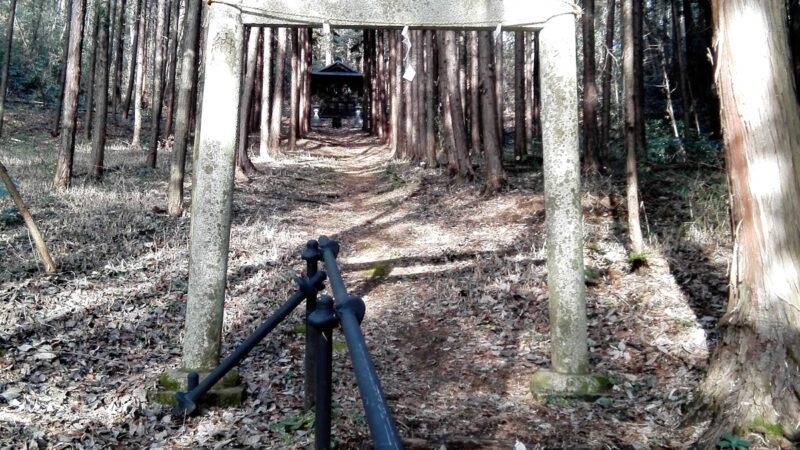
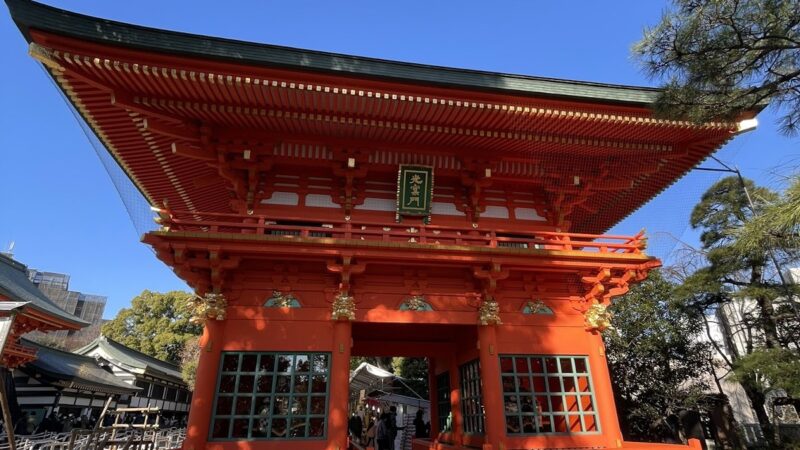
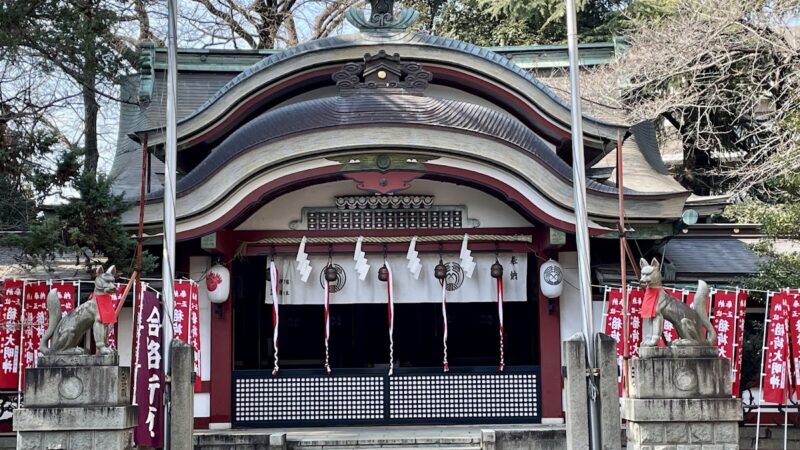
The current shrine building was rebuilt after the war, but it retains the style of traditional shrine architecture. The beautiful vermilion-painted shrine building exudes a dignified presence amidst the Waseda cityscape.
Subsidiary Shrines
Several subsidiary shrines are enshrined within the grounds of Anahachimangu Shrine. By paying homage to these deities along with the main deity, you can receive even greater divine blessings.
Sacred Tree
Within the shrine grounds stands a sacred tree estimated to be several hundred years old, quietly watching over a long history.
Stone Monuments and Memorials
Various stone monuments and memorials that tell the story of history are erected within the shrine grounds, allowing you to learn about the history of Anahachimangu Shrine and its connection to the local community.
Access and Visiting Information
Location
Address: 1-11 Nishi-Waseda 2-chome, Shinjuku-ku, Tokyo
Phone: 03-3203-7212
Access by Train
Tokyo Metro Tozai Line “Waseda Station”
- Approximately 5 minutes on foot from Exit 3B (nearest station)
- The exit towards Nakano is convenient
Toden Arakawa Line “Waseda Station”
- Approximately 10 minutes on foot
JR Yamanote Line/Seibu Shinjuku Line “Takadanobaba Station”
- Approximately 15 minutes on foot
Access by Bus
Toei Bus
- Gaku02 Line (Waseda University Main Gate ⇔ Takadanobaba Station) Get off at “Babashitamachi” bus stop (immediately adjacent)
- Waseda 77 Line (Waseda ⇔ Shinjuku Station West Exit) Get off at “Babashitamachi” bus stop (approximately 3 minutes on foot)
Access by Car and Parking
Anahachimangu Shrine has a parking lot for visitors, but the number of spaces is limited. Especially during the period when the Ichiyo Raifuku amulet is distributed, the surrounding roads become extremely congested, so we strongly recommend using public transportation.
There are also coin-operated parking lots nearby, but they are often full on holidays and during the distribution period, so please try to arrive early.
Visiting Hours
- Opening Hours: 9:00 AM
- Closing Hours: 5:00 PM
- Open Year-Round
- Goshuin (Shrine Stamp) Reception: Until 4:00 PM
The shrine office is open from 9:00 AM to 5:00 PM, but you can enter the shrine grounds anytime during opening hours.
Nearby Attractions and Tourist Spots
Waseda University
Waseda University, located within walking distance of Anahachimangu Shrine, is one of Japan’s leading private universities. You can visit its historic buildings and the Okuma Auditorium.
Hojo-ji Temple
Located right next to Anahachimangu Shrine, Hojo-ji Temple was formerly the head temple of Anahachimangu Shrine. You can feel the historical connection from before the separation of Shinto and Buddhism.
Kansen-en Park
This Japanese garden utilizes the former site of the lower residence of the Shimizu family, one of the three Tokugawa branch families. Located about a 10-minute walk from Anahachimangu Shrine, it is a beloved oasis in the city.
Shinjuku City Soseki Sanbo Memorial Museum
A memorial museum built on the site where the renowned author Natsume Soseki spent his later years. The Waseda area is known as a place associated with Soseki.
Annual Events and Festivals
Anahachimangu Shrine holds various festivals and events throughout the year:
- January 1st: New Year’s Day Festival
- February (Setsubun): Setsubun Festival (Last day of distribution of Ichiyo Raifuku amulets)
- October: Grand Festival, Takadanobaba Yabusame (mounted archery)
- December (Winter Solstice): Winter Solstice Festival (Start of distribution of Ichiyo Raifuku amulets)
- December 31st: Great Purification Ceremony, New Year’s Eve Festival
In addition, regular monthly festivals and other events are held. Please check the official website or contact us by phone for details.
About Other Shrines
Anahachimangu Shrine also manages several surrounding shrines. If you wish to obtain goshuin (shrine stamps) or prayers from other shrines, please contact the Anahachimangu Shrine office.
Manners and Precautions for Visiting a Shrine
Basic Worship Etiquette
- Bow before passing through the torii gate.
- Purify yourself at the water basin: Left hand, right hand, mouth, left hand in that order.
- Walk along the approach to the shrine, avoiding the center.
- Bow twice, clap twice, and bow once in front of the main hall.
Regarding Photography
Photography is generally permitted on the shrine grounds, but please note the following:
- Refrain from taking photos during prayers or Shinto rituals.
- Be considerate of other worshippers.
- Commercial photography requires prior permission.
If you wish to conduct interviews or commercial photography, please contact the shrine office at least one month in advance. You will need to explain the purpose and content of use in detail and obtain permission from the chief priest.
Tips for Avoiding Crowds
The shrine becomes extremely crowded during the distribution period of the Ichiyo Raifuku amulet. Relatively less crowded times and periods:
- Weekday mornings (especially mid-to-late January)
- Outside the distribution period (February 4th onwards to before the winter solstice in December)
For those who want to visit the shrine at a leisurely pace or who wish to have their goshuin (shrine stamp) handwritten, we recommend visiting outside the distribution period.
Frequently Asked Questions
Q: Can I have the Ichiyo Raifuku amulet mailed to me?
A: We do not offer mailing of the Ichiyo Raifuku amulet. It must be received directly at the shrine.
Q: Is there parking available?
A: There is parking for visitors, but spaces are limited. We strongly recommend using public transportation, especially during the distribution period.
Q: Is it possible to visit with a pet?
A: Generally, it is discouraged to bring pets to shrines. Please inquire with the shrine office in advance.
Q: Do you sell goshuin notebooks? **
A: Please inquire directly with the shrine office regarding the availability of original Anahachimangu Shrine stamp books.
Q: Can I receive a prayer for warding off evil?
A: Various prayers are accepted at any time. Please contact the shrine office (03-3203-7212) for details.
Summary
Anahachimangu Shrine is a venerable shrine with a history of over 900 years, and is a renowned shrine for financial luck and business prosperity, known for its Ichiyo Raifuku amulet, the only one of its kind in Japan. It preserves a rich history and tradition, including its founding by Minamoto no Yoshiie, its Edo-period belief in warding off insects, and the Takadanobaba Yabusame (mounted archery), a Tokyo Metropolitan Intangible Folk Cultural Property.
Its convenient location, just a 5-minute walk from Waseda Station on the Tokyo Metro Tozai Line, is also a major attraction, allowing visitors to combine their visit with a trip to Waseda University and other nearby tourist spots.
Those wishing to receive the Ichiyo Raifuku amulet are advised to visit between the winter solstice and Setsubun (the day before the beginning of spring). Those who prefer a more leisurely visit should come outside of the distribution period. In any case, Anahachimangu Shrine is one of the important shrines in Tokyo that you should visit at least once.
When visiting, please refer to the history and customs described in this article and offer your prayers with sincerity.