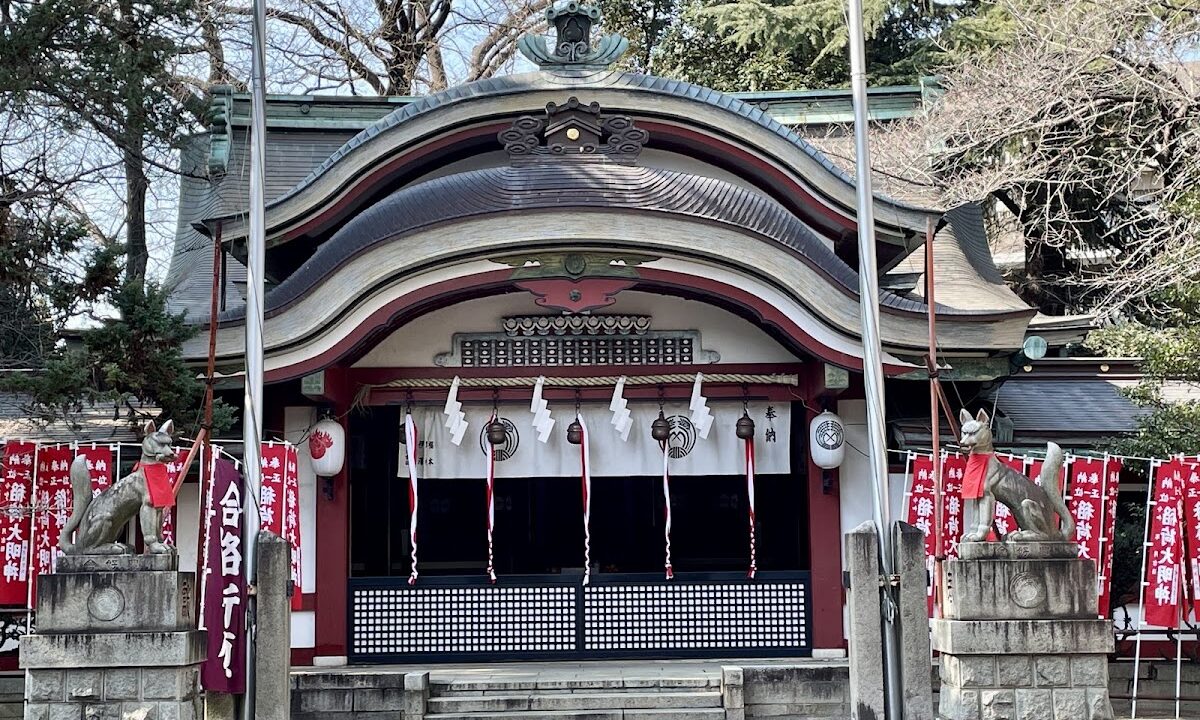
Complete Guide to Mizu Inari Shrine (Shinjuku Ward, Tokyo) | History, Benefits, Goshuin (Shrine Seal), and Access Information
Located in Nishi-Waseda, Shinjuku Ward, Tokyo, Mizu Inari Shrine is a venerable shrine with a history spanning over 1000 years. Named “Mizu Inari” (Water Inari) due to a legend of a sacred spring, it is widely revered as a guardian deity for healing eye diseases, prosperity in the water-related business, and firefighting. This article comprehensively covers everything you need to know before visiting Mizu Inari Shrine, including its history, benefits, highlights, goshuin information, and access methods.
Basic Information about Mizu Inari Shrine
Location: 3-5-43 Nishi-Waseda, Shinjuku-ku, Tokyo
Phone Number: 03-3200-4621
Nearest Station: 5-minute walk from Omokagebashi Station on the Toden Arakawa Line, 10-minute walk from Waseda Station on the Tokyo Metro Tozai Line
Main Deities: Ukanomitama-no-Okami, Sadahiko-no-Okami, Omiyahime-no-Okami
Former Name: Tomizuka Inari, Shogun Inari
Shrine Rank: Former Village Shrine
Mizu Inari Shrine is located near the Waseda University campus and is a popular shrine among students and local residents. Adjacent to the shrine grounds is Kansen-en Park, making it a quiet and peaceful place of relaxation in the heart of the city, attracting many visitors.
History and Origins of Mizu Inari Shrine
Founding and the Legend of Fujiwara no Hidesato
The founding of Mizu Inari Shrine dates back to the 4th year of the Tenkei era (941 AD). It is said to have begun when Fujiwara no Hidesato (Tawara no Tōta Hidesato Ason), a warrior who quelled the rebellion of Taira no Masakado, enshrined Inari Ōkami on the former shrine site, Tomizuka (near the present-day back of Waseda University Building 9).
Fujiwara no Hidesato was a warrior of the Heian period known for his achievements in defeating Taira no Masakado, and is also famous for the legend of slaying a centipede under the name “Tawara no Tōta.” After suppressing Masakado’s rebellion, he is said to have enshrined Inari Ōkami to pray for continued military success and peace in the region, and it was initially called “Tomizuka Inari” or “Shogun Inari.”
The Emergence of Sacred Water and the Renaming to “Mizu Inari”
The origin of the name Mizu Inari Shrine lies in a miraculous event that occurred in 1702 (Genroku 15). Suddenly, pure, sacred water gushed forth from a hollow in the trunk of an ancient hackberry tree (Oomuku) on the shrine grounds.
This sacred water became renowned for its efficacy in treating eye diseases, and many people visited the shrine seeking its water. Furthermore, it is said that a divine oracle declared, “Those who believe in me will be spared from fire,” and since then, the shrine has been called “Mizu Inari Shrine.” This legend of the sacred water is one of the origins of the shrine’s name.
Prosperity in the Edo Period
Throughout the Edo period, Mizu Inari Shrine attracted widespread devotion from commoners to samurai in Edo. It was particularly known for its efficacy in curing eye diseases, and was constantly visited by worshippers as the “god of eyes.” It was also deeply revered by those involved in the water trade as the god of water, and by firefighters as a protector from fire. A miniature Mount Fuji was built within the shrine grounds, becoming a place of worship for the Fuji-ko (Fuji pilgrimage) followers. This miniature Mount Fuji is considered the oldest of its kind in the Edo period and is still preserved today as an important cultural property.
Modern Relocation and the Present
During the Meiji era, it was ranked as a village shrine and revered as the guardian deity of the region. However, in 1963 (Showa 38), with the expansion of Waseda University’s campus, it was relocated to its current location (the former site of the Shimizu Tokugawa family’s lower residence), approximately 300 meters away.
The former shrine site is now behind Building 9 of Waseda University, where a monument commemorating the relocation has been erected. The current shrine site is adjacent to Kansen-en Park and continues to attract local worship in a lush green environment.
Deities and Benefits
Main Deity
Ukanomitama-no-Okami
A deity of food and grains, known as Inari-sama. Also written as “Ukanomitama-no-Okami,” this deity is believed to bring blessings of abundant harvests and business prosperity. A central deity in Inari worship, enshrined in Inari shrines throughout Japan.
Sadahiko-no-Okami Known as the god of guidance and roads, sometimes identified with Sarutahiko-no-Okami. Believed to bring blessings of traffic safety, protection from misfortune, and good fortune.
Omiyahime-no-Okami A goddess considered a subordinate deity of Inari, believed to bring blessings of family safety, matchmaking, and fertility.
Special Blessings of Mizu Inari Shrine
Healing of Eye Diseases This is the most famous blessing, stemming from the legend of the sacred water. Known as the “God of Eyes” since the Edo period, people suffering from eye diseases visited from all over Japan. Even today, many worshippers visit to pray for eye health.
Prosperity in the Water Industry
Due to its nature as a water deity, it attracts the faith of those involved in the water industry, such as restaurants, bars, and clubs. It is believed to bring prosperity in business and increased customer traffic.
Fire Protection and Firefighter’s Protection
Based on a divine oracle stating, “May you be spared from fire,” it is revered as a deity that protects against fires, and is deeply worshipped by firefighters. Fire departments and fire brigades visit to pray for safety.
Other Benefits
- Business Prosperity (Basic benefit of Inari deity)
- Abundant Harvest
- Family Safety
- Good Fortune
- Traffic Safety
- Academic Success (Many students visit due to its location in Waseda)
Highlights of the Shrine Grounds
Edo’s Oldest Fujizuka
The Fujizuka (miniature Mount Fuji) located within the grounds of Mizu Inari Shrine is a valuable cultural asset as the oldest Fujizuka in Edo. A Fujizuka is an artificial mountain built to resemble Mount Fuji for people who cannot climb the actual mountain.
The Fujizuka at Mizu Inari Shrine is believed to have been constructed around the Kanbun era (1661-1673) and is an important historical site that conveys the history of Fuji-ko (Fuji pilgrimage) faith in Edo (Tokyo). An Asama Shrine is enshrined at the top of the mound, and its structure allows for a simulated experience of climbing Mount Fuji, albeit in miniature.
Even today, a festival is held on June 30th and July 1st, coinciding with the opening of Mount Fuji for climbing, attracting many worshippers.
Shrines within the Precincts and Subsidiary Shrines
Several subsidiary shrines are enshrined within the grounds of Mizu Inari Shrine.
Mishima Shrine
Enshrines Oyamatsumi-no-Mikoto, worshipped as the god of mountains and the sea.
Kosodate Inari Shrine
A shrine where people pray for the healthy growth of children.
Mimikake Shrine
This shrine has an unusual name and a unique form of worship where visitors take home the ears of a stone fox statue when making a wish, and return them with two ears once their wish is granted.
In addition, there are 61 other small shrines within the grounds, reflecting the shrine’s history of accepting diverse beliefs.
Pine Tree Associated with Ota Dokan
It is said that a pine tree associated with Ota Dokan once stood on the grounds. Ota Dokan was a samurai of the Muromachi period and is known as the builder of Edo Castle, a figure deeply connected to this region. Although the pine tree no longer exists, a monument commemorating its history has been erected.
Monument to Horibe Yasubei
A monument to Horibe Yasubei, one of the 47 Ronin of Ako, is also located on the grounds. Horibe Yasubei was a swordsman known for the duel at Takadanobaba, and the monument is preserved as a historical site indicating his connection to this region.
Cornerstone of Peace Monument
Within the shrine grounds stands the “Cornerstone of Peace” monument, inscribed by Eisaku Sato, who served as the 61st to 63rd Prime Minister of Japan. Eisaku Sato was a politician who received the Nobel Peace Prize, and this monument was erected with a wish for peace.
Animals of the Shrine
Mizu Inari Shrine is known for keeping goats on its grounds. They are popular with visitors, especially children, and are a calming spot at the shrine. There are records indicating that horses were also kept there in the past.
Goshuin (Shrine Seal) Information
Goshuin (shrine seals) can be obtained at Mizu Inari Shrine.
Features of the Goshuin
The center features the calligraphy “Mizu Inari Shrine,” the right side reads “Located in Nishi-Waseda, Shinjuku-ku,” and the left side records the date of visit. The seal includes both the shrine’s seal and the “Mizu Inari Shrine” seal. It features a simple yet powerful calligraphy style.
Offering Fee: Approximately 300-500 yen
Reception Hours: During the hours the shrine office is open (generally 9:00 AM to 5:00 PM)
Notes: You may not be able to receive a Goshuin (shrine stamp) if the chief priest is absent. If you want to be sure to receive a Goshuin, it is recommended to call ahead to confirm.
Limited edition Goshuin may be given on special days (such as the annual festival).
Annual Events and Festivals
New Year’s Day Festival (January 1st)
A festival celebrating the New Year. It is bustling with worshippers making their first shrine visit of the year.
Setsubun Festival (Around February 3rd)
Bean-throwing takes place, with many local residents participating.
Hatsuumasai Festival (First Horse Day of February)
An important festival day for Inari shrines. Worshippers visit to pray for business prosperity.
Fujizuka Annual Festival (June 30th & July 1st)
A festival held to coincide with the opening of Mount Fuji to the climbing season. It is bustling with worshippers climbing the Fujizuka (miniature Mt. Fuji).
Grand Annual Festival (September)
The most important festival of Suiten Inari Shrine. A portable shrine procession and dedication ceremonies are held.
Shichi-Go-San Festival (November)
Many worshippers visit for Shichi-Go-San, celebrating the growth of children.
Access and Transportation Information
Access by Train
Toden Arakawa Line
Get off at “Omokagebashi Station,” approximately 5 minutes on foot (nearest station).
Walk along the Kanda River towards Kansen-en Park.
Tokyo Metro Tozai Line
Get off at “Waseda Station,” approximately 10 minutes on foot.
From Exit 3a, head north on Waseda-dori and turn left at the Nishi-Waseda intersection.
JR Yamanote Line/Seibu Shinjuku Line
Get off at “Takadanobaba Station” and walk for about 15 minutes.
Or get off at the “Nishi-Waseda” bus stop on the Toei Bus and walk for 3 minutes.
Access by Bus
Toei Bus
- Get off at the “Nishi-Waseda” bus stop on the Hayabusa 77 line and walk for 3 minutes.
- Get off at the “Nishi-Waseda” bus stop on the Takao 71 line and walk for 3 minutes.
Access by Car
Approximately 5 minutes from the “Waseda Exit” of the Metropolitan Expressway Route 5 Ikebukuro Line. However, there is no parking lot on the temple grounds, so please use nearby coin parking lots. There are several parking lots around Kansen-en Park.
Nearby Tourist Attractions
Kansen-en Park (Adjacent)
A Japanese garden developed on the site of the former lower residence of the Shimizu Tokugawa family. You can enjoy the beautiful scenery of each season.
Waseda University (5-minute walk)
A leading private university in Japan. The campus has several points of interest, including the Okuma Memorial Auditorium.
Shin-Edogawa Park (Higo Hosokawa Garden) (10-minute walk)
A strolling-style Japanese garden developed on the site of the Hosokawa family’s secondary residence.
Tokyo Metropolitan Toyama Park (15-minute walk)
A vast park featuring Hakoneyama (the highest artificial mountain in Tokyo).
Manners and Precautions for Visiting Shrines
Basic Worship Etiquette
- Bow before passing through the torii gate
- Cleanse your hands and mouth at the water basin
- Bow twice, clap twice, and bow once in front of the main hall
- Recite your wish silently
- Bow again at the torii gate when leaving
Photography
Photography is generally permitted on the shrine grounds, but please be considerate of other worshippers. Please refrain from taking photos inside the main hall or during Shinto rituals.
Best Time to Visit
While the shrine grounds are accessible 24 hours a day, the shrine office is generally open from 9:00 AM to 5:00 PM. If you wish to receive a Goshuin (shrine stamp) or other amulets, it is recommended to visit during these hours.
For those who prefer a quiet visit, early mornings and weekday mornings are relatively less crowded.
The Charm and Modern Significance of Mizu Inari Shrine
Mizu Inari Shrine, with its history spanning over 1000 years, is a shrine that seamlessly integrates into modern urban life. Located in the Waseda educational district, it is popular with a wide range of people, from students to local residents and business professionals.
The legend of the sacred water and its blessings for healing eye diseases hold even greater significance for people who strain their eyes in today’s digital society. Furthermore, its role as a guardian deity for specific professions such as the water trade and firefighting demonstrates the shrine’s continuous evolution with the times.
The oldest Fujizuka (miniature Mount Fuji) in Edo and the numerous subsidiary shrines within the grounds are valuable cultural heritage sites that convey the diversity of popular beliefs during the Edo period. Amidst the hustle and bustle of the city, Mizu Inari Shrine is a place worth visiting, offering a sense of history and the weight of faith.
Summary
Located in Nishi-Waseda, Shinjuku-ku, Tokyo, Mizu Inari Shrine is a historic shrine that has attracted the faith of the local community for over 1000 years since its founding in 941 AD. From the legend of its founding by Fujiwara no Hidesato, to the miracle of the spring of sacred water during the Genroku era, and its relocation in the Showa era, it continues to be cherished by many worshippers today.
It boasts numerous attractions, including unique blessings for healing eye diseases, prosperity in the water-related business, and protection against fire, the oldest Fujizuka (miniature Mount Fuji) in Edo, and over 61 subsidiary shrines within its grounds. Despite its convenient location in Waseda, it is situated in a lush green environment adjacent to Kansen-en Park, providing a quiet place of prayer in the heart of the city.
When visiting the area around Waseda University, be sure to stop by Mizu Inari Shrine. This is a hidden gem in Tokyo where the weight of history and the spirit of modernity intersect.