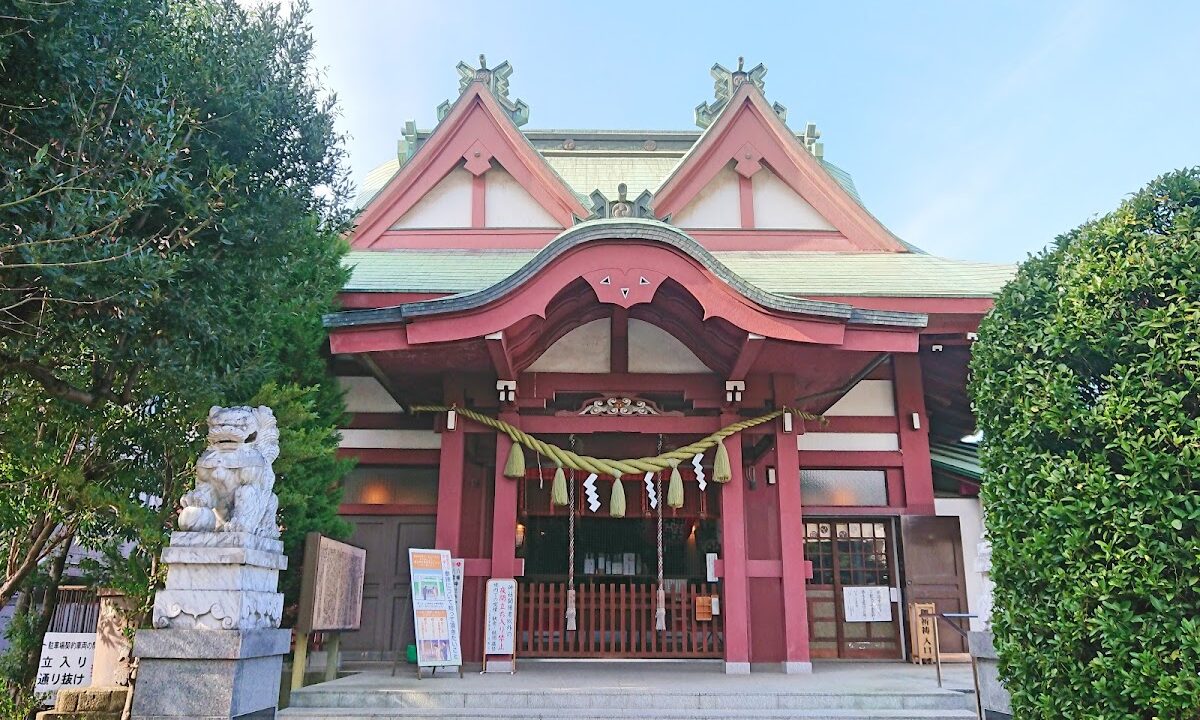
Hachiman Yakumo Shrine (Hachioji City, Tokyo) Complete Guide | History, Goshuin (Shrine Seal), and Access Information
Hachiman Yakumo Shrine is a historic shrine located in Motoyokoyama-cho, Hachioji City, Tokyo. It has a unique history, having merged the Hachiman Shrine and the Yakumo Shrine, and is deeply revered by local residents as the “founding deity of Hachioji.” This article provides detailed information you should know before visiting, including the history of Hachiman Yakumo Shrine, its enshrined deities, highlights of the grounds, goshuin information, and access methods.
Hachiman Yakumo Shrine is a historic shrine located in Motoyokoyama-cho, Hachioji City, Tokyo. ## Basic Information about Hachiman Yakumo Shrine
Official Name: Hachiman Yakumo Shrine
Location: 2-15-27 Motoyokoyama-cho, Hachioji City, Tokyo
Former Shrine Rank: Gosha (Village Shrine)
Deities Enshrined: Hondawake-no-mikoto (Emperor Ojin), Susanoo-no-mikoto
Founding: Yakumo Shrine (Engi 16, 916), Hachiman Shrine (Enchō 2, 924)
Annual Festival Day: Second Saturday and Sunday of September
Shrine Office Hours: 9:00 AM – 5:00 PM (Normal)
Official Website: https://www.hachiman-yakumo.or.jp/
Hachiman Yakumo Shrine is located about a 10-minute walk from Hachioji Station and is easily accessible from central Tokyo. As the guardian deity of the eastern district of Hachioji City, it is believed to offer blessings for protection against misfortune, traffic safety, family safety, and academic success.
History of Hachiman Yakumo Shrine
Ancient History
The history of Hachiman Yakumo Shrine dates back to the Heian period. The current shrine is a merger of two ancient shrines, each with its own deep history.
Founding of Yakumo Shrine (Tenno-gu)
Yakumo Shrine was founded in 916 AD (Engi 16). It enshrines Susanoo-no-Mikoto as its main deity and initially attracted worshippers as Tenno-gu, praying for the eradication of epidemics in the region. Founded in the mid-Heian period, it is an ancient shrine with a history of over 1100 years.
Founding of Hachiman Shrine (Hachiman-gu)
On the other hand, Hachiman Shrine was founded in 924 AD (Engi 2). The shrine enshrines Emperor Ojin (Homudawake-no-Mikoto) as its deity and was revered primarily by the samurai class as a god of war and victory. Built just eight years after the founding of Yakumo Shrine, it is believed that both shrines functioned as guardian deities of Yokoyama-no-Sho at roughly the same time.
As the Guardian Deity of Yokoyama-no-Sho
While there are various theories about the origin of the place name Hachioji, this area was once called “Yokoyama-no-Sho” and was an important base in Musashi Province. Hachiman Shrine and Yakumo Shrine have watched over the development of the region since the time of the reclamation and development of Yokoyama-no-Sho, serving as spiritual pillars for the residents.
In the Middle Ages, a samurai group called the Yokoyama clan ruled this area, and Hachiman Shrine was worshipped as a god of war, while Yakumo Shrine was worshipped as a god of protection against disease, each fulfilling different roles.
History of Merger
Due to the Meiji-era shrine merger policy, Hachiman Shrine and Yakumo Shrine were officially merged, becoming the current “Hachiman Yakumo Shrine.” The merger of two ancient shrines resulted in a shrine possessing both the divine blessings of military success and protection from misfortune, attracting a wider range of followers.
Even after the merger, the deities of each shrine were carefully enshrined, and the traditions and history of both shrines have been passed down to the present day. As a shrine that has grown alongside the development of Hachioji, it has become an indispensable presence for the local residents.
Development since the Modern Era
Through the Showa and Heisei eras, Hachiman Yakumo Shrine has developed alongside the urbanization of Hachioji City. The shrine grounds, which escaped wartime destruction, retain historical shrine buildings and subsidiary shrines, and even today it functions as an important center of faith in the eastern part of Hachioji.
Deities and Benefits
Emperor Ojin (Homudawake-no-Mikoto)
The deity enshrined at Hachiman Shrine, Homudawake-no-Mikoto, is Emperor Ojin, the 15th emperor. He is worshipped as Hachiman-sama at Hachiman shrines throughout Japan and is believed to offer the following benefits:
- Long-lasting military fortune and victory: Due to his nature as a god of war, prayers are offered for success in competitions, examinations, and other endeavors.
- National peace and security: Due to his divine status as an emperor, he protects the prosperity and peace of the nation.
- Industrial development: For the development of industry and the prosperity of business.
- Education and learning: He also has an aspect as a god of culture and education.
Susanoo-no-Mikoto
Susanoo-no-Mikoto, the enshrined deity of Yakumo Shrine, is one of the most representative gods in Japanese mythology. Known for the myth of slaying Yamata-no-Orochi, he offers the following blessings:
- Protection from Evil and Disaster: Worshipped as a god who wards off plagues and disasters.
- Matchmaking: As the god who composed Japan’s oldest waka poem, it is believed to bring about successful relationships.
- Protection from Agriculture: Characterized as a god of fertility.
- Family Safety: Protects the health and safety of the family.
Overall Benefits
At Hachiman Yakumo Shrine, which enshrines two deities, a wide range of prayers are possible, including the following:
- Protection from evil and misfortune
- Traffic safety
- Family safety
- Business prosperity
- Academic success and passing exams
- Safe childbirth and first shrine visit for newborns
- Shichi-Go-San (7-5-3 festival)
- Recovery from illness
- Good matchmaking and finding love
- On-site prayers and ground-breaking ceremonies
- Shinto wedding ceremonies
Highlights of the Shrine Grounds
Shrine Buildings
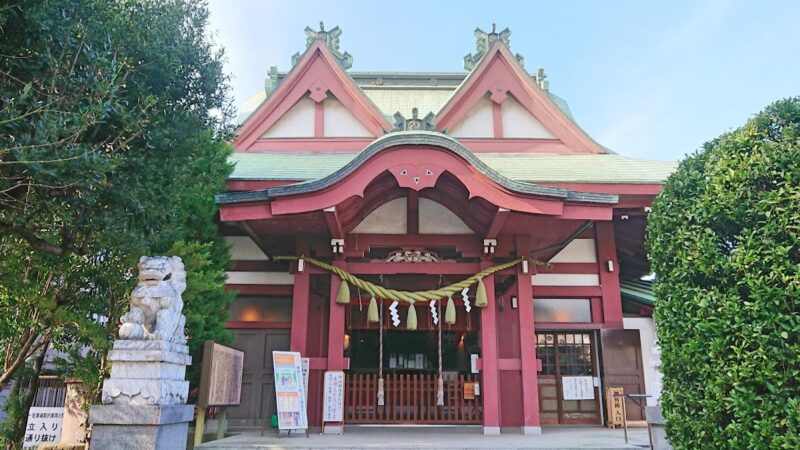
The shrine buildings of Hachiman Yakumo Shrine are valuable structures that preserve the traditional style of shrine architecture. The buildings, consisting of a worship hall and a main hall, exude the beauty and solemnity of wooden architecture. The main hall, in particular, features intricate carvings, showcasing the finest craftsmanship that has continued since the Edo period.
Subsidiary Shrines and Auxiliary Shrines
Several subsidiary shrines are enshrined within the grounds of Hachiman Yakumo Shrine. Among them, Yokoyama Shrine is particularly noteworthy. In fact, Yokoyama Shrine is considered to be the original tutelary shrine of this region, preserving the oldest form of faith in Hachioji.
In addition, there are several subsidiary shrines within the grounds, each offering unique blessings. Visiting these subsidiary shrines during your visit to the main shrine will enhance your worship experience.
Sacred Trees and Nature
Within the shrine grounds is a sacred tree estimated to be several hundred years old, evoking a sense of long history. In the increasingly urbanized city of Hachioji, the greenery within the grounds provides a precious space for relaxation, allowing visitors to enjoy the changing seasons.
Water Basin
The water basin, where worshippers purify themselves before worship, also maintains its traditional style. While some have recently switched to a flowing water system without ladles as a measure against COVID-19, the atmosphere of respecting proper worship etiquette remains unchanged.
Goshuin (Shrine Seal) and Goshuincho (Shrine Seal Book) Information
About Goshuin
Yawata Yakumo Shrine offers goshuin to visitors. Goshuin are popular among many visitors as proof of their visit and as a record of their connection with the shrine.
Features of Goshuin:
- Written in ink with “Yawata Yakumo Shrine”
- Stamped with the shrine’s seal
- Date included
- Offering Fee: Usually around 300-500 yen (subject to change)
Goshuin are available at the shrine office. After your visit, you will hand over your goshuincho (seal book) for inscription. Waiting times may occur during busy periods, so it is recommended to visit with ample time.
Goshuincho (Shrine Seal Book)
Yawata Yakumo Shrine may also offer its own original goshuincho (seal book) (availability varies depending on the season). The design reflects the shrine’s characteristics and is recommended for those starting to collect goshuin.
Manners for Receiving a Goshuin (Shrine Stamp)
- Pray First: The goshuin is proof of your visit. Always pray at the main shrine first.
- Prepare Your Goshuin Book: Open your goshuin book and specify the page you would like stamped on.
- Request Politely: Don’t forget to express your gratitude to the shrine priest.
- Prepare Your Offering: It’s best to have small change ready to avoid needing change.
- Photography: When posting photos of your goshuin on social media, check the shrine’s policy.
Annual Festivals and Events
Grand Festival (September)
The most important festival of Hachiman Yakumo Shrine is the Grand Festival, held annually on the second Saturday and Sunday of September. This festival is a beloved autumn tradition in Hachioji and attracts many worshippers.
Main Contents of the Annual Festival:
- Mikoshi Procession
- Kagura Performance
- Stalls
- Dedicatory Entertainment
The mikoshi (portable shrine) parades through the parish area, praying for the safety and prosperity of the community. This is a valuable opportunity to experience the atmosphere of a traditional festival.
New Year’s Visit (January)
Many worshippers visit the shrine for their first visit of the new year. It is especially crowded from January 1st to the third day, but it has become an important event celebrating the New Year in Hachioji.
- New Year’s Day Festival: January 1st
- Beginning of the Year Festival: January 3rd
- Distribution of lucky charms such as demon-repelling arrows and rakes
- Free serving of amazake (varies by year)
Other Annual Events
- Setsubun Festival (February): Bean-throwing ritual, prayer for warding off evil
- Spring Festival (April): Festival celebrating the arrival of spring
- Summer Purification Ceremony (June 30th): Ritual to purify sins and impurities accumulated over the past six months, passing through a ring of reeds
- Shichi-Go-San Festival (November): Visit to celebrate the growth of children
- Year-End Purification Ceremony (December 31st): Ritual to purify sins and impurities accumulated over the year
Access Information
Access by Train
Hachiman Yakumo Shrine is within walking distance of Hachioji Station and is easily accessible by public transportation.
If using JR lines:
- Get off at Hachioji Station on the JR Chuo Line, Yokohama Line, or Hachiko Line.
- Approximately 10 minutes on foot from the North Exit.
- Distance: Approximately 800m
If using Keio lines:
- Get off at Keio-Hachioji Station on the Keio Line.
- Approximately 8 minutes on foot from the Central Exit.
- Distance: Approximately 650m
Keio-Hachioji Station is slightly closer, so using the Keio Line is more convenient.
Detailed Walking Route
From JR Hachioji Station North Exit:
- Exit the North Exit and head towards Koshu Kaido.
- Turn left at the Hachioji Station North Exit intersection.
- Head north on National Route 16.
- Turn right near the Motoyokoyama-cho intersection.
- Continue through the residential area and you will see the shrine on your right.
From Keio Hachioji Station:
- Exit the Central Exit and head northeast.
- Go through the shopping street into the residential area.
- Follow the signs for Motoyokoyama-cho.
- You will arrive at the shrine in about 8 minutes.
Access by Car
Using the Expressway:
- Approximately 15 minutes from the Chuo Expressway “Hachioji IC”
- Approximately 20 minutes from the Ken-O Expressway “Hachioji Nishi IC”
Using General Roads:
- Approximately 2 minutes from the National Route 16 “Motoyokoyama-cho Intersection”
- Accessible from Koshu Kaido (National Route 20)
Parking Information
The shrine has a parking lot for visitors. However, please note the following points as the number of spaces is limited:
- Parking may not be available during festivals such as the annual grand festival.
- The shrine is extremely crowded during the New Year’s visit period (January 1st to 3rd).
- There are coin-operated parking lots nearby, but they may be full.
- We recommend using public transportation whenever possible.
Nearby Facilities
The following facilities are located near Hachiman Yakumo Shrine:
- Hachioji City Hall: Approximately 15 minutes on foot
- Hachioji Station Area Shopping Street: Approximately 10 minutes on foot
- Hachioji Castle Ruins: Approximately 20 minutes by car (National Historic Site)
- Mount Takao: Approximately 20 minutes by train (Michelin three-star tourist destination)
You can incorporate a visit to Hachiman Yakumo Shrine as part of your Hachioji sightseeing.
Manners and Etiquette for Visiting Shrines
Basic Etiquette for Visiting Shrines
There are traditional manners for visiting shrines. Please follow the following etiquette when visiting Hachiman Yakumo Shrine.
When passing through the torii gate:
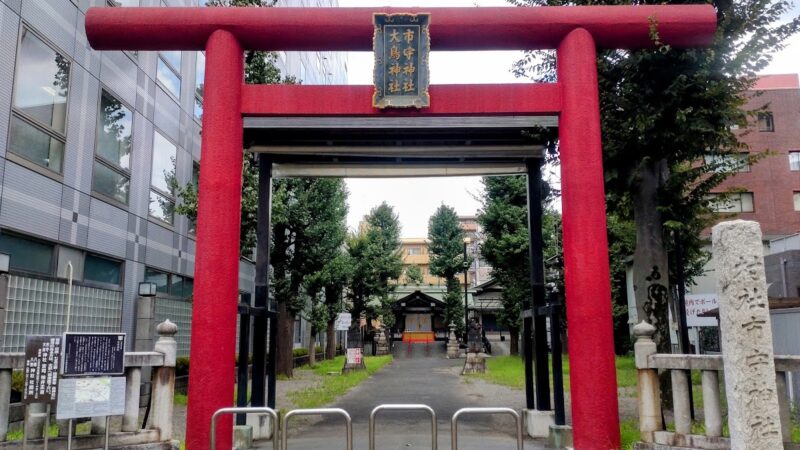
- Bow once before the torii gate.
- Walk along the edge of the path, as the center is the path for the gods.
How to purify yourself at the water basin:
- Take the ladle with your right hand and purify your left hand.
- Switch the ladle to your left hand and purify your right hand.
- Switch the ladle back to your right hand, receive water in your left hand, and rinse your mouth.
- Purify your left hand once more.
- Stand the ladle upright, purify the handle, and return it to its original position.
Worship at the main hall:
- Stand in front of the offering box.
- Bow slightly.
- Gently place your offering in the box.
- Ring the bell if there is one.
- Two bows, two claps, one bow:
- Bow deeply twice (two bows)
- Clap your hands twice (two claps)
- Pray silently in your heart.
- Bow deeply once (one bow)
Regarding Attire
While casual attire is acceptable for visiting the shrine, please consider the following points:
- Wear clean and presentable clothing.
- Avoid excessive exposure.
- Remove hats and sunglasses in front of the main hall.
- Formal attire is preferred if receiving prayers.
Regarding Photography
Photography is generally permitted on the shrine grounds, but please observe the following manners:
- Photography inside the main hall is often prohibited.
- Avoid disturbing other worshippers.
- Obtain permission before photographing Shinto priests or festival scenes.
- Avoid using tripods during crowded times.
- Remember to show respect to the shrine when posting on social media.
Regarding Prayers and Off-Site Ceremonies
Various Prayers
Yawata Yakumo Shrine accepts prayers for various milestones and wishes in life.
Personal Prayers:
- Protection from misfortune and evil influences
- Traffic safety (car blessing)
- Family safety
- Business prosperity
- Academic success and passing exams
- Recovery from illness
- Safe childbirth
- First shrine visit for a newborn
- Shichi-Go-San (7-5-3) ceremony
- Coming-of-age ceremony
- Prayer for a good marriage
Offering Fee: Varies depending on the prayer (from 5,000 yen)
On-site Ceremonies
We also accept on-site ceremonies where a Shinto priest will come to your location.
- Groundbreaking Ceremony (Purification of the land before construction)
- Ridgepole Raising Ceremony (When the building’s framework is completed)
- Completion Ceremony (When the building is completed)
- House Purification Ceremony (Purification of new and used houses)
- Shinto Altar Ceremony
- Well Filling/Well Digging
- Tree Cutting Purification Ceremony
- Opening of Shops/Offices
Shinto Wedding Ceremony
At Hachiman Yakumo Shrine, you can have a traditional Shinto wedding ceremony. A wedding ceremony conducted in a solemn atmosphere, following Japanese tradition, will be a lifelong memory.
- Accommodates small groups
- Consultations regarding costumes and photography are available
- Please contact the shrine directly for details
How to Book a Prayer Ceremony
- Advance reservations by phone are recommended
- Same-day reservations are possible, but there may be a waiting time
- Festival days and auspicious days are expected to be crowded
- Please check the official website or call for details
The History of Hachioji and Hachiman Yakumo Shrine
The Name of Hachioji
There are several theories about the origin of the name Hachioji, but the most plausible theory is that it originates from Hachioji Gongen, which was enshrined on Mt. Fukasawa (near the current Hachioji Castle ruins). Hachioji Gongen refers to the eight princes of Gozu Tenno (identified with Susanoo-no-Mikoto).
According to this theory, a deep connection with Susanoo-no-Mikoto, enshrined at Yakumo Shrine, becomes apparent. The name Hachioji itself is linked to the deity enshrined at Yakumo Shrine.
The Yokoyama Clan and Musashi Province
From the late Heian period to the Kamakura period, this region was the base of a samurai group called the Yokoyama Clan. The Yokoyama Clan boasted considerable power as one of the seven Musashi clans and has a history of participating in Minamoto no Yoritomo’s uprising.
Hachiman Shrine, as a god of war, was revered by the Yokoyama Clan and served as a spiritual pillar for the samurai. On the other hand, Yakumo Shrine, as a shrine where people prayed for the eradication of disease, is thought to have attracted worship from a different social strata.
Development as a Post Town
During the Edo period, Hachioji flourished as a post town on the Koshu Kaido road. Furthermore, a samurai group called the Hachioji Senjin Doshin was stationed there, making it a militarily important base.
Hachiman Yakumo Shrine also functioned as a place to watch over the prosperity of the post town and pray for the safety of travelers. Merchants and travelers likely visited the shrines to pray for safe journeys and business prosperity.
Modernization and Hachioji
Since the Meiji era, Hachioji has prospered from the textile industry, earning the nickname “Soto” (Mulberry City) due to its thriving sericulture and silk reeling industry. As the industry developed, the population increased, and Hachiman Yakumo Shrine increasingly played a vital role as the spiritual center of the region.
Today, Hachioji is an important city in western Tokyo and a gateway to Mount Takao, with many people coming and going. Hachiman Yakumo Shrine remains at the heart of its history, unchanged.
Nearby Shrines and Temples
When visiting Hachiman Yakumo Shrine, why not also visit other shrines and temples in Hachioji City?
Koyasu Shrine
An ancient shrine located about a 5-minute walk from Hachioji Station. It is revered as a deity of safe childbirth and child-rearing. Many people visit this shrine in conjunction with Hachiman Yakumo Shrine.
Taga Shrine
A shrine in Hachioji City dedicated to longevity and good health. This temple enshrines Izanagi-no-Mikoto and Izanami-no-Mikoto and is believed to grant blessings for health and longevity.
Ryōhōji Temple
A unique temple known as the “Moe Temple.” It promotes Buddhism through a modern approach and is attracting attention from younger generations.
Takaosan Yakuōin Temple
A representative sacred site of Hachioji. Known for its Tengu (mythical mountain spirit) worship, it is one of the leading tourist spots in the Kanto region, attracting 3 million visitors annually. Approximately 20 minutes by train from Hachioji Station.
Hachioji Sightseeing and Hachiman Yakumo Shrine
Model Hachioji Sightseeing Course
Half-Day Course:
- Arrive at JR Hachioji Station
- Visit Hachiman Yakumo Shrine (30 minutes)
- Visit Koyasu Shrine (20 minutes)
- Lunch near Hachioji Station
- Travel to Mount Takao
Full-Day Course:
- Arrive at Keio Hachioji Station
- Visit Hachiman Yakumo Shrine (1 hour)
- Stroll through Hachioji city center
- Visit Hachioji Castle Ruins (for history buffs)
- Climb or stroll around Mount Takao
- Enjoy hot springs and gourmet food near Takaosanguchi
Hachioji Gourmet
Hachioji is known as the birthplace of “Hachioji Ramen.” It’s characterized by soy sauce-based ramen topped with chopped onions. Enjoying local cuisine after visiting the shrine is highly recommended.
Also, there are many restaurants around Hachioji Station, offering a wide range of choices from Japanese to Western cuisine and cafes. ### Hachioji Through the Seasons
- Spring: Many famous cherry blossom viewing spots; especially lively during cherry blossom season.
- Summer: Hachioji Festival (August) is the city’s largest event.
- Autumn: Autumn foliage on Mt. Takao, the annual festival of Hachiman Yakumo Shrine.
- Winter: New Year’s visit to the shrine, winter scenery of Mt. Takao.
Summary: The Charm of Hachiman Yakumo Shrine
Hachiman Yakumo Shrine, with a history of over 1000 years, is still cherished by the local people as the guardian deity of Hachioji. Its unique origin, a fusion of two ancient shrines, Hachiman Shrine and Yakumo Shrine, is the reason it attracts a wide range of worshippers, as it is believed to possess both the divine blessings of military fortune and protection against evil.
Its convenient location, within walking distance of Hachioji Station, is another attractive feature. A day trip from central Tokyo is entirely possible, and combining it with a visit to Mt. Takao makes for a fulfilling day.
With its historic grounds, meticulously conducted festivals, and warm, community-rooted atmosphere, Hachiman Yakumo Shrine is more than just a tourist spot; it’s a place where you can experience the history and culture of Hachioji.
Whether you’re looking to visit a historic shrine in Tokyo, planning a trip to Hachioji, collecting Goshuin (shrine stamps), or seeking prayers at a significant life event, Hachiman Yakumo Shrine is a shrine worth visiting for a variety of purposes.
Why not visit Hachioji on your next day off and quietly pay your respects at Hachiman Yakumo Shrine, with its thousand-year history? You’re sure to have a truly refreshing experience.