Complete Guide to Ishizuka Inari Shrine (Taito Ward, Tokyo) | Thorough Explanation of Goshuin (Shrine Seals), History, Access, and Highlights
Ishizuka Inari Shrine, located in Yanagibashi, Taito Ward, Tokyo, is a historic shrine dating back to the Edo period. Quietly situated near the JR Sobu Line overpass, this shrine possesses a unique charm deeply intertwined with legends of jewel appearances and the geisha district culture of Yanagibashi. This article provides a detailed explanation of Ishizuka Inari Shrine’s history, goshuin information, access methods, and highlights.
What is Ishizuka Inari Shrine?
Ishizuka Inari Shrine is an Inari shrine located at 1-1-15 Yanagibashi, Taito Ward, Tokyo. While conveniently located within walking distance of Asakusabashi Station, it maintains a quiet atmosphere away from the hustle and bustle of the city.
Basic Information
Location: 1-1-15 Yanagibashi, Taito-ku, Tokyo 111-0052
Deity Enshrined: Ukanomitama-no-kami (Inari Okami)
Shrine Rank: Former Unranked Shrine
Founded: Early Edo period (before Genroku 1)
Annual Festival Day: Rituals are held throughout the year by local residents.
Ishizuka Inari Shrine is believed to bring blessings for business prosperity, abundant harvests, and family safety, and has been particularly revered by the restaurants and geisha associations of Yanagibashi.
History of Ishizuka Inari Shrine
Origin of Founding and Legend of the Appearance of Jewels
A mystical legend surrounds the founding of Ishizuka Inari Shrine. In ancient times, a miracle occurred when jewels appeared from a well, following a dream revelation from Inari Okami (a divine message given in a dream). It is said that a group of residents of Motohata-gocho, deeply moved by this event, founded this shrine to enshrine Inari Okami.
This legend of the jewel’s appearance indicates that Ishizuka Inari Shrine was recognized not merely as a local guardian shrine, but as a shrine with special spiritual powers. For people in the Edo period, dreams were an important means of understanding divine will, and the appearance of the jewel was considered a sign of divine blessing.
Relocation during the Genroku Era
In 1688 (Genroku 1), a major turning point occurred in the history of Ishizuka Inari Shrine. The former site was confiscated by the shogunate to be designated as “Asakusa Okura Firebreak Site.” Asakusa Okura was an important facility where the Edo shogunate stored tax rice and other goods, and an open space (firebreak site) was needed for fire prevention.
Due to this urban planning by the shogunate, Ishizuka Inari Shrine was relocated to its current location at 1-1-15 Yanagibashi. This relocation is an interesting historical example illustrating the relationship between Edo’s urban development and Shinto shrines.
Developments Since the Modern Era
Even after the Meiji era, Ishizuka Inari Shrine continued to be protected by local residents and those involved with restaurants as the guardian shrine of the Yanagibashi area. Yanagibashi, in particular, flourished as a geisha district from the Edo period, with many restaurants and geishas active there. Ishizuka Inari Shrine has continued to be closely intertwined with this geisha district culture to the present day.
In December 1967 (Showa 42), the shrine building was rebuilt into its current form. This rebuilding resulted in a compact yet clean and beautiful shrine building, which remains to this day.
Access and Transportation Information
Ishizuka Inari Shrine is easily accessible, within walking distance of several train stations.
Access from the Nearest Station
JR Sobu Line Asakusabashi Station
- Approximately 5 minutes on foot from the East Exit
- The most common access route
- Exit the station and head towards Yanagibashi
Toei Asakusa Line Asakusabashi Station
- Approximately 3 minutes on foot from Exit A3
- This is convenient if using the subway
- You will immediately enter the Yanagibashi area upon exiting the station
JR Sobu Line/Tokyo Metro Hibiya Line Akihabara Station
- Approximately 10 minutes on foot from the Showa-dori Exit
- Convenient if visiting in conjunction with sightseeing in Akihabara
Detailed Directions
After exiting the East Exit of Asakusabashi Station, walk along the JR Sobu Line overpass towards the Kanda River. When you reach the vicinity of the Yanagibashi intersection, you will see the torii gate of Ishizuka Inari Shrine near the overpass. It is a small shrine located in a residential area, but the torii gate and shrine name marker are landmarks.
Characteristics of the Surrounding Area
The Yanagibashi area, where Ishizuka Inari Shrine is located, is near the confluence of the Kanda River and Sumida River, and flourished as a key point for water transport during the Edo period. Even today, it is a valuable area where you can feel the atmosphere of Edo, with many long-established restaurants scattered throughout.
Highlights of the Shrine Grounds
Although Ishizuka Inari Shrine has compact grounds, it is packed with points of interest.
Shrine Building
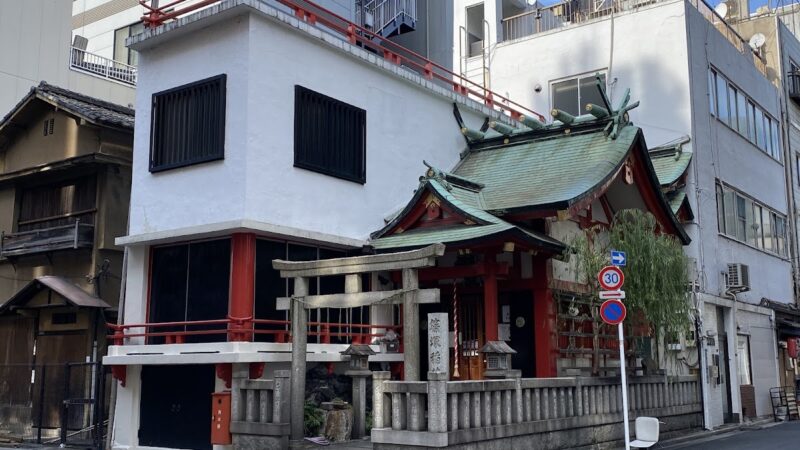
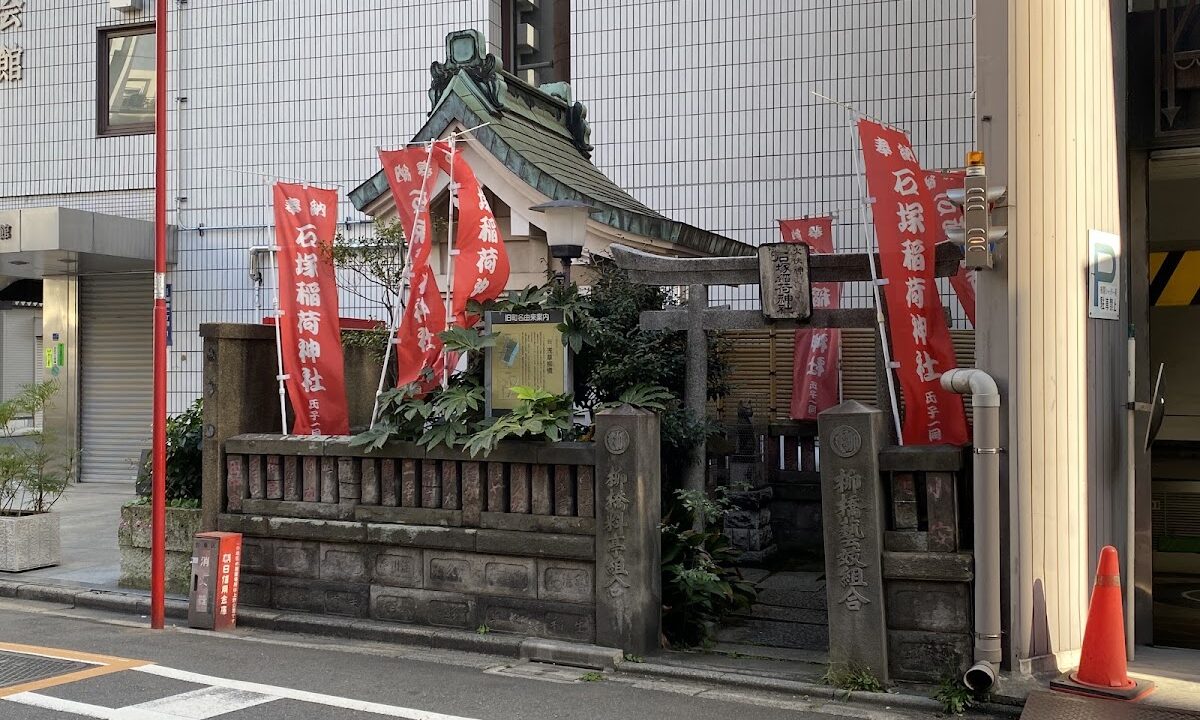
The current shrine building, rebuilt in 1967, maintains the traditional style of Inari shrine architecture while being designed to suit the limited space of an urban area. The bright vermilion shrine building stands out prominently amidst the surrounding residential area.
In front of the shrine building, instead of guardian lions (komainu), there are statues of foxes, a characteristic feature of Inari shrines. These divine foxes are considered messengers of Inari Okami (the Inari deity) and watch over worshippers.
Names of Restaurants and Geisha Associations Carved on the Stone Fence
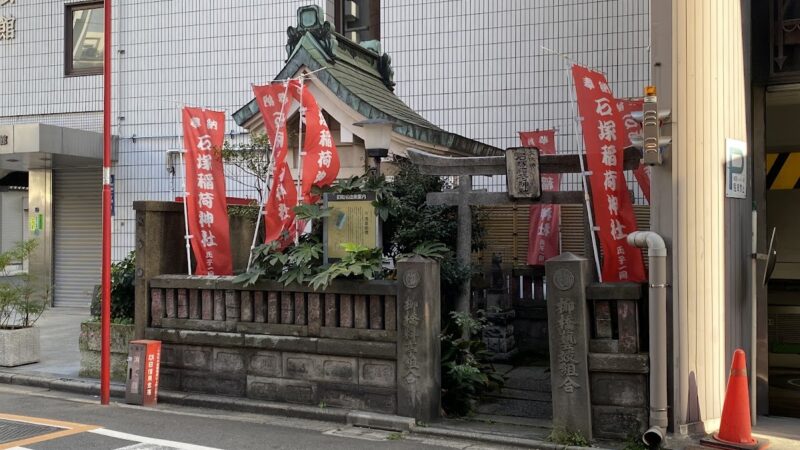
One of the most distinctive features of Ishizuka Inari Shrine is the stone fence (tamagaki) surrounding the shrine grounds. This fence bears the names of the Yanagibashi Geisha Association, the Yanagibashi Restaurant Association, and even individual restaurants.
These names of donors speak to the deep connection between Ishizuka Inari Shrine and the geisha culture of Yanagibashi. Yanagibashi was once one of Tokyo’s leading geisha districts, alongside Kagurazaka and Akasaka, and was lined with many restaurants. The restaurants and geishas worshipped at Ishizuka Inari Shrine, praying for business prosperity and donating the stone fence.
Seeing the names of the restaurants that remain today allows one to feel the history and culture of Yanagibashi.
Gateposts and Torii Gate
The gateposts at the entrance to the shrine grounds also bear the names of the Yanagibashi Geisha Association and the Restaurant Association, indicating that this shrine was a center of local faith. Passing through the vermilion torii gate, you enter a tranquil space far removed from the hustle and bustle of the city.
Atmosphere of the Shrine Grounds
Located very close to the JR Sobu Line overpass, you may hear the sound of trains, but this actually creates a unique atmosphere characteristic of a Tokyo shrine. The distinctive atmosphere where urban life and tradition coexist is a major attraction of Ishizuka Inari Shrine.
Information on Goshuin (Shrine Seals)
Many people are likely looking for information about the goshuin (shrine seal) at Ishizuka Inari Shrine.
Availability of Goshuin
Ishizuka Inari Shrine is an unmanned shrine without a resident priest. Therefore, unfortunately, goshuin are not issued. Those who wish to record their visit are advised to take photographs (while observing proper etiquette on the shrine grounds) or keep a pilgrimage diary.
Combining with Goshuin Pilgrimages
Those collecting goshuin may consider visiting nearby shrines that offer goshuin before or after visiting Ishizuka Inari Shrine. The Asakusabashi and Kuramae area has several shrines and temples, all within walking distance.
Manners and Etiquette for Visiting Shrines
Here are some basic manners to observe when visiting Ishizuka Inari Shrine.
Basic Worship Etiquette
- Bow Before Passing Through the Torii Gate: As a sign of respect before entering the sacred area, bow before the torii gate.
- Watering Procedure: If there is no watering basin, focus on purifying your mind.
- Worship Procedure: Place your offering in the offering box and worship using the two bows, two claps, and one bow ritual.
- Bow Upon Exit: When leaving the shrine grounds, turn around and bow after passing through the torii gate.
Photography Etiquette
Photography is generally permitted on the shrine grounds, but please note the following:
- Be considerate of other worshippers.
- Do not use flash directly towards the shrine building.
- Respect private property and the privacy of surrounding residents.
- Be careful about disclosing location information when posting on social media.
Suitable Time for Worship
Ishizuka Inari Shrine is open for worship 24 hours a day, but considering that the surrounding area is a residential area, daytime visits are recommended. Especially in the early morning and evening, it’s quiet, allowing for a peaceful visit.
Ishizuka Inari Shrine and the Culture of Yanagibashi
Understanding the history and culture of Yanagibashi is essential to understanding Ishizuka Inari Shrine.
The History of Yanagibashi as a Geisha District
From the Edo period to the early Showa period, Yanagibashi was one of Tokyo’s leading geisha districts. Located at the confluence of the Kanda River and Sumida River, its convenient water transport led to the construction of many high-class restaurants.
Particularly from the Meiji to Taisho periods, it flourished as a social gathering place for important figures from the political and business worlds, as well as cultural figures, and “Yanagibashi” became synonymous with a high-class restaurant district. In the summer, houseboats and small boats (chokibune) plied the streets, preserving the refined Edo culture.
Geisha Culture and Shrine Worship
The geishas of Yanagibashi visited Ishizuka Inari Shrine to pray for success in their daily work and good health. It has been a place of worship for various purposes, including improvement in artistic skills, good fortune in relationships, and business prosperity.
The names of geisha associations inscribed on the stone fence are valuable evidence that conveys this history of faith. Geisha still work in Yanagibashi today, and the traditional culture is being passed down.
Modern Yanagibashi and Ishizuka Inari Shrine
While modern Yanagibashi has lost some of its former glamour, several long-established restaurants remain, making it a valuable area where one can feel the atmosphere of the Edo period. Ishizuka Inari Shrine quietly watches over the history and culture of Yanagibashi.
Nearby Tourist Spots
Here are some nearby spots you might want to visit when you come to Ishizuka Inari Shrine.
Kanda River and Yanagibashi
Yanagibashi, located a few minutes’ walk from Ishizuka Inari Shrine, is a bridge spanning the confluence of the Kanda River and the Sumida River. From the bridge, you can see the Tokyo Skytree, and enjoy a view that blends the atmosphere of the Edo period with modern Tokyo.
Asakusabashi Wholesale District
The area around Asakusabashi Station is known as a hub for wholesalers of dolls, toys, and craft supplies. Many shops are open to the general public, making it a fun place to find bargains.
Kuramae Area
Within walking distance, the Kuramae area boasts an increasing number of stylish cafes and general stores, earning it the nickname “Tokyo’s Brooklyn.” It’s perfect for a coffee break after visiting the shrine.
Ryogoku/Edo-Tokyo Museum
A short walk away are the Edo-Tokyo Museum and the Ryogoku Kokugikan (sumo arena). Here, you can experience Edo history and sumo culture.
Annual Events and Festivals
At Ishizuka Inari Shrine, local residents perform rituals throughout the year.
Hatsuumasai Festival
Hatsuumasai, the most important festival at Inari shrines, is held on the first Day of the Horse in February. At Ishizuka Inari Shrine, local residents visit on this day to pray for business prosperity and family safety.
Annual Festival
The annual festival brings together parishioners and devotees for a Shinto ritual. The specific date may vary from year to year, so it is recommended to check before visiting.
About Inari Worship
To deeply understand Ishizuka Inari Shrine, let’s learn the basics of Inari worship.
What is Inari-shin?
Inari-shin is one of the most widely worshipped deities in Japan. The enshrined deity, Ukanomitama-no-kami, is the god of grain and food, and is believed to bring blessings such as abundant harvests, business prosperity, and industrial development.
Relationship with Foxes
Fox statues are found at Inari shrines because foxes are considered messengers (divine messengers) of Inari-shin. The fox itself is not a god, but is revered as a being that conveys the will of the god.
Inari Worship Across Japan
There are said to be over 30,000 Inari shrines throughout Japan, with the head shrine being Fushimi Inari Taisha in Kyoto. There are many Inari shrines in Tokyo, and Ishizuka Inari Shrine is one of them, attracting the faith of the local community.
Visitor Voices and Reviews
Here are some impressions from people who have actually visited Ishizuka Inari Shrine.
A Quiet Urban Oasis
Many visitors comment, “Despite being close to Asakusabashi Station, the shrine grounds are quiet and peaceful. I was able to forget the hustle and bustle of the city and find peace of mind.”
A Historical Stone Wall
“Seeing the names of restaurants and geisha associations carved into the stone wall, I felt the history of Yanagibashi. It’s a small shrine, but it has a weight of history,” says a history enthusiast, who highly praises the shrine.
A Photogenic Spot
“The view of the vermilion shrine building and the JR Sobu Line overpass together is very Tokyo-like and beautiful,” says a photography enthusiast, who finds it popular.
How to Enjoy Visiting Ishizuka Inari Shrine
Here are some tips for enjoying Ishizuka Inari Shrine to the fullest.
Historical Walking Course
A walking course tracing the history of Yanagibashi, starting from Ishizuka Inari Shrine, is highly recommended. Walk along the Kanda River and look for traces of the former geisha district. The buildings of long-established restaurants and the Yanagibashi bridge itself are also points of interest.
Seasonal Expressions
Despite its small size, the shrine grounds display different expressions depending on the season. The fresh greenery of spring, the contrast of the crimson against the blue sky of summer, the crisp air of autumn, and the dignified atmosphere of winter – visiting in each season is one way to enjoy it.
Combine with Local Cuisine
After visiting the shrine, enjoying the local cuisine around Yanagibashi and Asakusabashi is also recommended. There are various options, including long-established soba restaurants, Edo-style sushi, and downtown diners.
Summary
Ishizuka Inari Shrine is a historic Inari shrine located in Yanagibashi, Taito-ku, Tokyo. Beginning with a legend of the appearance of jewels in the Edo period, and after its relocation during the Genroku era, it has continued to attract the faith of the local community to this day.
This shrine has a unique history deeply intertwined with the geisha district culture of Yanagibashi, and the names of restaurants and geisha associations inscribed on the stone fence remain as evidence of this. Despite its convenient location just a 5-minute walk from Asakusabashi Station, it is a precious shrine where you can worship in a quiet and peaceful atmosphere.
While you cannot receive a Goshuin (shrine stamp), it is a shrine worth visiting as a small sanctuary in the city and a place where you can feel the history of Yanagibashi. Please consider visiting it in conjunction with a stroll through the Asakusabashi and Kuramae areas.
Frequently Asked Questions (FAQ)
Q1: Can I get a Goshuin at Ishizuka Inari Shrine?
A1: Unfortunately, Ishizuka Inari Shrine is an unmanned shrine without a resident priest, so Goshuin are not issued. We recommend recording your visit with photographs or in a pilgrimage diary.
Q2: How do I get to Ishizuka Inari Shrine?
A2: The nearest station is Asakusabashi Station on the JR Sobu Line and Toei Asakusa Line. It is located about a 5-minute walk from the East Exit of JR Asakusabashi Station and about a 3-minute walk from Exit A3 of the Toei Asakusa Line. The address is 1-1-15 Yanagibashi, Taito-ku, Tokyo.
Q3: Are there any set visiting hours for Ishizuka Inari Shrine?
A3: Ishizuka Inari Shrine is open for worship 24 hours a day, but considering that the surrounding area is a residential area, we recommend visiting during the daytime. It is especially quiet in the early morning and evening, allowing for a peaceful visit.
Q4: What are the blessings of Ishizuka Inari Shrine?
A4: As an Inari shrine, it is believed to bring blessings such as business prosperity, abundant harvests, family safety, and industrial development. It has been particularly revered by the restaurants and geisha associations of Yanagibashi as a god of business prosperity.
Q5: Please tell me about the history of Ishizuka Inari Shrine.
A5: Ishizuka Inari Shrine was founded in the early Edo period. It is said that in ancient times, after a dream revelation from Inari Okami (the god of rice and rice) led to the discovery of jewels in a dug well, the shrine was founded by volunteers from the former inn district. It was moved to its current location in 1688 (Genroku 1) and the present shrine building was constructed in 1967 (Showa 42).
Q6: What are the highlights of Ishizuka Inari Shrine?
A6: The biggest highlight is the names of the Yanagibashi Geisha Association, the Restaurant Association, and individual restaurants carved into the stone fence surrounding the shrine grounds. These are valuable historical evidence showing the deep connection between the Yanagibashi geisha district culture and the shrine. Also, the contrast between the beautiful vermilion shrine building and the JR Sobu Line elevated tracks creates a unique landscape that evokes a sense of coexistence between urban life and tradition.
Q7: Are there any recommended spots around Ishizuka Inari Shrine?
A7: You can enjoy strolling around, dining, and shopping in the Kanda River/Yanagibashi area, the Asakusabashi wholesale district, the Kuramae cafe and general store area, and if you venture a little further, the Edo-Tokyo Museum in Ryogoku.
Q8: Is photography allowed at Ishizuka Inari Shrine?
A8: Photography is generally permitted on the shrine grounds. However, please be considerate of other worshippers and observe proper etiquette, such as not using flash directly towards the shrine buildings. Since the surrounding area is a residential neighborhood, please also be mindful of privacy.