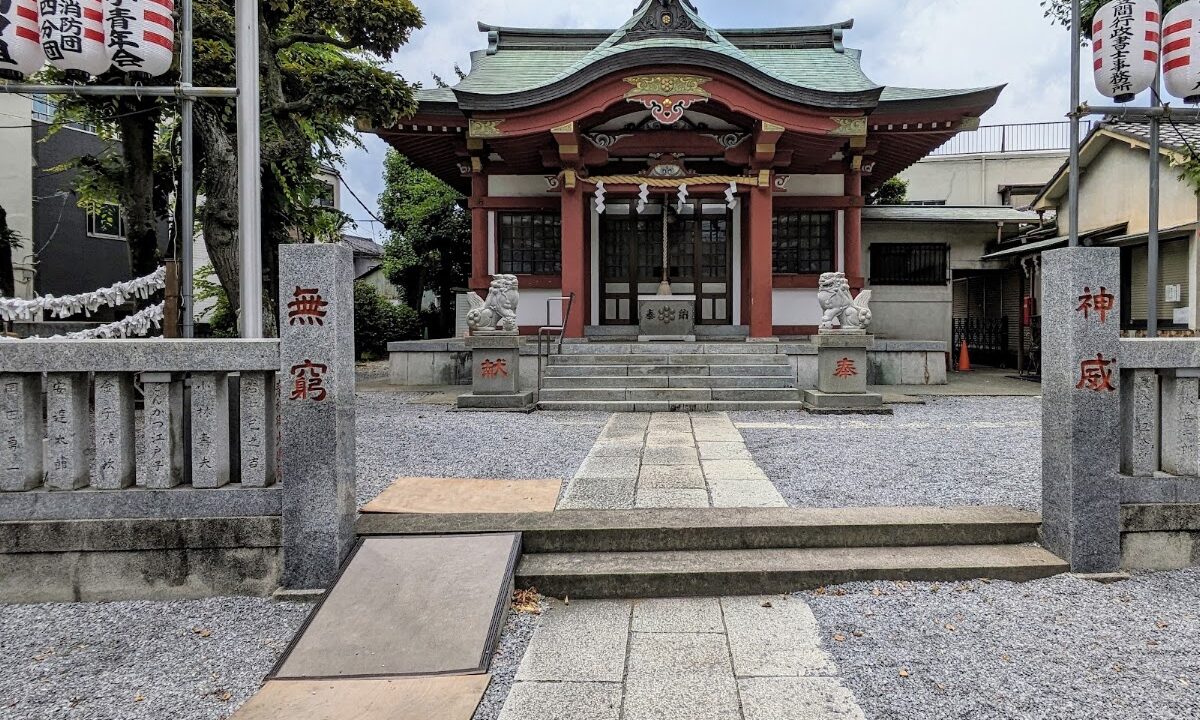
Complete Guide to Nagaura Shrine (Sumida Ward, Tokyo) | History, Goshuin (Shrine Seal), and Access Information
Nagaura Shrine, located in Higashi-Mukojima, Sumida Ward, Tokyo, is a historic shrine that has been cherished by the local community since the Edo period. Formerly known as “Dairokuten,” it adopted its current name after the Meiji Restoration’s separation of Shinto and Buddhism. This article comprehensively covers everything you need to know before visiting Nagaura Shrine, including its history, enshrined deities, goshuin information, detailed access methods, and nearby attractions.
Basic Information on Nagaura Shrine
Nagaura Shrine is located at 6-27-7 Higashi-Mukojima, Sumida Ward, Tokyo, and is managed as a subsidiary shrine of Shirahige Shrine (Higashi-Mukojima). Although a small shrine quietly nestled in a residential area, it has a long history of being cherished as the local guardian deity.
Basic Information
- Location: 6-27-7 Higashi-Mukojima, Sumida-ku, Tokyo
- Phone Number: 03-3610-1325 (Shirahi Shrine)
- Nearest Station: Higashi-Mukojima Station (Tobu Skytree Line), Hikifune Station (Keisei Line)
- Visiting Hours: Grounds are freely accessible (Shrine building is locked)
- Parking: None (Use nearby coin parking)
- Official Website: None (Same as Shirahi Shrine)
History and Origins of Nagaura Shrine
As “Dairokuten-sha” in the Edo Period
The exact founding date of Nagaura Shrine is unclear, but a record in a document from Bunka 2 (1805) confirms its existence at least by the late Edo period. At that time, it was called “Dairokuten” or “Dairokuten-sha.”
The term “Rokuten” refers to the Buddhist deity Paranijizaiten, and during the Edo period, under the influence of syncretism of Shinto and Buddhism, many Rokuten shrines existed in the Kanto region. These shrines functioned as guardian deities of the region and as places to pray for the prosperity of agriculture and commerce.
Separation of Shinto and Buddhism and Renaming in the Meiji Era
With the arrival of the Meiji era, the government issued a decree separating Shinto and Buddhism, requiring all shrines nationwide to eliminate Buddhist elements. This policy brought about a major turning point for Nagaura Shrine.
The name Rokuten, which originated from Buddhism, was changed, and the enshrined deity was changed to Kamimusubi-no-kami, a Shinto deity. The shrine’s name was changed to “Nagaura Shrine,” adopting the then-place name “Nagaura.” This name has continued to this day.
Modern Nagaura Shrine
From the Showa to the Heisei and Reiwa eras, Nagaura Shrine was maintained as a subsidiary shrine of Shirahige Shrine in Higashi-Mukojima. Although not a large shrine, it is cleaned and maintained by local residents, and many worshippers visit during New Year’s and the annual festival.
Deities and Blessings
Main Deity: Kamimusubi-no-kami
Kamimusubi-no-kami is one of the gods of creation in Japanese mythology. In the Kojiki and Nihon Shoki, it is considered one of the Kotoamatsukami (separate heavenly gods) who appeared in Takamagahara at the time of the creation of heaven and earth.
Divine Virtues of Kamimusubi-no-kami
- Power of creation and generation of all things
- Matchmaking and successful relationships
- Prosperity of descendants and fertility
- Business prosperity and good fortune
- Protection from evil and disaster
Enshrined Deity: Toyouke-no-kami
Some records indicate that Toyouke-no-kami, also known as Toyouke-no-Okami, is also enshrined here. This deity is known as the principal deity of the Outer Shrine of Ise Grand Shrine and is worshipped as the god who presides over food and grains.
Divine Virtues of Toyuuke-no-Kami
- Abundant harvests and business prosperity
- Protection of clothing, food, and shelter
- Industrial development
Highlights of the Shrine Grounds
Uniquely Arranged Approach and Shrine Buildings
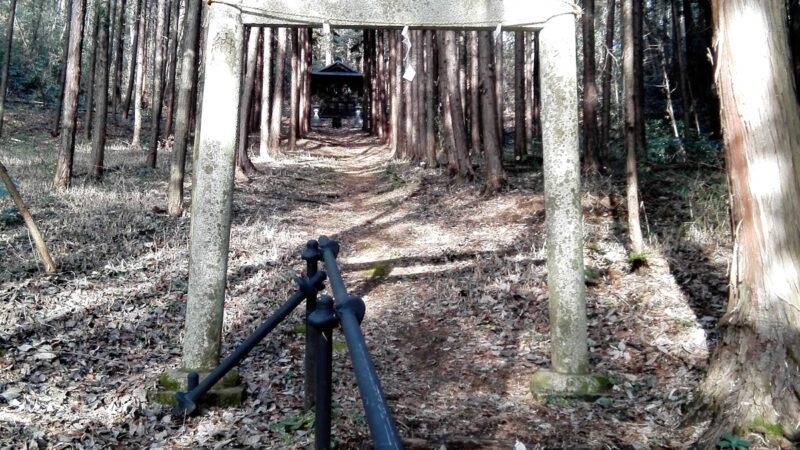
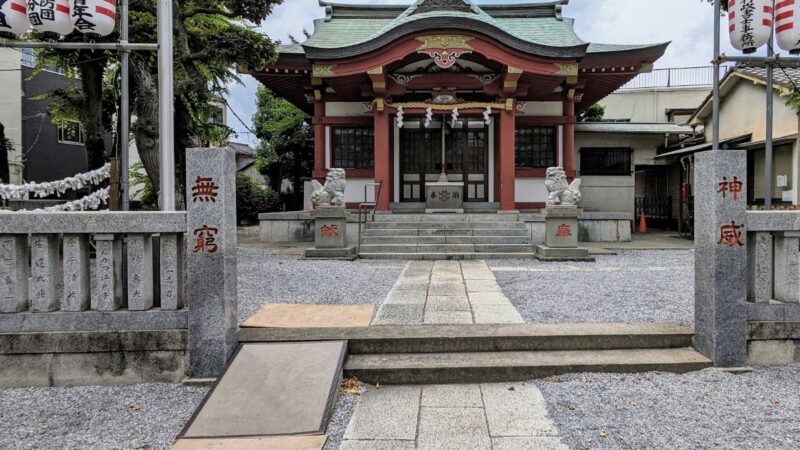
The most distinctive feature of the grounds of Nagaura Shrine is its unique arrangement. The entrance, torii gate, approach, and shrine building are all positioned at slightly different angles, creating a mysterious, non-straight-line structure.
This arrangement is thought to be a way to ensure sufficient distance along the approach within the limited grounds and to create a space for worshippers to compose themselves. It has also been suggested that the arrangement may have been influenced by feng shui or Onmyodo (Japanese esoteric cosmology).
Features of the Shrine Buildings
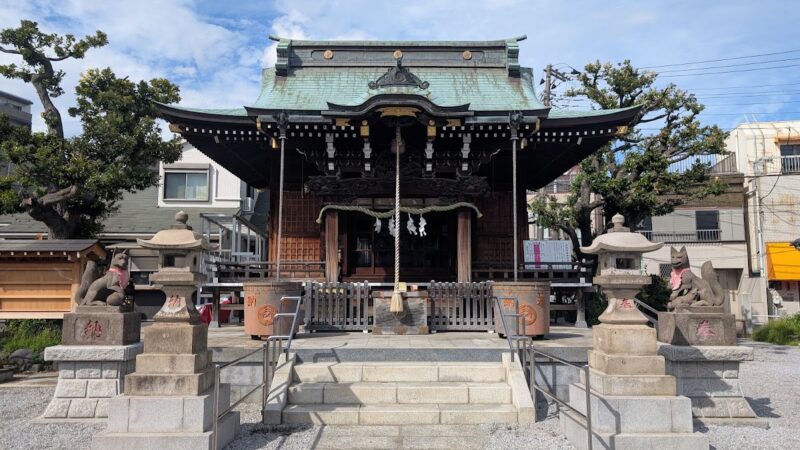
The shrine buildings face east (slightly towards the south), receiving the morning sun. Although small in scale, it appears to be meticulously maintained. The shrine building is usually locked and cannot be viewed from inside, but a donation box is provided, and worship is possible.
Atmosphere of the Shrine Grounds
Despite being located in a residential area, the shrine grounds are enveloped in a tranquil atmosphere. While there are no large trees, the well-maintained grounds reflect the faith of the local residents. It is a valuable space for quiet worship, away from the hustle and bustle of the city.
Information on Goshuin (Shrine Seals)
Regarding the Issuance of Goshuin
Goshuin are not always available at Nagaura Shrine, as it is a shrine managed by another shrine. They are only available during the following periods and occasions:
Goshuin Issuance Period
- New Year’s (around January 1st to 3rd)
- During festivals such as the annual grand festival
- During other special events
Since the shrine office is usually closed and the priest is not permanently stationed there, those wishing to obtain a goshuin are advised to contact Shirahige Shrine (03-3610-1325) in advance.
Goshuin Design
The goshuin (temple/shrine stamp) of Nagaura Shrine has a simple yet dignified design. The words “Nagaura Shrine” are written in ink in the center, the date of worship is on the right, and text such as “Located in Sumida Ward, Tokyo” is on the left. The stamp includes the shrine’s seal and a date stamp.
Availability at Shirahige Shrine
Nagaura Shrine’s goshuin may also be available at Shirahige Shrine, which manages the shrine. Shirahige Shrine is about a 10-minute walk from Higashi-Mukojima Station, and since its office has specific opening hours, visiting Shirahige Shrine is one option if you want to be sure to receive a goshuin.
Access
Access by Train
Nagaura Shrine is easily accessible by public transportation. There are two nearest stations.
From Higashi-Mukojima Station on the Tobu Skytree Line
- Estimated time: Approximately 15 minutes on foot (approximately 1.2 km)
- Exit Higashi-Mukojima Station and head east
- Cross Mito Kaido and proceed through the residential area
- The straight-line distance is approximately 400m, but walking along the road takes about 15 minutes.
From Hikifune Station on the Keisei Line
- Estimated time: Approximately 10 minutes on foot (approximately 800m)
- Exit Hikifune Station and head east
- Proceed along Mito Kaido towards Higashi-Mukojima
- Enter the residential area and follow the signs.
Detailed directions (from Higashi-Mukojima Station)
- Exit the ticket gate at Higashi-Mukojima Station and head to the East Exit
- Turn right onto the road in front of the station and proceed south for approximately 200m
- Cross Mito Kaido (National Route 6)
- After crossing, turn left and proceed a short distance along Mito Kaido
- Turn right at the first alley and enter the residential area.
- Continue straight for approximately 400m and you will see the torii gate of Nagaura Shrine on your left.
Detailed Directions (From Hikifune Station)
- Exit the ticket gate at Keisei Hikifune Station and head towards the East Exit.
- Go through the shopping street in front of the station and head towards Mito Kaido.
- Turn left onto Mito Kaido and proceed approximately 300m northeast.
- Turn right at the intersection of Higashi-Mukojima 6-chome.
- Continue through the residential area for approximately 300m and you will see Nagaura Shrine on your right.
Access by Car and Parking Information
Nagaura Shrine does not have its own parking lot. If you are visiting by car, the following arrangements are necessary.
Nearby Coin Parking
- Several coin parking lots are available around Higashi-Mukojima Station.
- Rates: Approximately 100-200 yen for 20 minutes.
- Within a 5-10 minute walk to Nagaura Shrine.
Notes
- The road in front of the shrine is narrow; street parking is strictly prohibited.
- As it is a residential area, consideration for noise is necessary.
- During busy periods such as New Year’s, using public transportation is recommended.
Access by Bus
While Toei Bus and Keisei Bus routes are available, it takes about 10 minutes to walk from the nearest bus stop, so access by train is the most convenient.
Annual Events and Festivals
Grand Festival
The Grand Festival of Nagaura Shrine is held every autumn. The specific date may vary from year to year, so it is recommended to check with Shirahige Shrine. During the Grand Festival, local residents gather and Shinto rituals are performed.
New Year’s Events
From New Year’s Day to the third day of the year, the shrine is bustling with visitors for their first shrine visit of the year. During this period, Goshuin (shrine stamps) are also given out, and local residents visit to offer New Year’s greetings. Despite being a small shrine, you can feel a warm, community-rooted atmosphere.
Other Festivals
- Setsubun Festival (February)
- Summer Purification Ceremony (end of June)
- Year-End Purification Ceremony (end of December)
These festivals may also be held at Shirahige Shrine.
Nearby Attractions and Shrines/Temples
When visiting Nagaura Shrine, we recommend also visiting nearby shrines, temples, and tourist spots.
Shirahige Shrine (Higashi-Mukojima)
Distance: Approximately 12 minutes on foot from Nagaura Shrine
Shirahige Shrine, the managing shrine of Nagaura Shrine, is one of the oldest shrines in Sumida Ward. It is said to have been founded during the Heian period and enshrines Sarutahiko-no-Okami as its main deity. It boasts spacious grounds and a magnificent shrine building, and offers Goshuin (temple stamps) year-round.
Shokakuji Temple
Distance: Approximately 5 minutes on foot from Nagaura Shrine
A Nichiren Buddhist temple, this ancient temple has existed in this area since the Edo period. Its quiet grounds are perfect for a stroll, and you can enjoy seasonal flowers.
Mukojima Hyakkaen Garden
Distance: Approximately 20 minutes on foot from Nagaura Shrine
A garden created during the Edo period, this metropolitan garden allows you to enjoy seasonal flowers. It attracts many tourists, especially during the autumn seven herbs and plum blossom season. It’s an ideal spot to visit in conjunction with a visit to Nagaura Shrine.
Tokyo Skytree
Distance: Approximately 25 minutes on foot from Nagaura Shrine, or approximately 10 minutes by train
A well-known Tokyo landmark. It’s close to the Higashi-Mukojima area where Nagaura Shrine is located, making it a convenient visit after your pilgrimage.
Sumida Park, Sumida Ward
Distance: Approximately 15 minutes on foot from Nagaura Shrine
This park, stretching along the Sumida River, is famous for its cherry blossoms. In spring, approximately 640 cherry trees bloom, attracting many visitors.
Manners and Points for Visiting a Shrine
Basic Worship Etiquette
- Bow before passing through the torii gate: Bow before entering the shrine grounds.
- Purify yourself at the water basin: Some Nagaura Shrines may not have a water basin, so purify your mind and body before visiting.
- Walking along the approach: The center of the approach is considered the path of the gods, so walk along the sides.
- Two bows, two claps, one bow: In front of the shrine building, bow twice, clap twice, and finally bow once.
Regarding Photography
Photography is generally permitted on the shrine grounds, but please note the following points.
- Avoid taking photos inside the shrine building.
- Be considerate and avoid including other worshippers in your photos.
- Refrain from using flash photography.
- Take photos quietly and without making noise.
Regarding Attire
There are no specific dress code requirements, but it is desirable to wear attire that reflects the sacred nature of the place. Many visitors wear slightly more formal attire during New Year’s and festivals.
The Charm and Significance of Visiting Nagaura Shrine
A Tranquil Space in the City
The greatest charm of Nagaura Shrine lies in its quiet and peaceful atmosphere, despite being located in a densely populated residential area of Tokyo. Unlike large-scale tourist shrines, it retains the simple charm of a shrine cherished by the local community.
A Space Where History Can Be Felt
Nagaura Shrine boasts a history dating back to the Edo period, and has survived the major transformation of the Meiji era’s separation of Shinto and Buddhism. Its history is fascinating for understanding Japanese religious and regional history. Though a small shrine, it possesses a profound historical weight.
The Heart of the Local Community
Even today, Nagaura Shrine is carefully preserved by the local community. The well-maintained grounds reflect the strong bonds of the local community. Visiting such a community-rooted shrine offers an opportunity to learn about traditional Japanese community structures.
Precautions When Visiting
About the Shrine Office
Nagaura Shrine does not have a permanent shrine office, nor is the chief priest permanently stationed there. If you wish to obtain a Goshuin (shrine stamp) or amulet, it is recommended to contact Shirahige Shrine (03-3610-1325) in advance to confirm the days of availability.
Visiting Hours
While entry to the shrine grounds is generally free, early morning and late-night visits should be avoided out of consideration for nearby residents. Recommended visiting hours are from 9:00 AM to around 5:00 PM.
Consideration for Neighbors
Since Nagaura Shrine is located in a residential area, the following points should be noted:
- Do not speak loudly
- Do not park on the street
- Take your trash with you
- Do not trespass on nearby houses or private property
Sumida Ward Shrine Pilgrimage Course
We introduce a shrine pilgrimage course in Sumida Ward, including Nagaura Shrine.
Half-Day Course (Approx. 3 Hours)
- Shirahige Shrine (60 minutes): A representative ancient shrine of Sumida Ward
- Nagaura Shrine (30 minutes): The shrine introduced in this article
- Shogaku-ji Temple (30 minutes): An ancient temple in the surrounding area
- Mukojima Hyakkaen Garden (60 minutes): Enjoy seasonal flowers
Full-Day Course (Approx. 6 Hours)
In addition to the above:
- Ushijima Shrine (60 minutes): A shrine near Sumida Park
- Tokyo Skytree (90 minutes): Enjoy panoramic views of Tokyo from the observation deck
- Sumida Park (60 minutes): A stroll along the Sumida River
Summary: Recommendation to Visit Nagaura Shrine
Nagaura Shrine is a historic shrine quietly situated in Higashi-Mukojima, Sumida Ward, Tokyo. From the Rokuten-sha shrine of the Edo period, it evolved through the separation of Shinto and Buddhism in the Meiji era to its current form, and has been protected by the local community.
While not a large-scale tourist shrine, it offers a precious space for quiet worship away from the hustle and bustle of the city. It enshrines Kamimusubi-no-kami and Toyuuke-no-kami, and is believed to bring blessings for matchmaking, prosperity of descendants, and abundant harvests.
Access is approximately a 10-minute walk from Hikifune Station on the Keisei Line, or a 15-minute walk from Higashi-Mukojima Station on the Tobu Skytree Line. Goshuin (shrine stamps) are only available during New Year’s and festivals, so advance confirmation is necessary if you wish to receive one.
There are many other attractions nearby, such as Shirahige Shrine, Mukojima Hyakkaen Garden, and Tokyo Skytree, making it an ideal place to visit as part of a Sumida Ward stroll. Please do visit Nagaura Shrine, where you can experience history and tranquility.