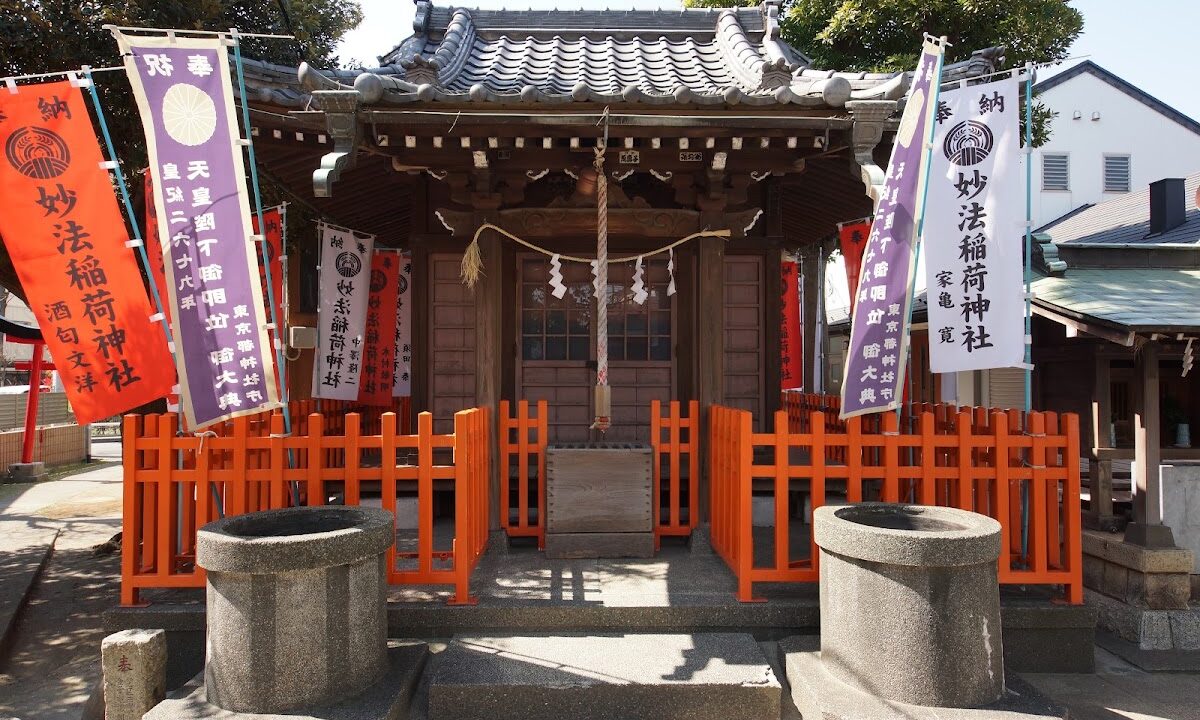
Myoho Inari Shrine (Tokyo) Complete Guide | History, Goshuin (Shrine Seal), and Access Information
There are several shrines in Tokyo named “Myoho Inari Shrine,” each with its own unique history and origins. This article provides a detailed and comprehensive explanation of the Myoho Inari Shrines located in Higashi-Suna (Koto Ward), Hon-Haneda (Ota Ward), and Jinbocho (Chiyoda Ward), covering everything from their historical background to modern worship information.
What is Myoho Inari Shrine?
Myoho Inari Shrine is a general term for Inari shrines located in different areas of Tokyo. Each shrine has its own independent history and has long been revered as the guardian deity of its region. The main enshrined deity is Ukanomitama-no-Mikoto, and the shrine is believed to bring blessings such as business prosperity, abundant harvests, and family safety.
Major Myoho Inari Shrines in Tokyo
- Myoho Inari Shrine in Higashisuna, Koto Ward: Guardian shrine of the former Hagi Shinden
- Myoho Inari Shrine in Honhaneda, Ota Ward (Ueda Myoho Inari Shrine): Center of faith in the Haneda area
- Myoho Eigo Inari Shrine in Jinbocho, Chiyoda Ward: Guardian shrine of the Kanda area
While each shrine shares the name “Myoho,” their founding circumstances and historical backgrounds differ. Let’s look at each shrine in detail below.
History and Origins of Myoho Inari Shrine (Higashisuna, Koto Ward)
Founding Circumstances
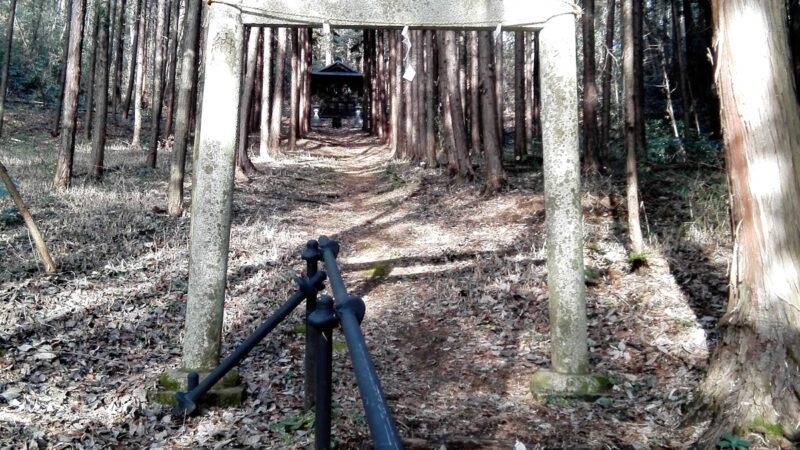
The Myoho Inari Shrine, located in Higashisuna, Koto Ward, is said to have been founded during the Keicho era (1596-1615) when Ogi Kanshichiro, originally from Hirakata, Kawachi, developed the area. This area was named “Myoho Kochi” (Myoho Farmland) and has been revered by local residents as the guardian shrine of Hagi Shinden.
Records from the Shinpen Musashi Fudoki-ko (New Compilation of the Topography of Musashi Province)
The Shinpen Musashi Fudoki-ko, compiled in the late Edo period, contains descriptions of this shrine. According to this work, the development of this region and the founding of the shrine were closely related, and it functions as a place to pray for the success of new land development and the prosperity of the region.
Descriptions from the Koto Ward Folklore (Joto Edition)
The Koto Ward Folklore (Joto Edition) records the Myoho Inari Shrine as deeply intertwined with the lives of the local residents. In an era when agriculture was the main industry, it played an important role as a place to pray for a bountiful harvest and as the center of the local community.
Deity and Blessings
Deity: Ukanomitama-no-Mikoto
Main Blessings:
- Abundant harvest
- Business prosperity
- Family safety
- Industrial development
Access Information
Location: Higashisuna, Koto-ku, Tokyo
Nearest Station:
- Walking distance from Minamisunamachi Station on the Tokyo Metro Tozai Line
- Bus from Oshima Station on the Toei Shinjuku Line
Visiting Hours: Grounds are freely accessible
History and Origins of Myoho Inari Shrine (Honhaneda, Ota-ku)
Founding and Relationship with Fushimi Inari Taisha
Myoho Inari Shrine (also known as Ueda Myoho Inari Shrine), located in Honhaneda, Ota-ku, was founded in September of the first year of Kyowa (1801). In that year, the area was hit by a great flood, suffering extensive damage. It is said that the residents, with a wish for reconstruction, invited a divided spirit from Fushimi Inari Taisha in Kyoto and built a shrine under a large pine tree.
Legend of the Snake Inari
It is said that a white snake lived at the base of the large pine tree at the time of the shrine’s founding, and this white snake was revered as a messenger of the gods. Because of this, Myoho Inari Shrine is also called “Snake Inari” and has attracted the deep faith of the local people. The white snake is considered a symbol of business prosperity and increased wealth, and it is said that it was particularly revered by merchants.
Haneda Seven Lucky Inari Pilgrimage
Myoho Inari Shrine is positioned as the second stop on the “Haneda Seven Lucky Inari Pilgrimage.” Several Inari shrines are scattered throughout the Haneda area, and it is believed that visiting them brings good fortune and protection from evil.
Benefits of the Haneda Seven Lucky Inari Pilgrimage:
- Good Fortune and Protection from Evil
- Business Prosperity
- Family Safety
- Good Luck and Prosperity
Annual Festivals and Events
Annual Festival Dates:
- First Horse Day of February
- October 22nd
The First Horse Day Festival is one of the most important festivals at Inari shrines, attracting many worshippers. Special rituals are performed on this day, and people visit to pray for business prosperity and family safety.
Goshuin (Shrine Seal) Information
Myoho Inari Shrine offers Goshuin. The Goshuin bears the inscription “Ueda Myoho Inari Shrine” and is a popular memento for many worshippers.
Features of the Goshuin (Shrine Seal):
- Ink Inscription: “Ueda Myoho Inari Shrine”
- Seal: Shrine Seal
- Location: Shrine Office (If absent, please go to Haneda Shrine)
- Offering Fee: Usually around 300-500 yen
Those wishing to receive a Goshuin are advised to check the available hours in advance.
Access Information
Address: 1-12-9 Honhaneda, Ota-ku, Tokyo 144-0044
Phone: 03-3744-3882 (Haneda Shrine)
Nearest Station:
- Approximately 15 minutes on foot from Kojiya Station on the Keikyu Airport Line
- Approximately 15 minutes on foot from Otorii Station on the Keikyu Airport Line
Bus Access:
- Approximately 2 minutes on foot from the Ueda bus stop (Keikyu Bus)
Parking: Parking available on the shrine grounds (limited number of spaces)
Shrine Grounds
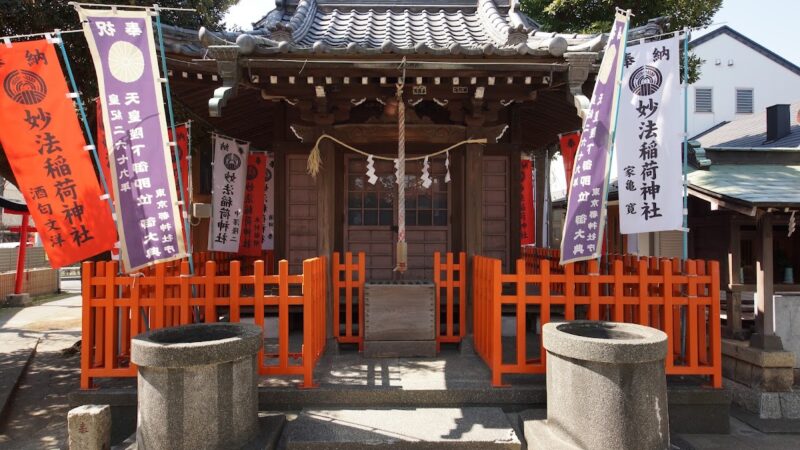
Nearby in a residential area, Myoho Inari Shrine boasts a compact yet well-maintained grounds. Passing through the vermilion torii gate, the main shrine building is directly ahead, with smaller shrines and stone monuments arranged on either side.
Main Facilities on the Shrine Grounds:
- Main Hall
- Worship Hall
- Torii Gate
- Water Basin
- Shrine Office
- Subsidiary Shrine
Myoho Eigo Inari Shrine (Jimbocho, Chiyoda-ku)
History and Origin
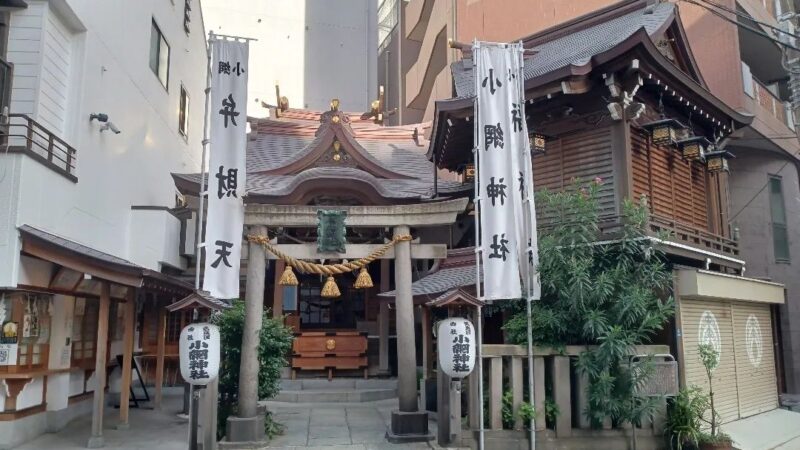
The Myoho Eigo Inari Shrine, located in Kanda Jimbocho, Chiyoda-ku, has an unknown founding date and origin, but it is said to have originally been a household shrine. It has been worshipped as the guardian deity of the Kanda area since the Edo period.
Location in Jimbocho
Jimbocho is a cultural area known as a district of used bookstores, with many publishing houses and bookstores lining the streets. Myoho Eigo Inari Shrine, within this cultural environment, attracts worshippers praying for academic success and business prosperity.
Access Information
Location: 3-29 Kanda Jimbocho, Chiyoda-ku, Tokyo
Nearest Station:
- Approximately 5 minutes on foot from Jimbocho Station (Tokyo Metro Hanzomon Line, Toei Shinjuku Line, Toei Mita Line)
Visiting Hours: Grounds are freely accessible
About the Deity of Myoho Inari Shrine
About Ukanomitama-no-Mikoto
Ukanomitama-no-Mikoto, the principal deity of Myoho Inari Shrine, is a god of grain and food appearing in Japanese mythology. In the Kojiki, he is described as the child of Susanoo-no-Mikoto and Kami-Oichihime-no-Mikoto, and is widely worshipped throughout Japan as the principal deity of Inari shrines.
Deity:
- God of Grains
- God of Food
- God of Industry
- God of Commerce
Divine Virtues:
- Abundant Harvest
- Business Prosperity
- Industrial Development
- Family Safety
- Fulfillment of Wishes
Characteristics of Inari Worship
Inari worship is one of the most widespread beliefs in Japan. In agricultural societies, the success of rice cultivation was a matter of life and death, and Inari worship, which prayed for a bountiful harvest, became deeply ingrained among ordinary people. Since the Edo period, with the development of commerce, Inari has also gained popularity as a god of business prosperity.
Symbols of Inari Shrines:
- Vermilion Torii Gate
- Fox Messenger
- White Snake (at some shrines)
- Rice Ears
Etiquette and Manners for Worship
Basic Worship Etiquette
When visiting a shrine, it is important to observe the following basic etiquette.
- Bow before passing through the torii gate: Show respect before entering the sacred area.
- Walk along the edge of the path: The center is considered the path of the gods.
- Purify yourself at the water basin:
- Hold the ladle in your right hand and purify your left hand.
- Switch the ladle to your left hand and purify your right hand.
- Switch the ladle back to your right hand, receive water in your left hand, and rinse your mouth.
- Finally, hold the ladle upright to purify the handle.
- Worship at the main hall:
- Quietly place your offering in the offering box.
- Ring the bell if there is one.
- Bow twice, clap twice, and bow once.
- Recite your prayer silently.
Unique Worship Methods for Inari Shrines
At Inari shrines, respect is also shown to the fox, the divine messenger. If there is a fox statue on the grounds, it is recommended to bow to it as well. Furthermore, a special ritual is performed on the first day of the horse in the lunar calendar, and it is believed that visiting on this day brings special blessings.
Attractions Around Myoho Inari Shrine
Around Higashisuna, Koto Ward
The area around Myoho Inari Shrine in Higashisuna, Koto Ward, offers the following attractions:
- Minamisunamachi Shopping Center SUNAMO: A large commercial complex
- Sendaihorikawa Park: A waterside promenade
- Museum of Contemporary Art Tokyo: A sanctuary for contemporary art
Around Honhaneda, Ota Ward
The area around Myoho Inari Shrine in Honhaneda, Ota Ward, is conveniently located near Haneda Airport.
- Haneda Shrine: The main guardian shrine of the Haneda area
- Tama River Riverbed: Ideal for strolling and cycling
- Haneda Airport: A chance to watch planes take off and land up close
- Haneda Seven Lucky Inari Pilgrimage: Allows you to visit other Inari shrines as well
Around Jinbocho, Chiyoda Ward
The area around Myoho Eigo Inari Shrine in Jinbocho boasts numerous cultural facilities.
- Jimbocho Used Bookstore District: Japan’s largest used bookstore district
- Meiji University: A historic private university
- Yasukuni Shrine: A large shrine within walking distance
- Nippon Budokan: A venue for concerts and martial arts competitions
Cultural Properties and Collections of Myoho Inari Shrine
Myoho Inari Shrine in Higashisuna, Koto Ward
Myoho Inari Shrine in Koto Ward houses cultural properties and materials passed down from the Edo period. It preserves ancient documents showing the history of land reclamation and materials recording regional changes, making it a valuable resource for local history research.
Myoho Inari Shrine in Honhaneda, Ota Ward
Myoho Inari Shrine in Honhaneda preserves a stone monument recording the shrine’s founding history and successive offerings. In particular, the records concerning the great flood of 1801 (Kyowa 1) are valuable resources for understanding the extent of the disaster at that time.
The Role of Myoho Inari Shrine in Modern Times
Center of the Local Community
Even in modern times, Myoho Inari Shrine functions as an important hub for the local community. Through events such as annual festivals and New Year’s visits, it serves as a place for local residents to interact and plays a role in deepening community bonds.
Urbanization and Shrines
Due to the rapid urbanization of Tokyo, the environment surrounding shrines has changed significantly. However, even within a residential area, Myoho Inari Shrine maintains a tranquil space, providing a place of peace and solace away from the hustle and bustle of the city.
Value as a Tourism Resource
In recent years, collecting Goshuin (shrine stamps) and visiting shrines and temples has become popular, and Myoho Inari Shrine attracts many visitors. The Haneda Seven Lucky Inari Pilgrimage, in particular, is attracting attention as a local tourism resource.
Annual Event Calendar
Myoho Inari Shrine holds various Shinto rituals and events throughout the year.
Main Annual Events
January
- New Year’s Day: Saitansai (New Year’s Day Festival), Hatsumode (First Shrine Visit of the Year)
February
- Hatsuuma Day: Hatsuumasai (First Horse Day Festival) (The most important festival)
October
- 22nd: Reitaisai (Grand Festival) (Honhaneda, Ota Ward)
December
- New Year’s Eve: Toshikoshi no Oharae (Great Purification Ceremony)
Visiting the shrine during these events allows you to experience a special atmosphere different from the usual.
Precautions When Visiting
Regarding Attire
There are no particularly strict dress code regulations, but it is desirable to dress appropriately, keeping in mind that this is a sacred place. Avoid revealing or overly flashy clothing.
Regarding Photography
Photography is generally permitted on the shrine grounds, but please note the following points.
- Be considerate of other worshippers.
- Photography may be prohibited inside the main hall.
- Refrain from taking photos during Shinto rituals.
- Check in advance before using a tripod.
Bringing Pets
Generally, it is considered good manners to refrain from bringing pets to the shrine. Especially when approaching the main hall, it is recommended to have pets wait outside the shrine grounds.
Donations and Offerings to Myoho Inari Shrine
How to Donate
Donations from local residents and worshippers play an important role in the maintenance and management of the shrine. Donations are accepted at the shrine office and are used for shrine repairs and the operation of festivals.
Offerings
The following offerings are traditionally made at Inari shrines:
- Offering of Torii gates
- Offering of fox statues
- Offering of stone fences
- Offering of lanterns
Summary
The Myoho Inari shrines located in Tokyo each have their own unique history and characteristics. The shrine in Higashisuna, Koto Ward, preserves the history of land reclamation; the shrine in Honhaneda, Ota Ward, embodies the wish for recovery from floods; and the shrine in Jinbocho, Chiyoda Ward, preserves the tradition of household deities.
These shrines, dedicated to Ukanomitama-no-Mikoto, are believed to bring various blessings, including abundant harvests, business prosperity, and family safety, and have long attracted the faith of local residents. Even today, they offer tranquil spaces amidst the city, providing peace of mind to many.
Understanding the history and origins of each shrine will enhance your pilgrimage. Visiting multiple shrines, such as through a pilgrimage to collect Goshuin (shrine stamps) or the Haneda Seven Lucky Inari Pilgrimage, allows you to appreciate the diversity and depth of Inari worship in Tokyo.
For the latest information on visiting shrines and event schedules, it is recommended to inquire with each shrine or the managing shrine association. Using a map app will also make access easier. I highly recommend visiting Myoho Inari Shrine at least once to experience its history and divine blessings.