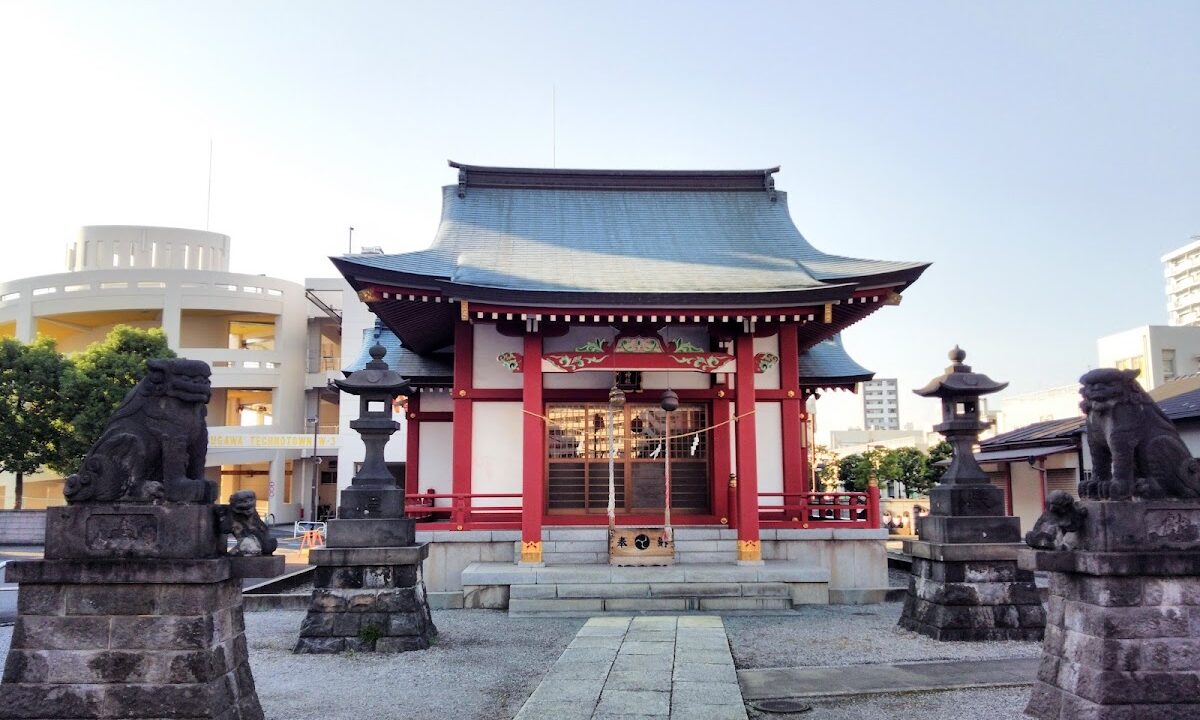
Komatsugawa Shrine (Edogawa Ward, Tokyo) Complete Guide: Goshuin (Shrine Seal), History, and Access Information
Komatsugawa Shrine is a beloved local shrine located in Komatsugawa, Edogawa Ward, Tokyo. Although relatively new, having been founded in the early Showa period, it is a historically significant shrine deeply intertwined with the region’s history, attracting many worshippers.
This article provides detailed information you should know before visiting Komatsugawa Shrine, including its history, enshrined deities, goshuin information, access methods, and highlights within the shrine grounds.
About Komatsugawa Shrine
Komatsugawa Shrine is located at 3-1-2 Komatsugawa, Edogawa Ward, Tokyo. It enshrines Amaterasu Omikami as its main deity, with Futsunushi-no-kami enshrined alongside. Currently managed as a subsidiary shrine of Ukita Inari Shrine, it is revered as a guardian deity of the region.
Deities Enshrined
Main Deity: Amaterasu Omikami
The supreme deity in Japanese mythology, a goddess who personifies the sun. She is revered as the ancestral deity of the Imperial Family and the tutelary deity of all Japanese people.
Enshrined Together: Futsunushi-no-Kami
A war god known as the main deity of Katori Shrine. A god who played an active role in the myth of the transfer of the land, he is believed to bring victory and good fortune.
Divine Virtues and Blessings
Komatsugawa Shrine is believed to offer the following blessings:
- Family Safety: Protection of family health and peace
- Business Prosperity: Development and prosperity of business
- Protection from Misfortune and Good Fortune: Avoiding disaster and attracting good fortune
- Traffic Safety: Praying for safe and accident-free travel
- Academic Success: Praying for academic improvement and passing exams
History
The history of Komatsugawa Shrine is closely intertwined with the large-scale civil engineering project of excavating the Arakawa floodway.
Background of Founding
The current Komatsugawa area was formerly part of Nishikomatsugawa Village in Katsushika District, Musashi Province. However, to prevent flooding caused by the frequent overflowing of the Arakawa River from the Meiji to Taisho periods, construction of the Arakawa floodway (the current Arakawa River) began in 1912 (Taisho 1).
This major construction project divided Nishikomatsugawa Village, and in 1914 (Taisho 3), the new “Komatsugawa Town” was established. The newly formed Komatsugawa Town needed a shrine to serve as a spiritual center for the community.
Founding in 1936 (Showa 11)
In 1936 (Showa 11), the shrine building was constructed thanks to the enthusiasm of the local residents. Then, in 1937 (Showa 12), the Suijinja Shrine, which was located in Higashishinozaki, was merged with the shrine, and a relocation ceremony was held. This marks the official founding of Komatsugawa Shrine.
From the Post-War Period to the Present
Having escaped the destruction of World War II, Komatsugawa Shrine remained a spiritual anchor for the community during the post-war reconstruction period. Even as the surrounding area urbanized during the period of rapid economic growth, it continued to attract unwavering devotion as the local guardian deity.
Currently, it is maintained as a subsidiary shrine of Ukita Inari Shrine, accepting regular festivals and daily worshippers.
The Legend of the Lion’s Head
An intriguing legend remains concerning the lion’s head that was once enshrined at Komatsugawa Shrine.
Long ago, during a festival, a group of young men carrying the lion’s head pawned it to a shop to raise money for sake. However, the lion’s head began to growl every night inside the shop. Frightened, the pawnbroker begged the shopkeeper to take the head back, saying, “I don’t need the loan, just take it back.” The lion’s head was then returned to the shrine.
This legend is passed down in the community as an interesting episode illustrating the sacredness of the shrine and the spiritual power residing in the sacred objects.
Shrine Grounds and Cultural Properties
Shrine Grounds
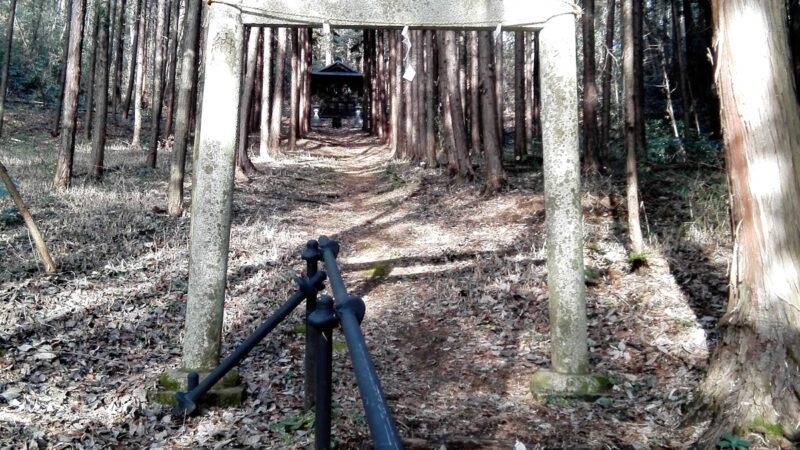
Komatsugawa Shrine maintains a tranquil atmosphere despite its urban location. Upon passing through the torii gate, the shrine building comes into view, welcoming visitors.
Shrine Building
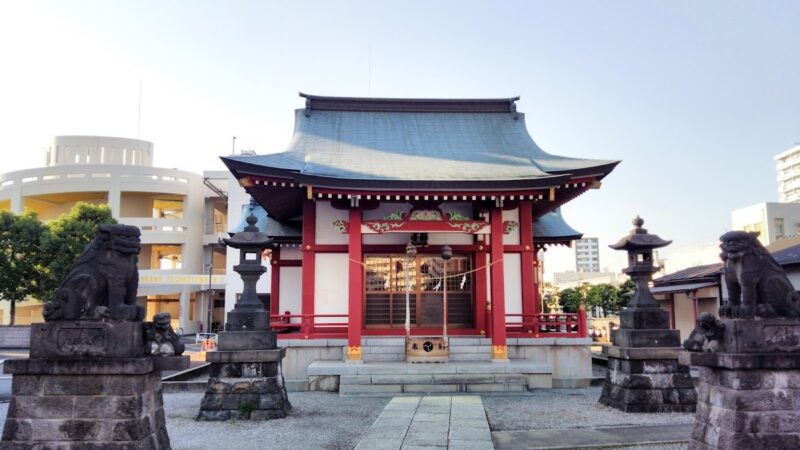
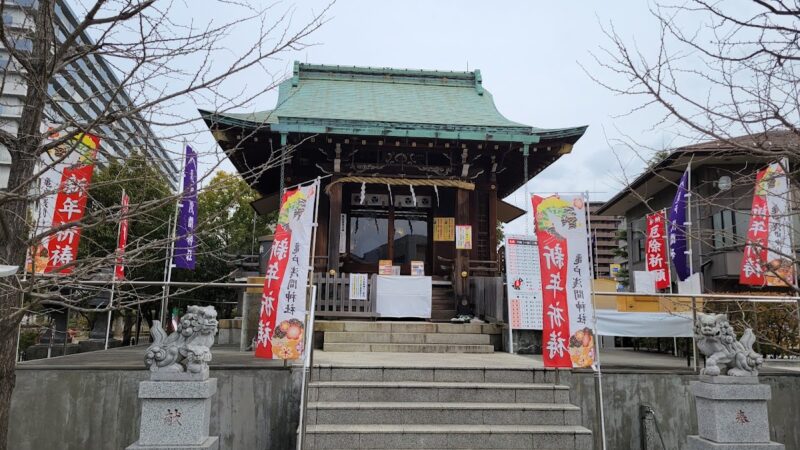
Built in 1936 (Showa 11), the shrine building is simple yet exudes a sense of dignity. Regular maintenance keeps it in beautiful condition.
Water Basin
A water basin is provided for purification before worship, allowing visitors to cleanse their minds and bodies before approaching the shrine.
Surrounding Environment
The Metropolitan Expressway Route 7 Komatsugawa Line runs in front of Komatsugawa Shrine, creating a unique landscape of a shrine standing amidst a modern urban landscape.
Also, the Old Nakagawa River flows nearby. Although it is now a narrow inlet, it was once the site of the “Sakasai no Watashi” ferry crossing, a historically thriving transportation hub.
Goshuin (Shrine Seals) and Goshuincho (Shrine Seal Books)
About Goshuin
You can receive a Goshuin at Komatsugawa Shrine. However, since Komatsugawa Shrine is also managed by Ukita Inari Shrine, it is recommended to check in advance regarding the issuance of Goshuin.
Features of Goshuin
- Calligraphy of the shrine name “Komatsugawa Shrine”
- Date of visit
- Shrine seal
Goshuin are cherished as proof of worship and as a memento of your trip. When receiving a Goshuin, it is considered good manners to complete your prayers first and then politely request one.
About Goshuincho (Shrine Seal Books)
For information on the availability of Komatsugawa Shrine’s original Goshuincho, please inquire directly with the shrine or Ukita Inari Shrine. Many visitors bring their own Goshuincho.
Points to Note When Receiving a Goshuin
- Pray first: The Goshuin is proof of worship. First, complete your prayers at the shrine.
- Prepare your Goshuincho (stamp book): Open your Goshuincho and specify the page you would like stamped on.
- Prepare your offering: Having small change ready will make things smoother (generally around 300-500 yen).
- Be polite: Don’t forget to show your gratitude to the shrine priest.
- Check the hours: Check the opening hours of the shrine office in advance.
Access Information
Here’s how to get to Komatsugawa Shrine.
Access by Train
Nearest Station: Toei Shinjuku Line “Higashi-Ojima Station”
- Approximately 9 minutes on foot (approx. 500m) from Higashi-Ojima Station
- Exit the north exit of the station and walk straight north.
Other Nearest Stations
- Approximately 15 minutes on foot from JR Sobu Line “Hirai Station”
- Approximately 20 minutes on foot from Toei Shinjuku Line “Funabori Station”
Walking Route (from Higashi-Ojima Station)
- Exit the north exit of Higashi-Ojima Station
- Walk north along Komatsugawa Street
- After walking straight for approximately 500m, you will see a shrine on your right.
- It is just past the elevated section of the Metropolitan Expressway Route 7 Komatsugawa Line.
Access by Bus
Toei Bus and Keisei Bus routes are also available. The nearest bus stops are “Komatsugawa 3-chome” or “Komatsugawa Police Station”.
Access by Car
Parking
Komatsugawa Shrine may not have its own parking lot, so we recommend using public transportation. If you are visiting by car, please use a nearby coin-operated parking lot.
Access from Major Roads
- Approximately 5 minutes from the Komatsugawa Exit of the Metropolitan Expressway Route 7 Komatsugawa Line
- Accessible via Kuramaebashi Street
Address and Basic Information
- Address: 3-1-2 Komatsugawa, Edogawa-ku, Tokyo 132-0034
- Phone Number: Please inquire via Ukita Inari Shrine
- Visiting Hours: Grounds are freely accessible (Shrine office hours may be limited)
- Admission Fee: Free
Annual Events and Festivals
Komatsugawa Shrine holds various festivals and events throughout the year.
Main Annual Events
New Year’s Day Festival (January 1st)
A festival to welcome the new year and pray for peace and happiness throughout the year. It is bustling with many visitors making their first shrine visit of the year.
Grand Festival (Autumn)
The most important festival of Komatsugawa Shrine, celebrated grandly by the entire community. It may include a procession of portable shrines and offering ceremonies.
Shichi-Go-San (November)
A celebration of children’s growth and prayers for their healthy development. Many families visit the shrine every year.
Monthly Festivals
Monthly festivals are held on fixed days each month, praying for the safety and prosperity of the community.
Shrine Visit Etiquette
There are basic manners to observe when visiting a shrine. When visiting Komatsugawa Shrine, please observe the following etiquette.
How to Pass Through a Torii Gate
- Bow before the torii gate.
- Walk along the edge of the path, as the center is the path for the gods.
- On your way back, bow again after passing through the torii gate.
How to Wash Your Hands
- Take the ladle with your right hand and wash your left hand.
- Switch the ladle to your left hand and wash your right hand.
- Switch the ladle back to your right hand, receive water in your left hand, and rinse your mouth.
- Wash your left hand once more.
- Hold the ladle upright, wash the handle, and return it to its original place.
How to Bow
- Stand upright in front of the offering box.
- Gently place your offering in the box.
- If there is a bell, ring it.
- Two bows, two claps, one bow.
- Bow deeply twice.
- Clap twice.
- Bow deeply once.
Nearby Shrines and Temples
Around Komatsugawa Shrine, there are several other historical shrines and temples.
Higashi Komatsugawa Katori Shrine
This shrine is the guardian shrine of the former Higashi Komatsugawa village and enshrines Futsunushi-no-Mikoto. It is an ancient shrine said to have been established in Kenji 3 (1277), and enshrines the same deity as Komatsugawa Shrine in its main hall.
Ukita Inari Shrine
This shrine is the former shrine under the jurisdiction of Komatsugawa Shrine and is a center of Inari worship, attracting local devotion. Goshuin (shrine stamps) may be available here.
Saikoji Temple
This Buddhist temple is located in the Komatsugawa area and is deeply connected to the local history. There was a time when a divided spirit related to Komatsugawa Shrine was enshrined within the grounds of Saikoji Temple.
History and Culture of the Komatsugawa Area
The Arakawa Floodway and Regional Transformation
The excavation of the Arakawa Floodway (the current Arakawa River) is essential to understanding the history of the Komatsugawa area. This massive construction project, which began in 1912 (Taisho 1), drastically altered the topography of eastern Tokyo, giving birth to the new town of Komatsugawa.
The Old Nakagawa River and Sakasai Ferry
The Old Nakagawa River, flowing near Komatsugawa Shrine, was once an important waterway connecting Edo (Tokyo) and Shimosa Province. The “Sakasai Ferry” was a ferry crossing point on this river, a vital transportation hub where many people and goods passed through.
Modern Komatsugawa
Present-day Komatsugawa is an urbanized area with the Metropolitan Expressway running through it, yet it has developed as a residential area that retains the charm of old Tokyo. Komatsugawa Shrine quietly continues to watch over the history of this region.
Highlights of Visiting the Shrine
Contrast with the Metropolitan Expressway
A distinctive feature of Komatsugawa Shrine’s landscape is the Metropolitan Expressway Route 7 Komatsugawa Line, which runs directly in front of the shrine grounds. The contrast between the modern elevated road and the traditional shrine symbolizes the layered history of Tokyo.
Tranquil Shrine Grounds
Despite its urban location, the shrine grounds are enveloped in a tranquil atmosphere. Despite being in a busy area, stepping inside the grounds reveals a peaceful space.
Seasonal Scenery
With cherry blossoms in spring, lush greenery in summer, vibrant autumn leaves, and crisp winter air, the shrine grounds display different expressions throughout the seasons, offering a different charm depending on when you visit.
Prayers and Rituals at Komatsugawa Shrine
Various Prayers
Komatsugawa Shrine accepts prayers for various milestones in life.
- First Shrine Visit: A prayer to give thanks for the birth of a baby and to pray for their healthy growth.
- Shichi-Go-San: A celebration of the growth of children at ages 3, 5, and 7.
- Exorcism: A prayer to ward off misfortune during unlucky years and pray for peace.
- Traffic Safety: A prayer for the safety of cars and motorcycles.
- Business Prosperity: A prayer for the development and prosperity of business.
- Prayer for Success: A prayer for success in entrance exams and qualification tests.
How to Apply for a Prayer
If you wish to request a prayer, it is recommended that you contact Ukita Inari Shrine in advance to discuss the date, time, and content. While same-day registration may be possible, reservations are recommended to ensure you receive a prayer.
About Photography
Photography Etiquette
Photography is generally permitted at Komatsugawa Shrine, but please observe the following etiquette.
- Consideration for other worshippers: Be careful not to disturb other worshippers.
- Photography inside the main hall: Permission may be required.
- Use of flash: Use sparingly.
- Commercial use: Permission must be obtained in advance.
- SNS posting: Keep in mind that this is a sacred place and strive for appropriate posting.
Photo Spots
- Panoramic view including the torii gate and shrine building
- Front view of the shrine building
- Seasonal scenery within the shrine grounds
- Composition capturing the contrast with the Metropolitan Expressway
Recommended Shrines in Tokyo
After visiting Komatsugawa Shrine, why not explore other shrines in Tokyo?
Shrines in Edogawa Ward
- Higashi Komatsugawa Katori Shrine: An ancient shrine founded in Kenji 3 (1277)
- Ukita Inari Shrine: Formerly a shrine managed by Komatsugawa Shrine
- Koiwa Shrine: The guardian shrine of Koiwa in Edogawa Ward
Major Shrines in Eastern Tokyo
- Kameido Tenjin Shrine: A Tenjin shrine famous as the god of learning
- Tomioka Hachimangu Shrine: Known for the Fukagawa Hachiman Festival, one of the three major Edo festivals
- Asakusa Shrine: Three shrines adjacent to Senso-ji Temple
Summary
Komatsugawa Shrine, though relatively new, was founded in Showa 11 (1936), but is an important shrine for the region, deeply connected to the historical event of the Arakawa flood control channel construction.
It enshrines Amaterasu Omikami and Futsunushi-no-Kami, and is believed to offer blessings for family safety, business prosperity, and protection from evil and good fortune. Its convenient location, just a 9-minute walk from Higashi-Ojima Station on the Toei Shinjuku Line, is another attractive feature.
Despite its modern location right next to the Metropolitan Expressway, the shrine grounds maintain a tranquil atmosphere, offering peace of mind to visitors. You can also receive a Goshuin (shrine stamp), making it a popular spot for those who enjoy visiting shrines.
When visiting the Komatsugawa area, be sure to stop by Komatsugawa Shrine and experience the local history and culture. You can experience a place of faith that thrives in modern Tokyo, while feeling the legend of the lion’s head and the remnants of the former Sakasai ferry crossing.
Frequently Asked Questions (FAQ)
Here are some frequently asked questions about Komatsugawa Shrine.
Q1: Where can I get a Goshuin from Komatsugawa Shrine?
Since Komatsugawa Shrine is a subsidiary shrine of Ukita Inari Shrine, you may be able to get a Goshuin at Ukita Inari Shrine. If you want to be sure to get a Goshuin, it is recommended to contact Ukita Inari Shrine in advance. If the shrine office is open when you visit, you may be able to receive it on the spot.
Q2: What is the nearest station to Komatsugawa Shrine?
The nearest station is Higashi-Ojima Station on the Toei Shinjuku Line, about a 9-minute walk (approximately 500m) from the north exit. Alternatively, it is also accessible from Hirai Station on the JR Sobu Line, about a 15-minute walk. The route from Higashi-Ojima Station is the most convenient and easiest to understand.
Q3: Does Komatsugawa Shrine have a parking lot?
It is highly likely that Komatsugawa Shrine does not have its own parking lot, so we recommend using public transportation for your visit. If you visit by car, you will need to use a nearby coin-operated parking lot. However, please note that there may be traffic restrictions during festivals and other events.
Q4: When was Komatsugawa Shrine founded?
The shrine building of Komatsugawa Shrine was constructed in 1936 (Showa 11), and in 1937 (Showa 12), the Suijin Shrine of Higashi-Shinozaki was merged with it, and a relocation ceremony was held. This marks the official founding of the shrine. It is a relatively new shrine, established for Komatsugawa Town, which was newly created as a result of the construction of the Arakawa Floodway.
Q5: What deities are enshrined at Komatsugawa Shrine?
The main deity is Amaterasu Omikami, and Futsunushi-no-kami is enshrined in the auxiliary shrine. Amaterasu Omikami is the supreme deity of Japan, and Futsunushi-no-kami is known as a god of war. They are believed to bring blessings for family safety, business prosperity, and protection from evil and good fortune.
Q6: Can I pray for Shichi-Go-San (7-5-3) at Komatsugawa Shrine?
Komatsugawa Shrine accepts prayers for Shichi-Go-San. However, since it is a shrine managed by Ukita Inari Shrine, it is recommended to contact Ukita Inari Shrine in advance to confirm the date, time, and details if you wish to pray. Many families visit during the Shichi-Go-San season in November.
Q7: When is the Komatsugawa Shrine’s annual festival held?
The Komatsugawa Shrine’s annual festival is held in the autumn. The specific date may vary from year to year, so please check with Ukita Inari Shrine or local bulletin boards for details. The festival includes a procession of the portable shrine and various dedication ceremonies, and is celebrated grandly by the entire community.
Q8: Please tell me about the legend of the lion’s head at Komatsugawa Shrine.
There is a legend about the lion’s head that was once enshrined at Komatsugawa Shrine. During a festival, young men pawned the lion’s head to a shop to get money for sake. The lion’s head began to growl every night in the shop, and the frightened pawnbroker begged them to take it back, saying, “I don’t need the money, just take it back.” This legend is passed down as an interesting episode illustrating the spiritual power residing in sacred objects.
Q9: What historical places are located around Komatsugawa Shrine?
Near Komatsugawa Shrine flows the old Nakagawa River, and there was once a ferry crossing called “Sakasai no Watashi.” Furthermore, the construction of the Arakawa Floodway (the current Arakawa River) significantly altered the area’s topography. There are also other historical shrines in the vicinity, such as Higashi Komatsugawa Katori Shrine, allowing visitors to experience the region’s history.
Q10: Can I visit Komatsugawa Shrine for Hatsumode (first shrine visit of the New Year)?
Komatsugawa Shrine holds a New Year’s Day festival and welcomes worshippers for Hatsumode. While not as crowded as larger shrines, it attracts many worshippers as the local guardian shrine. It’s a recommended Hatsumode spot for those who want to pray for the New Year in a calm atmosphere. It’s also easily accessible from Higashi-Ojima Station on the Toei Shinjuku Line.