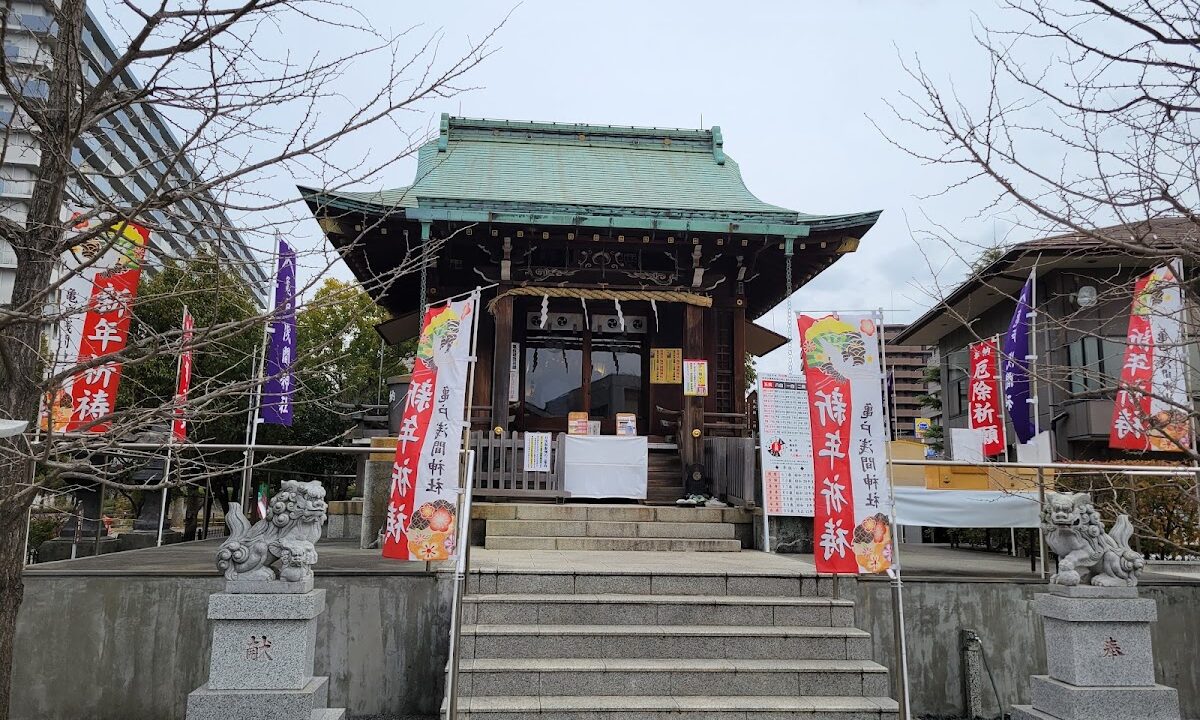
Kameido Asama Shrine (Koto Ward, Tokyo) Complete Guide | History of Fujizuka and Kogaizuka, Goshuin (Shrine Seals), and Access Information
Located in Kameido, Koto Ward, Tokyo, Kameido Asama Shrine has been a sacred site of Fuji worship since the Muromachi period, affectionately known as “O-Fuji-sama” by the local people. It is one of Tokyo’s leading Fujizuka (miniature Mount Fuji), boasts the Kogaizuka (a mound steeped in ancient legends), and enshrines Konohanasakuya-hime, the goddess of safe childbirth and child-rearing, attracting many visitors. This article provides a detailed overview of Kameido Asama Shrine, including its history, highlights, goshuin information, and access methods.
History and Origins of Kameido Asama Shrine
Founded in the Muromachi Period
Kameido Asama Shrine was founded in Daiei 7 (1527), during the Muromachi period. This era was the peak of Fuji worship, and local villagers invited Kanroji Motonaga to establish the shrine, enshrining Konohanasakuya-hime no Mikoto, the guardian deity of the sacred Mount Fuji.
Initially, the shrine was built on top of a burial mound called Kogaizuka, and the deity was relocated there as Asama Shrine. Ancient legends remain at Kogaizuka, further connecting the shrine’s history to its older roots.
The Legend of Kogaizuka
A moving legend concerning Yamato Takeru no Mikoto and Ototachibana-hime is told at Kogaizuka. During his eastern expedition, Yamato Takeru no Mikoto encountered a storm in the sea of Hashirimizu (present-day Uraga Channel). At that time, Ototachibana-hime threw herself into the sea to save her husband, Yamato Takeru no Mikoto, and appeased the sea god’s anger.
A few days later, Princess Ototachibana’s comb and hair ornament (kogai) washed ashore in what is now Kameido. The villagers respectfully buried them, which is considered the origin of the Kogaizuka (hair ornament mound). This legend forms the spiritual foundation of Kameido Sengen Shrine and is passed down as a symbol of marital love and devotion.
Development in the Edo Period
During the Edo period, the worship of Mount Fuji spread even further among the common people. Kameido Sengen Shrine became affectionately known as “O-Fuji-sama” (Lord Fuji) and attracted many worshippers. In particular, the festival coinciding with the opening of Mount Fuji became an important annual event in the region.
The Ansei Earthquake and Reconstruction
In 1855 (Ansei 2), a major earthquake struck Edo, causing the Kameido Sengen Shrine’s main building to collapse. However, thanks to the enthusiasm of the parishioners and believers, a grand project was undertaken in 1878 (Meiji 11): lava was transported from Mount Fuji to create a miniature Mount Fuji mound, and the shrine was rebuilt on top of it.
This miniature Mount Fuji is a genuine structure built using actual lava from Mount Fuji, and boasts one of the largest scales in Tokyo. Visitors believe that climbing the miniature Mount Fuji grants them the same blessings as climbing Mount Fuji itself.
Deity and Divine Virtues
Konohanasakuya-hime no Mikoto
The deity enshrined at Kameido Sengen Shrine is Konohanasakuya-hime no Mikoto. This goddess is a beautiful figure in Japanese mythology and is known as the goddess of Mount Fuji. During the descent of the heavenly grandchild, she married Ninigi no Mikoto and became pregnant overnight, raising suspicions. However, the myth tells of her setting fire to the birthing hut and safely giving birth to three children, thus proving her innocence.
Divine Virtues
Konohanasakuya-hime is believed to possess the following divine virtues based on her mythology:
Safe Childbirth and Child-Rearing: Due to the myth of giving birth in flames, she is deeply revered as a guardian deity of safe childbirth. Many pregnant women and those raising children visit the shrine.
Matchmaking and Good Relationships: Known as a deity who brings good relationships, based on the story of her marriage to Ninigi-no-Mikoto.
Good Fortune and Prosperity: As the guardian deity of the sacred Mount Fuji, she is believed to bring good fortune and prosperity.
Protection from Fire: Due to the myth of giving birth in flames, she is also worshipped as a deity who protects against disasters such as fires.
Highlights of the Shrine Grounds
Kameido’s Fujizuka
The most distinctive feature of Kameido Sengen Shrine is the Fujizuka (miniature Mount Fuji) towering within the shrine grounds. Built in 1878 (Meiji 11), this Fujizuka was constructed using lava actually transported from Mount Fuji, and is a full-fledged artificial mountain approximately 6 meters high.
Fujizuka (miniature Mount Fuji mounds) were built throughout Japan from the Edo period to the early Showa period for people who could not climb Mount Fuji. The Fujizuka at Kameido Sengen Shrine is particularly well-preserved and large in scale, even within Tokyo. A shrine stands at the top of the mound, and worshippers can ascend the stone steps to pay their respects.
The climbing path on the Fujizuka is designed to resemble the climbing path of Mount Fuji, and it is believed that climbing from the first station to the summit grants the same spiritual benefits as actually climbing Mount Fuji. Especially during the mountain opening season in June, many worshippers climb the Fujizuka.
Kogaizuka
The foundation of the Fujizuka is the Kogaizuka, which has existed in this area since ancient times. This mound, associated with the legend of Ototachibana-hime, is thought to date back to the Kofun period and is a historical heritage site of the region.
The Kogaizuka is not merely a place of legend; it holds significant importance as an actual ancient structure. By using the Kogaizuka as a foundation when constructing the Fujizuka, the continuity of this ancient sacred site is maintained.
The Largest Chinowa in the Kanto Region
Another famous feature of Kameido Sengen Shrine is the gigantic Chinowa (a ring made of reeds) erected during the summer purification ceremony in June. This ring measures approximately 3 meters in diameter and is said to be the largest in the Kanto region.
Passing through the Chinowa is a Shinto ritual to purify oneself of sins and impurities accumulated over the past six months and to pray for good health and protection from illness for the remaining half of the year. Worshippers chant, “Those who perform the summer purification ceremony in June are said to have their lives extended by a thousand years,” as they pass through the Chinowa three times, drawing a figure eight. This experience of passing through this gigantic Chinowa is unique to Kameido Sengen Shrine.
The Shrine Building
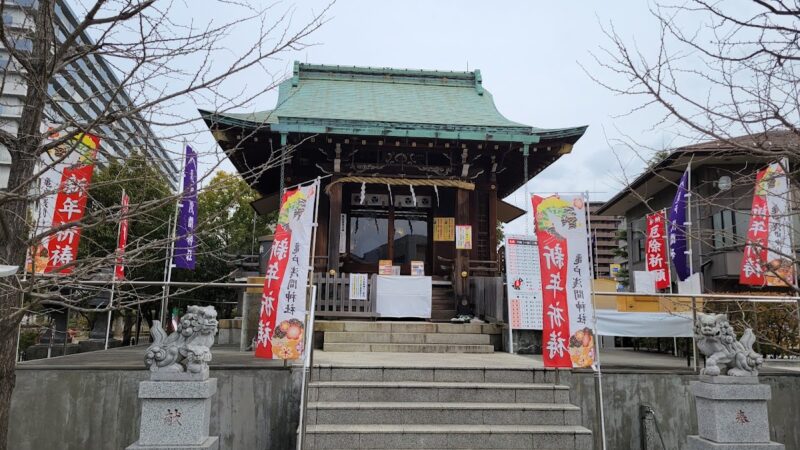
The current shrine building is constructed on top of a miniature Mount Fuji. From the shrine, reached by climbing stone steps, one can overlook the shrine grounds, offering a unique worship experience. The shrine building, though rebuilt after the Meiji era, retains the traditional style of shrine architecture, creating a solemn atmosphere befitting a sacred site of Fuji worship.
Water Basin
Near the entrance to the shrine grounds, the water basin allows visitors to purify their minds and bodies before praying. The pure water, symbolizing the sacred water of Mount Fuji, is used to cleanse the hands and mouth before proceeding to worship.
Annual Festivals and Rituals
Mountain Opening Festival (June 30th & July 1st)
The most important festival at Kameido Sengen Shrine is the Mountain Opening Festival, held in conjunction with the opening of Mount Fuji. Held over two days, June 30th and July 1st, it attracts many worshippers.
During this period, climbing the Fujizuka (miniature Mount Fuji) takes on special significance, believed to bring the same blessings as climbing Mount Fuji itself. Stalls line the shrine grounds, creating a festive atmosphere. Also, the Summer Purification Ceremony is held during this time, offering the opportunity to experience the largest Chino-wa Kuguri (a ritual involving passing through a ring of reeds) in the Kanto region.
Summer Purification Ceremony (June 30th)
On June 30th, the Summer Purification Ceremony is held. This is a Shinto ritual held at the halfway point of the year to purify oneself of sins and impurities committed unknowingly during that time. The aforementioned large straw ring is passed through, and many worshippers pray for good health and protection from illness for the next six months.
Year-End Purification Ceremony (December 31st)
On December 31st, the Year-End Purification Ceremony is held. This is a Shinto ritual to purify oneself of sins and impurities accumulated throughout the year, allowing for a refreshing start to the new year.
Monthly Festivals
Monthly festivals are held on the 1st and 15th of each month, praying for the peace and well-being of parishioners and worshippers, and for the prosperity of the region.
Goshuin (Shrine Seals) and Goshuincho (Shrine Seal Books)
About Goshuin
Kameido Asama Shrine offers Goshuin as a memento of your visit. The Goshuin (temple/shrine stamp) features the calligraphy of “Kameido Asama Shrine” and the shrine’s seal. As befits a shrine dedicated to Mount Fuji worship, it features a distinctive design with Mount Fuji as its motif.
Goshuin can be obtained at the shrine office, but since priests may not always be present, it is recommended to check the visiting hours in advance if you wish to be sure to receive a Goshuin. The offering fee is usually around 300 to 500 yen.
Original Goshuincho (Stamp Book)
Kameido Asama Shrine also offers original Goshuincho (stamp books). Featuring designs with Mount Fuji and Konohanasakuya-hime, they are popular as souvenirs of your visit. The offering fee for a Goshuincho is generally around 1,500 yen.
Etiquette for Receiving a Goshuin
Since the Goshuin is given as proof of your visit, be sure to receive it only after you have completed your prayers. Also, if you forget your Goshuincho, you may be given a pre-printed Goshuin. It is important to remember to express gratitude to the Shinto priests and to make your requests respectfully.
Items Offered
Amulets
At Kameido Sengen Shrine, various amulets are offered, each related to the divine virtues of the enshrined deity:
Safe Childbirth Amulet: A popular amulet for pregnant women praying for a safe delivery, based on the divine virtues of Konohanasakuya-hime.
Child-Rearing Amulet: An amulet for praying for the healthy growth of children.
Matchmaking Amulet: An amulet for those praying for a good match.
Good Fortune Amulet: An amulet for good fortune and prosperity, based on the spiritual power of Mount Fuji.
Traffic Safety Amulet: An amulet for praying for daily safety.
Ema (Votive Tablets)
You can write your wishes on ema designed with Mount Fuji and Konohanasakuya-hime and dedicate them to the shrine. Ema with various wishes, such as prayers for safe childbirth, matchmaking, and good fortune, are dedicated on the shrine grounds.
Fortune Slips
Fortune slips (omikuji) are also available. There are unique shrine-style fortune slips, such as cute ones shaped like Mount Fuji.
Prayers
Shrine Prayers
At Kameido Asama Shrine, you can receive prayers for various wishes:
Prayer for Safe Childbirth: Generally performed on the Day of the Dog in the fifth month of pregnancy. Prayers are offered for safe childbirth through the divine grace of Konohanasakuya-hime.
First Shrine Visit: A baby’s first visit to the shrine to pray for healthy growth.
Shichi-Go-San (7-5-3 Festival): Celebrating a child’s growth and praying for their future health and happiness.
Exorcism: Prayers for warding off misfortune for those in their unlucky year and praying for a peaceful year.
Traffic Safety: Prayers for car blessings and daily traffic safety.
Prayer Request Reception
Those wishing to request a prayer should register at the shrine office. Reservations may be required, so it is recommended to contact us in advance, especially during busy periods such as weekends, holidays, and New Year’s. The prayer fee (offering) varies depending on the content of the prayer, but generally starts from 5,000 yen.
Access Information
Access by Train
Kameido Sengen Shrine can be accessed from several train lines:
From Higashi-Ojima Station on the Toei Shinjuku Line
- Approximately 8 minutes on foot from the Ojima Exit
- The closest station, making it convenient to access.
From Kameido Station on the JR Sobu Line
- Approximately 20 minutes on foot from the North Exit
- Convenient if visiting Kameido Tenjin Shrine and other shrines together.
From Kameido Suijin Station on the Tobu Kameido Line
- Approximately 15 minutes on foot
Access by Bus
You can also use the Toei Bus from Kinshicho Station on the JR Sobu Line:
- Take the Kin25 line bound for Kasai Station
- Get off at the Sengen Shrine bus stop.
Using the bus will get you very close to the shrine, making it recommended for those who have difficulty walking.
Access by Car
Approximately 10 minutes from the Kinshicho Exit of the Metropolitan Expressway Route 7 Komatsugawa Line. However, since parking for the shrine is limited, we recommend using public transportation. There are coin-operated parking lots nearby, but they are expected to be crowded during festivals and other special occasions.
Address
9-15-7 Kameido, Koto-ku, Tokyo 136-0071
Visiting Hours and Shrine Office Hours
Visiting Hours
While visiting the shrine grounds is generally free, it is considered good manners to refrain from visiting at night. We recommend visiting during daylight hours.
Shrine Office Hours
The issuance of Goshuin (shrine stamps), amulets, and requests for prayers are handled during the shrine office’s opening hours. Generally, this is from 9:00 AM to around 5:00 PM, but there may be times when the priests are absent, so if you definitely want to receive a Goshuin or other items, we recommend checking in advance.
Nearby Attractions
Kameido Tenjin Shrine
Located near Kameido Station, Kameido Tenjin Shrine is a shrine dedicated to Sugawara no Michizane, known as the god of learning. It is also famous for its wisteria and plum blossoms, and many people visit it in conjunction with Kameido Sengen Shrine.
Kameido Central Park
Kameido Central Park, located near the shrine, is a spacious metropolitan park, perfect for strolls and picnics. It also boasts excellent sports facilities and serves as a local recreational area.
History of Koto Ward
Koto Ward is an area where the traditional downtown atmosphere from the Edo period coexists with modern development. Historic temples and shrines are scattered around Kameido, making it a pleasant place for walks.
Manners and Points for Visiting Shrines
Basic Shrine Visit Etiquette
- Bow before passing through the torii gate: Before entering the sacred area, compose yourself and bow.
- Purify yourself at the water basin: Purify your left hand, right hand, and mouth in that order.
- Climb the Fujizuka: Climb the stone steps towards the shrine. Climb slowly, paying attention to your footing.
- Two Bows, Two Claps, One Bow: In front of the shrine, bow deeply twice, clap twice, and finally bow deeply once.
- Quiet Departure: After praying, quietly descend the stone steps, and before leaving the torii gate, turn around and bow once.
Precautions for Climbing the Fujizuka
The Fujizuka has steep sections of stone steps, so it is recommended to wear comfortable clothing and shoes. It can be especially slippery in rainy weather and winter, so please be extra careful. Elderly people and those with mobility issues can pray from below without overexerting themselves.
Regarding Photography
Photography is generally permitted on the shrine grounds, but please be considerate of other worshippers. It is considered good manners to refrain from taking photos inside the shrine or during religious ceremonies.
The Charm of Kameido Sengen Shrine
A Sacred Site of Fuji Worship in the City
Located within Tokyo’s 23 wards, Kameido Sengen Shrine boasts an authentic Fujizuka (miniature Mount Fuji), making it a valuable sacred site of Fuji worship in the heart of the city. The Fujizuka, actually constructed using lava from Mount Fuji, preserves the tradition of Fuji worship that has continued since the Edo period.
Ancient History
The legend of the Kogaizuka (hairpin mound) indicates that this area has been recognized as a sacred place since ancient times. The story of Yamato Takeru and Ototachibana-hime continues to inspire even today as a symbol of love and devotion.
A Faith Rooted in the Community
Kameido Sengen Shrine, affectionately known as “O-Fuji-sama” (Lord Fuji) by the local people, has functioned not merely as a tourist spot, but as a center of the local community. Many parishioners and local residents participate in the annual festivals and religious ceremonies, preserving tradition.
Guardian Deity of Safe Childbirth and Child-Rearing
Many worshippers visit the shrine to pray for safe childbirth and child-rearing, thanks to the divine virtues of Konohanasakuya-hime. Many pregnant women and families with small children can be seen, creating a warm and welcoming atmosphere.
Summary
Kameido Sengen Shrine is a sacred site of Fuji worship with a history of approximately 500 years since its founding in the Muromachi period. It boasts many attractions, including one of Tokyo’s largest artificial mounds resembling Mount Fuji, the Kogaizuka mound steeped in ancient legends, and Konohanasakuya-hime, worshipped as the goddess of safe childbirth and child-rearing.
Passing through the largest straw ring in the Kanto region, climbing the artificial mound, and praying in the tranquil grounds will be a precious experience that allows you to forget the hustle and bustle of the city. When visiting Koto Ward in Tokyo, be sure to visit Kameido Sengen Shrine.
Its convenient location, just an 8-minute walk from Higashi-Ojima Station on the Toei Shinjuku Line, is also a major draw. Visiting nearby temples and shrines such as Kameido Tenjin Shrine will allow you to enjoy a fulfilling shrine tour. Enjoy praying to “O-Fuji-sama” with various wishes, such as prayers for safe childbirth, matchmaking, and good fortune.