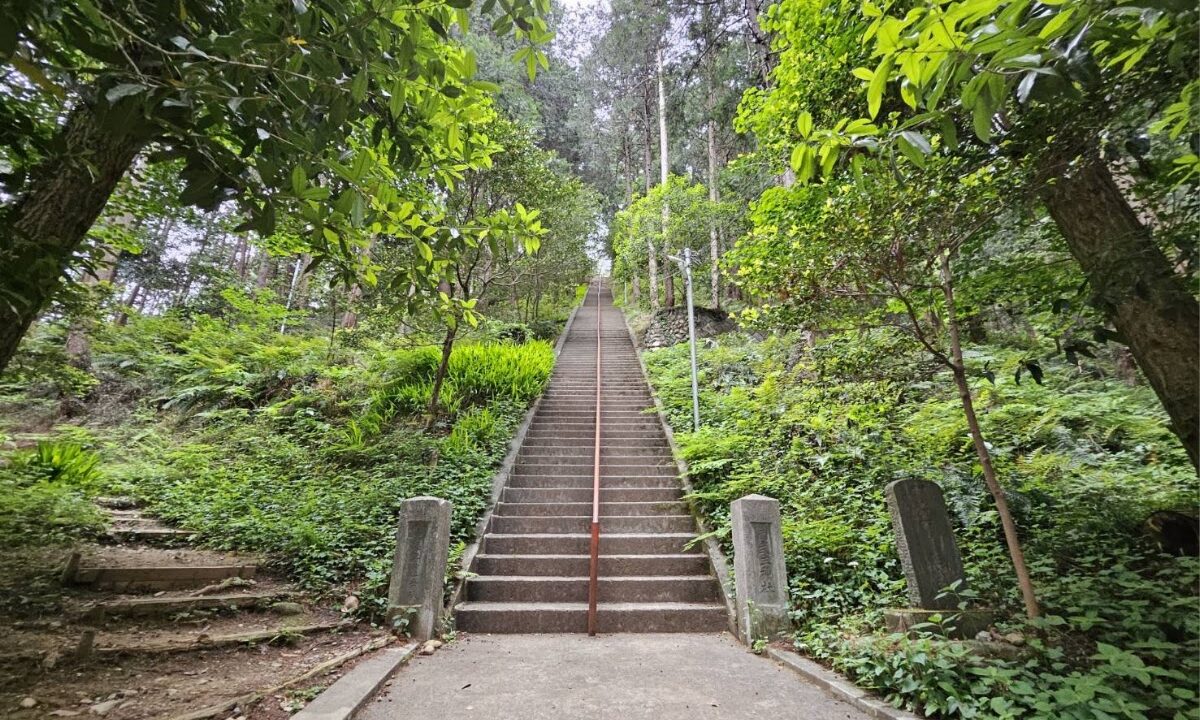
Amemushu Shrine (Akiruno City, Tokyo) Complete Guide | History, Deities, Access, and Highlights Explained in Detail
Amemushu Shrine, located in Amama, Akiruno City, Tokyo, is a historic shrine situated on the slopes of Mt. Myojin and affectionately known locally as “Myojin-sama.” The main hall, built in the late Edo period and reached by climbing a long stone staircase, is protected as an Akiruno City-designated tangible cultural property and features magnificent carvings. This article provides a detailed explanation of Amemushu Shrine’s history, deities, highlights within the grounds, and access methods.
Basic Information about Amemushu Shrine
Location
1941 Amama, Akiruno City, Tokyo 197-0825
Pronunciation
Amemushu Jinja (also known as Amamushi Jinja)
Common Name
Myojin-sama
Nearest Station
Approximately 13-15 minutes on foot or 6 minutes by car from JR Itsukaichi Line “Akigawa Station”
Parking
Some parking space available near the shrine grounds
Cultural Property Designation
Main Hall: Akiruno City Designated Tangible Cultural Property (Designated November 25, 2010)
Owner
Religious Corporation Amemushu Shrine
Deities and Benefits of Amemushu Shrine
The following four deities are enshrined at Amemushu Shrine:
Main Deity
Amenominakanushi-no-Mikoto
Considered the first god to appear in Japanese mythology, he is the supreme deity who governs the origin of the universe. He is one of the three creation gods who appeared in Takamagahara at the time of the creation of heaven and earth, and is revered as the god at the center of all things.
Enshrined Deities
Susanoo-no-Mikoto
Known as a god of protection against misfortune and disaster, he is a heroic god who defeated the Yamata no Orochi (eight-headed serpent). He is also worshipped as a god of agriculture and protection against disease.
Honda-wake-no-Mikoto
The divine name of Emperor Ojin, he is revered as a god of military fortune, success in competitions, and career advancement. He is a god widely worshipped throughout Japan as Hachiman-jin.
Ōgetsuhime-no-Mikoto
She is the goddess of food who presides over abundant harvests and is believed to bring blessings for agricultural and commercial prosperity.
Expected Blessings
- Health and Longevity: Health and longevity of mind and body through the power of the universe’s source, Amenominakanushi-no-Mikoto
- Protection from Evil and Misfortune: Exorcism of evil spirits through the power of Susanoo-no-Mikoto
- Luck in Competition and Career Advancement: Military fortune and success through Hachiman-no-Mikoto (Homudawake-no-Mikoto)
- Abundant Harvest and Business Prosperity: Prosperity of livelihood through Ōgetsuhime-no-Mikoto
- Family Safety: Comprehensive protection by the four deities
History and Origins of Ametake Shrine
Founding Date
The exact founding date of Ametake Shrine is unknown, but it has long been revered by local residents as the guardian shrine of the Amama district. The unique name of the shrine, “Amebushi,” is believed to originate from the place name “Amama.”
Records from the Tensho Era
Records of land donations to the shrine exist from the Tensho era (1573-1592), confirming that it was a well-established shrine at least by the end of the Sengoku period. This was a turbulent time of transition from Oda Nobunaga to Toyotomi Hideyoshi.
Reconstruction and Relocation in the Edo Period
Reconstruction in Kan’ei 16 (1639)
In Kan’ei 16, during the early Edo period, Amebushi Shrine was rebuilt at the foot of Mt. Myojin. This was the time when Tokugawa Iemitsu was solidifying the foundation of the Edo shogunate as shogun.
Relocation in Kaei 2 (1849)
In Kaei 2, during the late Edo period, the shrine was relocated from the foot of the mountain to its current location on the middle slopes of Mt. Myojin. The current main hall was constructed at the time of this relocation. The second year of the Kaei era (1849) was just before the turbulent period of the late Edo period, four years before Commodore Perry’s arrival.
After the Meiji Restoration
Even after the Meiji Restoration’s separation of Shinto and Buddhism, the shrine continued to attract worshippers as the guardian deity of the region. Even as times changed from Showa to Heisei and Reiwa, it remains affectionately known as “Myojin-sama” by local residents.
Highlights of the Shrine Grounds
Long Stone Staircase (196 or 231 Steps)
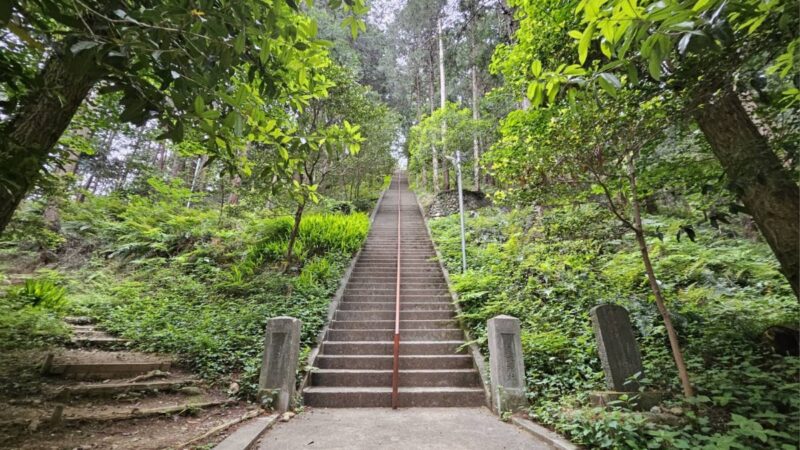
The most striking feature of visiting Ametake Shrine is the long stone staircase leading from the torii gate to the main shrine building. There are various theories regarding the number of steps:
- Steps to the main shrine building: 196 steps
- Counting from the torii gate: 231 or 233 steps
These are some of the records. Climbing these steps one step at a time allows one to leave the hustle and bustle of everyday life behind and prepare oneself to approach the sacred realm. Trees grow on both sides of the staircase, allowing worshippers to experience the changing seasons while paying their respects.
Main Shrine (Akiruno City Designated Tangible Cultural Property)
Construction Date
Kaei 2 (1849)
Architectural Style
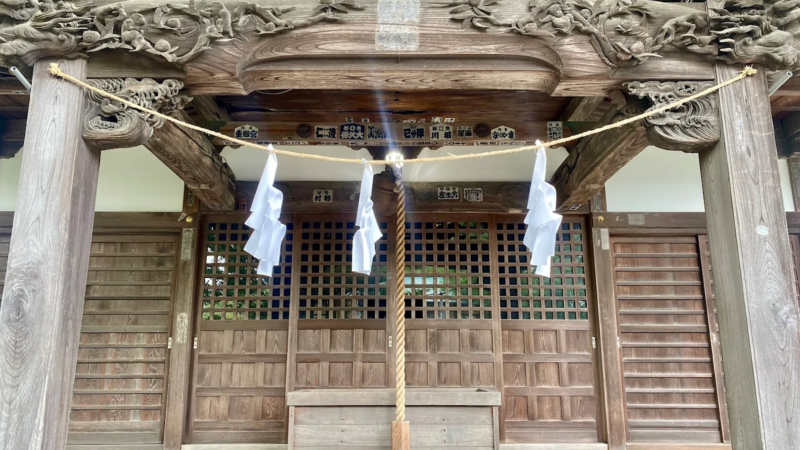
The main shrine exhibits characteristics of late Edo period shrine architecture, with elaborate carvings inlaid across the entire wall surface.
Carving Characteristics
The carvings adorning the walls of the main shrine represent the culmination of late Edo period craftsmanship, showcasing meticulously carved details. Traditional auspicious motifs such as dragons, lions, and flowers and birds are depicted, demonstrating the high level of skill of the craftsmen of that time.
Cultural Property Designation
Designated as an Akiruno City Designated Tangible Cultural Property (Building) on November 25, 2010 (Heisei 22). It is protected as a valuable cultural property that conveys the history of the region and as an example of late Edo period shrine architecture.
Layout of the Worship Hall and Shrine
The worship hall is located at the top of the stone steps, with the main shrine situated behind it. From the temple grounds, you can see the valley through which the Akigawa River flows and the surrounding mountains, creating a tranquil atmosphere surrounded by nature.
Natural Environment of the Temple Grounds
Located on the slopes of Mt. Myojin, the temple grounds are surrounded by abundant nature.
- Spring: Beautiful fresh greenery awaits, allowing for a refreshing visit.
- Summer: Cool shade from the trees creates a summer resort atmosphere.
- Autumn: Autumn leaves adorn the stone steps, offering a charming landscape.
- Winter: Enveloped in silence, you can feel the serene atmosphere of the sacred grounds.
Access and Surrounding Information
Access by Train
From JR Itsukaichi Line “Akigawa Station”
- On Foot
Approximately 13-15 minutes on foot from the south exit of Akigawa Station.
Exit the station and head southwest, cross the Akigawa River, and proceed to the Amama area.
- By Bus
Get off at the Nishi-Tokyo Bus “Ikiiki Center” bus stop, approximately 3 minutes on foot.
*Since bus services are limited, it is recommended to check the timetable in advance.
Access by Car
From Akigawa Station
Approximately 6 minutes by car (approximately 2km)
From Major Roads
- Approximately 15 minutes from the Ken-O Expressway “Akiruno IC”
- Accessible from National Route 411 (Takiyama Kaido)
Parking Information
There is some parking space near the temple grounds, but the number of spaces is limited. The road at the bottom of the stone steps is narrow, so please drive carefully. We recommend using public transportation if possible.
Nearby Attractions
Akigawa Valley
A 10-20 minute drive from Ametake Shrine lies the valley where the Akigawa River, one of Tokyo’s clearest rivers, flows. It’s a popular spot for river activities in summer and autumn foliage in the fall.
Kōtoku-ji Temple
An ancient temple of the Rinzai sect, Kenchō-ji school, located in Akiruno City, famous for its large ginkgo tree designated as a Tokyo Metropolitan Natural Monument.
Itsukaichi Local History Museum
A facility where you can learn about the history and culture of Akiruno City, recommended for those interested in local history.
Manners and Precautions for Visiting a Shrine
Precautions for Visiting the Stone Steps
The 196 (or 231) stone steps can be slippery, especially in rainy weather and winter. Please pay attention to the following points:
- Wearing comfortable shoes is recommended.
- Be especially careful of your footing in rainy weather.
- Elderly people and those with mobility issues should take breaks as they ascend.
- Use handrails where available.
Basic Etiquette for Visiting a Shrine
- Bow before passing through the torii gate.
- Purify your body and mind at the water basin (if available).
- Bow twice, clap twice, and bow once in front of the main hall.
- Quietly recite your wish in your heart.
- Maintain silence and respect nature within the shrine grounds.
Regarding Photography
Photography is generally permitted within the shrine grounds, but please consider the following points.
- Photography of cultural artifacts such as the carvings on the main shrine is permitted, but please refrain from using flash.
- Please be considerate of other worshippers.
- Remember that this is a sacred place.
The Charm and Significance of Visiting Ametake Shrine
A Local Guardian Shrine
Ametake Shrine has been a part of the lives of the people of the Ametake district for hundreds of years. The affectionate name “Myojin-sama” reflects the deep faith of the local residents.
Historical Value
The main shrine, built in the late Edo period, is a valuable cultural artifact that conveys the architectural techniques and artistry of the time. The carvings covering the entire wall surface can be considered works of art that embody the skills of craftsmen and their faith.
Harmony with Nature
Located on the slopes of Mt. Myojin, it offers an environment surrounded by abundant nature, despite not being far from the city. As you climb the stone steps, you can experience a sense of liberation from daily stress and a purification of the mind.
Comprehensive Protection by Four Deities
The four deities—Amenominakanushi-no-Mikoto, Susanoo-no-Mikoto, Hondawake-no-Mikoto, and Ogetsuhime-no-Mikoto—each possess different divine virtues and respond to the diverse wishes of worshippers. This shrine provides strength in various aspects of life, from health and longevity to protection from evil, success in competitions, and business prosperity.
Annual Events and Festivals
At Ametake Shrine, festivals are held throughout the year while preserving local traditions. For detailed schedules, please check local bulletin boards or city publications.
Annual Grand Festival
The annual grand festival, held every autumn, brings together local residents for portable shrine processions and offerings. It is an important event that reaffirms community bonds and prays for a bountiful harvest and family safety.
New Year’s Visit
Many worshippers visit the shrine in the new year to pray for safety and happiness throughout the year. However, compared to large shrines in the city center, it is less crowded, allowing for a more peaceful visit. ## About Goshuin (Shrine Seals)
Regarding the issuance of Goshuin at Ametake Shrine, there may not be a permanently staffed shrine office. If you wish to receive a Goshuin, it is recommended to check in advance. While Goshuin collecting has become popular in recent years, let’s not forget the original meaning of worship and cherish them as proof of faith.
Recommended Points for Visiting Ametake Shrine
1. The Tranquility of Early Morning Visits
Visiting early in the morning allows you to feel the sacred atmosphere more deeply, as the shrine grounds are enveloped in silence. The sight of the morning sun filtering through the trees is mystical.
2. Autumn Foliage Season
In autumn, the trees along the stone steps change color, creating a tunnel of autumn leaves along the approach to the shrine. It’s an ideal season for photography.
3. Combining with Historical Walks
There are many other historical temples, shrines, and historical sites scattered throughout Akiruno City. Starting from Ametake Shrine, a walk exploring the local history is also recommended.
4. Combining with Akigawa Valley
After visiting the shrine, extending your trip to Akigawa Valley allows you to fully enjoy nature and history in a single day. Especially in summer, it can be enjoyed in combination with river activities.
Summary: The Value of Ametake-jinja Shrine
Ametake-jinja Shrine, located in Amama, Akiruno City, Tokyo, is a shrine with a long history and cultural value. The main hall, built in the late Edo period, awaits at the top of 196 stone steps. Protected as an Akiruno City designated tangible cultural property, its magnificent carvings captivate visitors.
Ametake-jinja Shrine, with Amenominakanushi-no-Mikoto as its main deity, and Susanoo-no-Mikoto, Hondawake-no-Mikoto, and Ogetsuhime-no-Mikoto as secondary deities, is a shrine that brings various blessings, including health and longevity, protection from evil, good fortune in competitions, and abundant harvests. It is affectionately known locally as “Myojin-sama.”
Located just a 15-minute walk from Akigawa Station on the JR Itsukaichi Line, this shrine is situated in a naturally rich environment on the slopes of Mt. Myojin, offering a tranquil escape from the hustle and bustle of the city. The process of climbing the stone steps itself becomes a purifying experience, like a spiritual discipline, freeing you from the stresses of everyday life.
When visiting Akiruno City, be sure to stop by Ametake Shrine and feel the weight of its history, which dates back to the Edo period, and the warm protection of its four deities. “Myojin-sama” will surely bring happiness into your life.