Complete Guide to Kishijima Shrine (Akiruno City, Tokyo) | A Thorough Explanation of the History, Deities, Access, and Inner Sanctuary of the Benzaiten of Ajiro
Kishijima Shrine, located in Ajiro, Akiruno City, Tokyo, is a historic shrine affectionately known locally as “Benzaiten of Ajiro.” Situated on the slopes of Ajiro Benten Mountain, the shrine grounds, surrounded by abundant nature, offer a tranquil atmosphere. This article comprehensively introduces information useful for visitors, including the detailed history of Kishijima Shrine, its enshrined deities, blessings, access methods, and even the inner sanctuary, the Benzaiten Cave.
Basic Information about Kishijima Shrine
Location: 83 Ajiro, Akiruno City, Tokyo
Deity Enshrined: Ichikishimahime-no-Mikoto
Former Shrine Rank: Village Shrine
Common Name: Ajiro no Benten-sama
Nearest Station: Approximately 22-25 minutes on foot (approx. 1.8 km) from Musashi-Masudo Station on the JR Itsukaichi Line
Nearest Bus Stop: Approximately 19 minutes on foot (approx. 1.4 km) from Ajiro-iriguchi
Elevation: Approximately 233.6m (within the shrine grounds)
Head Shrine: Itsukushima Shrine (Hatsukaichi City, Hiroshima Prefecture), Munakata Taisha (Munakata City, Fukuoka Prefecture)
Kishijima Shrine is located within Ajiro Bentenyama Park, surrounded by mountains and a rich natural environment. The entrance is somewhat difficult to find, so first-time visitors are advised to use a map app.
History and Origins of Kishijima Shrine
Origin of Founding
The exact founding date of Kishijima Shrine is unclear, but one theory suggests it dates back to the Nanboku-cho period. A legend remains that Ashikaga Takauji, who founded the Muromachi Shogunate, enshrined the deity as his mother’s guardian deity, indicating its long history dating back to the Middle Ages.
Grant of Shuinchi Land from Tokugawa Ieyasu
In 1591 (Tensho 19), the shrine received 5 koku of Shuinchi land from Tokugawa Ieyasu, the first shogun of the Edo shogunate. This demonstrates the shrine’s status and importance, indicating that it received protection from the shogunate throughout the Edo period. Shuinchi land was land granted to temples and shrines by the shogun, granting them the privilege of exemption from land tax.
Separation of Shinto and Buddhism in the Meiji Era
In 1870 (Meiji 3), due to the Meiji government’s decree separating Shinto and Buddhism, our shrine, previously known as Benten-sha, was renamed to its current name, “Kishijima Shrine.” During this period, many temples and shrines throughout Japan were affected by the Shinto-Buddhist separation policy, and a clear distinction between shrines and temples emerged.
Changes in the Shrine Building
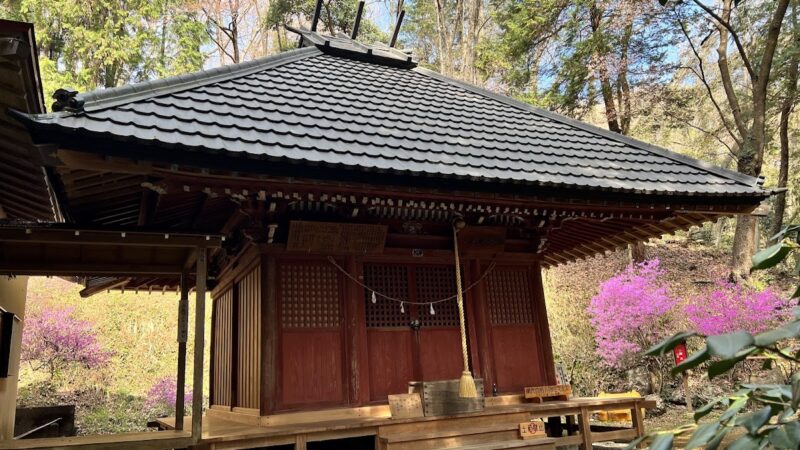
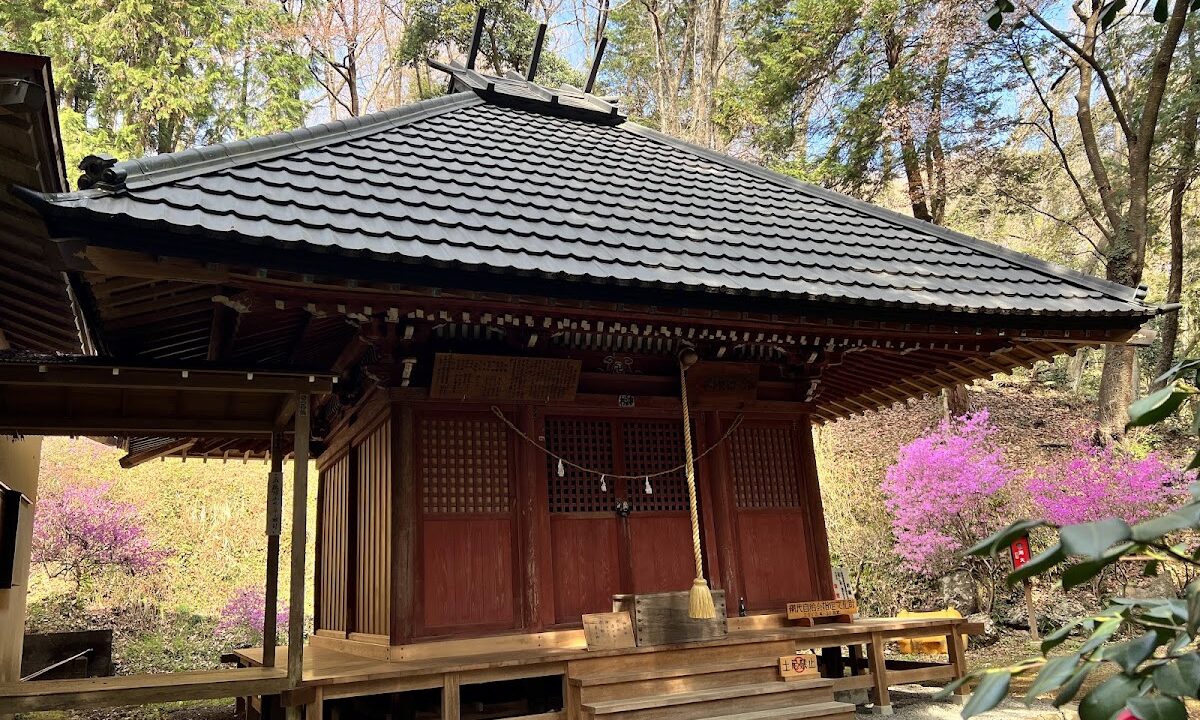
It is said that the shrine building was once a thatched-roof structure, but it has now been renovated into a tiled-roof structure. Due to its location in the mountains, maintenance is difficult, but it has been preserved to this day thanks to the faith of the local people.
About the Deity: Ichikishimahime-no-Mikoto
The deity enshrined at Kishijima Shrine is Ichikishimahime-no-Mikoto. Ichikishimahime-no-Mikoto is a goddess appearing in Japanese mythology and is known as one of the Munakata Three Goddesses.
The Divine Nature of Ichikishimahime-no-Mikoto
Ichikishimahime-no-Mikoto is worshipped as the goddess of water, the sea, and navigation, as well as the goddess of performing arts, beauty, and wealth. Due to syncretism with the Buddhist deity Benzaiten (Benten-sama), she is often affectionately known as “Benten-sama,” and Kishijima Shrine is commonly referred to as “Ajiro no Benten-sama.”
About the Munakata Three Goddesses
The Munakata Three Goddesses are three goddesses born from the oath (ukei) between Amaterasu-Omikami and Susanoo-no-Mikoto:
- Tagorihime-no-Mikoto
- Tagitsuhime-no-Mikoto
- Ichikishimahime-no-Mikoto
These three goddesses are enshrined throughout Japan, with Munakata Taisha in Fukuoka Prefecture and Itsukushima Shrine in Hiroshima Prefecture as their head shrines.
Benefits of Kishijima Shrine
Kishijima Shrine, which enshrines Ichikishimahime-no-Mikoto, is believed to offer the following benefits:
Main Benefits
- Beauty and Health: As the goddess of beauty and health, prayers for beauty and health are offered.
- Protection from Water Disasters: As the god of water, prayers for protection from water disasters and safety are offered.
- Safe Voyages: As the guardian deity of the sea, prayers for safe travels are offered.
- Business Prosperity: As Benzaiten, the goddess of wealth and fortune is offered.
- Skill Improvement: Prayers for improvement in performing arts and skills.
- Matchmaking: As the guardian deity of women, prayers for matchmaking are offered.
Benzaiten, in particular, is known for her benefits in improvement in performing arts and increased financial luck, and is revered by musicians and artists.
Highlights of the Shrine Grounds
Main Shrine
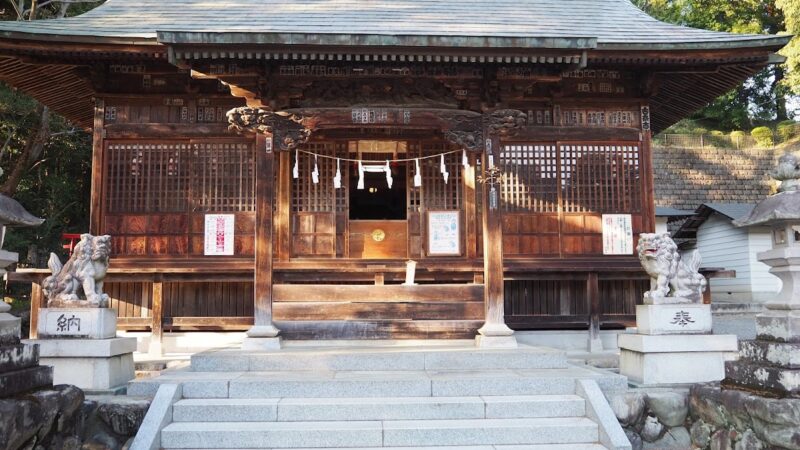
The main shrine, built on the mountainside of Ajiro Benten-yama, is situated within the mountain’s slope and exudes a tranquil atmosphere. Surrounded by lush trees, it offers a glimpse into the changing seasons. The tiled roof of the shrine is simple yet dignified, conveying a sense of its long history.
Small Shrine Behind the Main Shrine
Behind the main shrine is a small shrine. Although few visitors come here, it is a valuable reminder of local beliefs. Take a moment to appreciate these small shrines as you stroll through the grounds.
Inner Sanctuary: Benten Cave (Benten Cave)
The greatest highlight of Kishijima Shrine is the Benten Cave, the inner sanctuary located further up the mountain from the main shrine.
Features of Benten Cave
- A sacred space utilizing a natural rock cave
- The entrance features a heart-shaped hole, making it a popular spot for social media photos
- Inside the cave are enshrined statues of Daikokuten and Bishamonten
- The Daikokuten statue is designated as an Tangible Cultural Property by Akiruno City
Cultural Value
The Daikokuten statue enshrined inside the cave is officially designated as a cultural property of Akiruno City, recognizing its historical and cultural value. Daikokuten is one of the Seven Lucky Gods and is worshipped as the god of business prosperity and abundant harvests. This cave, where Daikokuten is enshrined together with Bishamonten, is a valuable historical site that preserves the remnants of the syncretism of Shinto and Buddhism.
Access to the Cave
To reach Benten Cave, you need to climb a mountain path further from the main shrine. The path is well-maintained, but we recommend visiting in suitable hiking shoes and clothing. Please be especially careful during rainy weather and winter, as the ground can become slippery.
Ajiro Bentenyama Park
Kishijima Shrine is located within Ajiro Bentenyama Park. The park is rich in nature and is a popular hiking destination. Nearby are low mountains such as Ajiro Bentenyama (292m), Hanamiyama (256.7m), and Ajiro Shiroyama (331m), allowing for light hiking.
Access Methods
Access by Train
The nearest station is JR Itsukaichi Line “Musashi-Masudo Station”.
- Walking from Musashi-Masudo Station: Approximately 22-25 minutes (approximately 1.8km)
- Head northwest from the station towards Ajiro.
Access by Bus
The nearest bus stop is “Ajiro Iriguchi”.
- Walking distance from Ajiro-iriguchi bus stop: Approximately 19 minutes (approximately 1.4 km)
- Bus service is limited, so we recommend checking the timetable in advance.
Access by Car
- Approximately 15-20 minutes from Akiruno city center
- It’s easy to find if you aim for Ajiro Bentenyama Park
- Please follow the on-site signs regarding parking
- Search for “83 Ajiro, Akiruno City, Tokyo” or “Ajiro Bentenyama Park” on your car navigation system.
Points to Note
- The area is surrounded by mountains, and the entrance may be difficult to find.
- We strongly recommend that first-time visitors use a map app (Yahoo! Maps, Google Maps, etc.).
- It’s a good idea to check your mobile phone’s signal strength in advance.
- Since you will be walking on mountain paths, comfortable walking shoes are essential.
Points and Manners for Visiting
Etiquette for Visiting
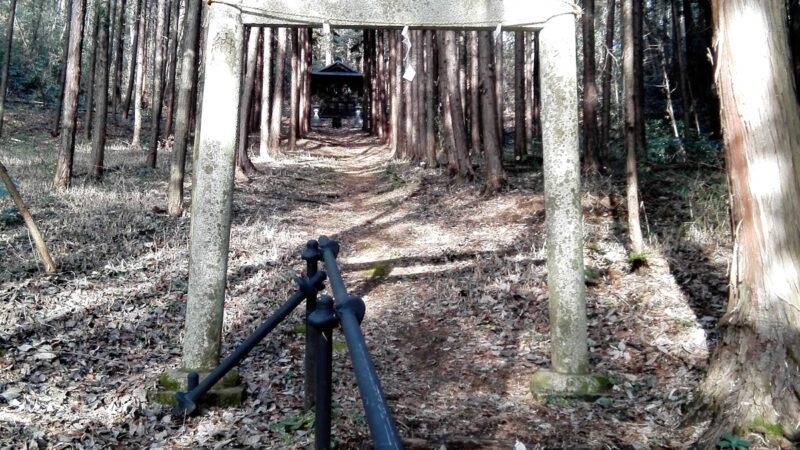
- Bow before passing through the torii gate
- Walk along the edge of the path (the center is the path for the gods)
- If there is a water basin, cleanse your hands and mouth.
- Worship using the two bows, two claps, one bow method.
- If you extend your walk to the inner sanctuary, take sufficient safety precautions.
Regarding Photography
- Photography is generally permitted on the shrine grounds, but please be considerate of other worshippers.
- It is considered good manners to refrain from taking photos inside the main hall.
- The heart-shaped hole in Benten Cave is a popular photo spot, but please remember that it is a sacred place.
Clothing and Items to Bring
- Comfortable clothing and trekking shoes are ideal.
- Bring insect repellent in summer and warm clothing in winter.
- Bring drinking water (there are likely no vending machines nearby).
- A flashlight is useful if you are going to the inner sanctuary.
Nearby Attractions
Ajiro Castle Mountain
Near Kishijima Shrine is Ajiro Castle Mountain (elevation 331m). This mountain is believed to have once been the site of a medieval mountain castle and has been developed into a hiking trail. From the summit, you can enjoy panoramic views of the surrounding mountains.
Other Shrines and Temples in Akiruno City
Akiruno City has many other shrines and temples:
- Ninomiya Shrine: The main guardian shrine of Akiruno City
- Akiru Shrine: A prestigious ancient shrine listed in the Engishiki (ancient Japanese legal code)
- Daihiganji Temple: An ancient temple famous for its white bush clover
Akigawa Valley
Akiruno City is also the gateway to the Akigawa Valley. It’s a popular tourist spot where you can enjoy clear streams and lush nature, and you can enjoy barbecues, camping, and playing in the river.
Annual Events and Festivals
Regarding the specific festival dates of Kishijima Shrine, publicly available information is limited due to the shrine’s small size. Generally, shrines dedicated to Benzaiten (a goddess of fortune) hold the following events:
- Annual Grand Festival: The most important festival held once a year
- Hatsumode (First Shrine Visit of the New Year): The first three days of the New Year
- Benzaiten Festival: A festival related to Benzaiten (the timing varies depending on the shrine)
These are some of the events that are often held, but it is recommended to ask locals or those involved for details.
The Charm of Kishijima Shrine
Tranquility and Nature
The greatest charm of Kishijima Shrine is its tranquil environment, surrounded by deep nature despite being close to the city center. Located on the mountainside, it allows you to escape the hustle and bustle of everyday life and find peace of mind.
The Weight of History
With a long history said to date back to the Nanboku-cho period, a shuinchi (land granted by Tokugawa Ieyasu), and a Daikokuten statue designated as a city cultural property, this small shrine is also characterized by its high historical value.
The Mystery of the Inner Sanctuary
The inner sanctuary, utilizing the natural rock cave known as Benten Cave, is a precious place that preserves the remnants of the syncretism of Shinto and Buddhism. The tranquil atmosphere within the cave leaves a deep impression on visitors.
Combining with Hiking
Visiting the sanctuary as part of a hiking course through the surrounding low mountains allows you to enjoy nature walks and shrine visits simultaneously. Those confident in their physical fitness are recommended to combine it with a climb of Ajiro Castle Mountain or Ajiro Benten Mountain.
Precautions When Visiting
Safety Precautions
- Be aware of sudden changes in weather as you will be walking on mountain paths.
- Visiting in groups is safer than visiting alone.
- Check your cell phone signal strength and ensure you have a means of emergency contact.
- Plan your time carefully to descend before sunset.
Environmental Preservation
- Always take your trash with you.
- Do not harm nature.
- No open flames.
- Do not feed wild animals.
Consideration for the Local Community
- Walk quietly when passing through residential areas.
- Do not trespass on private property.
- Remember to greet local residents.
The Significance of Visiting Kishijima Shrine
Kishijima Shrine, though not large in scale, is one of the few shrines in Tokyo where you can experience the atmosphere of authentic mountain worship. It enshrines Ichikishimahime-no-Mikoto, the goddess of water, beauty, and performing arts, and houses cultural artifact Buddhist statues in its inner sanctuary, making it a valuable place that preserves the tradition of Shinto-Buddhist syncretism.
For those seeking to escape the hustle and bustle of the city and find peace of mind in nature, those wishing to visit a historic shrine, or those wanting to combine hiking with shrine visits, Kishijima Shrine is an ideal destination.
Summary
Located in Ajiro, Akiruno City, Tokyo, Kishijima Shrine is a historic shrine affectionately known locally as “Ajiro’s Benten-sama.” Despite its small size, it boasts numerous attractions, including a possible founding date back to the Nanboku-cho period, land granted by Tokugawa Ieyasu, and the Benten Cave housing a Daikokuten statue designated as a city cultural property.
The enshrined deity is Ichikishimahime-no-Mikoto, and is believed to offer blessings for beauty and health, protection from water-related disasters, business prosperity, and skill improvement. While its location on a mountainside makes access somewhat time-consuming, it offers a tranquil and sacred atmosphere.
Approximately a 25-minute walk from Musashi-Masudo Station, combining a visit with a hike in the surrounding low mountains will create a more fulfilling experience. If you venture to the Benten Cave in the inner sanctuary, you’ll encounter precious cultural heritage, including a heart-shaped hole and a Buddhist statue designated as a cultural property.
If you’re looking for a shrine in Tokyo where you can experience nature and history, be sure to visit Kishijima Shrine. It’s sure to be a memorable pilgrimage experience.