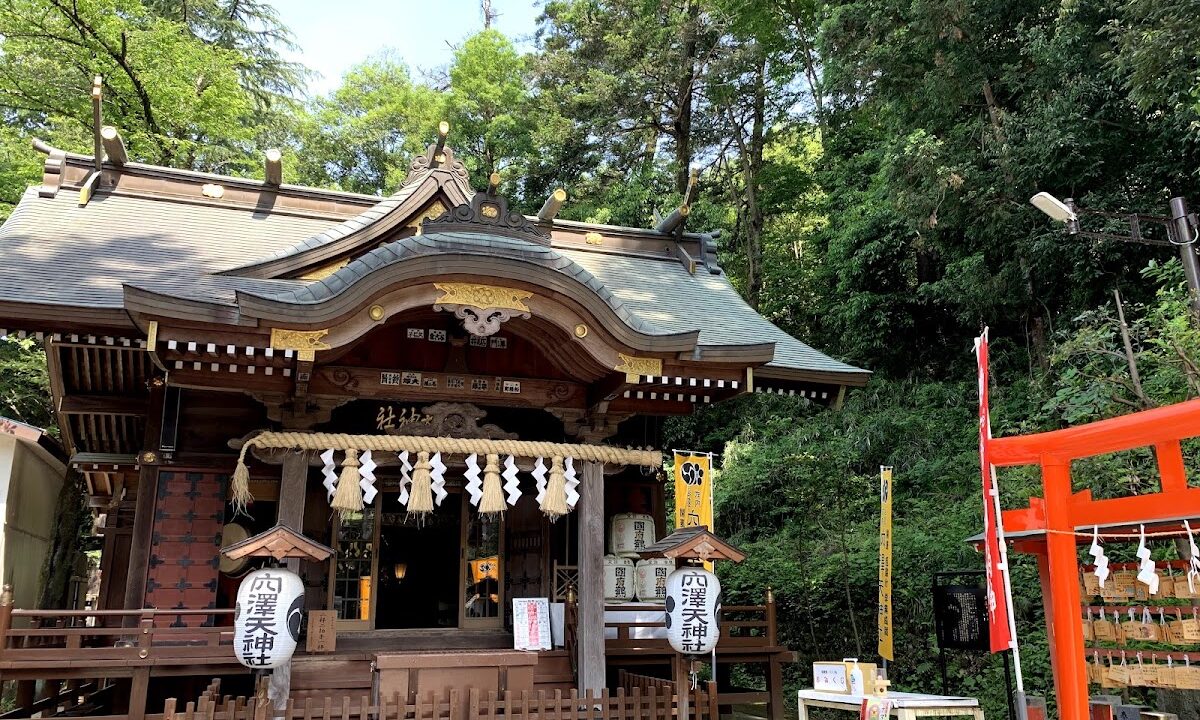
Anazawa Tenjin Shrine (Inagi City, Tokyo) Complete Guide | History, Goshuin (Shrine Seal), Access, and Benefits Explained in Detail
Anazawa Tenjin Shrine, located in Yanoguchi, Inagi City, Tokyo, is a venerable shrine listed in the Engishiki Jinmyocho (a list of shrines compiled in the Heian period). Known for its cave and spring at the foot of the cliff within the shrine grounds, and for its blessings related to matchmaking, academics, and medical care, it is deeply revered by the local people.
This article comprehensively explains everything you need to know before visiting Anazawa Tenjin Shrine, including its history, enshrined deities and blessings, goshuin information, highlights within the grounds, and access methods.
What is Anazawa Tenjin Shrine? | Its Status and History as a Shikinaisha (Shrine Listed in the Engishiki)
Anazawa Tenjin Shrine is a Shikinaisha (minor shrine) identified as “Anazawa Shrine in Tama District, Musashi Province,” listed in the Engishiki Jinmyocho. A Shikinaisha is a historically significant shrine listed in the Engishiki Jinmyocho, compiled in 927 during the Heian period. This signifies a high-ranking shrine recognized by the imperial court since ancient times.
Under the modern shrine ranking system, it was classified as a Gosha (village shrine) and has been revered as a central shrine in the region. Even today, it remains a cherished cultural asset of Inagi City and a spiritual pillar of the local community.
Origin of the Shrine Name | The Meaning Behind “Anazawa”
The name “Anazawa” originates from a cave (cave) located on the cliff below the shrine grounds. Pure spring water flows from this cave, and it has been revered as a sacred place of worship since ancient times. The cave is a special space that evokes a sense of natural mystery and is the most distinctive feature of Anazawa Tenjin Shrine.
History of Anazawa Tenjin Shrine | From Founding to the Present
Ancient Founding Legend
Regarding the founding of Anazawa Tenjin Shrine, a legend states that it was established in the 4th year of Emperor Kōan’s reign (around 427 BC). While this is a legendary date based on the Nihon Shoki (Chronicles of Japan), it indicates that the shrine existed as a place of worship at least since ancient times.
Located on a terrace cliff in the Tama River basin, and featuring abundant springs, it is easy to imagine that ancient people considered this area a sacred site for water deity worship and nature worship.
Listing in the Engishiki Jinmyōchō (Register of Shrines in the Engi Era)
The shrine is listed as “Anazawa Shrine in Tama District, Musashi Province” in the Engishiki Jinmyōchō (Register of Shrines in the Engi Era), completed in the 5th year of the Engi era (927 AD). This confirms that it was already an important shrine recognized by the imperial court during the Heian period. As a Shikinaisha (shrine listed in the Engishiki) within Tama District, Musashi Province, it played a central role in local faith.
From the Middle Ages to the Early Modern Period
While detailed records from the Middle Ages onward are limited, the shrine has consistently attracted the faith of local people. During the Edo period, it is believed that prayers for abundant harvests, protection from disease, and family safety were offered as the guardian shrine of surrounding villages.
Development in the Modern Era
Under the modern shrine ranking system of the Meiji era, it was ranked as a Gosha (village shrine), establishing its position as a central shrine in the region. Even after the war, its historical value as a local tutelary shrine and a Shikinaisha (a shrine listed in the Engishiki) was re-evaluated, attracting many worshippers.
Deities and Benefits | Diverse Divine Virtues
Anazawa Tenjin Shrine enshrines three deities: the main deity and three other deities enshrined alongside.
Main Deity: Sukunahikona-no-Mikoto
The main deity is Sukunahikona-no-Mikoto. In Japanese mythology, he is known as a deity who, along with Ōkuninushi-no-Mikoto, pioneered the land and bestowed upon people the techniques of medicine, agriculture, and sake brewing.
Benefits of Sukunahikona-no-Mikoto:
- Medical Care and Health Promotion: As the god of medicine, prayers for healing from illness and good health.
- Industrial Development: Development of industries such as agriculture and sake brewing.
- Wisdom and Skill: Acquisition of various skills and knowledge.
Enshrined Deity: Sugawara no Michizane (Kanjin)
Sugawara no Michizane is a Tenjin deity worshipped nationwide as the god of learning. He was a scholar and politician of the Heian period, known for his outstanding talent and sincere character.
Benefits of Sugawara no Michizane:
- Academic Achievement: Passing examinations and improving academic performance.
- Improvement in Performing Arts: Improvement of artistic talents such as calligraphy and poetry.
- Sincerity and Justice: An honest heart and the realization of justice.
Enshrined Deity: Ōnamuchi-no-Mikoto
Ōnamuchi-no-Mikoto is another name for Ōkuninushi-no-Mikoto, a god who worked with Sukunahikona-no-Mikoto in nation-building.
Benefits of Ōkuninushi-no-Mikoto:
- Matchmaking: Success in finding a good partner, marital harmony
- Business Prosperity: Success in business, business prosperity
- Family Safety: Peace and prosperity of the family
General Benefits
Anazawa Tenjin Shrine is known for the following benefits, thanks to the divine virtues of these three deities:
- Matchmaking: Prayers for good relationships, success in love
- Academics: Passing exams, academic achievement
- Medical Care/Health: Recovery from illness, improved health
- Performing Arts: Improvement of artistic talent
Because of these diverse benefits, the shrine is visited by worshippers with various wishes.
Highlights of the Shrine Grounds | The Mystery of the Cave and Spring Water
Atmosphere of the Shrine and Grounds
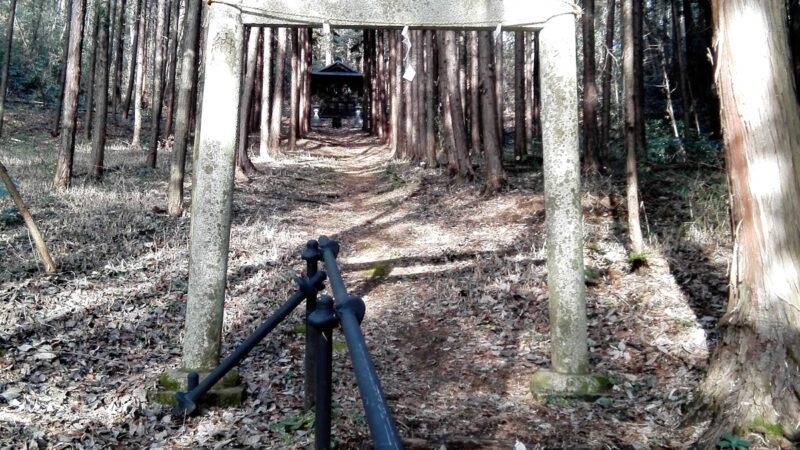
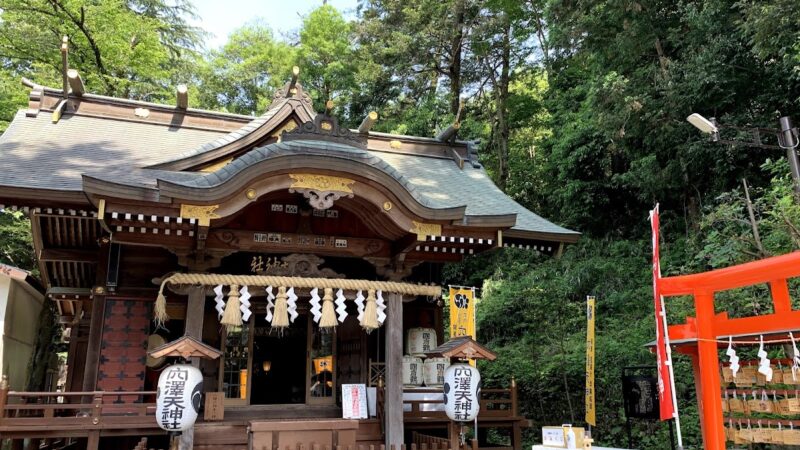
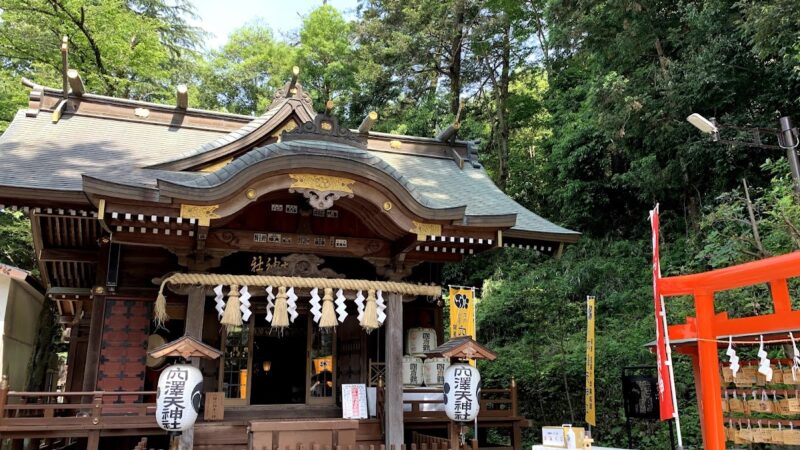
The grounds of Anazawa Tenjin Shrine are located on a river terrace of the Tama River, a tranquil space surrounded by abundant nature. Passing through the torii gate, a tree-lined path leads to the shrine. The main hall is built in a traditional shrine architectural style, creating a solemn atmosphere.
Cave (Cave Formation) | The Shrine’s Most Distinguished Feature
The most distinctive feature of Anazawa Tenjin Shrine is the cave located in the cliff below the shrine grounds. This cave was formed naturally and has been an object of worship since ancient times. The cave is enveloped in a mystical atmosphere and is still carefully preserved as a sacred space.
The cave can be accessed by descending stairs from the shrine grounds. The natural beauty and tranquil atmosphere leave a deep impression on visitors.
Spring Water | Selected as one of Tokyo’s 100 Best Spring Waters
Pure spring water flows from the cave, and this spring water has been selected as one of “Tokyo’s 100 Best Spring Waters.” The water, which springs from the geological layers of the Tama River basin, maintains a stable temperature throughout the year and has been used as a source of water for daily life since ancient times.
The spring water flows into the Misawa River, serving as an important water source supporting the local water environment. The landscape, a fusion of natural elements such as the sound of water, lush greenery, and caves, offers a precious space where one can experience rich nature despite being close to the city.
Geological Observation Spot
Around the shrine grounds, you can observe geological formations unique to the Tama River basin. The exposed cross-section of the river terraces makes it a geologically interesting point. It’s a place worth visiting for anyone interested in natural science.
Trees and Nature on the Shrine Grounds
The shrine grounds are lush with ancient trees and seasonal trees, allowing visitors to enjoy the beauty of nature throughout the seasons. Fresh greenery in spring, deep green in summer, vibrant autumn leaves, and the tranquil beauty of winter—each season presents a different face.
Cultural Properties and Traditional Performing Arts | Edo no Sato Kagura
Nationally Designated Important Intangible Folk Cultural Property “Edo no Sato Kagura”
Anazawa Tenjin Shrine preserves “Edo no Sato Kagura,” a nationally designated important intangible folk cultural property. This is a traditional performing art passed down by the “Yamamoto-sha Chu” (Yamamoto Headquarters), a valuable cultural heritage dating back to the Edo period.
Sato Kagura is a traditional performing art that expresses mythological stories through dances performed with Kagura masks, and has played an important role in local festivals. It is performed at events such as the Anazawa Tenjin Shrine’s annual festival, where you can witness this ancient and elegant dance.
Annual Festival and Regular Events
The annual festival is held on the third or fourth Sunday of each month until August 25th. Local people gather for traditional festival events, including a portable shrine procession and the dedication of Sato Kagura.
In addition, various Shinto rituals are performed throughout the year, such as the New Year’s Day Festival, the Setsubun Festival, and the Summer Purification Ceremony.
Goshuin (Shrine Seal) and Goshuincho (Shrine Seal Book) Information
Regarding the Issuance of Goshuin
Anazawa Tenjin Shrine offers regular Goshuin. The shrine office is open from 9:00 AM to 4:00 PM.
The goshuin (temple/shrine stamp) features the shrine’s name, “Anazawa Tenjin Shrine,” written in ink and stamped with a red seal. It’s a simple yet powerful goshuin that reflects the shrine’s status as a Shikinaisha (a shrine listed in the Engishiki, an ancient Japanese legal code).
Special Goshuin
On special days, such as the annual festival, limited edition goshuin may be offered. We recommend checking the shrine’s official account or website for details.
Original Goshuincho (Goshuin Notebook)
Anazawa Tenjin Shrine also offers original goshuincho. You can obtain a commemorative goshuincho featuring designs inspired by the shrine’s distinctive caves and springs.
Etiquette for Receiving Goshuin
The goshuin is proof of your visit. The correct order is to first offer your heartfelt prayers at the main hall, and then receive your goshuin at the shrine office. Remember to express your gratitude to the shrine staff and use polite language.
Access and Parking Information
Basic Information
Address: 3292 Yanoguchi, Inagi City, Tokyo
Phone Number: 042-377-0055
Shrine Office Hours: 9:00 AM – 4:00 PM
Access by Train
Approximately 10-minute walk from Keio Yomiuri Land Station on the Keio Sagamihara Line
Keio Yomiuri Land Station is the nearest station. The easiest route is to exit the station at the South Exit and walk along the Misawa River; it takes about 10 minutes on foot. You can enjoy a stroll along the river on your way to the shrine.
Approximately 15-minute walk from Yanoguchi Station on the JR Nambu Line
The shrine is also accessible from Yanoguchi Station on the JR Nambu Line. Walk south from the station towards the Misawa River. It’s about a 15-minute walk.
Access by Bus
You can also take a bus from Keio Line “Inagi Station” or Odakyu Line “Shin-Yurigaoka Station”. Get off at the “Yanoguchi” bus stop and it’s about a 5-minute walk.
Access by Car and Parking
Approximately 10 minutes from Chuo Expressway “Inagi IC”
If you are accessing by car, the nearest interchange is the Inagi Interchange on the Chuo Expressway. After exiting the interchange, drive on local roads for about 10 minutes.
Parking: There is parking space for visitors on the shrine grounds. However, since the number of spaces is limited, we recommend using public transportation during busy periods such as New Year’s Day and the annual festival.
Nearby Tourist Attractions
There are several tourist attractions around Anazawa Tenjin Shrine, including Yomiuri Land and Inagi City Nature Park. You can enjoy exploring the surrounding area in conjunction with your visit to the shrine.
Points and Manners for Visiting a Shrine
Etiquette for Visiting a Shrine
- Bow at the Torii Gate: Bow before passing through the torii gate.
- Purify at the Water Basin: Cleanse your hands and mouth.
- Walk along the Edge of the Path: The center is considered the path of the gods.
- Etiquette at the Main Hall: Two bows, two claps, and one bow are the basic rituals.
- Visiting the Cave: As it is a sacred place, please observe quietly.
Photography
Photography is generally permitted within the shrine grounds, but it may be advisable to refrain from taking photos inside the shrine buildings or during religious ceremonies. Please check with the shrine office if you have any questions.
Clothing
There are no specific dress code requirements, but shrines are sacred places. Clean and subdued attire is recommended. Since there are stairs leading down to the cave, comfortable walking shoes are recommended.
Enjoying the Shrine by Season
Spring (March-May)
This is a beautiful season with fresh greenery. The trees in the shrine grounds are budding, creating an atmosphere full of vitality. The purity of the spring water is particularly striking during this season.
Summer (June-August)
The shrine grounds, enveloped in deep green, are filled with cool air. During the August Grand Festival, you can witness traditional rituals and local Kagura dances.
Autumn (September-November)
This is a beautiful season for autumn foliage. The trees in the shrine grounds change color, creating a picturesque landscape. You can worship in a calm and peaceful atmosphere.
Winter (December-February)
The shrine grounds, enveloped in silence, have a solemn atmosphere. During the New Year’s visit period, it is bustling with many worshippers. Even in winter, the spring water continues to flow without drying up.
The Charm of Anazawa Tenjin Shrine | Why So Many People Visit
Historical Value as a Shikinaisha Shrine
The historical value of being a Shikinaisha shrine listed in the Engishiki Jinmyocho (a list of shrines compiled in the Heian period) is a major attraction for shrine enthusiasts and history buffs. You can feel the weight of this place of worship that has continued since ancient times.
Grounds in Harmony with Nature
With its caves, springs, geological formations, and abundant trees, the grounds harmoniously blend natural elements, creating a precious space where you can experience rich nature despite being close to the city.
Diverse Blessings
With blessings for matchmaking, academic success, health, and performing arts, it attracts worshippers of all ages. It’s a shrine you can visit at life’s milestones or to pray for.
Easy Access
Located just a 10-minute walk from Keio Yomiuri Land Station, it’s easily accessible from the city center.
Community-Rooted Faith
This shrine is cherished by the local people, and its warm atmosphere is a major draw. It hasn’t become overly commercialized as a tourist spot, maintaining its original shrine-like character.
Nearby Shrines and Temples
When visiting Anazawa Tenjin Shrine, we recommend also visiting the surrounding shrines and temples.
Myozenji Temple
A Nichiren Buddhist temple located in Inagi City, relatively close to Anazawa Tenjin Shrine.
Ikoji Temple
An ancient temple in Inagi City, with a rich history.
Aoi Shrine
Also located in Inagi City, this is a Shikinaisha (a shrine listed in the Engishiki, an ancient Japanese legal text) dedicated to the water god. Many people visit this shrine along with Anazawa Tenjin Shrine.
Frequently Asked Questions (FAQ)
Q1: What are the reception hours for the Goshuin (temple/shrine stamp) at Anazawa Tenjin Shrine?
A1: The reception hours at the shrine office are from 9:00 AM to 4:00 PM. However, these hours may change due to religious ceremonies or events, so if you want to be sure to get a Goshuin, we recommend calling ahead to confirm.
Q2: What is the most convenient nearest station to Anazawa Tenjin Shrine?
A2: The nearest station is Keio Yomiuri Land Station on the Keio Sagamihara Line, about a 10-minute walk away. The route from the station along the Misawa River is easy to follow, allowing you to enjoy a stroll along the river on your way to the shrine. It’s also accessible in about 15 minutes on foot from JR Nambu Line’s Yanoguchi Station.
Q3: Can I freely visit the cave?
A3: You can visit the cave by descending the stairs from the shrine grounds. However, as it is a sacred place, please visit quietly and observe proper etiquette. Some areas can be slippery, so we recommend wearing comfortable shoes.
Q4: What are the blessings of Anazawa Tenjin Shrine?
A4: The main blessings are for matchmaking, academic success, medical care and health improvement, and improvement in performing arts. The main deity, Sukunahikona-no-Mikoto, is known as the god of medicine; the enshrined deity, Sugawara no Michizane, is known as the god of learning; and Ōkuninushi-no-Mikoto is known as the god of matchmaking. Because of the diverse blessings, visitors come with a variety of wishes.
Q5: Is there parking available?
A5: There is parking space for visitors on the shrine grounds, but the number of spaces is limited. During busy periods such as New Year’s Day and the annual festival, the parking lot is likely to be full, so we recommend using public transportation.
Q6: When is the annual festival held?
A6: The annual festival is held on the third or fourth Sunday of each month until August 25th. You can witness traditional festival rituals, including the performance of “Edo no Sato Kagura,” a nationally designated important intangible folk cultural property. Please check the shrine’s official information for detailed dates.
Q7: How crowded is it during New Year’s Day?
A7: From New Year’s Day to the third day, many visitors come as the local guardian shrine, but it is not as crowded as large shrines in the city center. It is a relatively calm shrine to visit. However, the parking lot may be crowded, so using public transportation is recommended.
Q8: Do you accept wedding ceremonies or prayers?
A8: We also accept Shinto wedding ceremonies and various prayers (first shrine visit for newborns, Shichi-Go-San, exorcism, etc.). For details, please contact the shrine office directly (042-377-0055). Advance reservations are often required.
Q9: Is it possible to visit with a pet?
A9: Generally, it is discouraged to bring pets to shrines. At Anazawa Tenjin Shrine, pets should not be brought into the shrine buildings or caves. When strolling around the grounds, consideration for other visitors is necessary. Please check with the shrine office if you have any questions.
Q10: Is the spring water from the Tokyo 100 Selected Springs drinkable?
A10: The spring water is pure water selected as one of Tokyo’s 100 Selected Springs, but we recommend checking with the shrine beforehand regarding drinking it. Generally, drinking the spring water directly is at your own risk. It is safest to enjoy it primarily through viewing, such as for sightseeing or purifying your hands.
Q10: Is the spring water drinkable?
A10: The spring water is pure water selected as one of Tokyo’s 100 Selected Springs, but we recommend checking with the shrine beforehand regarding drinking it. Generally, drinking the spring water directly is at your own risk. ## Summary | Experience the Charm of Anazawa Tenjin Shrine
Anazawa Tenjin Shrine in Inagi City, Tokyo, is a fascinating shrine with historical value as an Engishiki-listed shrine, the natural mystery of its cave and spring water, and a variety of blessings including matchmaking, academic success, and health.
Despite its convenient location in the city center, it offers a tranquil space surrounded by abundant nature, allowing visitors to pray with peace of mind. It is a rare shrine where the prestige of an Engishiki-listed shrine coexists with a warm, community-rooted atmosphere.
It is a shrine that can be visited for various purposes, such as at life’s milestones, when making a wish, or when simply wanting to heal the soul in nature. Taking advantage of its convenient location just a 10-minute walk from Keio Yomiuri Land Station, we highly recommend you visit. The pure water gushing from the cave and the atmosphere of this ancient place of worship will surely leave a lasting impression.