Toga Shrine (Miyakejima, Tokyo) Complete Guide | History, Deities, and Access Information for this Engishiki-Listed Shrine
Toga Shrine, located in Miyake Village, Tokyo, is known as one of the most representative ancient shrines of the Izu Islands. It is a historically significant shrine, recorded in the Heian period as an Engishiki-listed shrine, and is affectionately known as “Toga-sama” by the islanders as the guardian shrine of Miyakejima. This article provides a detailed introduction to Toga Shrine, including its history, deities, grounds, festivals, and access information.
Basic Information about Toga Shrine
Toga Shrine is located in Togayama, Ako, Miyake Village, Miyakejima, Tokyo. Miyakejima is one of the Izu Islands, located approximately 180 km south of Tokyo in the Pacific Ocean, and is a naturally rich island formed by volcanic activity.
Location: 100-1212 Tomigayama, Ako, Miyake Village, Miyakejima, Tokyo
Shrine Rank: Engishiki-listed shrine, former village shrine
Deity Enshrined: Kotoshironushi-no-Mikoto
Number of Parishioners: Approximately 1,800 households
Contact: Inquiries can be made through the Miyakejima Tourism Association
Tomiga Shrine is located at the southwestern tip of Miyakejima, perched on the mountainside of Tomigayama. The entrance to the shrine grounds is along Tokyo Metropolitan Road 212, which circles the island, and a path leads from there to the shrine.
About the Name of Tomiga Shrine
There are several theories regarding the origin of the name “Tomiga,” but it is generally believed to derive from its location on Tomigayama, a mountain that has been revered as a sacred peak on Miyakejima since ancient times. The sound “Toga” is also said to be related to an ancient word meaning a sacred place.
Affectionately known as “Togasama” by the islanders, the shrine has been revered to this day as the spiritual center of Miyakejima. Furthermore, as the Mishima Daimyojin, the guardian deity of the Izu Seven Islands, it has also played a role as the protector of the entire Izu archipelago.
About the Deity: Kotoshironushi-no-Mikoto
The deity enshrined at Toga Shrine is Kotoshironushi-no-Mikoto. Kotoshironushi-no-Mikoto is a deity appearing in the Kojiki and Nihon Shoki, and is known as the son of Okuninushi-no-Mikoto.
Kotoshironushi-no-Mikoto played an important role in the myth of the transfer of the land, and is widely worshipped as the god of oracles, the god of business prosperity, and the god of the sea. Also known as Ebisu, he has been deeply revered as the guardian deity of maritime safety and abundant catches on Miyakejima, where fishing is a thriving industry.
Tomiga Shrine is also known as the birthplace of the deity enshrined at Izu Mishima Shrine (Mishima Taisha in Mishima City, Shizuoka Prefecture), and holds a historically important position as a key point of faith connecting the Izu Islands and Honshu.
History of Tomiga Shrine
The exact founding date of Tomiga Shrine is unclear, but it is considered a candidate for “Ame-tsuke-no-Mikoto Shrine” or “Ame-tsuwake-no-Mikoto Shrine,” listed in the “Engishiki Jinmyocho,” compiled in the 5th year of the Engi era (927 AD) during the Heian period, and is certain to have a history of at least 1000 years.
Ancient to Medieval Periods
From ancient times, it served as the guardian shrine of the seven Izu Islands and was a central figure in the faith of the entire Izu Islands. It was revered as Mishima Daimyojin and played an important role as the birthplace of the deity enshrined at Izu Mishima Shrine. In the medieval period, it was also revered by samurai families and is believed to have received the patronage of powerful clans that ruled the Izu Islands.
Early Modern Period
During the Edo period, Miyakejima Island, which was a direct territory of the shogunate, functioned as a spiritual pillar for the islanders. By this time, it had already established its position as the island’s principal guardian shrine, attracting reverence from all districts on the island.
Modern Period and Beyond
Under the Meiji era’s shrine ranking system, it was ranked as a local shrine. However, Miyakejima is a volcanic island with a history of frequent eruptions. Tomiga Shrine was also affected; originally located at Mine Tomiga-daira near the 8th station of Mt. Oyama, it is said to have been moved via Futashima-ga-yama (Shin-Tomiga-yama, Futatsu-Tomiga-yama) and then to Arashima Shrine in Kosabihama due to eruptions, before finally moving to its current location on Mt. Tomiga.
During the eruptions of 1962, 1983, and 2000, the entire island population was evacuated. Tomiga Shrine served as a spiritual anchor for the islanders and played a crucial role in their return to the island after the evacuation.
Shrine Grounds
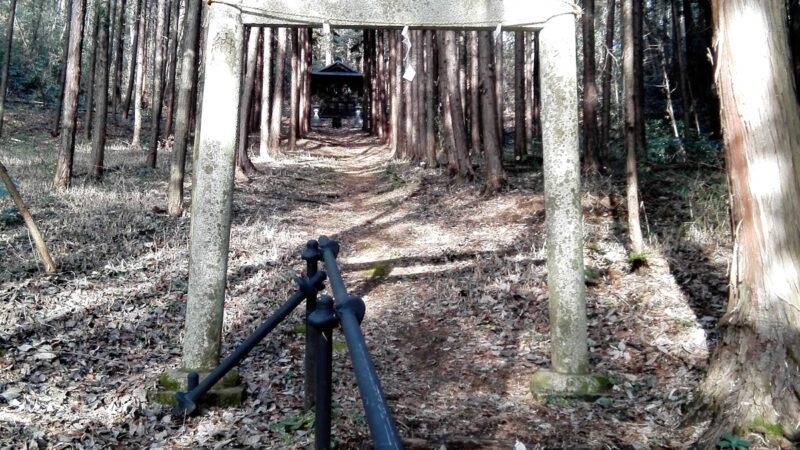
Tomiga Shrine is located on the slopes of Mount Tomiga in the southwestern part of Miyakejima Island. A torii gate along Tokyo Metropolitan Road 212 marks the entrance to the approach, from where stone steps lead up to the shrine grounds.
Approach and Torii Gate
A magnificent torii gate stands at the entrance to the approach, and the “Tomiga Shrine” bus stop is nearby. The approach is surrounded by lush greenery, allowing visitors to observe Miyakejima’s unique vegetation as they make their way to the shrine.
Shrine Buildings
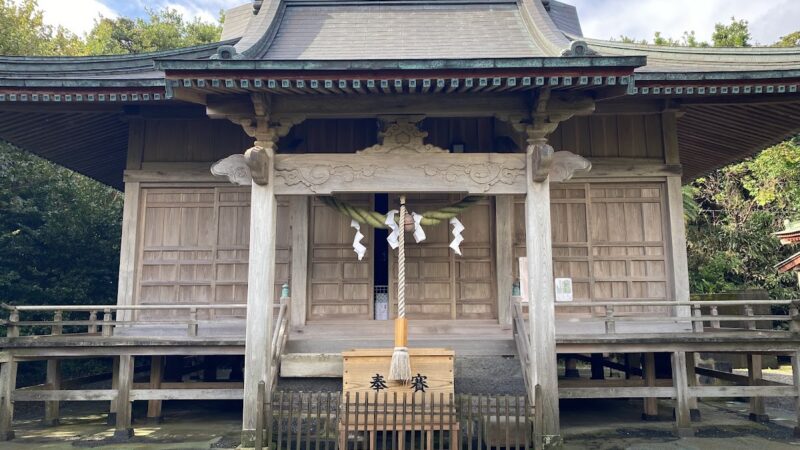
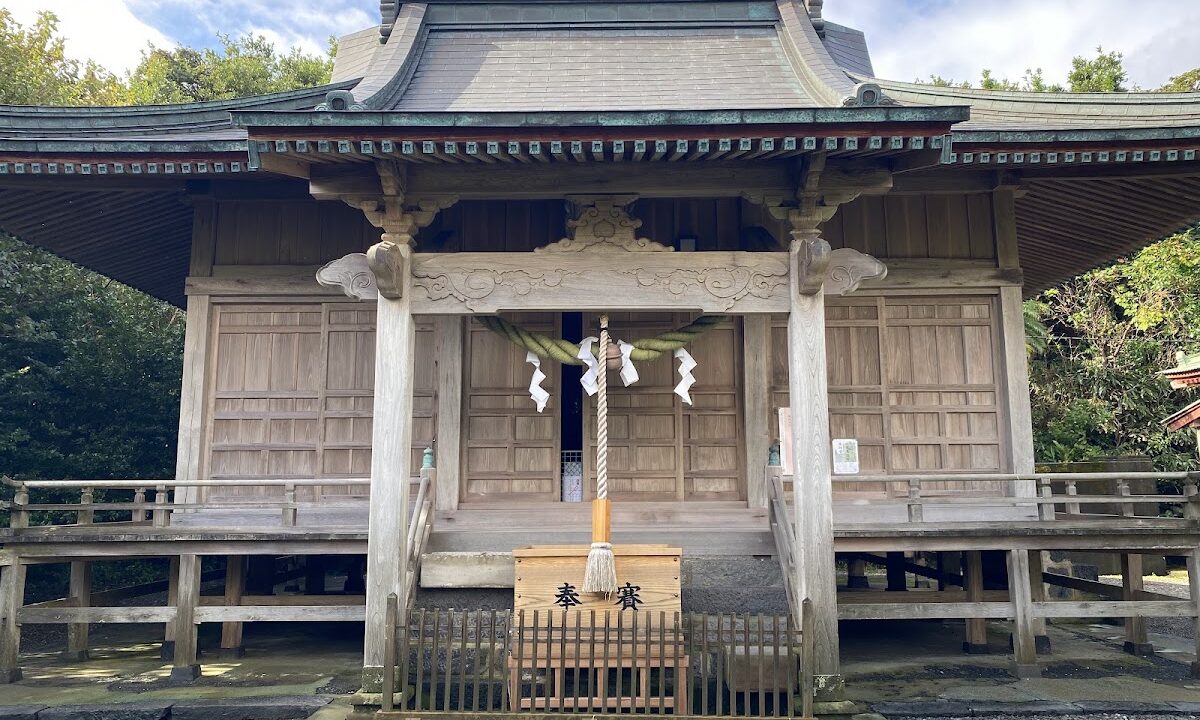
The main hall is built in a traditional shrine architectural style, creating a solemn atmosphere along with the worship hall. The architecture is adapted to the unique environment of a volcanic island, and it also bears the mark of a history of recovery from past eruption damage.
Nature within the Shrine Grounds
The shrine grounds are surrounded by evergreen broadleaf forests, allowing visitors to experience the rich nature of Miyakejima Island. The sounds of wild birds can be heard, and the fresh greenery is particularly beautiful from spring to early summer, while the autumn foliage is also a delight.
Subsidiary Shrines
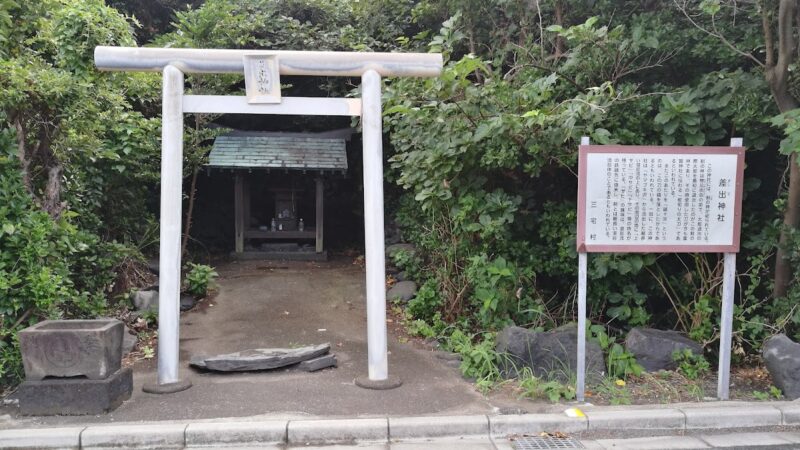
Tomoka Shrine, as the principal guardian shrine of Miyakejima Island, oversees 18 subsidiary shrines throughout the island. These subsidiary shrines are scattered throughout the island and are worshipped as guardian deities of their respective regions.
The main subsidiary shrines include the guardian shrines of various districts on the island, as well as small shrines known for specific blessings. These are managed by the priests of Tomoka Shrine, and they also conduct local festivals.
Festivals and Annual Events
Tomoka Shrine holds various festivals throughout the year, but the most important is the “Tomoka Shrine Grand Festival,” held every other year.
Tomiga Shrine Grand Festival (Pilgrimage Mikoshi)
The Tomiga Shrine Grand Festival is Miyakejima’s largest festival, held every other year from August 4th to 9th. Also known as the “Pilgrimage Mikoshi,” it is a valuable traditional event designated as a Tokyo Metropolitan Government Intangible Folk Cultural Property.
During the festival, the portable shrine (mikoshi) parades through each district of the island. Each district welcomes the mikoshi with elaborate decorations and events, enveloping the entire island in festive spirit. This festival strengthens the bonds among the islanders and serves as an important opportunity to reaffirm Miyakejima’s identity.
The mikoshi procession route covers the island’s major settlements, and grand welcoming ceremonies are held in each district, including the Ako district. Many spectators come from outside the island, making it a quintessential summer event on Miyakejima.
Other Festivals
- Annual Festival: A regular festival held once a year.
- New Year’s Festival: A festival celebrating the New Year held on January 1st.
- Monthly Festival: A regular festival held every month.
- Prayer for Maritime Safety: A festival praying for safety in fishing and a bountiful catch.
Through these festivals, Tomiga Shrine is deeply intertwined with the lives of the islanders.
Cultural Properties
The most important cultural property related to Tomiga Shrine is the aforementioned “Tomiga Shrine Grand Festival (Meguri Mikoshi),” which is designated as a Tokyo Metropolitan Government Intangible Folk Cultural Property. This festival is considered important from the perspective of cultural property preservation as a valuable event that conveys the traditional culture of Miyakejima to the present day.
Furthermore, the ancient documents and offerings preserved at the shrine are of high historical value and serve as important materials for understanding the history of Miyakejima.
Access
Since Miyakejima is an outlying island, access to the island is necessary first. Afterward, use island transportation to reach Tomiga Shrine.
Access to Miyakejima Island
By Plane:
- Approximately 50 minutes by Shin Chuo Airlines small aircraft from Chofu Airport
- Approximately 1-3 flights per day (may be cancelled due to weather)
- Arrive at Miyakejima Airport
By Ferry:
- Approximately 6 hours 30 minutes by Tokai Kisen large passenger ship from Takeshiba Pier in Tokyo
- Overnight departures are common
- Arrive at Miike Port
From Miike Port/Miyakejima Airport to Tomiga Shrine
By Bus:
- Take the village bus from Miike Port or Miyakejima Airport
- Get off at the “Tomiga Shrine” bus stop, short walk
- Bus service is limited, so check the timetable in advance
By Taxi:
- Approximately 15 minutes from Miike Port
- Approximately 10 minutes from Miyakejima Airport
- There are taxi companies on the island, but the number of vehicles is limited, so advance contact is recommended
By Rental Car/Rental Motorbike:
- There are rental car and motorcycle rental businesses on the island, allowing for free movement.
- Use Tokyo Metropolitan Road 212 and follow the signs for Tomiga Shrine.
Points to Note When Visiting
- Miyakejima is a volcanic island, and volcanic gases may be emitted. Please check the status of volcanic activity before visiting.
- Transportation options on the island are limited, so advance planning is important.
- Ferry and flight services may be canceled due to weather, so it is recommended to plan your itinerary with some leeway.
- The area around Tomiga Shrine is rich in nature, but comfortable walking shoes are recommended.
Benefits of Tomiga Shrine
Tomiga Shrine, which enshrines Kotoshironushi-no-Mikoto, is said to offer the following benefits:
- Maritime Safety: Protection of fishing and shipping safety
- Abundant Catch: Prosperity of fishing and abundant catches
- Business Prosperity: Benefits of Ebisu (god of fishermen and sailors)
- Family Safety: Health and peace of the family
- Protection of the Island: Peace and development of Miyakejima Island as a whole
The shrine is particularly revered by those involved in the fishing industry, and many visit to pray for safety before setting out to sea.
Nearby Tourist Spots
When visiting Tomiga Shrine, we recommend also visiting other tourist spots on Miyakejima Island.
Mt. Oyama
An active volcano towering in the center of Miyakejima Island, with an elevation of 775m. While there may be entry restrictions due to volcanic activity, climbing is possible when restrictions are lifted.
Oji Pond
The largest freshwater lake on Miyakejima Island, a crater lake with a circumference of approximately 2km. It is also known as a birdwatching spot.
Izumisaki Lighthouse
A white lighthouse standing at the southern tip of Miyakejima Island. The surrounding area is a scenic viewpoint where you can enjoy the magnificent view of the Pacific Ocean.
Ako District
The Ako district, where Tomiga Shrine is located, is one of Miyakejima’s main settlements, with many shops and restaurants.
Accommodation on Miyakejima Island
When visiting Tomiga Shrine, you may need to stay overnight on Miyakejima Island. There are various accommodations on the island, including guesthouses, hotels, and pensions.
- Guesthouses: Experience the homey atmosphere of the island
- Hotels: Relatively well-equipped accommodations
- Pensions: Many cater to divers
It is recommended to book accommodations early, especially during the summer and the Tomiga Shrine Grand Festival. You can check accommodation information on the Miyakejima Tourism Association website.
Miyakejima Local Products
Purchasing Miyakejima’s local products as a memento of your visit to Tomiga Shrine is also recommended.
- Ashitaba: A representative specialty product of Miyakejima Island, popular as a health food.
- Island Shochu: Authentic shochu brewed on Miyakejima Island.
- Kusaya: A traditional fermented food from the Izu Islands.
- Island Sushi: Sushi with a unique island flavor.
These can be purchased at shops and souvenir stores on the island.
Best Season for Visiting
The best season to visit Tomiga Shrine varies depending on your purpose.
To see the Tomiga Shrine Grand Festival: Held every other year from August 4th to 9th (check the year in advance).
Pleasant Weather: Spring (April-June) and Autumn (September-November) are relatively warm and pleasant.
Time to Avoid: Typhoon season (August-October) has a high risk of transportation cancellations.
While it is possible to visit the shrine year-round, be aware that the sea can be rough in winter, and ferry services may be cancelled.
Summary
Toga Shrine, located on Miyakejima Island in Tokyo, is a venerable shrine with over a thousand years of history, listed in the Engishiki (an ancient Japanese legal code). It enshrines Kotoshironushi-no-Mikoto and is affectionately known as “Togasama” by the islanders as the guardian shrine of the Izu Seven Islands.
The Toga Shrine Grand Festival, held every other year, is designated as a Tokyo Metropolitan Government Intangible Folk Cultural Property and is an important event that preserves the traditional culture of Miyakejima Island. Having continued to function as a spiritual pillar for the islanders in the harsh natural environment of a volcanic island, Toga Shrine is a must-visit shrine when visiting Miyakejima.
Due to its location 180km south of Tokyo in the Pacific Ocean, access requires time and planning, but in return, you can experience the island’s nature, history, and the depth of its faith in a way that cannot be found in the city. When sightseeing on Miyakejima Island, be sure to visit Toga Shrine and experience the history of faith in the Izu Islands.