Complete Guide to Kōtoku-ji Temple | History, Autumn Foliage, and Access Information for a Famous Temple in Akiruno City and Nerima Ward
While there are several temples named “Kōtoku-ji” in Tokyo, the most famous is Kōtoku-ji in Akiruno City. Founded during the Muromachi period, it is a historic Rinzai Zen temple of the Kenchō-ji school, and in autumn, it becomes one of Tokyo’s premier autumn foliage spots, attracting many worshippers and tourists. This article provides a detailed explanation of Kōtoku-ji in Akiruno City, including its history, highlights, the best time to see the autumn leaves, and access information.
What is Kōtoku-ji Temple? | Basic Information and Overview
Kōtoku-ji Temple is a Rinzai Zen temple of the Kenchō-ji school located in Owada, Akiruno City, Tokyo. Its mountain name is Ryūkaku-zan, and it is a prestigious ancient temple said to have been founded in 1373 (Ōan 6). Within the temple grounds are two large ginkgo trees designated as Tokyo Metropolitan Government Natural Monuments, creating a spectacular golden spectacle, especially during the autumn foliage season.
Kōtoku-ji Temple in Akiruno City
Official Name: Ryūkakuzan Kōtoku-ji Temple
Sect: Rinzai Zen Kenchō-ji School
Founded: Ōan 6 (1373)
Location: 234 Owada, Akiruno City, Tokyo
Designated Cultural Properties: Tokyo Metropolitan Government Designated Historic Site, Tokyo Metropolitan Government Designated Natural Monument (Two Large Ginkgo Trees)
Kōtoku-ji Temple in Akiruno City has been a temple of over 650 years since its founding in the early Muromachi period, attracting the faith of the local community. Currently, in addition to its historical value, it is gaining popularity as a spot for viewing autumn foliage.
Kōtoku-ji Temple in Nerima Ward
There is another Kōtoku-ji Temple in Tokyo, located in Sakuradai 6-chome, Nerima Ward. This is a temple of the Rinzai sect, Daitoku-ji branch, and its mountain name is Enmanzan. While it is a different temple from Kōtoku-ji in Akiruno City, it is a historical temple belonging to the same Rinzai sect and is well-loved in the region.
Other Kōtoku-ji Temples
There are other temples named Kōtoku-ji throughout Japan. In Hokuto City, Hokkaido, there is Jigenzan Kōtoku-ji, a Sōtō sect temple founded in 1736 (Genbun 1), dating back to the Edo period. Also, in Saitama Prefecture, there is Kinryūzan Kōtoku-ji, also a Sōtō sect temple.
History of Kōtoku-ji | A Tradition Continuing from the Muromachi Period
Origin of Founding and Founder
The history of Kōtoku-ji in Akiruno City dates back to 1373 (Ōan 6), the early Muromachi period. According to temple tradition, the wife of the wealthy Shoo initially built the temple buildings and invited Shingen Kitetsu Zenji, the 70th abbot of Kencho-ji Temple in Kamakura, to be the founding abbot. Later, Shoo himself made donations and improved the temple complex.
Shingen Kitetsu Zenji was a high-ranking priest of Kencho-ji Temple in Kamakura, and Kōtoku-ji Temple, inheriting his lineage, was positioned as a temple of high status from its founding. As a temple of the Kencho-ji branch of the Rinzai school, it spread the teachings of Zen and played a role as a spiritual pillar for the region.
Development during the Edo Period
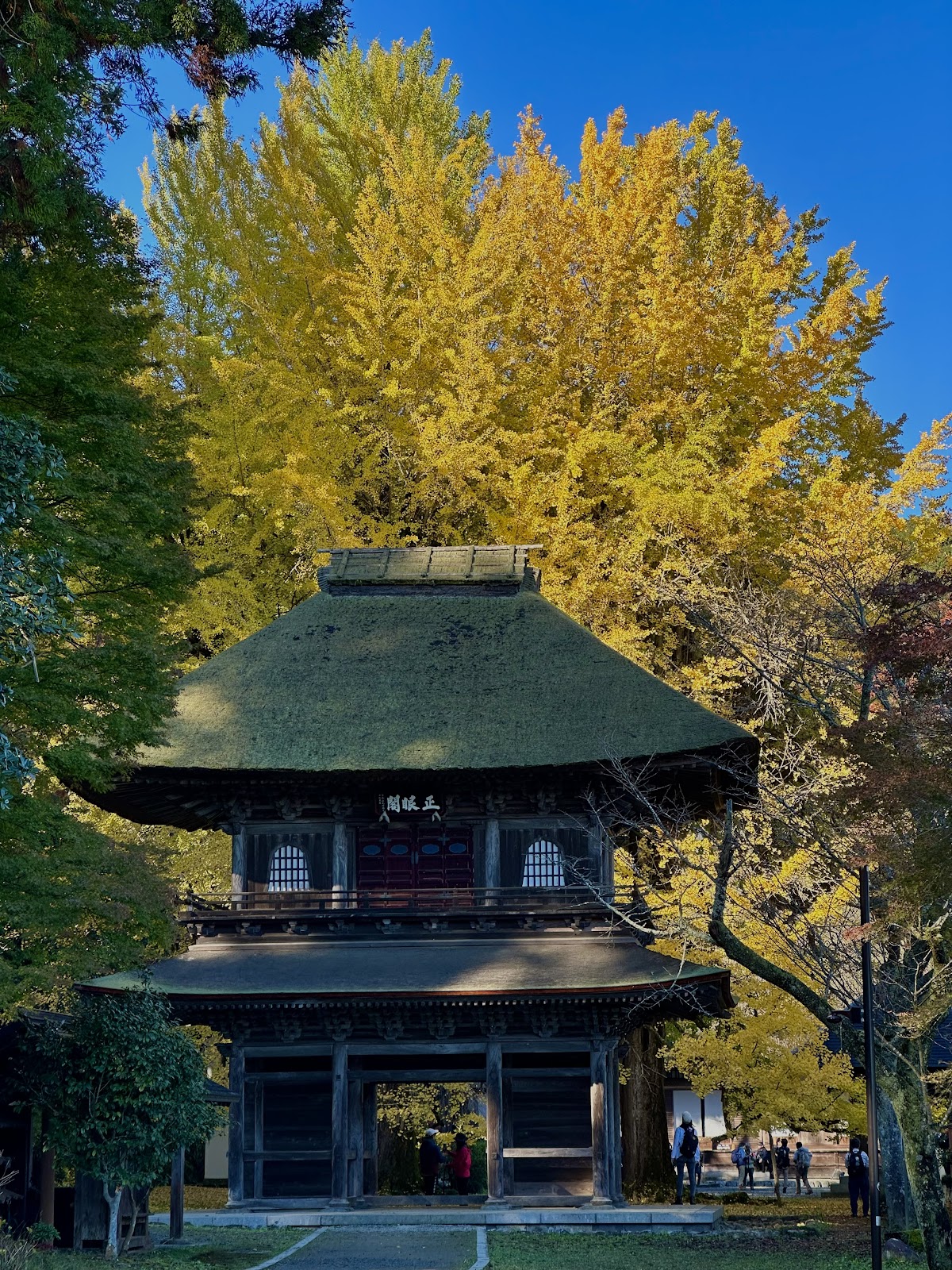
During the Edo period, Kōtoku-ji Temple developed under the patronage of the Tokugawa shogunate. The thatched-roof temple gate that remains today is believed to be a mid-Edo period structure and is a valuable cultural asset that conveys the architectural style of that time.
The imposing temple gate is characterized by its simple yet dignified construction, typical of Zen temples. The dignified appearance of the thatched roof evokes a sense of history in visitors.
Kōtoku-ji Temple in Modern Times
Since the Meiji era, Kōtoku-ji Temple has been passed down as a local temple, maintaining ties with its parishioners and local residents. From the Showa to Heisei periods, its cultural value was recognized, with the large ginkgo tree on the temple grounds being designated a Tokyo Metropolitan Government Natural Monument.
Currently, in addition to its role as a religious facility, it is attracting attention as a tourist spot, being one of Akiruno City’s premier autumn foliage locations. It is a space where history and nature harmonize, and is beloved by many.
Akiruno City’s Premier Autumn Foliage Spot | Highlights and Attractions
Two Dazzling Ginkgo Trees
The greatest highlight of Kōtoku-ji Temple is the two large ginkgo trees that stand tall on the temple grounds. These ginkgo trees are said to be several hundred years old and are designated as Tokyo Metropolitan Government Natural Monuments. In autumn, the golden leaves, bathed in sunlight, gleam with dazzling beauty.
Upon passing through the temple gate, a canopy of yellow created by two large ginkgo trees unfolds before your eyes. Its impressive presence and beauty captivate many photography enthusiasts and those enjoying the autumn foliage.
A Yellow Carpet Spreads Across the Temple Grounds
During the autumn foliage season, the leaves fallen from the large ginkgo trees cover the entire temple grounds, creating a dazzling yellow carpet. This sight is a well-known autumn tradition at Kōtoku-ji Temple and a popular spot for photos posted on social media.
Walking on this carpet of fallen leaves is a precious opportunity to experience autumn with all five senses—not just sight, but also the feel underfoot and the sound of the leaves rustling. Spending time in the quiet temple grounds, enveloped in golden light, will be a special moment that allows you to forget the worries of everyday life.
The Contrast Between the Imposing Temple Gate and the Autumn Leaves
The thatched temple gate, believed to have been built in the mid-Edo period, is another highlight of Kōtoku-ji Temple. The contrast between the imposing and dignified gate and the golden ginkgo trees stretching out beyond it is highly regarded as a landscape symbolizing traditional Japanese beauty.
The view of the temple grounds from the gate is an excellent spot for photography. The scenery, where historical architecture and natural beauty are integrated, deeply moves visitors.
The Serene Atmosphere Unique to a Zen Temple
Kōtoku-ji Temple, a Zen temple of the Kenchō-ji branch of the Rinzai school, exudes a serene and solemn atmosphere throughout its grounds. Even during the autumn foliage season, you can slowly appreciate the natural beauty in a calm environment away from the hustle and bustle of the city.
Enjoying the autumn leaves in a space imbued with the spirit of Zen brings a sense of spiritual fulfillment that goes beyond mere sightseeing. The time spent quietly connecting with nature will be a valuable experience for modern people.
Autumn Foliage Data | Best Viewing Period and Season
Best Viewing Period for Autumn Foliage
The best time to see the autumn foliage at Kōtoku-ji Temple is typically from mid-November to late November. While this may vary slightly depending on weather conditions, mid-November is considered the most beautiful time to enjoy the golden colors.
Beginning of Color Change: Early November
Best Viewing Period: Mid-November to Late November
Leaf Fall: Early December
How to Enjoy by Season
Early November: The ginkgo trees gradually begin to change color. The gradation from green to yellow is beautiful, and it’s relatively less crowded, making it ideal for those who want to enjoy the scenery at a leisurely pace.
Mid-November: The peak season arrives, with the large ginkgo trees completely transformed into a golden color. This is the most beautiful time, but weekends are expected to be crowded. Weekday visits are recommended.
Late November: This is the time when the leaves begin to fall, creating a yellow carpet throughout the temple grounds. It’s a luxurious time to enjoy both the vibrant autumn colors on the trees and the fallen leaves on the ground.
Relationship between Weather and Autumn Leaves
The coloring of ginkgo trees is greatly influenced by temperature and sunshine hours. Large temperature differences between day and night, and prolonged sunny weather, result in a more vivid yellow color. Check the weather forecast before visiting and choose a sunny day to enjoy the most beautiful autumn foliage.
Access Information | How to Get to Kōtoku-ji Temple
Access by Public Transportation
Using Trains and Buses:
- Get off at Musashi-Itsukaichi Station on the JR Itsukaichi Line.
- From the station, take a Nishi-Tokyo Bus bound for Kazuma, Fujikura, or Koiwa.
- Get off at the Kōtoku-ji-mae bus stop and walk for about 1 minute.
The bus ride takes approximately 10 minutes. Since there are only 2-3 buses per hour, it is recommended to check the timetable in advance. Taxi Access: A taxi from Musashi-Itsukaichi Station takes approximately 10 minutes and costs around 1,500 yen.
Access by Car
Route from Major Roads:
- Approximately 30 minutes from the Chuo Expressway “Hachioji IC”
- Approximately 15 minutes from the Ken-O Expressway “Akiruno IC”
Car Navigation Setting:
You can search using the address “234 Owada, Akiruno City, Tokyo”.
Parking Information
Kōtoku-ji Temple has its own parking lot. However, congestion is expected on weekends and holidays during the autumn foliage season, so early arrival is recommended. If the parking lot is full, please consider using nearby paid parking lots or public transportation.
Parking Details:
- Capacity: Approximately 20 cars (Free)
- Hours: Daytime only
- Notes: It gets very crowded during the autumn foliage season.
Access Information
During the peak autumn foliage season, especially on weekends in mid-November, many tourists visit, so traffic congestion and full parking lots are expected. If possible, we recommend visiting on a weekday or early in the morning. Also, if using public transportation, it’s a good idea to check the return bus schedule in advance.
Spot Data | Visiting Information and User Guide
Basic Information
Name: Ryukakuzan Kōtoku-ji Temple
Address: 234 Owada, Akiruno City, Tokyo
Phone: 042-596-0021 (Akiruno City Tourism Association)
Sect: Rinzai Zen Kenchō-ji School
Visiting Hours: Open throughout the day (grounds freely accessible)
Admission Fee: Free
Closed Days: None
Etiquette During Visits
Kōtoku-ji Temple is a temple where religious activities are still conducted. Please observe the following etiquette when visiting or sightseeing.
- Please behave quietly within the temple grounds.
- Do not enter restricted areas such as the main hall or the priest’s quarters.
- Photography is permitted, but please be considerate of other visitors.
- Please take all your trash with you.
- Do not take fallen leaves or plants.
- Smoking is permitted only in designated areas.
Facilities Information
- Toilets: Available
- Vending Machines: None (Convenience store is approximately a 5-minute drive away)
- Accessibility: The temple grounds have gravel paths, making wheelchair access difficult.
Recommended Nearby Spots | Akiruno City Sightseeing
Akigawa Valley
Located approximately 15 minutes by car from Kōtoku-ji Temple, Akigawa Valley is a scenic spot boasting abundant nature that feels far removed from Tokyo. Visitors can enjoy playing in the clear stream, barbecues, and hiking. During the autumn foliage season, the entire valley is ablaze with color, making it an ideal spot to visit in conjunction with Kōtoku-ji Temple.
Seoto no Yu Hot Spring
Located along the Akigawa Valley, Seoto no Yu is a day-trip hot spring facility about a 20-minute drive from Kōtoku-ji Temple. A popular way to spend an autumn holiday is to relax in the hot springs after enjoying the autumn foliage at Kōtoku-ji Temple. The open-air bath offers views of the clear waters of the Akigawa River.
Ōtake Limestone Cave
Designated as a natural monument of Tokyo, Ōtake Limestone Cave is about a 30-minute drive from Kōtoku-ji Temple. It’s a rare spot where you can explore the interior of a limestone cave approximately 300 meters long. This experience, where you can feel the mystery of nature, is especially recommended for families with children.
Hinohara Tokyo Citizens’ Forest
Located at the westernmost point of Tokyo, Hinohara Tokyo Citizens’ Forest is a natural park spread across a mountainous area at an altitude of around 1,000 meters. While it’s a bit of a distance (about a 40-minute drive) from Kōtoku-ji Temple, you can enjoy authentic forest bathing and hiking. In autumn, the broadleaf trees display beautiful autumn colors, allowing you to enjoy a natural landscape that feels far removed from the city.
Around Musashi-Itsukaichi Station
Around Musashi-Itsukaichi Station, you’ll find numerous restaurants and souvenir shops using local ingredients. You can purchase Akiruno City’s specialty “Norabou-na” (a type of vegetable), local sake, and handmade crafts. Stop by before or after visiting Kōtoku-ji Temple to discover the charm of the area.
Event Information | Annual Events at Kōtoku-ji Temple and Surrounding Areas
Special Atmosphere During Autumn Foliage Season
While Kōtoku-ji Temple doesn’t hold special events during the autumn foliage season, many tourists visit on weekends in mid-November, creating a lively atmosphere within the temple grounds. The local tourism association sometimes holds autumn events in the surrounding area, so it’s a good idea to check before your visit.
Annual Events in Akiruno City
Akiruno City hosts a variety of events throughout the year.
- Spring: Cherry Blossom Festival (early April)
- Summer: Akiruno Summer Festival (early August), Akigawa Valley Summer Fireworks Display (mid-August)
- Autumn: Industrial Festival (early November), Autumn Foliage Season (mid-to-late November)
- Winter: Year-End Market (late December)
Visiting Kōtoku-ji Temple in combination with these events will make for a more fulfilling sightseeing experience.
Photography Tips | For Taking Beautiful Photos
Recommended Photography Spots
View from the Temple Gate: Taking a photo of the large ginkgo tree before passing through the temple gate, or through the gate, creates a beautiful image contrasting the historical building with natural beauty.
From the Center of the Temple Grounds: This position allows you to frame both large ginkgo trees simultaneously. You can capture a powerful composition with the golden canopy spreading out before you.
Carpet of Fallen Leaves: A close-up of the yellow fallen leaves spread across the ground beautifully captures the texture of autumn.
Best Time for Photography
Morning: The soft morning light filters through the ginkgo leaves, making the yellow even more vibrant. It’s also relatively less crowded, allowing for a more relaxed photography experience.
Daytime: When the sun is high in the sky, the entire temple grounds are brightly lit, resulting in high-contrast photographs.
Evening: The ginkgo leaves illuminated by the setting sun take on a deeper golden hue, creating warm and inviting photographs.
Precautions for Photography
- Use a tripod only, and only if it does not inconvenience other visitors.
- Do not enter restricted areas.
- Be considerate of others during crowded times.
- Obtain permission from the temple beforehand for commercial photography.
Frequently Asked Questions
Is there an entrance fee to Kōtoku-ji Temple?
Entry to the grounds of Kōtoku-ji Temple is free. There is no entrance fee. However, when offering a donation or receiving a Goshuin (temple stamp), please offer what you feel is appropriate.
When is the best time to see the autumn leaves?
The best time to see the leaves is usually from mid-November to late November. Mid-November is considered the most beautiful time. However, this may vary depending on the weather each year, so we recommend checking the latest information before visiting.
Is there parking?
There is free parking on the temple grounds (approximately 20 spaces). However, it gets very crowded on weekends during the autumn foliage season, so we recommend arriving early or using public transportation.
Can I bring my pet?
Pets are allowed on the temple grounds as long as they are on a leash and do not disturb other visitors. However, pet owners are responsible for cleaning up after their pets.
Can I get a Goshuin?
You can get a Goshuin at Kōtoku-ji Temple. However, there may be times when the Goshuin is not available, so if you want to be sure to get one, we recommend calling ahead to confirm.
Can I enjoy it on a rainy day?
Kōtoku-ji Temple has its own charm on rainy days, and the colors of the wet fallen leaves appear even more vibrant. However, the grounds are gravel, so footing can be difficult. Please wear rain gear and comfortable shoes.
Is it accessible for wheelchair users?
The temple grounds are gravel, so wheelchair access may be difficult. It is possible with an assistant, but we recommend checking the situation beforehand.
Summary | Enjoy Japanese Autumn at Kōtoku-ji Temple
Kōtoku-ji Temple is a prestigious Rinzai Zen temple of the Kenchō-ji school with a history of over 650 years dating back to the Muromachi period. Especially during the autumn foliage season, the two large ginkgo trees, designated as natural monuments by Tokyo, shine golden, creating a spectacular sight of a yellow carpet covering the temple grounds.
The imposing temple gate contrasts beautifully with the large ginkgo tree, offering a tranquil atmosphere characteristic of Zen temples. The space, steeped in history, provides a special escape from everyday life, despite being only about an hour from central Tokyo.
The best time to see the autumn foliage is from mid- to late November. Access is convenient: approximately 10 minutes by bus from Musashi-Itsukaichi Station on the JR Itsukaichi Line, or about 15 minutes by car from the Akiruno Interchange on the Ken-O Expressway. Nearby are the Akigawa Valley and hot spring facilities, allowing you to fully enjoy the nature and culture of Akiruno City over the course of a day.
Why not experience the beautiful autumn of Japan at Kōtoku-ji Temple, where history and nature harmonize? The temple grounds reveal different expressions depending on the time of day and season, ensuring new discoveries with every visit.