About Hie Shrine
Hie Shrine, located in Nagatacho, Chiyoda-ku, Tokyo, is a prestigious shrine that served as the guardian shrine of Edo Castle and was revered by the Tokugawa shogunate. Affectionately known as “Sanno-san,” it is characterized by its lush green grounds and magnificent shrine buildings, despite its central Tokyo location.
Deities and Benefits
Main Deity
Oyamakui-no-kami is enshrined as the main deity, with Kunitokotachi-no-kami, Izanami-no-kami, and Ashinakatsuhiko-no-mikoto enshrined in the auxiliary shrines. Oyamakui-no-kami has been worshipped since ancient times as the god of mountains and the earth.
Main Benefits
- Matchmaking & Marital Harmony: Symbolized by the statue of a pair of monkeys, this shrine is believed to bring good fortune in relationships.
- Career Success & Advancement: Due to its history of being patronized by the Tokugawa Shogunate, it is believed to bring business prosperity and career advancement.
- Protection from Evil & Protection from Unfavorable Directions: Guardian of the back gate (the “demon’s gate”) of Edo Castle (the current Imperial Palace).
- Safe Childbirth & Fertility: The statue of a mother and baby monkey attracts many worshippers praying for safe childbirth.
- Business Prosperity: Due to its location in the heart of the political and business world, it is frequently visited by corporations.
Points to Note When Visiting
Sacred Monkey Statues
The divine messenger of Hie Shrine is the monkey. There are several monkey statues on the shrine grounds, each offering different benefits.
- Married Monkey Couple: Located to the right of the main shrine, for matchmaking and marital harmony.
- Mother and Child Monkey: Located to the left of the main shrine, for fertility and safe childbirth.
- Divine Monkey Statue: Instead of guardian dogs, these monkeys stand in front of the worship hall. They are believed to ward off evil, as their name suggests they “drive away evil.”
Senbon Torii (Inari Shrine Approach)
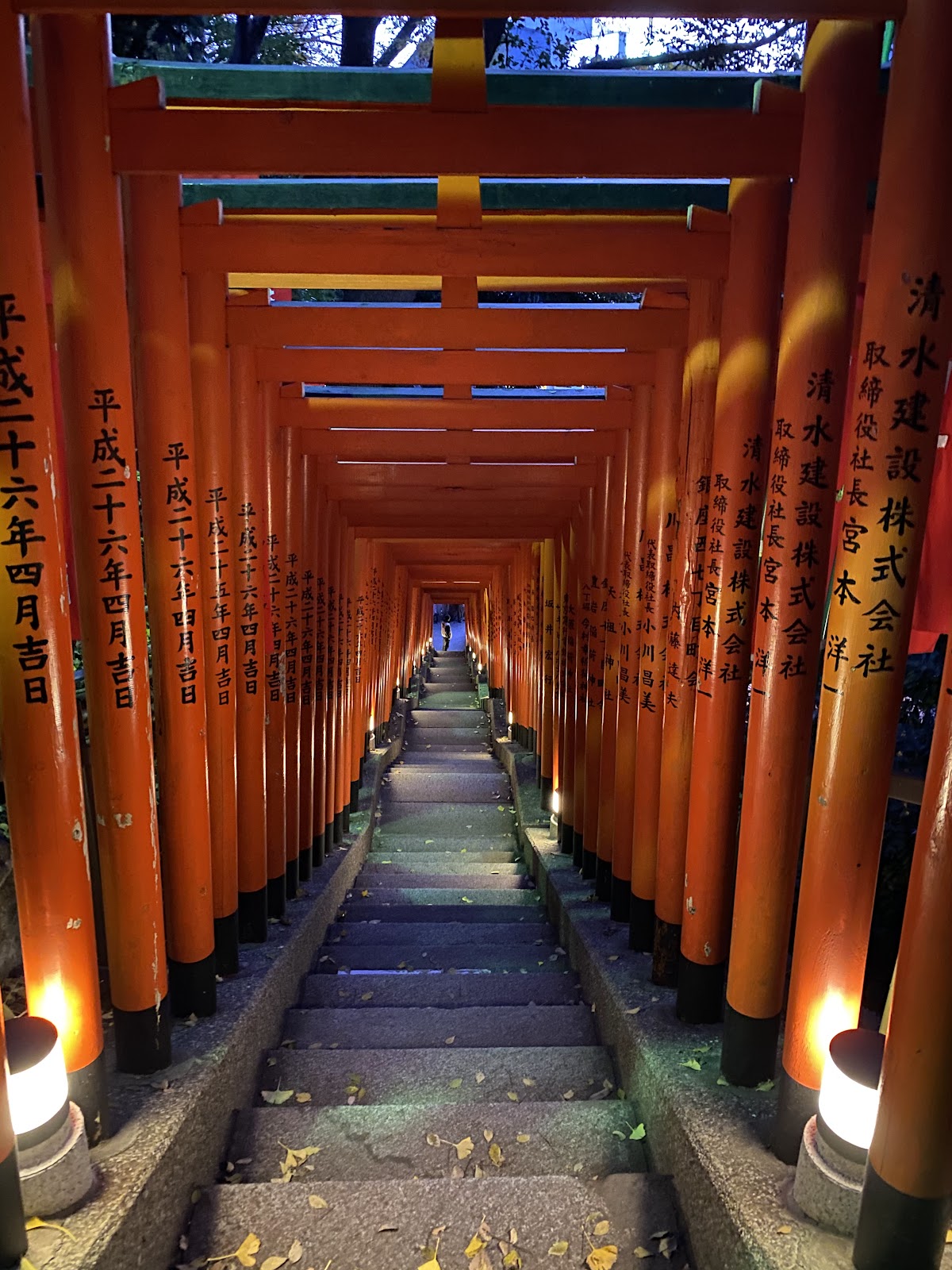
The West Approach features a “Senbon Torii” (Thousand Torii Gates), a long row of vermilion torii gates, making it a popular spot for Instagram photos. It is equipped with escalators, making it accessible for those with strollers or wheelchairs.
Recommended Pilgrimage Route
- Entering from the Sanno Torii (Men’s Slope): A formal pilgrimage route passing through a unique gassho-style torii gate and ascending the stone steps.
- Passing through the Senbon Torii: Enjoy the rows of vermilion torii gates from the west approach.
- Using the Escalator: For those who are not confident in their physical strength, use the escalator on the west approach.
Items Available
- Masaru Amulet: A cute amulet with a monkey motif, for warding off evil and misfortune.
- Matchmaking Amulet: A pair of amulets in pink and light blue.
- Work Amulet: A popular amulet for business people seeking career advancement and good fortune.
- Goshuin (Shrine Seal): Available in a regular version and a Sanno Festival limited edition.
Annual Events and Festivals
Sanno Festival (Mid-June)
The largest festival of Hie Shrine, counted as one of the Three Great Edo Festivals. During the main festival, held every two years, a 300-meter-long procession parades from the Imperial Palace area through Ginza and Nihonbashi. The Shinko-sai (divine procession) features a procession of people in imperial costumes and floats parading through the city center, preserving Edo traditions.
Other Major Events
- Hatsumode (January 1st-3rd): Attracts approximately 300,000 worshippers.
- Setsubun-sai (February 3rd): Bean-throwing ritual.
- Shichi-Go-San (October-November): A representative Shichi-Go-San pilgrimage site in central Tokyo.
- Oharai-shiki (June 30th & December 31st): A ritual to purify oneself of the impurities accumulated over the past six months.
Highlights of the Shrine Grounds
Shrine Building
A magnificent shrine building in the Gongen-zukuri style, rebuilt in 1967. The beautiful vermilion paint and gold leaf create a tranquil space that feels far removed from the city center.
Sanno Inari Shrine
Within the grounds stands a subsidiary Inari shrine dedicated to business prosperity. Located beyond the thousand torii gates, it’s a popular spot, often visited by those seeking both blessings.
Garden
Behind the main hall is a Japanese garden, an urban oasis where you can enjoy the beauty of nature throughout the seasons. It’s especially beautiful during the autumn foliage season, offering a peaceful place for worship.
Access and Visiting Information
Access by Train
- Tokyo Metro Chiyoda Line Akasaka Station 3-minute walk from Exit 2 (nearest station)
- Tokyo Metro Namboku Line/Ginza Line Tameike-Sanno Station 3-minute walk from Exit 7
- Tokyo Metro Marunouchi Line/Ginza Line Akasaka-Mitsuke Station 8-minute walk from Exit 11
Visiting Hours
- Visiting Hours: 6:00 AM – 5:00 PM (Opens at 5:00 AM from April to September)
- Gift Shop: 8:00 AM – 4:00 PM
- Prayer Reception: 9:00 AM – 4:30 PM
Location
2-10-5 Nagatacho, Chiyoda-ku, Tokyo 100-0014
Parking
Parking available for visitors (approximately 100 spaces, free). However, it is unavailable during the Sanno Festival and the New Year’s visit period.
History
The origins of Hie Shrine are ancient, beginning in the Kamakura period when Chichibu Shigetsugu invited the Sanno Shrine to the Edo clan’s castle. In 1478, when Ota Dokan built Edo Castle, he invited the Kawagoe Hie Shrine to serve as the guardian shrine of the castle.
After Tokugawa Ieyasu entered Edo, it was revered as the tutelary deity of the Tokugawa shogunate, and in 1607, it was moved to Momijiyama within Edo Castle. After the Great Fire of Meireki, it was moved to its current location in 1659, and attracted the faith of the people of Edo as the “guardian shrine of Edo Castle” and the “ancestral deity of the Tokugawa shogunate.”
After the Meiji Restoration, it has been revered to this day as a shrine protecting the Imperial Palace and as the guardian deity of Tokyo.
Surrounding Information
Adjacent to the National Diet Building, the Prime Minister’s Official Residence, the Supreme Court, and other central areas of Japanese politics. After visiting the shrine, you can enjoy shopping at Akasaka Sacas and Tokyo Midtown, or dine at a long-established restaurant in Akasaka.