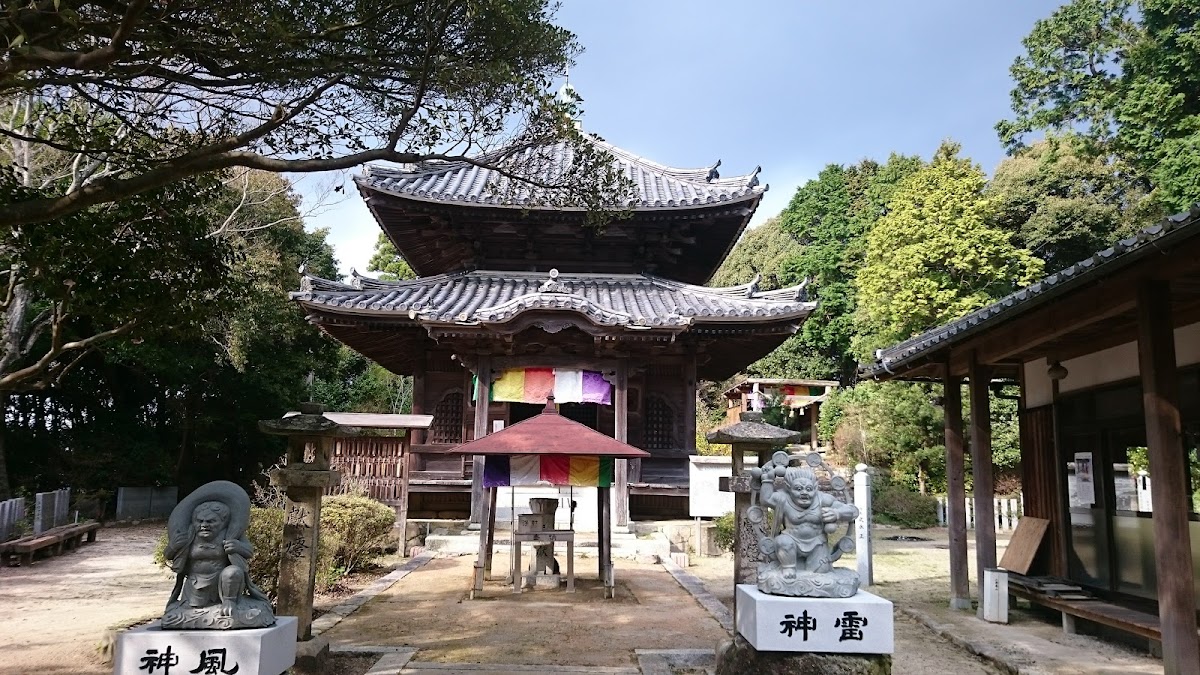
Niidera-san Gokuraku-ji Temple (Iwakuni City, Yamaguchi Prefecture) Complete Guide: History, Cultural Assets, and the Charm of the Fire-Walking Festival
Niiidera-san Gokuraku-ji Temple, located on the summit of Mount Niidera in Shuto-cho, Iwakuni City, Yamaguchi Prefecture, is a historic temple founded during the Nara period. As the first of the 33 Kannon pilgrimage sites of Suo Province, it has long been cherished by many pilgrims. Perched on a mountaintop at an altitude of 245 meters, this temple offers a tranquil space surrounded by abundant nature, a precious spot for peaceful worship.
History and Origins of Niidera-san Gokuraku-ji Temple
Founding in the Tenpyo Period and Hata no Minatari
The history of Niidera-san Gokuraku-ji Temple dates back to the 16th year of the Tenpyo era (744 AD). It was established during the reign of Emperor Shomu by Hata no Minatari, the chief administrator of Kuga District. Hata no Kaisoku was a prominent figure in the region and is known for his efforts in spreading Buddhist culture.
From its founding, it was designated as an imperial prayer temple by Emperor Shomu and developed as a center of mountain Buddhism. Its scale gradually expanded, and at its peak, it became a large temple complex with 24 sub-temples, and the entire mountain came to be called “Niidera-yama.”
Transition from the Medieval to the Early Modern Period
Niidera-yama Gokuraku-ji Temple, which flourished as a center of mountain Buddhism during the medieval period, faced a major turning point due to the turmoil of the Sengoku period. After the fall of the Ouchi clan, the temple steadily declined, losing its former prosperity.
However, during the Kan’ei era of the Edo period (1642-1644), Yuzan, the head priest of Myofuku-ji Temple in Yokoyama Village, Iwakuni, petitioned Lord Kikkawa for the temple’s restoration. And in Genroku 7 (1694), the restoration was realized by Kikkawa Hiroki. This restoration restored Niidera-san Gokuraku-ji Temple to its present form as a temple.
First Temple of the Suo Province Thirty-Three Kannon Pilgrimage
Niidera-san Gokuraku-ji Temple holds an important position as the first temple of the Suo Province Thirty-Three Kannon Pilgrimage. As a starting point for the pilgrimage, it has attracted many pilgrims and has been a center of Kannon worship, attracting the faith of the region.
Principal Image and Valuable Cultural Assets
Eleven-Faced Kannon Bodhisattva
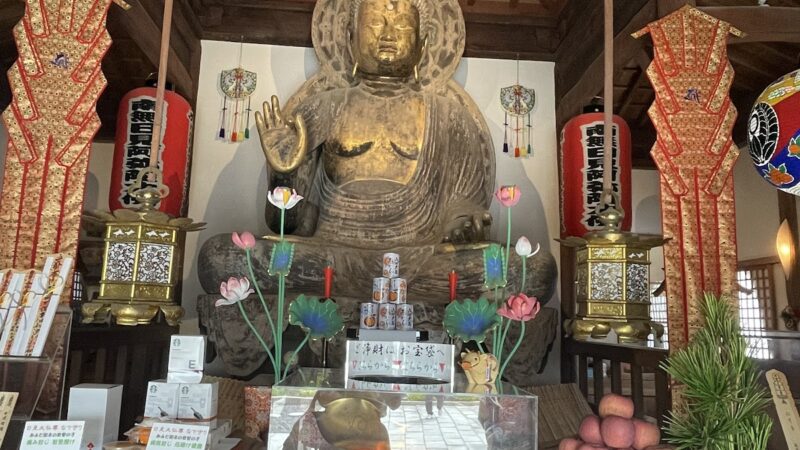
The principal image of Niidera-san Gokuraku-ji Temple is the Eleven-Faced Kannon Bodhisattva. The Eleven-Faced Kannon is a Kannon Bodhisattva with eleven faces on its head, believed to watch over and save sentient beings from all directions. The principal image is enshrined in the Kannon Hall, and its majestic appearance deeply impresses visitors.
There are also descriptions of the Holy Kannon Bodhisattva as the principal image, indicating a long history as a center of Kannon worship. The path to the mountaintop is lined with stone Buddha statues marking the distance, and it is said that happiness approaches with each additional marker.
Yakushido Hall, a Yamaguchi Prefecture Designated Cultural Property
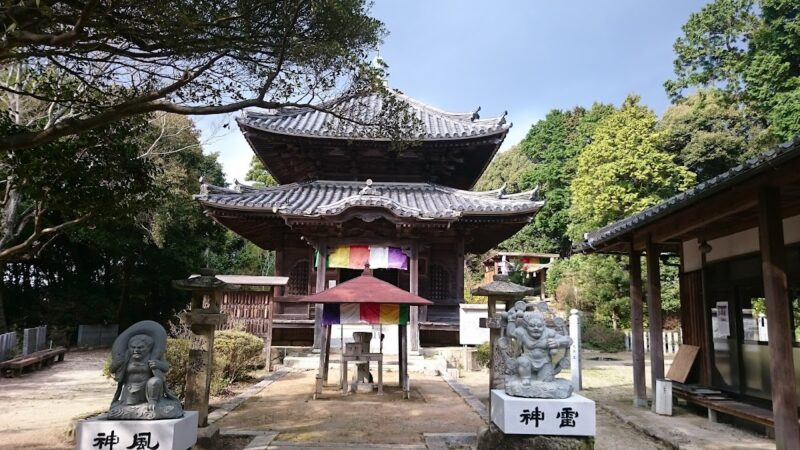
One of the most important cultural properties at Gokurakuji Temple on Mount Niidera is the Yakushido Hall, a Yamaguchi Prefecture designated cultural property. The Yakushido Hall is a building dedicated to Yakushi Nyorai (the Medicine Buddha), and is visited by pilgrims praying for recovery from illness and longevity.
The architectural style and decorations strongly reflect the characteristics of the era, making it a valuable resource for understanding the history of Buddhist architecture in Yamaguchi Prefecture. Inside the hall are numerous cultural artifacts, including a statue of Yakushi Nyorai, allowing visitors to feel the depth of history and faith.
Other Cultural Properties and Temple Treasures
Besides the Yakushido Hall, Gokurakuji Temple on Mount Niidera houses many other cultural properties. Buddhist statues, Buddhist implements, and ancient documents, among other valuable materials from the Nara period to the Edo period, convey the history of the region to the present day.
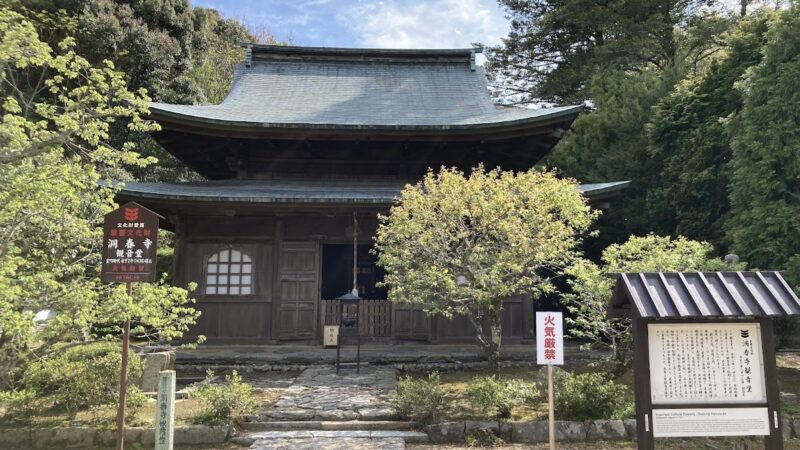
The Kannon Hall is also known for its magnificent architecture, delighting the eyes of visitors. These cultural assets are carefully preserved not only as works of art, but also as objects of faith.
Annual Events and the Fire Walking Festival
The Fire Walking Festival in November
The most famous event at Gokuraku-ji Temple on Mount Niidera is the Fire Walking Festival, held every November. This festival is a solemn ceremony that inherits the traditions of Shugendo (mountain asceticism), and attracts many worshippers.
During the Fire Walking Festival, a fire is lit on a goma altar, and participants walk across it barefoot. This ceremony is a prayer for purification of mind and body and for good health, as participants walk the path of faith while feeling the heat of the flames. General worshippers can also experience fire walking following the monks and Shugendo practitioners, providing a valuable spiritual experience.
The Significance and Appeal of the Fire Walking Festival
The Fire Walking Festival is not merely a traditional event, but an important ceremony that embodies the spirituality of Shugendo. Fire symbolizes purification, representing the burning away of worldly desires and the rebirth of a new self.
On the day of the festival, not only local residents but also many worshippers from afar visit, and the temple grounds are enveloped in a solemn atmosphere. The faces of participants who have completed the fire-walking ceremony are filled with a sense of accomplishment and exhilaration, and this experience will surely be deeply etched in their hearts.
Other Annual Events
Besides the Fire-Walking Festival, various Buddhist services and events are held throughout the year at Gokuraku-ji Temple on Mount Niidera. From New Year’s visits to spring and autumn equinox services and the Kannon festival, worshippers visit in every season, making it a place of faith.
Nature and Hiking on Mount Niidera
A Mountain Temple at an Elevation of 245 Meters
Mount Niidera is a mountain with an elevation of 245 meters, and the main hall of Gokuraku-ji Temple is located at its summit. This mountain has a rich history as a thriving center of mountain Buddhism, and even today, it retains strong traces of mountain worship.
While the view from the summit is limited, it is known as a mountain where one can ascend in peace and tranquility. More than a mountain climb, it is cherished by many as a pilgrimage route and a place for spiritual discipline.
Stone Buddhas and the Pilgrimage Route
The pilgrimage route to the summit is lined with stone Buddhas marked by cho (approximately 109 meters). These Buddhas, placed every cho, serve as guideposts for pilgrims and are objects of worship. There is a legend that “happiness approaches with each cho,” and counting the Buddhas as you climb offers a calming experience.
Walking this pilgrimage route is not merely a climb, but a journey of spiritual pilgrimage. The process of striving for the summit step by step, enveloped in the silence of nature, becomes a time of training and meditation.
The Beauty of Nature Through the Seasons
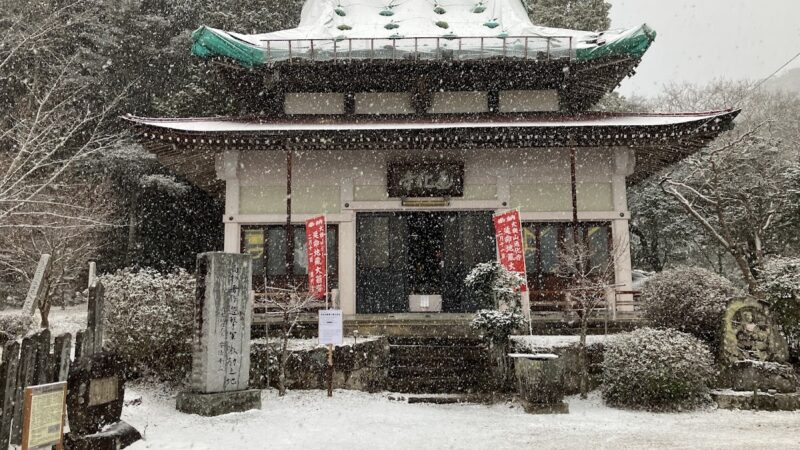
Mount Niidera is blessed with beautiful nature throughout the four seasons. In spring, new green leaves sprout; in summer, the area is covered in deep green; in autumn, the mountains are adorned with vibrant autumn foliage; and in winter, a serene snowscape unfolds.
The autumn foliage season, in particular, often coincides with the fire-walking festival, offering many visitors an excellent opportunity to experience both the beauty of nature and the solemnity of religious faith simultaneously.
Access and Visiting Information
Location and Basic Information
Location: 742-0413 Kamihata, Shuto-cho, Iwakuni City, Yamaguchi Prefecture
Phone Number: 0827-84-3162
Sect: Mountain Buddhism, Kannon Worship
Principal Image: Eleven-faced Kannon Bodhisattva (Holy Kannon Bodhisattva)
Pilgrimage Site: First of the 33 Kannon Pilgrimage Sites of Suo Province
Transportation Access
Access by Train: Approximately 15 minutes by car from JR Gantoku Line “Suo-Takamori Station”. Taking a taxi from the station or renting a car is convenient.
Access by Car: Approximately 30 minutes from Sanyo Expressway “Iwakuni IC”. Take the Yamaguchi Prefectural Road towards Mt. Niidera. The road is well-maintained up to near the summit, and parking is available.
Guidelines for Visiting the Temple
Since Niidera-san Gokuraku-ji Temple is located on a mountaintop, please note the following points when visiting:
- Attire: Comfortable walking shoes and clothing are recommended. Especially if you plan to participate in the fire-walking festival, it’s a good idea to be prepared to go barefoot.
- Time: Allow approximately one hour for the round trip walk to the mountaintop.
- Season: Insect repellent is necessary in summer, and warm clothing is required in winter.
- Manners: To maintain a peaceful environment, please refrain from loud conversations and always take your trash with you.
About the Goshuin (Temple Seal)
At Niidera-san Gokuraku-ji Temple, you can receive the Goshuin of the first temple of the Suo Province Thirty-Three Kannon Pilgrimage. For those undertaking the pilgrimage, this first temple’s Goshuin holds special significance. The Goshuin can be obtained at the temple office, but it is recommended to call ahead to confirm as staff may be absent.
Nearby Tourist Attractions
History and Culture of Iwakuni City
Iwakuni City, home to Niidera-san Gokuraku-ji Temple, is a city rich in history and culture, famous for Kintaikyo Bridge. Visiting Iwakuni Castle, Kintaikyo Bridge, and Kikko Park before or after your visit to the temple will enhance your sightseeing experience.
Charms of Shuto Town
Shuto Town is a region rich in nature, preserving the beauty of rural landscapes and satoyama (traditional Japanese rural scenery). You can enjoy local cuisine and seasonal agricultural products. A trip to discover the charms of the region, combined with a visit to Niidera-san Gokuraku-ji Temple, is highly recommended.
Summary of the Charms of Niidera-san Gokuraku-ji Temple
Niidera-san Gokuraku-ji Temple, a venerable temple with over 1200 years of history, possesses many attractions.
Historical Value: It boasts a long history, founded in 744 AD (Tenpyo 16), and holds the status of an imperial temple commissioned by Emperor Shomu.
Cultural Properties: The temple preserves valuable cultural properties, including the Yakushido (Medicine Buddha Hall), a designated cultural property of Yamaguchi Prefecture, as well as the Eleven-Faced Kannon Bodhisattva and the Kannon Hall.
Significance as a Sacred Site: As the first temple of the Suo Province Thirty-Three Kannon Pilgrimage, it serves as a center of Kannon worship.
Experience: The annual Fire Walking Festival in November offers a rare opportunity to experience the traditions of Shugendo (mountain asceticism).
Natural Environment: Located on a mountaintop 245 meters above sea level, the temple offers a peaceful pilgrimage experience walking along a path lined with stone Buddha statues.
Access: It is relatively easy to access, just a 15-minute drive from JR Suo-Takamori Station.
Recommendation for Visiting
Futidera-san Gokuraku-ji Temple is a special place where historical buildings and a tranquil natural environment create a sense of peace for visitors. For those seeking a peaceful escape from the hustle and bustle of everyday life, those interested in history and cultural heritage, those on pilgrimages, and those wishing to experience the unique ritual of fire walking, this temple is well worth a visit.
As the first temple on the Suo Province Thirty-Three Kannon Pilgrimage, it’s an ideal starting point for a new pilgrimage. The path leading to the mountaintop, where you count the stone Buddha statues one by one, is truly a journey of the soul. The sense of accomplishment upon reaching the summit and the joy of paying respects to Kannon will surely be deeply etched in your heart.
While the autumn fire-walking festival is particularly recommended, you can enjoy the beauty and tranquil atmosphere of each season no matter when you visit. When visiting Iwakuni City, Yamaguchi Prefecture, be sure to include a visit to Niidera-san Gokuraku-ji Temple in your itinerary.
Faith and Community Bonds
Niidera-san Gokuraku-ji Temple is not merely a tourist spot; it is deeply rooted in the faith and lives of the local people. For over 1200 years, this temple has received people’s prayers and served as a spiritual haven in this land.
Even today, faith and culture are passed down to future generations through the maintenance activities of local residents and their participation in annual events. Traditional events, such as the fire-walking festival, also play a role in strengthening community bonds, demonstrating how faith fosters ties within the local community.
Visitors will realize that this temple is not merely a historical building, but a living place of faith. For those of us living in the modern age, experiencing this long history and flow of faith will be a valuable spiritual experience.
Niidera-san Gokuraku-ji Temple will continue to provide peace of mind and hope to many people as a bridge connecting the past, present, and future.