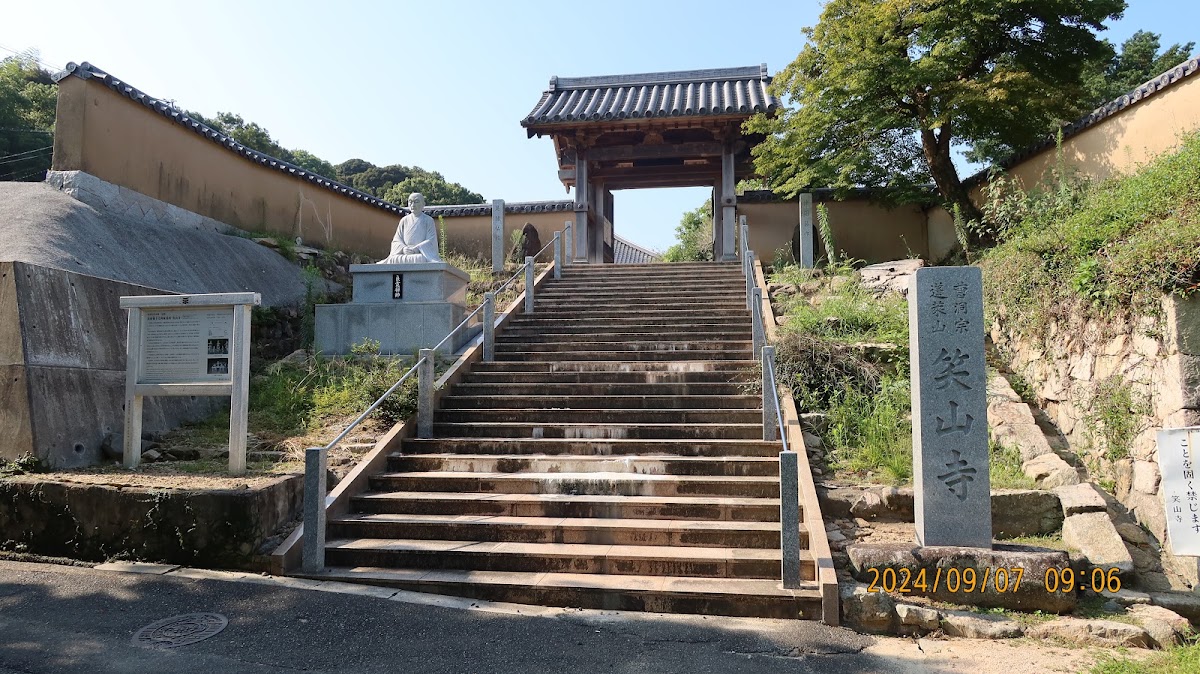
Complete Guide to Shōzanji Temple (Shimonoseki City, Yamaguchi Prefecture): A Thorough Explanation of its History and Highlights Related to the Mōri Family
Shōzanji Temple, located in Chōfu, Shimonoseki City, Yamaguchi Prefecture, is a Sōtō Zen Buddhist temple founded in the early Edo period by Mōri Hidemoto, the founder of the Chōfu Domain. This ancient temple, beloved by the local community as the Mōri family’s ancestral temple and known as the “Temple of Plum Blossoms,” is an important spot that conveys the history of the castle town of Chōfu. This article provides a detailed explanation of everything you need to know before visiting Shōzanji Temple, from its historical background and highlights to access methods.
History and Origins of Shōzanji Temple
Founding Circumstances and Mōri Hidemoto
The history of Shōzanji Temple dates back to the Genna era (1615-1623). It began when Mōri Hidemoto, the founder of the Chōfu Domain, relocated and rebuilt the abandoned Hōraisan Chōon-in (Chōonji Temple), which was located in Kame-no-kō, to its current location. Hidemoto was the grandson of Mori Motonari and is known for establishing the Chofu Domain after the Battle of Sekigahara.
Initially, this temple was built to commemorate Hidemoto’s grandmother, Nomi no Ōkata. Nomi no Ōkata was a lady-in-waiting to Myōkyū, Mori Motonari’s wife, and was a very important figure to Hidemoto. Thus, Shōzan-ji Temple was born from the deep affection the Mori family had for their loved ones.
Origin of the Temple Name “Shōzan-ji”
In 1652 (Shōō 1), a significant turning point occurred. The spirit of Hoida Motokiyo, Mori Hidemoto’s father, was moved to this temple. At this time, the temple’s name was changed to “Shōzan-ji,” after Motokiyo’s posthumous Buddhist name, “Dōunji-dono Shōzan Jōkai Daizenjōmon.”
Hoida Motokiyo was born the fourth son of Mori Motonari and was a warrior who inherited the Hoida family. He fought on the Western Army’s side in the Battle of Sekigahara and was a key figure in supporting the Mori family through their subsequent hardships. The temple’s name, derived from his father’s posthumous Buddhist name, expresses Hidemoto’s deep respect and affection for his father.
Role as the Mori Family’s Memorial Temple
Shozanji Temple played a crucial role as one of the Chofu Mori family’s memorial temples. Within its grounds are the massive five-tiered stupas of the second lord, Mori Mitsuhiro, and the seventh lord, Mori Moronari, making it a valuable historical site that tells the story of the Chofu domain.
The Chofu domain, a branch of the Hagi domain (Choshu domain), survived throughout the Edo period and played a vital role in the Choshu domain’s role as a driving force behind the Meiji Restoration. Shozanji Temple functioned as a spiritual pillar for the domain lords behind the scenes of this historical event.
Highlights and Cultural Properties of Shōzanji Temple
Thirteen-Storied Stone Pagoda (City-Designated Cultural Property)
A must-see when visiting Shōzanji Temple is the thirteen-storied stone pagoda located within the temple grounds. This pagoda was constructed from the late Kamakura period to the Nanboku-chō period and is designated as a tangible cultural property by Shimonoseki City.
The thirteen-storied stone pagoda symbolizes the belief in the thirteen Buddhas in Buddhism and the thirteen heavenly realms, and is a valuable relic demonstrating the high level of stonework technology of the time. Its existence, having survived for hundreds of years despite exposure to wind and rain, conveys the depth of faith in the medieval period. The intricate carvings on each layer of the pagoda and its overall balance possess an artistic quality that captivates visitors.
Five-Ring Pagodas of the Chōfu Domain Lords
Within the temple grounds are the massive five-ring pagodas of the second lord, Mōri Mitsuhiro, and the seventh lord, Mōri Moronari. The Gorinto (five-ring pagoda) is a Buddhist memorial tower representing the five elements of earth, water, fire, wind, and void, and was widely used as a tombstone for samurai families.
Particularly noteworthy is its size. Gorinto for feudal lords were significantly larger than typical ones, and their dignified appearance symbolized the authority of the Chofu domain. These Gorinto are also important historical materials for studying the history of the Chofu Mori family.
Principal Image: Nyoi Kannon
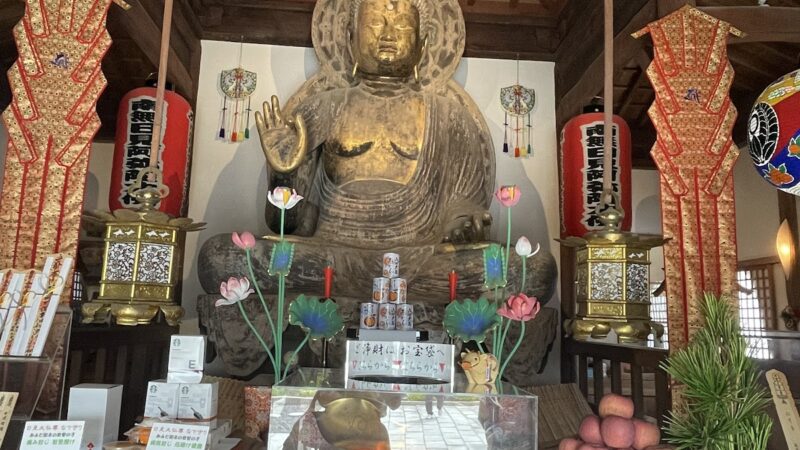
The principal image of Shozanji Temple is Nyoi Kannon. Nyoi Kannon is one of the manifestations of Kannon Bodhisattva, depicted holding a wish-granting jewel, and is believed to have the power to grant any wish.
As a Soto Zen temple, Shozanji Temple practices Zen meditation and Buddhist ceremonies, and the faith in its principal image, Nyoi Kannon, has been a spiritual anchor for the local people. Praying in the tranquil main hall, one can feel the history of faith spanning several centuries.
Shōzanji Temple as a Famous Plum Blossom Spot
Shōzanji Temple is also known as the “Temple of Plum Blossoms.” Many plum trees are planted on the temple grounds, and in early spring, beautiful plum blossoms bloom in profusion. The sight of white and red plum blossoms blooming against the backdrop of the old stone pagoda and main hall is truly a landscape that encapsulates the beauty of Japan.
The plum blossom season is typically from mid-February to early March, and during this time, many worshippers and tourists visit the temple. A stroll through the temple grounds, enveloped in the fragrance of plum blossoms, will allow you to forget the hustle and bustle of everyday life and enjoy a moment of peace.
The Grounds and Atmosphere of Shōzanji Temple
A Space Enveloped in Silence
Although Shōzanji Temple is located in a residential area of the castle town of Chōfu, stepping onto the temple grounds reveals a different world. The quiet environment surrounded by trees is the perfect place to escape the noise of the city and find peace of mind.
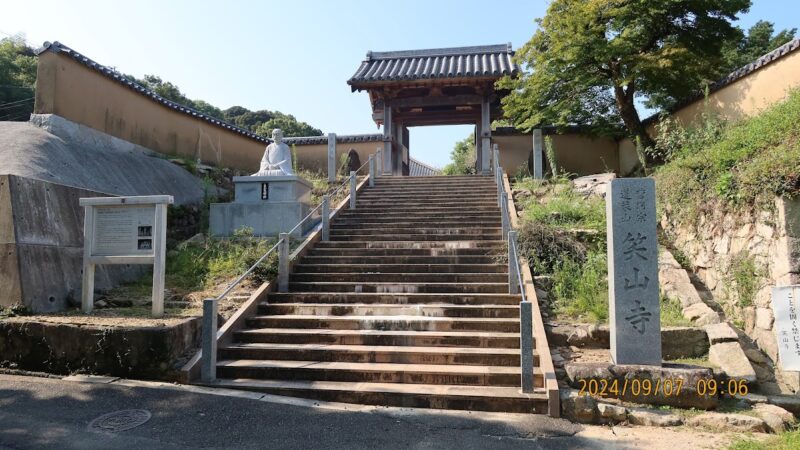
As befits a Soto Zen temple, the grounds are meticulously maintained, creating a simple yet beautiful space that evokes the spirit of Zen. Walking along the stone-paved approach, you can feel the weight of history.
A Base for Exploring Chofu’s History
The Chofu district, where Shozanji Temple is located, was once a thriving castle town of the Chofu Domain, and remains a historical area with samurai residences and old townscapes. When visiting Shozanji Temple, exploring the surrounding Kozanji Temple, Chofu Mori Residence, and Chofu Garden will allow you to gain a deeper understanding of Chofu’s history.
In particular, Kozanji Temple is a temple that holds a place in the history of the late Edo period as the place where Takasugi Shinsaku raised his army, and is known as one of Chofu’s two major ancient temples, along with Shozanji Temple. For history buffs, a walking course visiting these historical sites is highly recommended.
Access Information and Visitor Guide
Location and Basic Information
Location: 2-4-1 Chofu Kawabata, Shimonoseki City, Yamaguchi Prefecture
Sect: Soto Zen
Mountain Name: Horaisan
Principal Image: Nyoi Kannon
Access by Public Transportation
By JR:
From JR Sanyo Main Line “Shimonoseki Station,” take a Sanden Kotsu bus and get off at the “Jokamachi Chofu” bus stop. It’s approximately a 15-minute walk from there. The bus ride takes about 23 minutes.
Bus Routes:
- Please take a bus bound for Chofu or Ozuki.
- The “Jokamachi Chofu” bus stop is the center of Chofu tourism and also has a tourist information center.
Access by Car
From the Chugoku Expressway:
Approximately 15 minutes from Shimonoseki IC
From the Sanyo Expressway:
Approximately 15 minutes from Shimonoseki IC
For parking, please use the public parking lots in the Chofu area or the parking lots of nearby tourist facilities. The tourist parking lot at Jokamachi Chofu is within walking distance.
Notes for Visitors
Shozanji Temple is a temple that still functions as a place of worship. Please note the following points when visiting the temple:
- Please pray quietly within the temple grounds.
- Photography is permitted, but please be considerate of the interior of the main hall and the monks.
- Please do not touch cultural artifacts.
- Please take your trash with you.
Nearby Tourist Attractions
Kozanji Temple
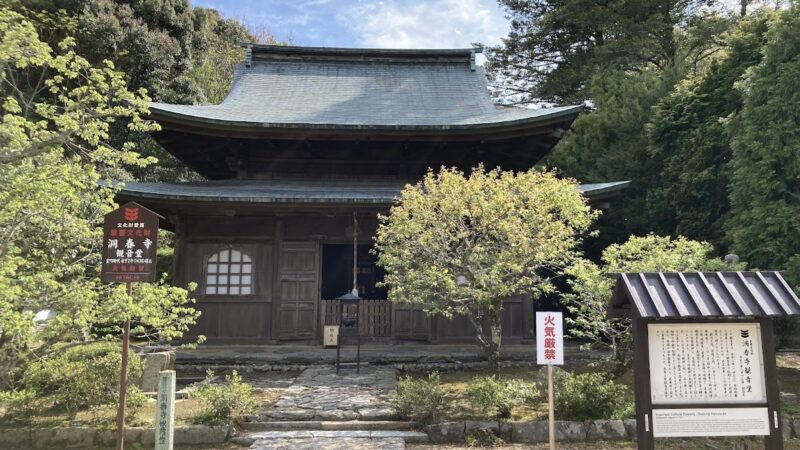
Located about a 10-minute walk from Shozanji Temple, Kozanji Temple is an ancient Rinzai Zen temple founded during the Kamakura period. Known for its National Treasure Buddha Hall and as the site of Takasugi Shinsaku’s uprising, it is a highlight of Chofu sightseeing. It is also famous for its autumn foliage, attracting many tourists in the fall.
Chofu Mori Residence
This facility is open to the public as the residence of Mori Mototoshi, the last lord of the Chofu domain. It is a valuable building that preserves the style of a high-ranking samurai residence from the Meiji era, and its beautiful garden is also a highlight. It is about a 15-minute walk from Shozanji Temple.
Chofu Garden
This is a strolling-style Japanese garden developed on the site of the residence of Nishi Uncho, a senior retainer of the Chofu Mori family. It’s a garden where you can enjoy the beauty of nature throughout the seasons, and is particularly magnificent during the autumn foliage season. It’s about a 20-minute walk from Shozanji Temple.
Walking Path Along the Dangugawa River
Along the Dangugawa River, which flows through the town of Chofu, there is a charming walking path lined with cherry trees and old stone bridges. In spring, the cherry blossoms are beautiful, and in early summer, the fresh greenery is stunning, allowing you to stroll leisurely while feeling the atmosphere of a castle town.
Recommended Time to Visit Shozanji Temple
Plum Blossom Season (Mid-February to Early March)
This is the time when Shozanji Temple, known as the “Temple of Plum Blossoms,” is at its most beautiful. The contrast between the plum blossoms blooming in the temple grounds and the historical buildings is magnificent, making it ideal for photography. Since it’s still a cold time of year, don’t forget to dress warmly.
Season of Fresh Greenery (April-May)
From spring to early summer, the trees in the temple grounds are adorned with fresh green leaves, creating a refreshing atmosphere. The weather is mild, making it a perfect season for strolling. It’s an ideal time to visit other historical sites in Chofu as well.
Season of Autumn Leaves (Mid-November-Early December)
In autumn, the trees in the temple grounds change color, allowing visitors to enjoy the autumn foliage in a tranquil atmosphere. This is a popular time for tourists to visit in conjunction with the autumn leaves at Kozanji Temple.
The History of Chofu and the Position of Shozanji Temple
Establishment and Development of the Chofu Domain
The Chofu Domain began after the Battle of Sekigahara, when Mori Terumoto’s territory was reduced to the two provinces of Suo and Nagato. His eldest son, Hidenari, became the lord of the Hagi Domain, and his second son, Hidemoto, was granted 50,000 koku in Chofu, establishing the domain.
Chofu has been the location of the “Nagato Provincial Government” since ancient times, and the place name “Chofu” originates from this. During the Middle Ages, it was a base for the Ouchi clan, and during the Sengoku period, for the Mori clan. In the Edo period, it developed into a castle town.
Chofu and the Bakumatsu Restoration
During the Bakumatsu period, the Chofu domain, along with the Hagi domain, was a central force in the movement to overthrow the shogunate. Many Chofu samurai participated when Takasugi Shinsaku raised an army at Kozanji Temple. After the Meiji Restoration, the Chofu domain ceased to exist due to the abolition of the feudal domains and establishment of prefectures, but its history and culture still thrive in the town.
Shozanji Temple, having witnessed this history of Chofu, is cherished by the local people.
About the Soto Zen School
Shozanji Temple is a Soto Zen temple. The Soto Zen school is a branch of Zen Buddhism introduced to Japan by Zen Master Dogen during the Kamakura period, and emphasizes “Shikantaza,” that is, simply sitting in meditation.
There are approximately 14,000 Soto Zen temples throughout Japan, making it one of the largest Buddhist sects in Japan in terms of the number of temples. The head temples of the Soto Zen sect are Eihei-ji Temple in Fukui Prefecture and Soji-ji Temple in Kanagawa Prefecture, where many monks dedicate themselves to daily training.
At Shozan-ji Temple, Buddhist services and events based on the teachings of the Soto Zen sect are held, and it functions as a center of faith in the region.
Summary: The Charms of Shozan-ji Temple
Located in Chofu, Shimonoseki City, Yamaguchi Prefecture, Shozan-ji Temple is an ancient Soto Zen temple with a history of over 400 years, founded by Mori Hidemoto, the founder of the Chofu Domain, and serving as the Mori family’s ancestral temple.
The temple boasts many attractions, including a thirteen-story stone pagoda designated as a city cultural property, five-ringed pagodas of successive feudal lords, and the beautiful scenery of the “Temple of Plum Blossoms.” The tranquil grounds provide an ideal space to calm the mind while feeling the weight of history.
As part of exploring the castle town of Chofu, and as a destination for historical exploration in Yamaguchi Prefecture, Shozan-ji Temple is a worthwhile place to visit. Visiting Shōzanji Temple along with nearby Kōzanji Temple and the Chōfu Mōri Residence will allow you to gain a deeper understanding of Chōfu’s history and culture.
Shōzanji Temple displays different expressions throughout the seasons: in early spring when the plum blossoms bloom, in spring when the leaves are fresh, and in autumn when the leaves change color. When you visit Yamaguchi Prefecture, be sure to stop by. The history associated with the Mōri family and the tranquil atmosphere of the Zen temple will surely be a memorable experience.