Suo Kokubunji Temple (Hofu City, Yamaguchi Prefecture) Complete Guide | The Full Picture of 1200 Years of History and Cultural Assets Since its Founding in the Tenpyo Era
Located in Kokubunji-cho, Hofu City, Yamaguchi Prefecture, Suo Kokubunji Temple is a special head temple of the Shingon sect, boasting a history of over 1200 years. Founded in 741 AD (Tenpyo 13) during the Nara period by the imperial decree of Emperor Shomu, it is the only Kokubunji temple in Japan whose temple buildings remain in the same location as when it was founded. The “Former Grounds of Suo Kokubunji Temple” are designated as a national historic site.
This article will introduce the charm of this historically significant temple, covering its historical value, abundant cultural assets, highlights within the grounds, annual events, and visiting information.
History of Suo Kokubunji Temple | From Tenpyo-Shoho to the Present
Background of Founding and Emperor Shomu’s Imperial Edict
The founding of Suo Kokubunji Temple is based on Emperor Shomu’s imperial edict for the construction of provincial temples, as recorded in the *Shoku Nihongi* (Continued Chronicles of Japan). In 741 (Tenpyo 13), Emperor Shomu ordered the construction of provincial monasteries and nunneries in each province of Japan to pray for the peace and security of the nation and its people through the power of Buddhism. In Suo Province, Suo Kokubunji Temple was founded as a provincial monastery in what is now Kokubunji-cho, Hofu City.
At the time of its founding, Suo Kokubunji Temple was a magnificent temple complex with seven main halls. The main hall was at the center, surrounded by a pagoda, lecture hall, and monks’ quarters, and it is believed to have reached its peak during the Tenpyo-Shoho era (749-757). Nearby, the remains of the Suō Kokuga (provincial government office) also exist, indicating that this area was the political and religious center of Suō Province at the time.
Decline in the Heian Period and Restoration in the Kamakura Period
With the start of the Heian period, the Suō Kokubunji gradually declined along with the decline of the Kokubunji system. However, a turning point came in the Kamakura period. The fact that Suō Province became a ryōkoku (provincial province responsible for funding the expenses of Tōdai-ji, the head Kokubunji) sparked a movement for restoration.
From this period onward, the Suō Kokubunji came under the patronage of powerful local figures. Especially from the medieval period onward, it was able to maintain its function as a temple thanks to the protection of the Ōuchi clan, who ruled Suō Province, and subsequently the Mōri clan.
History of Fires and Reconstruction
Throughout its long history, the Suō Kokubunji suffered numerous fires, resulting in repeated destruction and reconstruction of its temple buildings. In particular, the temple suffered a major fire during the Oei era (1394-1428) which destroyed many of its main buildings, but it was subsequently rebuilt and restored.
The current main hall was rebuilt in 1774 and is designated as a National Important Cultural Property. It is a valuable building that preserves the architectural style of the mid-Edo period.
Cultural Properties of Suo Kokubunji Temple | Nearly 100 Buddhist Statues and Precious Treasures
The reason Suo Kokubunji Temple is called a “treasure trove of cultural properties” is due to the vast amount of cultural properties it possesses. It houses over 10,000 cultural properties in total, including Buddhist statues designated as Important Cultural Properties, 200 paintings, 1,500 documents, and 8,500 Buddhist scriptures.
Buddhist Statues Designated as National Important Cultural Properties
Wooden Seated Statue of Yakushi Nyorai (Main Image)
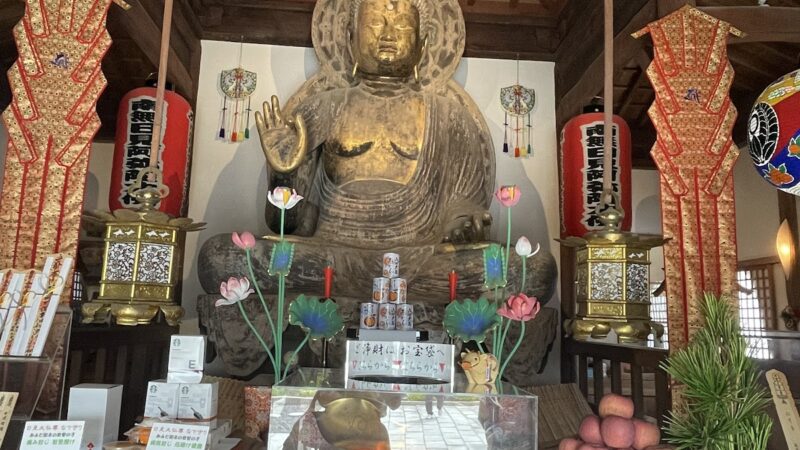
The seated statue of Yakushi Nyorai, the main image of Suo Kokubunji Temple, is a National Important Cultural Property. Carved from a single piece of cypress wood, it is estimated to be a work from the late Heian period. Yakushi Nyorai (Medicine Buddha) has long been revered as the Buddha who presides over healing illnesses and granting health and longevity. It is enshrined in the center of the main hall’s altar, welcoming worshippers in a solemn atmosphere.
Wooden Standing Statues of Nikko Bosatsu and Gekko Bosatsu
The standing statues of Nikko Bosatsu and Gekko Bosatsu, enshrined as attendants to Yakushi Nyorai, are also designated as National Important Cultural Properties. These Bodhisattva statues assist Yakushi Nyorai and play a role in saving sentient beings in the Eastern Pure Land. Their elegant forms and exquisite carving techniques represent the pinnacle of Heian period Buddhist art.
Four Standing Statues of the Four Heavenly Kings
The four standing statues of the Four Heavenly Kings, placed at the four corners of the main hall’s altar, are carved from a single piece of cypress wood and painted with lacquer, and are designated as National Important Cultural Properties. The Four Heavenly Kings—Jikokuten, Zochoten, Komokuten, and Tamonten—are positioned to protect the central seated statue of Yakushi Nyorai from all four sides.
Each statue is characterized by its powerful expression and dynamic posture, magnificently expressing the dignity of the Four Heavenly Kings who ward off evil and protect Buddhist teachings. Some of the original coloring remains, conveying the solemn atmosphere of the time of its founding.
Other Important Buddhist Statues
In addition to the above, Suo Kokubunji Temple houses numerous other Buddhist statues, including a seated statue of Amida Nyorai. Nearly 100 Buddhist statues exist in total, making it a valuable place where one can see Buddhist art from various periods, from the Heian to the Edo period, all in one place.
Main Hall (National Important Cultural Property)
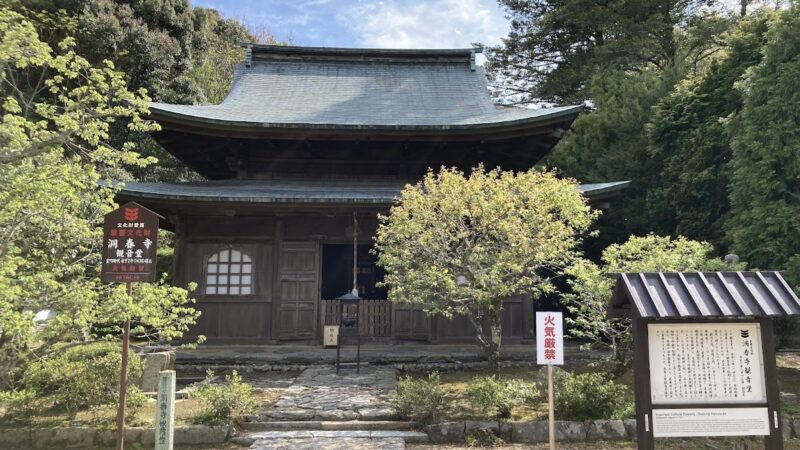
Rebuilt in 1774, the Main Hall is a magnificent building designated as a National Important Cultural Property. The imposing structure, with its hipped roof and tiled roof, is a prime example of mid-Edo period temple architecture.
Inside the main hall, important Buddhist statues, including the seated statue of Yakushi Nyorai (Medicine Buddha), are enshrined, creating a solemn religious space. The building’s details are adorned with intricate carvings, showcasing the high level of craftsmanship of the time.
Niomon Gate (Yamaguchi Prefecture Designated Cultural Property)
The Niomon Gate, guarding the entrance to the temple grounds, is designated as a cultural property of Yamaguchi Prefecture. The Kongo Rikishi statues (Nio statues) on either side greet visitors with powerful gazes.
Passing through the Niomon Gate is a symbolic act of entering a sacred space from the secular world, playing an important role in preparing one’s mind for worship.
Paintings, Documents, and Scriptures
In addition to Buddhist statues and buildings, Suo Kokubunji Temple houses a vast collection of cultural artifacts. The collection includes 200 paintings, including Buddhist paintings and portraits; 1,500 documents, containing ancient manuscripts that tell the history of the temple; and 8,500 scriptures, including valuable Buddhist texts.
These materials are extremely important historical sources for studying not only the history of Suo Kokubunji Temple, but also the history of Suo Province, Buddhist culture from the medieval to the early modern period, and the changes in the local community.
Highlights of the Temple Grounds | Walking Through the Temple Precincts of the Tenpyo Period
National Historic Site “Former Precincts of Suo Kokubunji Temple”
The most distinctive feature of Suo Kokubunji Temple is that it is the only temple in Japan that has preserved its temple grounds from the Tenpyo period. Designated as a national historic site as “Former Precincts of Suo Kokubunji Temple,” it is the only Kokubunji temple in Japan where the temple buildings remain in their original location.
Walking through the temple grounds is an experience of the spatial layout of the Tenpyo period, over 1200 years ago. The layout of the temple complex, centered around the main hall, is a valuable historical site that preserves the basic form of Kokubunji temple architecture from that period.
A Famous Spot for Crape Myrtle Trees
Approximately 130 crape myrtle trees are planted on the grounds of Suo Kokubunji Temple. These were planted with the meaning of “sliding away” misfortune and evil, and in summer, they bloom with beautiful crimson flowers, coloring the temple grounds.
During the blooming season from July to September, the contrast between the solemn atmosphere of the ancient temple and the vibrant flowers is magnificent, attracting many worshippers and tourists. The temple grounds with blooming crape myrtle trees are one of the representative landscapes of Suo Kokubunji Temple.
A Space of Serene Prayer
The entire temple grounds are enveloped in silence, creating a space for prayer away from the hustle and bustle of the city. Walking along the tree-lined path, passing through the Niomon Gate, and reaching the main hall provides a time to calm the mind and prepare to engage with Buddhist teachings. The sound of bells and chanting echoing through the temple grounds conveys the Buddhist tradition that has continued since the temple’s founding in the Tenpyo era, and continues to soothe the hearts of visitors.
Annual Events | Prayer and the Transmission of Tradition
At Suo Kokubunji Temple, various Buddhist events are held throughout the year. These events are deeply intertwined with the religious lives of the local people and serve as a venue for the transmission of traditional culture.
Major Annual Events
- Shōshō-e (January): A Buddhist service to welcome the New Year and pray for peace throughout the year.
- Setsubun-e (February): A service to pray for protection from evil and good fortune.
- Spring Equinox Service (March): A memorial service for ancestors.
- Hanamatsuri (April): A service celebrating the birth of Buddha.
- Urabon-e (August): A memorial service for ancestors during the Obon festival.
- Autumn Equinox Service (September): A memorial service for ancestors during the autumn equinox.
- Joya no Kane (December 31st): The ringing of the temple bell 108 times to mark the end of the year.
Many local residents participate in these events, demonstrating that Suō Kokubunji Temple is not merely a tourist destination, but a living place of faith.
Prayers and Ancestor Worship | A Place of Faith in the Modern Age
Suō Kokubunji Temple is a temple possessing historical cultural assets, and at the same time, it functions as a place of faith that receives people’s prayers in the modern age.
Various Prayers
The principal image, Yakushi Nyorai (Medicine Buddha), is known as the Buddha of healing and longevity, and many people visit to pray for good health and recovery from illness. Prayers are also offered for various wishes, such as family safety, traffic safety, and academic success.
As a special head temple of the Koyasan Shingon sect, prayers are performed based on the traditions of Shingon Esoteric Buddhism, and a wide range of prayers are accepted, from personal wishes to family happiness and even world peace.
Ancestor Worship
Ancestor worship is also an important role of Suō Kokubunji Temple. During annual events such as the Higan-e (equinox) and Obon-e (Buddhist festival), many parishioners pray for the repose of their ancestors’ souls. Individual memorial services are accepted at any time, and the temple is a beloved place for local residents to remember and honor their loved ones.
Suo Kokubunji Cemetery and Columbarium
Suo Kokubunji Temple has a cemetery and columbarium, and functions as a place for perpetual memorial services. Memorial services at this temple with over 1200 years of history provide a sense of peace to many people.
Experiential Programs | Experiencing Buddhist Culture
Suo Kokubunji Temple offers various programs to experience Buddhist culture (the timing and content may change, so advance confirmation is recommended).
Sutra Copying and Buddha Image Copying Experience
You can experience sutra copying and Buddha image copying, calming your mind and connecting with Buddhist teachings. The act of carefully copying each character of the sutra in a tranquil space provides an opportunity to regain the spiritual calm often lost in modern society.
Zen Meditation
Experience programs based on Shingon Buddhist meditation methods are sometimes held. By regulating your breathing and calming your mind, you can spend time away from the hustle and bustle of everyday life. ## Access and Visiting Information
Basic Information
- Location: 2-67 Kokubunji-cho, Hofu City, Yamaguchi Prefecture (Cultural properties such as the main hall are at address 2578)
- Sect: Koyasan Shingon Sect, Special Head Temple
- Mountain Name: Jōruri-zan
- Principal Image: Yakushi Nyorai (Medicine Buddha)
- Founded: Tenpyō 13 (741)
- Founder: Emperor Shōmu (Imperial Request)
Transportation Access
Access by Train
- Approximately 10 minutes by car from JR Sanyo Main Line “Hofu Station”
- Also accessible by bus from Hofu Station (Get off at “Kokuga” bus stop on the Bōchō Kōtsū Bus, approximately 5 minutes on foot)
Access by Car
- Approximately 10 minutes from Sanyo Expressway “Hofu East IC”
- Approximately 15 minutes from Sanyo Expressway “Hofu West IC”
- There is a parking lot for visitors on the temple grounds (free of charge).
Visiting Hours and Admission Fee
- Visiting Hours: Usually 9:00 AM to 5:00 PM (may vary depending on the season)
- Admission Fee: Free entry to the grounds. Viewing cultural properties may incur a fee (please check with the temple for details)
- Closed Days: None (may be closed for religious services, etc.)
Notes for Visitors
- The temple grounds are a sacred place. Please visit in silence.
- Photography is permitted, but there may be restrictions on photographing cultural properties such as Buddhist statues.
- Visiting may be prohibited during religious services.
- Please check in advance regarding bringing pets.
Nearby Attractions | Historical Spots in Hofu
There are many historical attractions around Suo Kokubunji Temple.
Suo Kokuga Ruins
Near Suo Kokubunji Temple are the ruins of the Suo Kokuga, the administrative center of Suo Province, which is designated as a national historical site. This site is valuable as a relic of a local administrative center during the Nara and Heian periods.
Hofu Tenmangu Shrine
Hofu Tenmangu Shrine, one of Japan’s three great Tenjin shrines, is also located in Hofu City. As a shrine dedicated to Sugawara no Michizane, the god of learning, it attracts many worshippers.
Mori Family Garden and Mori Museum
The former residence and garden of the Mori family, the lords of the Choshu Domain, are also a highlight. It features a beautiful garden designated as a national scenic spot and a museum exhibiting valuable cultural artifacts passed down through the Mori family.
Summary | A Sacred Site with 1200 Years of Prayers
Suo Kokubunji Temple is a historically valuable temple that has functioned as a place of prayer for over 1200 years since its founding in 741 AD. Suo Kokubunji Temple, the only temple in Japan to retain its grounds from the Tenpyo period, is designated a national historic site. Within its grounds, which include the nationally designated Important Cultural Property (Kondo), a seated statue of Yakushi Nyorai, standing statues of Nikko and Gekko Bodhisattvas, and standing statues of the Four Heavenly Kings, along with nearly 100 Buddhist statues, and over 10,000 cultural artifacts including paintings, documents, and scriptures.
The Buddhist teachings resonating within the temple grounds have soothed the hearts of people seeking peace, good health, and happiness throughout the ages. While a treasure trove of historical cultural assets, it remains a living place of faith, deeply connected to the local community through prayers, ancestral veneration, and annual events.
When visiting Hofu City in Yamaguchi Prefecture, be sure to visit Suo Kokubunji Temple and experience its history, culture, and tranquil space of prayer, which have continued since its founding in the Tenpyo period. Especially during the summer when the crape myrtle blossoms are in bloom, you can enjoy a special landscape where the solemnity of the ancient temple harmonizes with the beauty of nature.
Suo Kokubunji Temple, with its Buddhist culture passed down for over 1200 years, continues to resonate with people’s hearts. We hope you will visit and experience firsthand the weight of its history and its significance in the modern age.