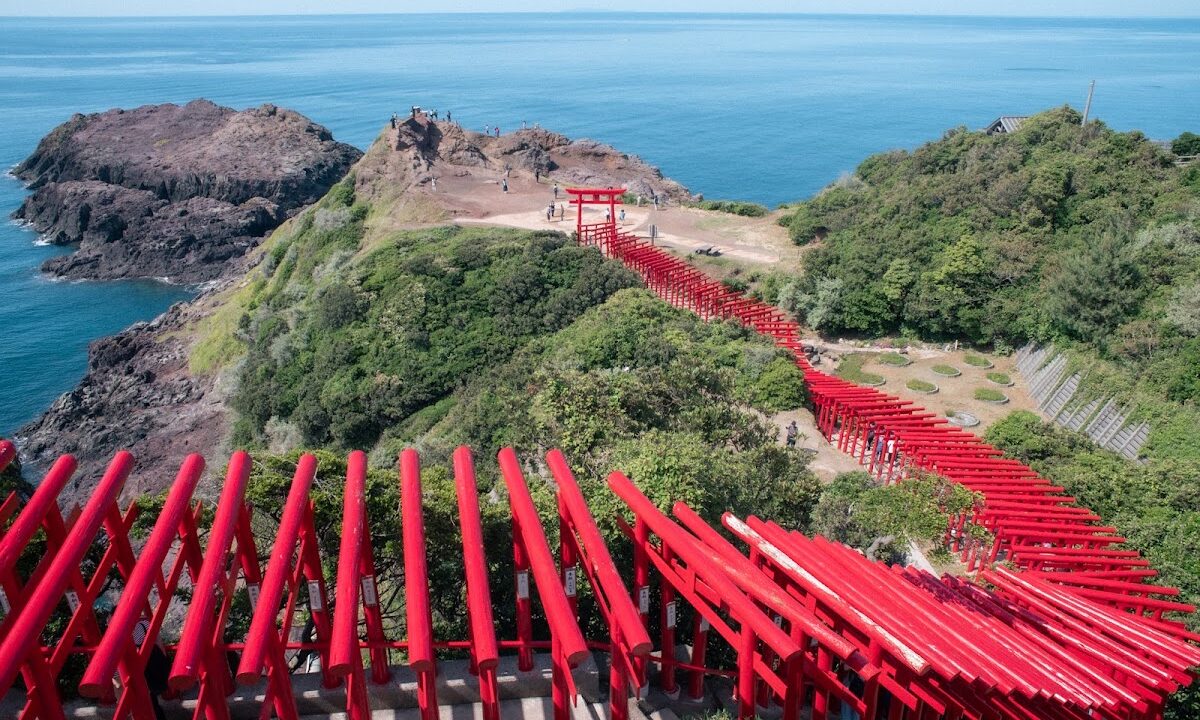
Hokkeji Temple (Hofu City, Yamaguchi Prefecture) Complete Guide: History, Access, and Detailed Information on Perpetual Memorial Services
Located in Kokubunji-cho, Hofu City, Yamaguchi Prefecture, Hokkeji Temple is a Shingon Buddhist temple with a long history rooted in the local community. Today, it is known as a temple cemetery offering diverse memorial services, including perpetual memorial services and tree burials. This article comprehensively introduces the information necessary for those considering visiting or performing memorial services at Hokkeji Temple, from its historical background to specific access methods, memorial service options, and surrounding area information.
Basic Information and Overview of Hokkeji Temple
Temple Location and Sect
Hokkeji Temple is a Shingon Buddhist temple located at 7-19 Kokubunji-cho, Hofu City, Yamaguchi Prefecture. Hofu City is located in the central part of Yamaguchi Prefecture and is a historical region that has flourished as a transportation hub since ancient times. Hokkeji Temple has also been deeply connected to the local community throughout its history.
Shingon Buddhism is one of the major Buddhist sects in Japan, founded by Kobo Daishi Kukai, and is based on the teachings of Esoteric Buddhism. Hokkeji Temple also performs traditional Shingon rituals and ceremonies, functioning as a center of local faith.
Characteristics and Role of the Temple
Hokkeji Temple, as a temple cemetery, provides various memorial services to parishioners and the general public. In recent years, in addition to traditional graves with tombstones, it has also offered modern memorial services such as perpetual memorial graves and tree burials, catering to those seeking diverse options.
Characteristics of a temple cemetery include the regular performance of religious rituals and ceremonies, and the continuous performance of memorial services by the head priest. This allows it to serve not only as a place to remember the deceased, but also as a place of solace for bereaved families.
Access to Hokkeji Temple
Nearest Station and Walking Access
The nearest station to Hokkeji Temple is Hofu Station on the JR Sanyo Main Line. Hofu Station is one of the main stations on the Sanyo Main Line, connecting Iwakuni and Moji, and is served by both local and rapid trains.
Hokkeji Temple is approximately a 20-minute walk (about 1.6 km) from Hofu Station. Exit the station, head north, cross National Route 2, and pass through a residential area to reach the temple. If walking is difficult, you can consider taking a taxi.
Access by Bus
Using public transportation, the bus is also convenient. The nearest bus stops are as follows:
- Kokubunji Bus Stop: Approximately a 6-minute walk (about 467m) to Hokkeji Temple
- Hofu Tenmangu Bus Stop: Approximately a 9-minute walk (about 698m) to Hokkeji Temple
Taking the bus from Hofu Station shortens the walking distance. For bus routes and timetables, it is recommended to check the Hofu City community bus and regular bus information in advance.
Access by Car and Parking
When visiting by car, the nearest interchanges are Hofu-Higashi IC or Hofu-Nishi IC on the Sanyo Expressway. It takes approximately 15-20 minutes to reach the temple from either interchange.
When using a car navigation system, enter the address “7-19 Kokubunji-cho, Hofu City, Yamaguchi Prefecture,” or you may be able to search by phone number. It is recommended to check directly with the temple before your visit regarding parking availability and the number of parking spaces.
Options for Memorial Services at Hokkeji Temple
About Perpetual Memorial Graves
Perpetual memorial graves are a type of burial plot where the temple provides perpetual memorial services and management. Hokkeji Temple also offers perpetual memorial graves, which have the following features:
Benefits of Perpetual Memorial Graves
- No Successor Required: Provides peace of mind even if there are no descendants or no one to inherit the grave in the future.
- Reduced Management Burden: The temple handles the cleaning and maintenance of the gravestone, reducing the burden on the bereaved family.
- Clear Costs: Often requires only an initial fee with no ongoing maintenance costs, making financial planning easier.
Differences Between Individual and Communal Graves
There are mainly two types of perpetual memorial graves:
- Individual Grave: The remains are individually interred for a certain period (usually 13, 17, or 33 years), after which they are communally interred. Suitable for those who wish to remember the deceased individually.
- Communal Grave: The remains are buried together with those of others from the beginning. Recommended for those who want to keep costs down.
The choice between the two types should be made by considering your budget, your views on memorial services, and your family’s wishes.
Characteristics of Tree Burial
Tree burial is a form of memorial service that emphasizes returning to nature, using a tree as a grave marker instead of a tombstone. It has become increasingly popular in recent years with the growing interest in nature.
Characteristics of Tree Burial
- Harmony with Nature: Because burial takes place under a tree without the use of a tombstone, it blends seamlessly into the natural environment.
- No Inheritance Required: Many tree burials include perpetual care, so there is no problem even without an heir.
- Cost-Effective Benefits: Since tombstone costs are unnecessary, it is often less expensive than a typical burial plot.
- Environmental Consideration: As an environmentally friendly burial method, it is chosen by those with a strong environmental consciousness.
If you are considering a tree burial at Hokkeji Temple, it is important to consult with the temple in advance regarding specific burial methods, tree types, costs, and annual maintenance details.
Use of Columbariums
A columbarium is a form of memorial service where cremated remains are enshrined in an indoor facility. The demand for columbariums is increasing due to the ability to pay respects regardless of the weather and the need to address the shortage of burial plots in urban areas.
Benefits of a Columbarium
- Comfortable visits are possible regardless of weather or season, as it is indoors.
- Well-maintained and clean facilities ensure a consistently clean environment.
- Often located in easily accessible areas with convenient transportation.
For information regarding the availability and details of a columbarium at Hokkeji Temple, we recommend contacting the temple directly.
Cost Estimates and Selection Guide for Memorial Services
General Cost Estimates
The cost estimates for memorial services in and around Hofu City, Yamaguchi Prefecture, vary greatly depending on the type of memorial service chosen:
Perpetual Memorial Grave
- Communal Grave: Approximately 100,000 to 300,000 yen
- Individual Grave (for a limited period): Approximately 300,000 to 1,000,000 yen
Tree Burial
- Approximately 200,000 to 800,000 yen (including perpetual memorial service fee)
Traditional Grave
- 1,000,000 to 3,000,000 yen or more (including gravestone cost and perpetual usage fee)
These are merely general estimates and may vary depending on the temple or cemetery. Additionally, annual maintenance fees may be required separately, so it is important to compare the total cost.
Key Points for Choosing a Memorial Service
When choosing a memorial service, we recommend considering the following points:
- Budget: Consider the total cost, including not only initial expenses but also ongoing costs such as annual maintenance fees.
- Succession: Is there someone to inherit the grave?
- Sectary Restrictions: Temple cemeteries may have sectarian restrictions.
- Access: Is it within a distance that allows for regular visits?
- Approach to Memorial Services: Do you prioritize individual memorial services or returning to nature?
Hokkeji Temple is a Shingon Buddhist temple, but it is necessary to confirm in advance whether they accept people of all sects.
Support for Grave Closure and Reburial
What is Grave Closure?
Grave closure refers to the removal of the currently used grave site and the relocation of the remains to another location or reburial in a perpetual memorial grave, etc. In recent years, more people are considering closing their family graves for the following reasons:
- Living far away makes visiting the grave difficult
- There is no one to inherit the grave
- Grave management becomes a burden due to aging
- Financial reasons make maintenance difficult
Procedures for Closing a Family Grave
When closing a family grave, the following steps are necessary:
- Consultation with Relatives: Closing a family grave is an important decision involving family and relatives, so thorough discussion is necessary beforehand.
- Decision on a New Burial Site: Decide on a new burial site (e.g., perpetual memorial grave, tree burial, columbarium)
- Administrative Procedures: Obtain a “Reburial Permit” from the municipal office
- Closing Ceremony: Perform a ceremony to remove the spirit from the grave at the current burial site
- Removal of the Tombstone: Request a stonemason to remove the tombstone and return the site to its original state
- Transfer of Remains: Transfer the remains to the new burial site
- Eye-Opening Ceremony: A memorial service to consecrate the remains at the new burial site.
Support for Grave Closure at Hokkeji Temple
Hokkeji Temple offers perpetual memorial graves and tree burials as alternatives to grave closures. If you are considering relocating remains from another cemetery to Hokkeji Temple, we recommend consulting with us in advance regarding the following points:
- Acceptance conditions for relocation (e.g., denominational restrictions)
- Details of costs
- Method and frequency of memorial services
- Support for necessary procedures
Grave closure involves complex procedures, so receiving support from a specialist can ensure a smooth process.
Cemetery and Burial Site Information around Hofu City
Major Cemeteries in Hofu City
Besides Hokkeji Temple, there are several other cemeteries and burial sites in Hofu City. It is helpful to be aware of information on major cemeteries in the surrounding area when making comparisons.
Public Cemeteries
- Municipal cemeteries are relatively inexpensive, but application periods may be limited.
- Often open to people of all religious denominations.
Private Cemeteries
- Often have excellent facilities and are well-equipped with barrier-free features.
- Open to people of all religious denominations, and offer a variety of memorial service options.
Temple Cemeteries
- Temple cemeteries, such as those at Hokkeji Temple, are characterized by regular memorial services and elaborate memorial services.
- While there may be restrictions based on religious denomination, an increasing number of temples are allowing use even without becoming a temple parishioner.
Nearby Buddhist Altar and Buddhist Goods Stores
When considering memorial services, you should also consider purchasing a Buddhist altar and Buddhist goods. There are several Buddhist altar and Buddhist goods stores around Hokkeji Temple, where you can receive guidance and after-sales service from expert staff.
Points to consider when choosing a Buddhist altar:
- Size that fits the space where it will be installed
- Design that matches the style of your home (traditional, modern, etc.)
- Material and quality that fits your budget
- Quality of after-sales service
History and Cultural Background of Hokkeji Temple
History of Hofu City and Kokubunji Town
Kokubunji Town in Hofu City, where Hokkeji Temple is located, is a region with deep historical ties to Buddhist culture, as its name suggests. It is believed that when Kokubunji temples were established throughout the country by order of Emperor Shomu during the Nara period, the Kokubunji temple of Suo Province was also located in this area.
Hofu City has flourished as a transportation hub since ancient times and developed as a post town on the Sanyo Road. Even today, it remains a transportation hub with the Sanyo Main Line and National Route 2 passing through it, and its historical importance remains unchanged.
Shingon Buddhism and the Local Community
Shingon Buddhism is a sect founded in the early Heian period by Kobo Daishi Kukai, and is based on the teachings of Esoteric Buddhism. Numerous Shingon Buddhist temples exist within Yamaguchi Prefecture, supporting the religious life of the local community.
Hokkeji Temple, as a Shingon Buddhist temple, also has a history of serving as a spiritual center for local residents. It continues to maintain its ties with the community through annual events and memorial services.
Consultation and Visit Reservations
Importance of Prior Consultation
When considering perpetual memorial services, tree burials, or grave closures, it is extremely important to consult with the temple in advance. You can ask the following questions by phone or email:
- Details and costs of memorial services
- Are there any restrictions based on religious sect?
- Is there an annual maintenance fee, and how much is it?
- Frequency and content of memorial services
- Is it possible to visit and how to make a reservation?
Points to check when visiting
When actually visiting a temple, we recommend checking the following points:
- Accessibility: Check if you can visit regularly.
- Condition of facilities: Cleanliness and maintenance of the cemetery and temple grounds.
- Atmosphere: Is it a comfortable environment for yourself and the deceased?
- Responsiveness of the head priest and temple staff: Polite answers to questions and attentive consultation.
- Surrounding environment: Is it a quiet and peaceful environment?
Visiting is a good opportunity to compare multiple temples and cemeteries. By visiting not only Hokkeji Temple but also surrounding facilities, you will be able to make a more satisfying choice.
Differences from Other Hokkeji Temples in Yamaguchi Prefecture
Hokkeji Temple in Tokuji, Yamaguchi City
As shown in search results, in addition to Hokkeji Temple in Hofu City, there is another temple called “Hokkeji” in Tokuji-bori, Yamaguchi City (address: 2822 Tokuji-bori, Yamaguchi City, Yamaguchi Prefecture). This is also a temple of the Koyasan Shingon sect, and the nearest station is Niho Station on the JR Yamaguchi Line.
Because the names are similar, it is important to accurately confirm the address and location when visiting or making inquiries.
Differences in Spelling
The spellings “Hokkeji” and “Hokkeji” differ because the official name varies depending on the temple. The temple in Hofu City is officially spelled “Hokkeji,” while the temple in Tokuji, Yamaguchi City is officially spelled “Hokkeji.”
Summary: For Those Considering Memorial Services at Hokkeji Temple
Hokkeji Temple (Kokubunji-cho, Hofu City, Yamaguchi Prefecture) is a temple that inherits the traditions of Shingon Buddhism while offering diverse forms of memorial services that meet modern needs. Options such as perpetual memorial graves, tree burials, and columbariums are available to suit individual circumstances and wishes.
Advantages of Choosing Hokkeji Temple
- Excellent Access: Within walking distance of Hofu Station on the JR Sanyo Main Line, and close to a bus stop.
- Tradition of Shingon Buddhism: Regular memorial services and attentive memorial services.
- Diverse Forms of Memorial Services: Responding to modern needs with perpetual memorial graves, tree burials, etc.
- A Temple Rooted in the Community: Highly reliable as a temple in Hofu City with a long history.
Choosing a form of memorial service is the final gift to the deceased and an important decision that also leads to peace of mind for the bereaved family. Hokkeji Temple accepts consultations and visits to support you in making such an important choice.
If you are considering purchasing a burial plot, closing a grave, or relocating a remains, we recommend that you first inquire by phone or email and then visit the site in person. Compare multiple options and find the best form of memorial service for yourself and your family.
Located in the historic Kokubunji-cho area of Hofu City, Hokkeji Temple will continue to walk hand in hand with the local community and serve as a place of memorial service for many people.