Achihayao Shrine (Osaka Prefecture) Complete Guide | History, Goshuin (Shrine Seal), Benefits, and Access Information
Achihayao Shrine, located in the Hanaten area of Tsurumi Ward, Osaka City, is a historically significant shrine listed in the Engishiki Jinmyocho (a list of shrines compiled in the Heian period). Known as Hachiken Shrine during the Edo period, it is a beloved historical shrine for locals, boasting many attractions including legends surrounding the Kusanagi-no-Tsurugi (Grass-Cutting Sword) and a sacred camphor tree over 400 years old.
This article comprehensively introduces all the information you need to know before visiting Achihayao Shrine, including its history, enshrined deities, highlights within the grounds, benefits, goshuin information, and access methods.
Basic Information about Ajihayao Shrine
Location: 3-31-18 Hanaten-Higashi, Tsurumi-ku, Osaka City, Osaka Prefecture 538-0044
Phone Number: 06-6962-0378
Former Shrine Rank: Gosha (Village Shrine)
Shrine Rank: Shikinaisha (Listed in the Engishiki Jinmyocho)
Nearest Station: Approximately 3 minutes on foot from Hanaten Station on the JR Gakken Toshi Line (Katacho Line)
Parking: Available (Several spaces)
History and Origins of Ajihayao Shrine
Status as a Shikinaisha
Ajihayao Shrine is a Shikinaisha listed in the Engishiki Jinmyocho, compiled during the Heian period, as “Ajihayao Shrine, Higashinari District, Settsu Province.” The Engishiki Jinmyocho is a register completed in 927 AD (Enchō 5) that records important shrines throughout Japan recognized by the imperial court at the time. Being listed in it means that the shrine has existed for at least 1000 years and has a long and distinguished history.
From Yatsurugi Shrine to Ajihayao Shrine
During the Edo period, it was called “Yatsurugi Daimyojin” or “Yatsurugi Shrine.” This name originates from the divided spirit of the Kusanagi-no-Tsurugi sword enshrined at the shrine. In the Meiji era, Namikawa Seisho, a scholar of Japanese classics who conducted research on the identification of Engishiki-listed shrines, determined that this shrine corresponds to the “Ajihayao Shrine” listed in the Engishiki Jinmyocho.
Following this, the “Ajihayao Shrine Name Marker Stone” was erected on the shrine grounds, and since then, it has become widely known by its original name as an Engishiki-listed shrine, “Ajihayao Shrine.”
The Legend of the Kusanagi Sword and its Connection to Atsuta Shrine
Our shrine has an intriguing legend concerning the Kusanagi Sword, one of Japan’s Three Sacred Treasures.
According to tradition, in the 7th year of Emperor Tenji’s reign (668 AD), someone stole the Kusanagi Sword from Atsuta Shrine and fled to this area. However, a sudden great storm struck, and fearing divine punishment, the thief abandoned the sword and fled.
The local people revered and worshipped this sacred sword, and enshrined it at our shrine. Later, the Kusanagi Sword was returned to Atsuta Shrine, but it is said that a divided spirit remained at our shrine and came to be worshipped as the Eight Swords Deity. This legend is the origin of our shrine being called “Eight Swords Shrine” during the Edo period.
The Relationship Between the Place Name and the Shrine
There is a theory that the place name “Hanaten,” where Ajihayao Shrine is located, is related to the legend of the Kusanagi Sword. Several interpretations exist, including the theory that the name originated from a thief “leaving” the sacred sword, or that it derives from the sword being “left unattended.”
The close connection between the place name and the shrine’s legend speaks to the historical importance of this shrine in this area.
Deities and Benefits
Main Deity: Ajisukitakahikone-no-kami (Ajisukitakahikone-no-kami)
The main deity of Ajihayao Shrine is Ajisukitakahikone-no-kami. It is also known as Ajisukitakahikone-no-kami.
This deity appears in Japanese mythology, such as in the Kojiki and Nihon Shoki, and is considered a child of Okuninushi-no-kami. As evidenced by the inclusion of the farming tool “suki” (plow) in the deity’s name, this deity has been worshipped since ancient times as a god of agriculture, particularly a protector of rice cultivation.
In mythology, Ajisukitakahikone-no-kami also possesses characteristics of a thunder god, and his voice is said to have resounded loudly. There are also accounts of him descending from heaven during a funeral procession, suggesting his character as a god who brings about the cycle of life and fertility.
Enshrined Deities: Yatsurugi-no-Okami and Kamo-no-Omikami
In addition to the main deity, the following gods are also enshrined at this shrine:
Yatsurugi-no-Okami: This deity originates from the aforementioned legend of the Kusanagi-no-Tsurugi sword and is considered a divided spirit of the Kusanagi-no-Tsurugi. It is believed to offer protection against misfortune and disaster. Kamo no Omikami: This deity is the ancestral god of the Kamo clan and belongs to the same lineage as the deities enshrined at Kamigamo Shrine and Shimogamo Shrine in Kyoto. The presence of this deity suggests a connection between this shrine and the Kamo clan, or the ancient Kamo tribe.
Expected Benefits
The main benefits you can expect at Ajihayao Shrine are as follows:
- Abundant Harvests and Protection of Agriculture: Because the main deity, Ajisukitakahikone-no-kami, is a god of agriculture.
- Business Prosperity and Success: Protection of the development of all livelihoods, not just agriculture.
- Protection from Evil and Disaster: Exorcism of evil spirits by the spiritual power of Hachiken-no-kami.
- Protection from Lightning and Weather Safety: Protection from the main deity who has the characteristics of a thunder god.
- Family Safety and Protection of the Community: As a tutelary deity who has protected the land since ancient times.
Highlights of the Shrine Grounds
The Sacred Camphor Tree Over 400 Years Old
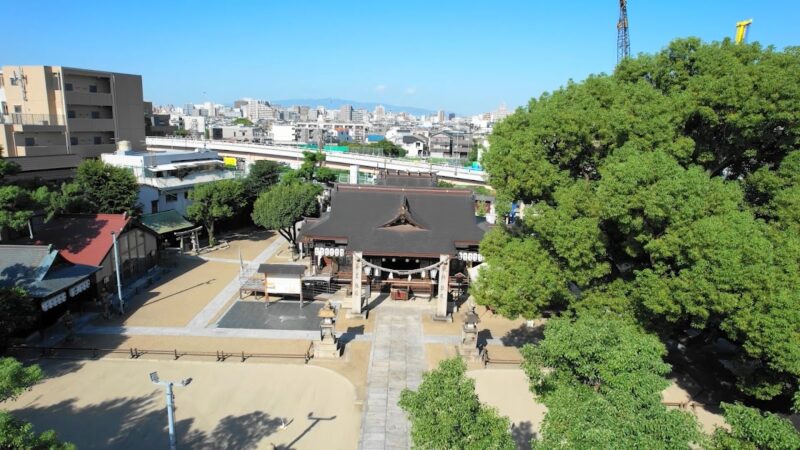
The most impressive feature of the grounds of Ajihayao Shrine is the gigantic camphor tree that stands right next to the torii gate. This camphor tree is said to be over 400 years old and is designated as a natural monument of Osaka Prefecture.
Its trunk circumference is extremely thick, and its presence is overwhelming. This sacred tree boasts a height that allows it to be seen from afar, and is a beloved landmark in the Hanaten area. It is believed that Hakuryu Daigongen is enshrined within this sacred tree, and it is revered by the local people.
The camphor tree has been considered a sacred tree since ancient times, and its longevity and evergreen nature have made it a symbol of eternity and vitality. Our camphor tree can be said to be a witness to history, having watched over this land for over 400 years.
The Only Okage Toro in Osaka City
Within the temple grounds is an Okage Toro (shadow lantern) erected in 1868 (Keio 4). This is a valuable cultural asset that preserves the tradition of “Okage-mairi,” a popular pilgrimage during the late Edo period, and is extremely rare as this is the only Okage Toro still existing in Osaka City.
“Okage-mairi” refers to the mass pilgrimages to Ise Grand Shrine that occurred every few decades during the Edo period. Particularly noteworthy are the two instances in 1830 (Bunsei 13) and 1867 (Keio 3), when millions of people made their way to Ise, creating a significant social phenomenon. Okage-toro (lanterns commemorating the rise of this popular faith) were erected in various locations to commemorate this surge in popular devotion.
Our shrine’s Okage-toro was erected the year after the last Okage-mairi, making it a valuable historical artifact that speaks to the faith of the people during the turbulent period from the end of the Edo period to the Meiji Restoration.
Main Hall and Worship Hall
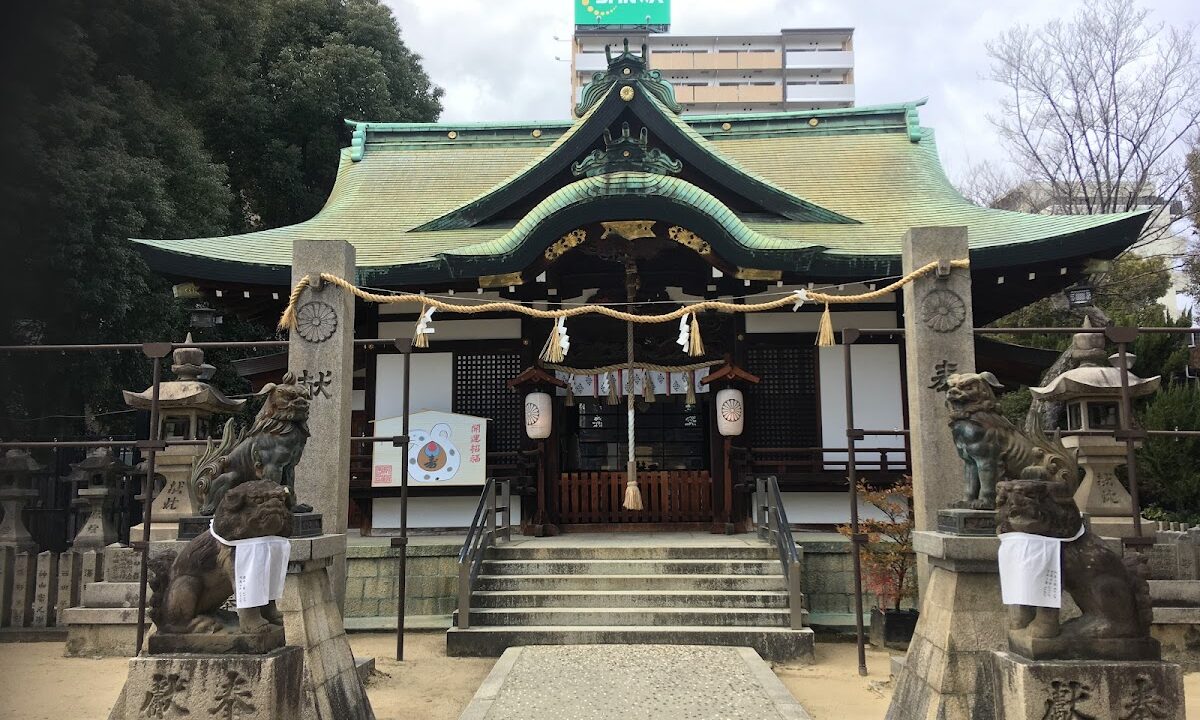
The shrine buildings of Ajihayao Shrine, though small, exude a sense of history. The main hall is built in the traditional style of shrine architecture and, along with the worship hall, is carefully maintained as the center of local faith.
Despite being located in an urban area, the shrine grounds maintain a tranquil atmosphere, allowing worshippers to escape the hustle and bustle and offer their prayers in peace.
Shrine Precincts
Several shrines are enshrined around the main hall.
- Daishogun Shrine: Worshipped as the god of direction and protection against misfortune.
- Inari Shrine: Popular as the god of business prosperity and abundant harvests.
- Gokoku Shrine: A shrine for national peace and the repose of war dead.
- Aido Shrine: Multiple deities are enshrined together.
These shrines also demonstrate the diversity of faith and importance of this shrine in the region.
Shrine Name Marker and Torii Gate
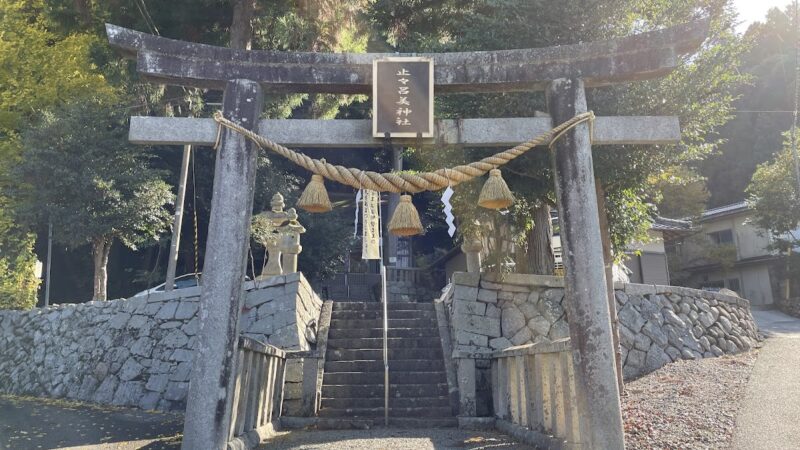
At the entrance to the shrine grounds is the “Ajihayao Shrine Name Marker,” erected by Namikawa Makoto. The front bears the name “Ajihayao Shrine,” and the right side is inscribed with the location “Hanaten Village,” conveying the historical circumstances of this shrine’s recognition as a Shikinaisha (a shrine listed in the Engishiki, an ancient Japanese legal code).
Passing through the torii gate, well-maintained grounds unfold on both sides of the approach, guiding worshippers to the main shrine.
Goshuin Information
Goshuin (shrine stamps) are available at Ajihayao Shrine.
Goshuin Reception Hours: Generally during the daytime (please inquire at the shrine office for details)
Offering Fee: Usually around 300-500 yen
Special Goshuin: Limited edition goshuin may be given on special days such as the annual festival.
The goshuin features the calligraphy of “Shikinaisha Ajihayao Shrine” and the shrine’s seal. As a valuable goshuin demonstrating its status as a Shikinaisha (shrine listed in the Engishiki), it is popular among shrine pilgrims.
Important Notes:
- The shrine office may be unattended, so if you definitely want to receive a Goshuin (shrine stamp), we recommend calling ahead to confirm.
- A Goshuin is proof of your visit, so please be sure to pray before receiving one.
- If you do not have a Goshuincho (stamp book), you may be able to receive a pre-printed Goshuin.
Main Festivals and Annual Events
Ajihayao Shrine holds various festivals and Shinto rituals throughout the year.
Annual Grand Festival
This is the most important festival of our shrine, held grandly every autumn. Local parishioners and worshippers gather, and a portable shrine procession and dedication ceremonies take place, making it a major event in the Hanaten area.
New Year’s Visit and New Year’s Festival
Many worshippers visit to welcome the New Year. The New Year’s Festival is held to pray for safety and prosperity throughout the year.
Summer Purification Ceremony
On June 30th, the “Summer Purification Ceremony (Nagoshi no Harae)” is held to cleanse away the impurities accumulated over the past six months. Through rituals such as passing through a ring of reeds, prayers are offered for purification of mind and body, and for good health.
Monthly Festival
A monthly festival is held regularly each month, praying for the peace and prosperity of the parish community.
Access Information
Access by Train
Ajihayao Shrine is very close to Hanaten Station on the JR Gakken Toshi Line (Katacho Line), making it easily accessible by train.
Nearest Station: JR Gakken Toshi Line (Katacho Line) “Hanaten Station”
Travel Time: Approximately 3 minutes on foot from Hanaten Station (approximately 200m northeast)
Access from Major Stations:
- From JR Osaka Station: Take the JR Osaka Loop Line to Kyobashi Station, transfer to the JR Gakken Toshi Line at Kyobashi Station, and travel to Hanaten Station (approximately 15-20 minutes)
- From JR Kyobashi Station: Take the JR Gakken Toshi Line to Hanaten Station (approximately 5 minutes)
- From JR Amagasaki Station: Take the JR Tozai Line/Gakken Toshi Line (direct service) to Hanaten Station (approximately 20 minutes)
Access by Car
Using the Hanshin Expressway:
- Approximately 10 minutes from the “Morishoji Exit” on the Hanshin Expressway Route 12 Moriguchi Line
- Approximately 15 minutes from the “Hoenzaka Exit” on the Hanshin Expressway Route 13 Higashi Osaka Line
Parking: There are a few parking spaces on the temple grounds, but spaces are limited, so we recommend using public transportation. During busy periods such as New Year’s Day or the annual festival, please consider using nearby coin-operated parking lots.
Landmarks in the Area
If you head northeast from Hanaten Station, you will see a huge 400-year-old camphor tree from afar; using this as a landmark will make it easy to find your way. Although it is located in a residential area, there is a small park at the entrance to the shrine, which serves as a playground for local children.
Manners and Time Required for Visiting
Etiquette for Visiting a Shrine
Please observe basic etiquette for visiting a shrine.
- Bow before passing through the torii gate: This is a courtesy before entering the sacred area.
- Purify yourself at the water basin: Purify your left hand, then your right hand, then your mouth.
- Walk along the edge of the path: The center is considered the path of the gods.
- Etiquette at the main hall: Two bows, two claps, and one bow are the basic rituals.
- Bow upon leaving: Turn around and bow before leaving the torii gate.
Estimated time required for worship
The shrine grounds are compact, so worship itself can be completed in about 15-20 minutes. However, the time required will vary if the following elements are included.
- If receiving a Goshuin (temple/shrine stamp): Add 10-15 minutes
- If thoroughly exploring the shrine grounds: 30-40 minutes
- If enjoying photography: 40-60 minutes
Historical Background of Ajihayao Shrine and the Hanaten Area
Ancient Higashinari District and Shikinaisha Shrines
The Hanaten area, where Ajihayao Shrine is located, belonged to Higashinari District of Settsu Province in ancient times. Higashinari District occupied a wide area from the eastern part of present-day Osaka City to Higashi-Osaka City, and was a region where agriculture flourished from ancient times.
The Engishiki Jinmyocho (a list of shrines compiled in the Heian period) lists several shrines in Higashinari District as Shikinaisha shrines in addition to Ajihayao Shrine, indicating that this region was an important center of faith from ancient times. The fact that the main deity of this shrine is Ajisukitakahikone-no-kami, a god of agriculture, is also thought to reflect the agricultural character of this region.
Connection to the Kamo Clan
Because our shrine enshrines Kamo-no-Omikami (Kamo-no-Okami), a connection to the ancient Kamo clan (Kamo family) has been suggested. The Kamo clan was a powerful clan in ancient Japan, excelling in agricultural and water management techniques, and is believed to have migrated to various regions and carried out development.
While the Kamo Shrines in Kyoto (Kamigamo Shrine and Shimogamo Shrine) are known as the Kamo clan’s base, many traces of the Kamo clan remain around Osaka, and our shrine is considered one of them. There is a strong possibility that the Kamo clan was involved in the development of the Hanaten area.
Transition from the Medieval to the Early Modern Period
Although detailed records from the medieval period onward are scarce, our shrine has consistently attracted worshippers as the local tutelary deity. During the Edo period, it was known as Hachiken Shrine and, along with the legend of the Kusanagi-no-Tsurugi sword, was central to the region’s identity.
With the Meiji-era reform of the shrine system, our shrine was designated a Gosha (village shrine) and officially recognized as an important shrine in the region. Following the designation of the shrine as a Shikinaisha (a shrine listed in the Engishiki, an ancient Japanese legal code) by Makoto Namikawa, its ancient history was re-recognized, and its current name, “Ajihayao Shrine,” was revived.
Nearby Attractions and Places to Visit
Tsurumi Ryokuchi Park
Located approximately 2km north of Ajihayao Shrine, this vast urban park is the former site of the 1990 International Garden and Greenery Exposition (Expo ’70). Visitors can enjoy seasonal flowers and greenery. It’s perfect for refreshing oneself in nature after visiting the shrine.
Osaka Castle
Osaka Castle Park is approximately 15 minutes away from Hanaten Station via the JR Gakken Toshi Line and Osaka Loop Line. Enjoy representative Japanese castle architecture and a vast park.
Kyobashi Area
Kyobashi, just one station from Hanaten Station, is one of Osaka’s leading shopping districts. It boasts numerous restaurants and shopping facilities, making it convenient for meals and shopping after visiting the shrine.
The Shrine’s Connection to the Community and the Modern Age of Ajihayao Shrine
Ajihayao Shrine, with its history spanning over 1000 years, continues to play a vital role as a central hub for the local community.
The small park at the entrance to the shrine grounds serves as a playground for local children, demonstrating that the shrine functions not only as a place of worship but also as a place for community interaction.
Many parishioners and local residents participate in festivals such as the annual grand festival, fostering intergenerational exchange. Maintaining such traditional community bonds in the increasingly urbanized city of Osaka is a significant characteristic of our shrine.
Notes and Requests Regarding Visits
Photography
Photography is generally permitted on the shrine grounds, but please note the following:
- Photography inside the main hall may be prohibited.
- Please be considerate of other visitors.
- Remember that this is a sacred place and photograph with respect.
- Permission is required for commercial use.
Clothing and Belongings
There are no specific dress code requirements, but please dress appropriately for a sacred place like a shrine. Even in summer, it is advisable to avoid excessive exposure to clothing.
If you plan to receive a Goshuin (temple/shrine stamp), please remember to bring your Goshuincho (stamp book).
Maintaining a Quiet Environment
The shrine grounds are located in a residential area and also serve as a place of relaxation for local residents. Please refrain from loud conversations and noisy behavior, and pray quietly.
Summary: The Charm of Ajihayao Shrine
Ajihayao Shrine is a valuable shrine that, while possessing the status of a Shikinaisha (a shrine listed in the Engishiki Jinmyocho), continues to preserve a community-based faith within an urban residential area.
Many elements of high historical and cultural value remain, including the legend surrounding the Kusanagi-no-Tsurugi (Grass-Cutting Sword), a camphor tree designated as a prefectural natural monument over 400 years old, and the only Okage-toro (a type of lantern) in Osaka City. Furthermore, with Ajisukitakahikone-no-Kami, the god of agriculture, as its main deity, many worshippers visit seeking blessings for abundant harvests and business prosperity.
Its excellent accessibility, just a 3-minute walk from JR Hanaten Station, is a major draw, making it easy to stop by during your Osaka sightseeing. Combining it with nearby attractions like Osaka Castle and Tsurumi Ryokuchi Park will ensure a fulfilling day.
Ajihayao Shrine has watched over this land from ancient times to the present day. Stepping into its tranquil grounds, you can forget the hustle and bustle of the city and reflect on its long and rich history. When you visit Osaka, be sure to pay your respects.