Anrakuji Temple (Ogaki City, Gifu Prefecture) Complete Guide | History and Highlights of an Ancient Temple Associated with Ieyasu and Prince Shotoku
Anrakuji Temple, located in Akasaka-cho, Ogaki City, Gifu Prefecture, is an ancient Jodo sect temple boasting a history of over 1400 years. Said to have been founded by Prince Shotoku, it is known as an indispensable temple in Japanese history, where Prince Oama (later Emperor Tenmu) prayed for victory during the Jinshin War and Tokugawa Ieyasu prayed for victory during the Battle of Sekigahara.
This article will fully convey the charm of this historic temple, including its detailed history, cultural assets, visiting information, and access methods.
Basic Information about Anrakuji Temple
Official Name: Shiunzan Eimeiin Anrakuji
Temple Overview
- Location: 756 Akasaka-cho, Ogaki City, Gifu Prefecture
- Sect: Jodo Sect
- Mountain Name: Shiunzan
- Temple Name: Eimeiin
- Principal Image: Shakyamuni Buddha
- Founder: Prince Shotoku (tradition)
- Founding: Said to be in the first year of Emperor Suiko’s reign (593 AD)
- Pilgrimage Site: 21st temple of the Thirty-Three Sacred Sites of Western Mino
Anrakuji Temple is a Jodo Sect temple, yet it has the unusual characteristic of having Shakyamuni Buddha as its principal image. This is a characteristic seen in temples with a long history dating back to ancient times, indicating that the principal image has been preserved even as the sect has changed.
History and Background of Anraku-ji Temple
Founding and Connection to Prince Shotoku
Anraku-ji Temple is said to have been founded in the first year of Empress Suiko’s reign (593 AD) by Prince Shotoku. The late 6th century in Japan was a time when Buddhism began to spread widely, and Prince Shotoku promoted the construction of temples throughout the country. Anraku-ji Temple is believed to have been founded as part of this effort, serving as a base for Buddhist missionary work in the Tokai region.
While many temples throughout Japan are said to have been founded by Prince Shotoku, Anraku-ji Temple holds historical value beyond mere legend due to its continued important role in subsequent history.
The Jinshin War and Prince Oama (Emperor Tenmu)
The Jinshin War, which broke out in 672 AD, was the largest civil war in ancient Japan. It is said that Prince Oama (later Emperor Tenmu) ordered the head priest of Anraku-ji Temple to pray for victory in this war.
Mino Province was a crucial stronghold for Prince Oama during the Jinshin War, and the area around Akasaka was strategically important. After Prince Oama’s victory and enthronement as Emperor Tenmu, Anraku-ji Temple received imperial protection and expanded its influence.
Due to this historical background, Anraku-ji Temple came to be recognized as a prestigious temple with deep ties to the imperial court since ancient times.
The Battle of Sekigahara and Tokugawa Ieyasu
The Battle of Sekigahara in 1600 (Keicho 5) brought Anraku-ji Temple national recognition.
Ieyasu’s Prayer for Victory
On the eve of the Battle of Sekigahara, Tokugawa Ieyasu stopped by Anraku-ji Temple to pray for victory. It is said that Ieyasu established his headquarters on Okayama, the hill behind the temple, and devised his strategy while surveying the battlefield of Sekigahara from there.
Renaming to Katsuyama
After the Tokugawa army’s victory, Ieyasu renamed Okayama to “Katsuyama” (Victory Mountain) to commemorate the victory. It is still affectionately known as “O-Katsuyama” (御勝山) today and is designated as a historical site as the Okayama main camp site of the Battle of Sekigahara.
Granting of the Aoi Crest
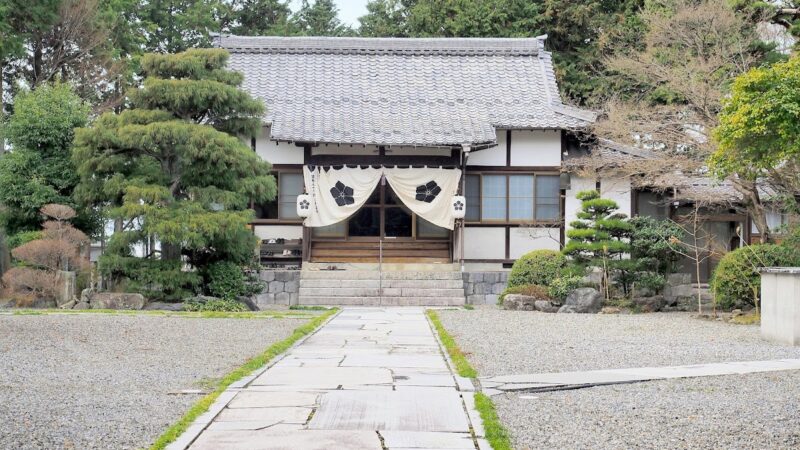
As a token of gratitude to Anraku-ji Temple, Ieyasu permitted the use of the Tokugawa family crest, the “Three-Leaf Aoi” (Three-Leaf Aoi). This was the highest honor for the temple and demonstrated its special relationship with the Tokugawa shogunate. The Aoi crest can still be seen at Anraku-ji Temple today.
Otani Yoshitsugu’s Battle Bell
Furthermore, Ieyasu donated the battle bell of Otani Yoshitsugu, who fought on the Western Army side in the Battle of Sekigahara, to Anraku-ji Temple. It is believed that by enshrining the relic of an enemy general in the temple, he served both as a memorial for the fallen soldiers and as a commemoration of the victory. This battle bell is still preserved as an important cultural asset of Anraku-ji Temple.
History from the Edo Period Onward
Throughout the Edo period, Anraku-ji Temple continued to receive the patronage of the Tokugawa family. The lords of the Ogaki domain also revered Anraku-ji Temple for generations, donating temple lands and improving its buildings.
Even amidst the anti-Buddhist movement after the Meiji Restoration, it was protected as a temple associated with the Tokugawa family, and many cultural assets were preserved. Even today, it welcomes many visitors as a center of local faith and a historical tourist spot.
Cultural Assets and Highlights of Anraku-ji Temple
Principal Image: Shakyamuni Buddha
The principal image of Anraku-ji Temple is Shakyamuni Buddha. The fact that it enshrines Shakyamuni Buddha rather than Amida Buddha, despite being a Jodo sect temple, is thought to be a continuation of the tradition from its founding. The principal image is strictly guarded as a hidden Buddha and is only unveiled during special religious ceremonies.
Otani Yoshitsugu’s Battle Bell
The battle bell used by Otani Yoshitsugu, a general of the Western Army in the Battle of Sekigahara, is a representative cultural asset of Anraku-ji Temple. Donated by Tokugawa Ieyasu, this bell is a valuable relic that conveys the history of the Sengoku period, attracting many history enthusiasts.
Otani Yoshitsugu is known as a general who remained loyal to Ishida Mitsunari despite his illness, and his spirit of loyalty has been passed down through generations. This battle bell also embodies the meaning of a symbol of the samurai spirit that transcends the boundaries of friend and foe.
Stone Memorial Towers
Within the temple grounds, there remains a group of stone memorial towers erected from the medieval to early modern periods. Various forms of memorial towers, such as gorinto (five-ringed stupas) and hokyointo (treasure chest stupas), stand side by side, conveying the state of faith at that time.
These stone structures were donated by influential local figures and parishioners, demonstrating that Anraku-ji Temple was a spiritual pillar of the local community for many years.
Site of the Okayama Main Camp at the Battle of Sekigahara
Katsuyama (formerly Okayama), the hill behind Anraku-ji Temple, is designated as a historical site as the “Site of the Okayama Main Camp at the Battle of Sekigahara.” From the summit, you can enjoy a panoramic view of Sekigahara, and truly feel as if Ieyasu watched the battle unfold from this vantage point.
A hiking trail is still maintained, allowing visitors to enjoy a historical walk. A monument stands at the summit, and an information board explaining the history of the Battle of Sekigahara is also installed.
Atmosphere of the Temple Grounds
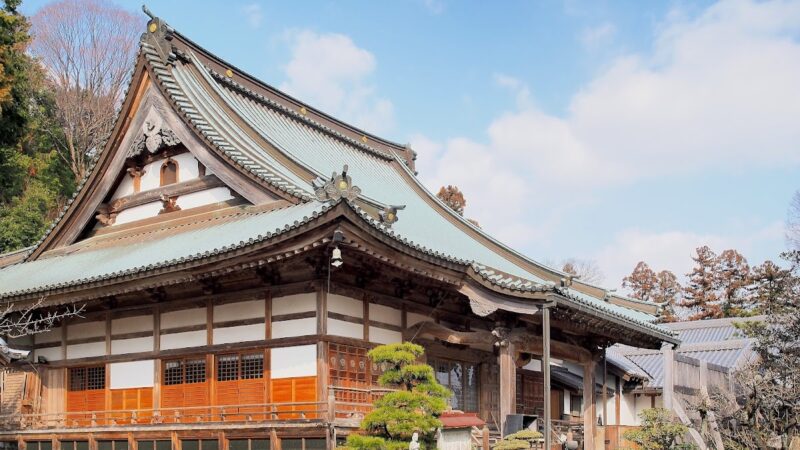
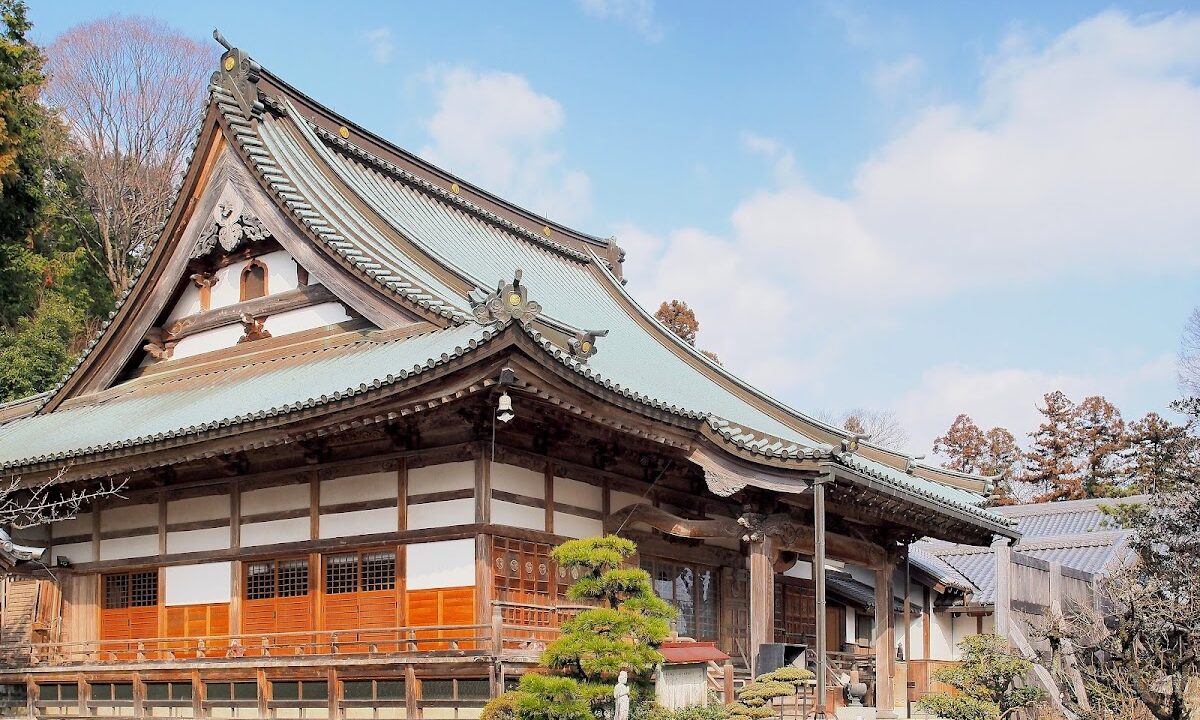
Anraku-ji Temple grounds exude a solemn atmosphere enveloped in tranquility. The temple buildings, including the main hall, bell tower, and living quarters, are neatly arranged, and the well-maintained gardens display different expressions throughout the seasons.
Especially during the cherry blossom season in spring, the fresh greenery in early summer, and the autumn foliage season, many visitors come during these popular times. The environment is conducive to quiet worship while feeling the weight of history.
21st Temple of the 33 Sacred Sites of West Mino
Anraku-ji Temple is the 21st temple of the 33 Sacred Sites of West Mino, and is a popular destination for pilgrims. The 33 Sacred Sites of West Mino is a pilgrimage route visiting Kannon temples in western Gifu Prefecture, a traditional path of faith that has continued since the Edo period.
As a temple on the pilgrimage route, Anraku-ji Temple offers Goshuin (temple stamps), which serve as a memento for pilgrims. Through this pilgrimage, you can experience the history and culture of the West Mino region.
Anraku-ji Temple is the 21st temple of the 33 Sacred Sites of West Mino, and is a beloved place for pilgrims. ## How to Access Anrakuji Temple
Access by Train
From JR Tokaido Main Line “Mino-Akasaka Station”
- Approximately 5 minutes on foot (approx. 700m)
- Closest to the nearest station, convenient access on foot
From JR “Ogaki Station”
- Approximately 15 minutes by Meihan Kintetsu Bus bound for “Akasaka,” get off at “Akasaka” bus stop, approximately 3 minutes on foot
- Bus service from Ogaki Station is limited, so it is recommended to check the timetable in advance.
Access by Car
From Tokai-Kanjo Expressway “Ogaki-Nishi IC”
- Approximately 7 minutes (approx. 4km)
- Accessible via National Route 21
From Meishin Expressway “Ogaki IC”
- Approximately 15 minutes (approx. 8km)
Parking
There is parking space for visitors on the temple grounds. However, space is limited, so please consider using nearby public parking lots during busy times.
Address and Contact Information
- Address: 756 Akasaka-cho, Ogaki City, Gifu Prefecture 503-2213
- Phone: If prior contact is necessary, please contact the Ogaki City Tourism Association (0584-77-1535)
Visiting Information
Visiting Hours
- The temple grounds are generally open for free visits.
- If you wish to view the main hall, prior contact is recommended.
- Recommended visiting hours: 9:00 AM to 4:00 PM
Admission Fee
- Entry to the temple grounds is free.
- Additional fees may apply for special viewings.
Annual Events
Anrakuji Temple holds various Buddhist services and events throughout the year. The main events include the following:
- Spring Equinox Ceremony (March)
- Flower Festival (April)
- Obon Festival (August)
- Autumn Equinox Ceremony (September)
- New Year’s Eve Bell Ringing (December 31st)
During special events, cultural properties that are normally closed to the public may be opened.
Nearby Tourist Attractions
Akasaka-juku
Akasaka-cho, where Anraku-ji Temple is located, was once the center of Akasaka-juku, a post town that flourished on the Nakasendo road. The old townscape remains, allowing visitors to enjoy historical walks.
Kinsho-zan Myojo-rin-ji Temple
This ancient Shingon Buddhist temple in Ogaki City is known as one of Japan’s three great Kokuzo Bodhisattva temples. Many people visit this temple along with Anraku-ji Temple.
Sekigahara Battlefield
Located about 20 minutes by car from Anraku-ji Temple, the Sekigahara Battlefield is a historical site where the decisive battle for control of Japan took place. At the Sekigahara Battlefield Memorial Museum, you can learn about the battle through detailed exhibits.
Ogaki Castle
Ogaki Castle, the headquarters of the Western Army during the Battle of Sekigahara, is another must-see spot for history buffs. From the castle tower, you can enjoy a panoramic view of Ogaki city.
How to Enjoy Visiting Anraku-ji Temple
Recommended for History Fans
Anraku-ji Temple has been involved in important historical turning points in Japan from ancient times to the early modern period. Visiting the temple while feeling its connection to important historical figures such as Prince Shotoku, Emperor Tenmu, and Tokugawa Ieyasu will deepen your understanding of history.
Especially for those interested in the Battle of Sekigahara, we recommend climbing Katsuyama Mountain after visiting Anraku-ji Temple to experience the view that Ieyasu saw.
Photo Spot
The temple grounds are also a popular photo spot where you can enjoy the beautiful scenery of each season. The following points are especially recommended:
- Panoramic view of the main hall and temple grounds
- Otani Yoshitsugu’s battle bell
- Stone memorial towers
- View from Katsuyama
However, please be mindful of proper etiquette when taking photos so as not to disturb other worshippers.
Goshuin (Temple Seal)
As the 21st temple of the Thirty-Three Sacred Sites of West Mino, you can receive a Goshuin (temple seal). Bring your Goshuincho (stamp book) and receive one as a memento of your visit.
Points to Note When Visiting Anrakuji Temple
Attire and Manners
- Please wear appropriate attire for visiting a temple.
- Please maintain silence within the temple grounds and be considerate of other visitors.
- Please refrain from taking photographs in areas where photography is prohibited.
Seasonal Precautions
- Summer: Take precautions against heatstroke when climbing Mt. Katsuyama.
- Winter: Be careful of footing when there is snow.
- Spring and Autumn Holiday Seasons: Crowds are expected.
Inquiries
If you wish to request a special viewing or group visit, it is recommended to contact the temple in advance.
Summary: The Charm of Anrakuji Temple
Anrakuji Temple, located in Akasaka-cho, Ogaki City, Gifu Prefecture, is an ancient Jodo sect temple with a history of over 1400 years. It is said to have been founded by Prince Shotoku, and was chosen by Emperor Tenmu during the Jinshin War and by Tokugawa Ieyasu during the Battle of Sekigahara as a place to pray for victory, making it a temple that played an important role in Japanese history.
The temple grounds preserve valuable cultural artifacts, including the battle bell of Otani Yoshitsugu, and the hill behind it, Katsuyama, is designated as a historical site as the Okayama main camp site of the Battle of Sekigahara. It is also known as the 21st temple on the Thirty-Three Sacred Sites of Western Mino, and is popular with pilgrims, history buffs, and tourists alike.
With its convenient location just a 5-minute walk from Mino-Akasaka Station, visiting Anraku-ji Temple in conjunction with nearby tourist attractions such as the Sekigahara battlefield and Ogaki Castle allows for a deeper experience of the Sengoku period history.
Why not take a moment to quietly pray in the tranquil grounds, feeling the weight of Japanese history? Anraku-ji Temple is a special temple worth visiting, where history and faith are intertwined.