Complete Guide to Imakumano Kannonji Temple | History, Benefits, and Access Information for the 15th Temple of the Saigoku Thirty-Three Kannon Pilgrimage
Located within the grounds of Sennyuji Temple in Higashiyama Ward, Kyoto City, Imakumano Kannonji Temple is a renowned temple that has long attracted many worshippers as the 15th temple of the Saigoku Thirty-Three Kannon Pilgrimage. Known as the “Kannon of the Head,” it is revered nationwide for its benefits in curing headaches and preventing dementia. This article provides a detailed introduction to Imakumano Kannonji Temple, including its history, principal image, benefits, highlights within the temple grounds, worship methods, and access information.
What is Imakumano Kannonji Temple?
Imakumano Kannonji Temple is a Shingon sect temple of the Sennyuji school located in Sennyuji-yama-cho, Higashiyama Ward, Kyoto City. As a sub-temple of the head temple Sennyuji-ji, it presents a majestic presence nestled in the embrace of the Imakumano Mountains, the thirty-six peaks of Higashiyama.
Its official name is “Kannonji,” but it is widely known by its common name, “Imakumano.” Its mountain name is “Shin-Nachisan,” a historically significant name bestowed by Emperor Go-Shirakawa. The principal image is the Eleven-Faced Kannon Bodhisattva, and it holds an important position as the 15th temple on the Saigoku Thirty-Three Kannon Pilgrimage and the 19th temple on the Rakuyo Thirty-Three Kannon Pilgrimage.
Formal Name and Mountain Name of Imakumano Kannonji Temple
- Formal Temple Name: Kannonji
- Common Name: Imakumano Kannonji
- Mountain Name: Shin-Nachisan
- Sect: Shingon-shu Sennyu-ji School
- Head Temple: Sennyu-ji Temple (a sub-temple of the head temple)
The mountain name, Shin-Nachisan, was given by Emperor Go-Shirakawa, who deeply revered this temple, and was likened to the Kannon faith of Kumano Nachi. This name indicates the deep connection between Imakumano Kannonji Temple and Kumano faith.
History of Imakumano Kannonji Temple
Founded by Kobo Daishi
The history of Imakumano Kannonji Temple dates back to the early Heian period. Around 825 (during the Kōnin era), the temple was founded by Kūkai (Kōbō Daishi) at the request of Emperor Saga.
It is said that Kūkai himself carved the Eleven-Faced Kannon Bodhisattva, using a small Kannon statue measuring 1.8 inches (approximately 5.4 cm) that he received from Kumano Gongen as the inner Buddha. This principal image has long been revered as a sacred statue imbued with the divine power of Kumano Gongen and the spiritual power of Kūkai.
Deep Connection with Emperor Go-Shirakawa
A noteworthy aspect of the history of Imakumano Kannon-ji Temple is its deep connection with Emperor Go-Shirakawa (the 77th Emperor). Emperor Go-Shirakawa suffered from severe headaches and repeatedly prayed at Imakumano Kannon-ji Temple for relief.
It is said that one night, Kannon appeared at the Emperor’s bedside and shone a light upon him. Because this miracle cured his headache, Emperor Go-Shirakawa deeply revered the temple and bestowed upon it the mountain name “Shin-Nachi-san” (New Nachi Mountain), and it came to be known as “Imakumano Kannon-ji.”
Due to this story, Imakumano Kannon-ji became known as “Kannon of the Head,” and worshippers from all over Japan came to the temple seeking its blessings for relieving headaches and preventing dementia.
History as one of the 33 Kannon Pilgrimage Sites of Saigoku
Imakumano Kannon-ji has a long history of pilgrimage as the 15th temple of the 33 Kannon Pilgrimage Sites of Saigoku. The Saigoku 33 Pilgrimage is considered the oldest pilgrimage route in Japan and has welcomed many pilgrims as a central sacred site of Kannon worship.
During the Edo period, the Saigoku pilgrimage became popular among commoners, and Imakumano Kannon-ji was bustling with many worshippers. Even today, many pilgrims visit throughout the year, seeking temple stamps.
Principal Image and Faith
Eleven-Faced Kannon Bodhisattva
The principal image of Imakumano Kannon-ji Temple is the Eleven-Faced Kannon Bodhisattva. It is said that this statue was carved by Kobo Daishi himself, and it houses a 1.8-inch Kannon statue bestowed upon it by Kumano Gongen as an inner Buddha.
The Eleven-Faced Kannon is a Kannon Bodhisattva with 11 faces on its head, believed to gaze in all directions and save all sentient beings. The principal image of Imakumano Kannon-ji Temple, in particular, is revered as the “Kannon of the Head” due to its miraculous power to cure Emperor Go-Shirakawa’s headaches.
Benefits for Relieving Headaches and Dementia
Imakumano Kannon-ji Temple is known as the “Kannon of the Head” and is said to offer the following benefits:
- Headache Relief: Based on the story of Emperor Go-Shirakawa’s recovery from headaches.
- Dementia Prevention: For mental clarity and prevention of dementia.
- Academic Success: For passing exams and improving academic performance.
- Bestowal of Wisdom: For receiving wisdom.
Especially during exam season, many students and their parents visit the temple praying for academic success. Furthermore, reflecting the aging society, the number of visitors seeking amulets to prevent dementia is also increasing.
Waka Poem
The waka poem for the 15th temple of the Saigoku Thirty-Three Kannon Pilgrimage is:
“From ancient times, though unknown, the vow of the Buddha of Imakumano remains renewed.”
This waka poem expresses the ever-renewing vow of Kannon at Imakumano Kannon-ji Temple, and the unwavering compassion with which she continues to save all sentient beings.
Highlights of the Temple Grounds
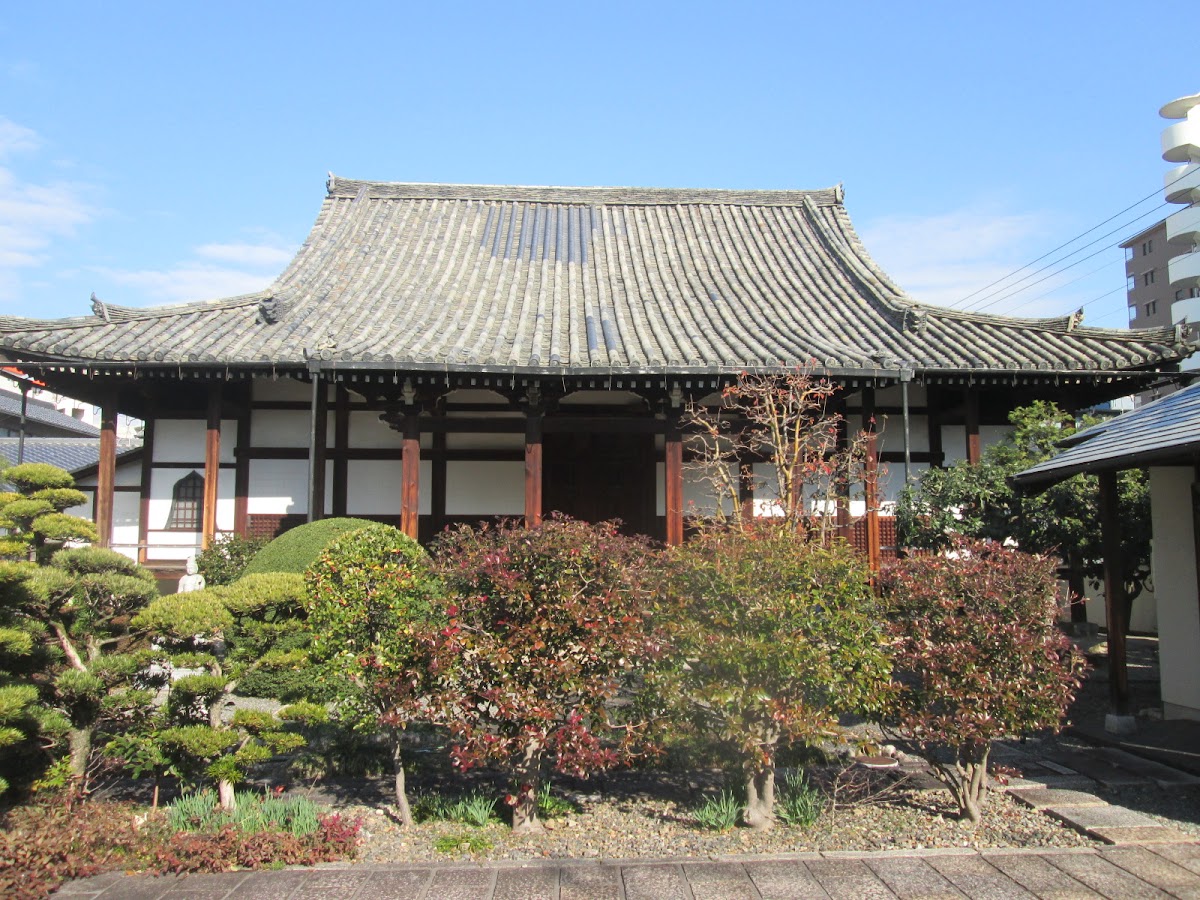
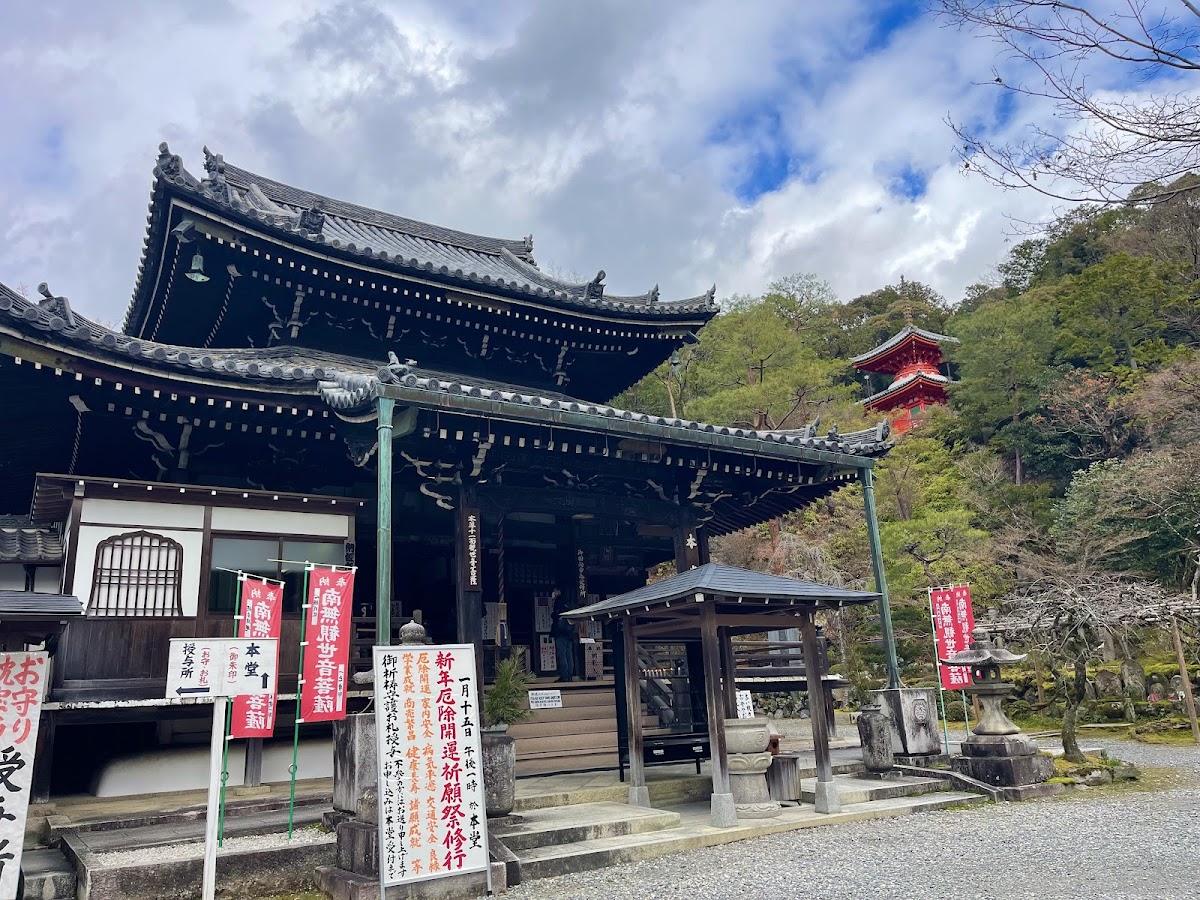
Main Hall
The main hall houses the principal image, the Eleven-Faced Kannon Bodhisattva. Inside the hall, worshippers can be seen quietly joining their hands in prayer, offering their individual wishes. A large incense burner stands in front of the main hall, and the smoke of incense never ceases.
Daishi Hall
The Daishi Hall, dedicated to Kobo Daishi, is an important building as a place of worship for Kukai, the founder of the pilgrimage. As a Shingon Buddhist temple, a deep devotion to Kobo Daishi continues to this day.
Torii Bridge and Autumn Leaves
Within the temple grounds is a beautiful vermilion-painted torii bridge, a particularly spectacular spot during the autumn foliage season. The seasonal scenery, from the green maple leaves in early summer to the vibrant red leaves in autumn, captivates visitors.
The autumn leaves at Imakumano Kannon-ji Temple are known as a hidden gem in Kyoto, and many tourists visit in conjunction with other autumn foliage tours around Sennyu-ji Temple.
Kannon for Preventing Dementia
Within the temple grounds is a statue of Kannon known as the “Kannon for Preventing Dementia,” where many worshippers pray for mental clarity and prevention of dementia. In our aging society, devotion to this Kannon statue is increasing year by year.
Annual Events and Ceremonies
Shikoku Pilgrimage Sand-Stepping Ceremony
At Imakumano Kannon-ji Temple, a “Sand-Stepping Ceremony” is held, where participants can receive the same blessings as those of the Shikoku 88 Temple Pilgrimage by stepping on the sand of the 88 temples. This memorial service is held for those who find it difficult to actually make the pilgrimage to Shikoku, and it attracts many worshippers.
Kyoto Seven Lucky Gods Pilgrimage
Imakumano Kannonji Temple is also known as one of the temples in the “Senzan Seven Lucky Gods Pilgrimage,” which centers around Sennyuji Temple. In the New Year, it is bustling with worshippers enjoying the Seven Lucky Gods pilgrimage.
Other Annual Events
- Shōshō-e (January 1st-3rd): New Year’s memorial service
- Setsubun-e (February 3rd): Setsubun bean-throwing ceremony
- Shunki Higan-e (Spring Equinox): Ancestor memorial service
- Autumn Higan-e (Autumn Equinox): Ancestor memorial service
- Kannon-sama Ennichi (18th of every month): Monthly memorial service
Information for Visitors
Visiting Hours and Admission Fees
- Visiting Hours: 8:00 AM – 5:00 PM (Year-round)
- Admission Fee: Free entry to the grounds (Donation required for entry into the main hall)
- Goshuin (Temple Stamp) Reception: 8:00 AM – 5:00 PM
How to Visit
- Sanmon (Temple Gate): Bow before entering the grounds
- Temizuya (Water Basin): Cleanse your hands and mouth
- Hondo (Main Hall): 4. Daishi-do Hall: Pay respects to Kobo Daishi.
- Boke-fuji Kannon: Pray for mental clarity.
- Goshuin (Temple Seal): Receive a Goshuin at the temple office.
In the case of the Saigoku Thirty-Three Kannon Pilgrimage, the traditional method of worship involves receiving a Goshuin in your pilgrimage notebook and reciting a Goeika (Buddhist hymn).
Amulets and Souvenirs
At Imakumano Kannon-ji Temple, the following amulets and souvenirs are popular:
- Headache Relief Amulet: An amulet for praying for relief from headaches
- Dementia Prevention Amulet: An amulet for preventing dementia and promoting mental clarity
- Academic Success Amulet: An amulet for passing exams and improving academic performance
- Goshuin (Temple Seal): Goshuin from the Saigoku Thirty-Three Kannon Pilgrimage and the Rakuyo Thirty-Three Kannon Pilgrimage
- Miyage (Image): A talisman printed with the image of the principal deity
Access Information
Address
32 Sennyuji Yamauchi-cho, Higashiyama-ku, Kyoto City, Kyoto 605-0977
Access by Train
Using Keihan Railway:
- Get off at Tofukuji Station on the Keihan Main Line, approximately 15 minutes on foot
- Get off at Tobakaido Station on the Keihan Main Line, approximately 15 minutes on foot.
Using JR:
- Get off at Tofukuji Station on the JR Nara Line, approximately 15 minutes on foot.
Access by Bus
Using City Bus:
- Get off at the Sennyuji-michi bus stop (Kyoto City Bus), approximately 10 minutes on foot.
- Get off at the Imakumano bus stop (Kyoto City Bus), approximately 5 minutes on foot.
Main routes: Routes 202, 207, 208, etc.
Access by Car and Parking
By Car:
- Approximately 15 minutes from Kyoto Minami IC on the Meishin Expressway.
- Approximately 10 minutes from Kamogawa Nishi IC on the Hanshin Expressway.
Parking:
- Free parking available (approximately 20 spaces).
- May be full during peak seasons such as autumn foliage season.
- Paid parking is also available around Sennyuji Temple.
Combining Imakumano Kannon-ji Temple with Nearby Tourist Attractions
Since Imakumano Kannon-ji Temple is located within the grounds of Sennyu-ji Temple, it is recommended to visit the following temples in conjunction with it:
- Sennyu-ji Temple: The head temple known as the family temple of the Imperial family (5-minute walk)
- Unryu-in Temple: A branch temple of Sennyu-ji Temple with a beautiful, tranquil garden (10-minute walk)
- Tofuku-ji Temple: A large temple famous for its autumn foliage (15-minute walk)
- Fushimi Inari Taisha Shrine: The head shrine of Inari worship, known for its thousands of torii gates (10-minute drive)
The Four Seasons of Imakumano Kannon-ji Temple
Spring (March-May)
In spring, cherry blossoms and fresh greenery adorn the temple grounds. Many visitors come during the spring equinox, and visiting in the gentle spring sunshine is a truly refreshing experience.
Summer (June-August)
The early summer green maple leaves are magnificent, and the approach to the temple, resembling a green tunnel, creates a refreshing atmosphere. Since it’s a relatively less crowded time, it’s recommended for those who want to visit in peace.
Autumn (September-November)
The autumn foliage season is the most beautiful time to visit Imakumano Kannon-ji Temple. From mid- to late November, the maple trees on the temple grounds turn vibrant colors, and the area around Torii Bridge is particularly spectacular. It becomes bustling with tourists who combine their visit with a tour of the autumn leaves around Sennyu-ji Temple.
Winter (December-February)
The temple grounds, enveloped in winter’s silence, exude a solemn atmosphere. Imakumano Kannon-ji Temple in a snowscape also has a unique charm, possessing a beauty only found in winter. In the New Year, visitors come for Hatsumode (first shrine visit of the year) and the Seven Lucky Gods pilgrimage.
Guidelines for Visiting Imakumano Kannon-ji Temple
As part of the Saigoku Thirty-Three Kannon Pilgrimage
Imakumano Kannon-ji Temple is the 15th temple on the Saigoku Thirty-Three Kannon Pilgrimage, making it an important base for pilgrims. Traditionally, pilgrims should bring their pilgrimage notebooks, receive temple stamps, and recite the temple’s hymns.
Imakumano Kannon-ji Temple is positioned as an important temple within Kyoto City on the pilgrimage route, which continues from the 14th temple, Miidera (Onjo-ji), to the 16th temple, Kiyomizu-dera.
How to Pray to the Kannon of the Head
When praying for relief from headaches or dementia, it is recommended to pray in front of the Kannon statue for dementia prevention after visiting the main hall. It is important to convey your wishes to Kannon with sincerity.
Students preparing for exams should receive an amulet for academic success and pray for Kannon’s protection in conjunction with their daily efforts.
Regarding Photography
Photography is generally permitted within the temple grounds, but photography inside the main hall and of the principal image may be prohibited. Please check before taking photos and be considerate of other visitors.
The area around Torii Bridge is a popular photo spot during the autumn foliage season, but please be careful not to obstruct worshippers.
Summary
Imakumano Kannon-ji Temple is a historical temple founded by Kobo Daishi and deeply revered by Emperor Go-Shirakawa. As the 15th temple of the Saigoku Thirty-Three Kannon Pilgrimage, and known as the “Kannon of the Head,” it attracts many worshippers seeking relief from headaches, prevention of dementia, and academic success.
With the mountain name of Shin-Nachisan, the Eleven-Faced Kannon Bodhisattva watches over visitors in the tranquil environment of the Sennyu-ji Temple grounds. The beautiful nature throughout the seasons, especially the autumn foliage, is exceptional, making it a recommended hidden gem for Kyoto sightseeing.
Easily accessible by Keihan Railway, JR, and city buses, Imakumano Kannonji Temple can be combined with visits to nearby temples such as Sennyuji and Tofukuji to enjoy a more fulfilling Kyoto temple tour.
This temple is worth visiting for a variety of purposes, including those aspiring to complete the Saigoku Thirty-Three Kannon Pilgrimage, those seeking blessings for headaches and dementia prevention, those seeking tranquility in a quiet Kyoto temple, and those who wish to appreciate the beauty of autumn foliage. Please visit Imakumano Kannonji Temple and experience the compassion of Kannon.