Jōruri-ji Temple Complete Guide | Exploring the Nine Amida Buddhas (National Treasures) and the Garden of the Pure Land
Located in Kamo-cho, Kizugawa City, Kyoto Prefecture, Jōruri-ji Temple is a valuable temple that preserves the Pure Land faith of the Heian period. The landscape, woven from the nine seated Amida Buddha statues lined up in a row in the National Treasure main hall, the three-story pagoda to the east, and the Pure Land style garden centered around a pond, truly embodies the Pure Land of Paradise. This article comprehensively introduces everything you need to know before visiting Jōruri-ji Temple, including its history, highlights, visiting information, and access methods.
What is Jōruri-ji Temple? | An Ancient Heian Temple Embodying the Pure Land of Paradise
Jōruri-ji Temple is a Shingon Ritsu sect temple located in Nishikoza Fudaba, Kamo-cho, Kizugawa City, Kyoto Prefecture. Its mountain name is Odawara-yama, and its principal images are the nine Amida Buddhas and Yakushi Nyorai. The temple’s name, “Jōruri,” originates from the “Jōruri World,” the Pure Land of Yakushi Nyorai (Medicine Buddha) enshrined in the inner sanctuary of the three-story pagoda.
Because nine seated statues of Amida Nyorai (Amitabha Buddha) are enshrined in the main hall, it is also known as “Kyūtai-ji” (Nine Buddha Temple) and is a valuable temple that conveys the rise of Pure Land Buddhism in the late Heian period. The temple grounds are designated as a Special Place of Scenic Beauty and Historic Site, and the main hall, three-story pagoda, nine seated Amida Nyorai statues, and the standing statues of the Four Heavenly Kings are designated as National Treasures.
Arrangement and Meaning of the Pure Land Garden
The most distinctive feature of Jōruri-ji Temple is its unique temple layout, centered around a pond said to be shaped like the Sanskrit character “A,” with Yakushi Buddha (three-story pagoda) to the east and Amida Buddha (main hall) to the west. This is a replica of the Jōdoen garden from the Heian period (794-1185). The Yakushi Nyorai (Medicine Buddha) in the east symbolizes worldly benefits, while the Amida Nyorai (Amitabha Buddha) in the west symbolizes rebirth in paradise in the afterlife.
The east, being the direction of the rising sun, represents birth and this world, while the west, being the direction of the setting sun, signifies death and the afterlife. This east-west arrangement embodies the Buddhist worldview, allowing visitors to experience a simulated journey from this world to the next by moving between the east and west sides of the pond.
History of Jōruri-ji Temple | From Founding to the Present
Founding Legends and Actual Founder
According to the legend of Jōruri-ji Temple, it was founded in 738 (Tenpyō 11) during the Nara period, when Emperor Shōmu ordered the monk Gyōki to construct it. However, according to the “Jōruri-ji Ryūjiki,” an important cultural property preserved at Jōruri-ji Temple, the actual founding dates back to 1047 (Eishō 2), when a monk named Gimyo from Taima enshrined a statue of Yakushi Nyorai (Medicine Buddha).
Development in the Late Heian Period
In the late Heian period, as Pure Land Buddhism spread among the nobility and common people, Jōruri-ji Temple also developed significantly. During this time, the main hall (Amida-dō) housing nine Amida Buddhas was constructed. The belief in the nine Amida Buddhas is based on the concept of the nine stages of rebirth in the Pure Land (Kuhon Ōjō) described in the *Contemplation Sutra*, reflecting people’s desire for rebirth in the Pure Land.
The nine stages of rebirth are a teaching that states there are nine stages to rebirth in the Pure Land based on one’s actions in life. By enshrining Amida Buddhas corresponding to each stage, the aim was to guarantee rebirth for all people.
Changes Since the Middle Ages
From the Kamakura period onward, Jōruri-ji Temple was maintained as a center of the Shingon Ritsu sect. Despite enduring the turmoil of the Sengoku period and the hardships of the Edo period, it continued to preserve its religious traditions, supported by the faith of the local people. Having overcome the crisis of the anti-Buddhist movement of the Meiji era, it remains a valuable temple that retains much of its Heian period appearance to this day.
National Treasures and Important Cultural Properties | Cultural Properties of Jōruri-ji Temple
National Treasure: Main Hall (Amida Hall)
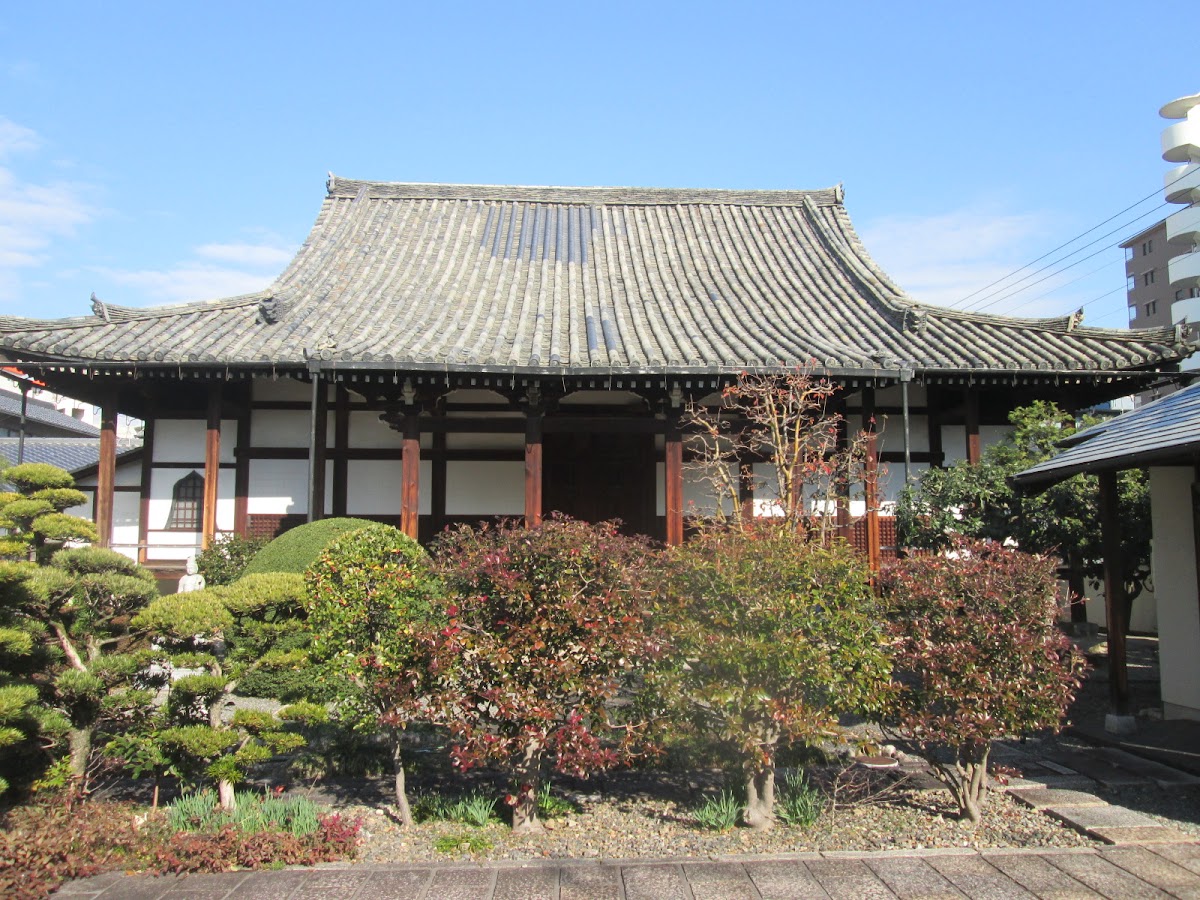
The main hall of Jōruri-ji Temple is a valuable building that preserves the architectural style of the late Heian period and is designated as a National Treasure. It is a long, horizontal hall with a hipped roof and tiled roofing, and inside, nine seated Amida Buddha statues are enshrined in a single row.
The main hall’s structure features a large, approximately 2.8-meter-tall (Jōroku) seated Amida Buddha statue in the center, flanked on either side by four slightly smaller Amida Buddha statues. All nine of these statues are designated National Treasures and represent the pinnacle of Heian period Buddhist sculpture.
National Treasure: Nine Amida Buddha Statues
All nine Amida Buddha statues are believed to date from the late Heian period (late 11th to early 12th century). The central statue is Jōroku in size and features a gentle and elegant expression in the Jōchō style. The eight attendant statues are also exquisitely crafted, each with subtle differences in expression, captivating the viewer.
These Amida Buddha statues embody the concept of the nine levels of rebirth in paradise, reflecting the strong desire of people at that time for rebirth in paradise. There are very few existing Nine Amida Halls, and Jōruri-ji Temple is a precious example in Japan that retains its original form.
National Treasure: Three-Storied Pagoda
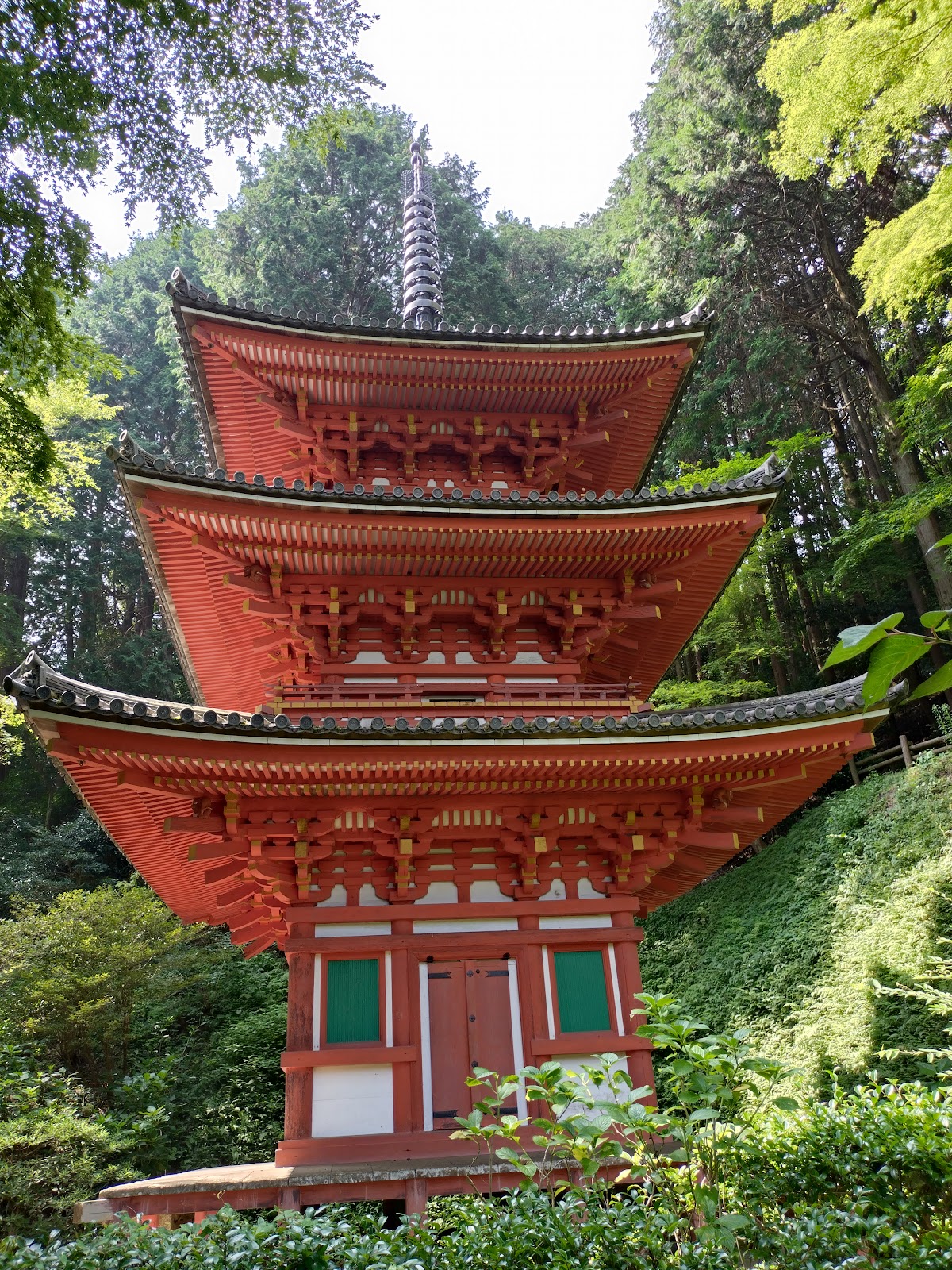
The three-storied pagoda, located on the east side of the temple grounds, opposite the main hall across a pond, is also designated a National Treasure. This pagoda dates from the late Heian period, and the first floor houses a seated statue of Yakushi Nyorai (a designated Important Cultural Property). The pagoda is situated in the east, where the sun rises, symbolizing the Eastern Pure Land of Jōruri, the Pure Land of Yakushi Nyorai.
The first floor of the three-storied pagoda is usually closed to the public, but it is opened on special viewing days (mainly on fine weather days in spring and autumn), allowing visitors to view the seated statue of Yakushi Nyorai. The pagoda’s well-proportioned and beautiful form harmonizes with the changing seasons, creating a breathtaking landscape, especially during the autumn foliage season.
National Treasure: Standing Statues of the Four Heavenly Kings
Inside the main hall, along with nine seated statues of Amida Buddha, are the standing statues of the Four Heavenly Kings, both designated as National Treasures. Dating from the late Heian period, they are characterized by their powerful expressions and dynamic postures.
Other Important Cultural Properties
The seated statue of Yakushi Nyorai inside the three-story pagoda and the temple’s treasured “Jōruri-ji Ryūkiji” (a historical document) are designated as Important Cultural Properties. Furthermore, the entire temple grounds are designated as a Special Place of Scenic Beauty and a Historic Site, demonstrating the high historical value of the garden.
Highlights of Jōruri-ji Temple | Beauty in the Four Seasons
The Beauty of the Pure Land Garden
The garden of Jōruri-ji Temple is highly regarded as a typical example of a Heian period Pure Land garden. The central pond is called “Hōchi” (Treasure Pond) and is said to be shaped like the Sanskrit character “A”. Stone arrangements and plantings surround the pond, creating a beautiful landscape that changes with the seasons.
In spring, cherry blossoms bloom in profusion, and in summer, the fresh greenery is a vibrant sight. During the autumn foliage season, the entire temple grounds are dyed in red and yellow, and the combination of the three-story pagoda and the autumn leaves is particularly renowned as a breathtaking sight. In winter, the snowscape creates a serene atmosphere, allowing visitors to enjoy different expressions throughout the year.
Atmosphere of the Approach
The approach to Jōruri-ji Temple is a quiet path winding through a peaceful rural landscape. The atmosphere of a mountain village, far removed from the hustle and bustle of modern life, permeates the area, bringing a sense of calm even before entering the temple. Stone Buddhas and Jizo statues are scattered along the path, reminding visitors of its long history as a place of worship.
Tranquility of the Temple Grounds
The grounds of Jōruri-ji Temple are relatively uncrowded and enveloped in tranquility. Sitting by the pond, one can meditate while gazing at the three-story pagoda to the east and the main hall to the west. The quiet environment, where only the chirping of birds and the sound of the wind can be heard, truly evokes the feeling of paradise.
Surrounding Cultural Properties
Near Jōruri-ji Temple, numerous ancient temples, including Iwashifune-ji Temple, are scattered throughout the area. If you have time, a “Tōno Stone Buddha Pilgrimage” visiting these temples is highly recommended. The Tōno area boasts many stone Buddhas and rock-carved Buddhas dating from the Heian to Kamakura periods, making it a delightful historical walking experience.
Visiting Information | Hours, Fees, and Notes
Basic Information
Address: 40 Nishikozaba, Kamo-cho, Kizugawa City, Kyoto Prefecture
Phone Number: 0774-76-2390
Visiting Hours:
- March to November: 9:00 AM to 5:00 PM
- December to February: 10:00 AM to 4:00 PM
Admission Fee:
- Junior High School Students and above: 400 yen
- Elementary School Students: 200 yen
Parking: Available (Free, approximately 50 spaces)
*Parking may be full during peak seasons such as autumn foliage season.
Special Public Viewing Information
The seated statue of Yakushi Nyorai on the first floor of the three-story pagoda is usually not open to the public, but it is specially opened on fine weather days in spring (late March to early May) and autumn (October to November). Since the opening dates vary depending on the weather, it is recommended to check with the temple in advance. ### Notes for Visitors
- Photography is prohibited inside the main hall. Photography of the garden and exterior is permitted, but please be considerate of other visitors.
- The temple grounds are a place of tranquility, so please refrain from loud conversations.
- Entry to areas other than designated areas is prohibited for the protection of cultural properties.
- The ground can get cold in winter, so please dress warmly.
Access Methods | Access by Public Transportation and Car
Access by Public Transportation
Jōruri-ji Temple is located in a mountainous area, so access by public transportation takes some time.
If using JR:
- Get off at JR Yamatoji Line “Kamo Station”
- Take the Kizugawa City Community Bus “Tōno Line” (approximately 20 minutes)
- Get off at “Jōruri-ji-mae” bus stop and it’s a short walk.
*Community buses are infrequent, so it is recommended to check the timetable in advance.
If using Kintetsu Railway:
- Get off at Takanohara Station on the Kintetsu Kyoto Line.
- Take the Nara Kotsu bus bound for Jōruri-ji Temple (approximately 20 minutes).
- Get off at the last stop, Jōruri-ji Temple, and it’s a short walk from there.
*Please note that bus services are limited, so checking the timetable is necessary.
Access by Car
From Kyoto:
Approximately 30 minutes via National Route 24 and Prefectural Route 752.
From Nara:
Approximately 20 minutes via National Route 163 and Prefectural Route 752.
From Osaka:
Approximately 30 minutes from the Horai Interchange on the Daini-Hanna Expressway.
When using a car navigation system, search for “Jōruri-ji Temple” or enter the address “40 Nishikozaba, Kamo-cho, Kizugawa City, Kyoto Prefecture”.
By Taxi
You can also take a taxi from JR Kamo Station or Kintetsu Takanohara Station. The hike takes approximately 15-20 minutes and costs around 2,000-3,000 yen.
Nearby Tourist Attractions | Places to Visit Together
Iwashin-ji Temple
Located about a 40-minute walk (approximately 2.5 km) from Jōruri-ji Temple, Iwashin-ji Temple is another renowned temple possessing many cultural artifacts from the Heian period. It features a three-story pagoda (an Important Cultural Property) and a seated statue of Amida Buddha, and is particularly known for its beautiful hydrangeas. Visiting both Jōruri-ji Temple and Iwashin-ji Temple will allow you to gain a deeper understanding of the historical value of the Tōno area.
Stone Buddhas of Tōno
The hiking trail connecting Jōruri-ji Temple and Iwashin-ji Temple is dotted with stone Buddhas created from the Heian to Kamakura periods. You can visit historically significant stone Buddhas such as the Amida Triad cliff carving, affectionately known as the “Laughing Buddha,” and the “Three Buddhas in the Thicket.” The hike takes approximately 1-2 hours.
Kizugawa City Tourism
Besides Jōruri-ji Temple, Kizugawa City boasts many other cultural treasures, including Kaijūzan-ji Temple (Five-Storied Pagoda, National Treasure) and Kaniman-ji Temple (Seated Shakyamuni Buddha Statue, National Treasure). If you have ample time, a tour of the entire city of Kizugawa is highly recommended.
Recommended Season for Visiting Jōruri-ji Temple
Spring (March-May)
Spring is a beautiful season with cherry blossoms in bloom and lush greenery. A special viewing of the Three-Storied Pagoda is also held, offering a rare opportunity to see the seated Yakushi Nyorai statue. The weather is mild, making it ideal for hiking.
Autumn (October-November)
Autumn is said to be the most beautiful season for Jōruri-ji Temple. The temple grounds, adorned with autumn leaves, are picturesque, and the combination of the Three-Storied Pagoda and autumn leaves viewed across the pond is a must-see. A special viewing of the Three-Storied Pagoda is also held during this time.
Summer (June-August)
In summer, the temple grounds are enveloped in a cool, refreshing atmosphere with lush greenery. With relatively few tourists, it’s recommended for those seeking a quiet visit. However, insect repellent such as mosquitoes is necessary.
Winter (December-February)
Winter at Jōruri-ji Temple is a beautiful snowscape, offering a mystical atmosphere enveloped in silence. As it’s the season with the fewest tourists, you can visit at your leisure. However, be aware that visiting hours are shorter.
Summary | Jōruri-ji Temple: Conveying the Pure Land Faith of the Heian Period
Jōruri-ji Temple is a valuable temple that preserves the Pure Land faith of the Heian period. The landscape, woven from the nine seated Amida Buddha statues enshrined in the National Treasure main hall, the three-story pagoda to the east, and the Pure Land garden centered around a pond, deeply impresses visitors as an expression of the Pure Land on earth.
Located in Kizugawa City, Kyoto Prefecture, a somewhat inconvenient location, Jōruri-ji Temple attracts relatively few tourists, offering a tranquil and peaceful atmosphere for worship. The beautiful scenery, harmoniously integrated with the changing seasons, offers new discoveries with every visit.
Jōruri-ji Temple allows visitors to experience the world of paradise while encountering cultural artifacts from the Heian period. We highly recommend visiting this special space where history, culture, and nature harmonize.