Complete Guide to Kōzan-ji Temple | History, Highlights, and Visiting Information for the World Heritage Site and Temple of the Chōjū-jinbutsu-giga (Scrolls of Frolicking Animals)
Located in Toganoo-cho, Umegahata, Ukyo-ku, Kyoto City, Kōzan-ji Temple (also known as Kōsan-ji) is an independent Shingon Buddhist temple registered as a World Heritage Site as part of the “Historic Monuments of Ancient Kyoto.” Known for its national treasure, the “Chōjū-jinbutsu-giga” (Scrolls of Frolicking Animals and Humans), and possessing Japan’s oldest tea plantation, this ancient temple has a history of over 800 years as a sacred place of learning and ascetic practice founded by Myōe Shōnin.
This article will introduce the charm of this World Heritage Site in its entirety, from its detailed history and highlights within the temple grounds to its valuable cultural assets and visiting information.
About Kōzan-ji Temple
Basic Information
Kōzan-ji Temple’s mountain name is Toganoo-san, and its principal image is Shakyamuni Buddha. Located in the lush, natural surroundings of Toganoo, along the Kiyotaki River in the mountains northwest of Kyoto city, Kōzan-ji Temple is one of the three renowned temples known as “Sanbi,” along with Takao-san Jingoji Temple and Makio-san Seimyōji Temple.
Currently an independent temple of the Shingon sect, it flourished as a center for the revival of the Kegon sect during the time of Myōe Shōnin. The entire temple grounds are designated a national historic site, and in 1994, it was registered as a World Heritage Site as part of the “Historic Monuments of Ancient Kyoto.”
Origin of the Name of Kōzan-ji Temple
The temple’s name, “Kōzan-ji,” originates from the imperial plaque “Nichishutsu Sakishō Kōzan no Tera” (The sun rises and first illuminates the temple on the high mountain), bestowed upon Myōe Shōnin by Emperor Go-Toba in 1206. This phrase signifies that the sun first illuminates the temple on the high mountain, carrying the profound meaning that the light of Buddhist teachings first illuminates this place.
History of Kōzan-ji Temple
From Founding to the Heian Period
There are various theories regarding the founding of Kōzan-ji Temple, but tradition holds that it was established in 774 (Hōki 5) by imperial decree of Emperor Kōnin. However, there are no clear historical records from this period, and the details remain unknown.
It is certain that a temple existed in this area from the late Nara period to the Heian period, and it was initially called “Tsugao-bō” or “Tsugao-bō.” During the Heian period, it was positioned as a branch temple of the nearby Jingoji Temple and was called “Jingoji Jūmujin-in.”
Restoration by Myōe Shōnin
The de facto founder of Kōzan-ji Temple was Myōe Shōnin (1173-1232), a monk from the early Kamakura period.
Myōe was known as a scholar-monk of the Kegon sect, and in 1206, he was granted the land of Toganoo by Emperor Go-Toba. At this time, Myōe was 34 years old. At the Emperor’s request, Myōe developed this land as a center for the revival of the Kegon sect, and rebuilt it as “Kōzan-ji Temple.”
Myōe was not merely a scholar-monk; he was a practitioner who strictly adhered to precepts and valued deep meditation and dialogue with nature. He loved the nature of Toganoo, and it is said that he composed the famous poem, “Akaakaya akaakaya akaakaya akaakaya akaakaya akaakaya tsuki” (Red, red, red, red, red, red, red moon), in this place.
Prosperity in the Kamakura Period
During Myōe’s time, Kōzan-ji Temple flourished greatly as a research center for Kegon studies. Myōe trained many disciples, lectured on and copied the Kegon Sutra, and established the foundation of the temple as a center of learning.
The temple became a center of learning and faith, with a vast collection of classical texts and documents. The literature and records collected and compiled by Myōe Shōnin form the foundation of the enormous cultural heritage preserved at Kōzan-ji Temple today.
In 1232 (Kanki 4), Myōe Shōnin passed away at this site at the age of 60. His legacy had a profound impact on later generations, and Kōzan-ji Temple became revered as a sacred site of Myōe worship.
Changes from the Medieval Period Onward
Kōzan-ji Temple continued to exist as a center of learning during the Kamakura period and beyond, but many of its buildings were destroyed by war, including the Ōnin War (1467-1477). The Ōnin War, in particular, caused immense damage, resulting in the loss of major buildings, including the main hall.
In the Edo period, reconstruction was undertaken with the support of the Tokugawa shogunate and the imperial court. However, the magnificent temple complex of yesteryear was not restored, and its scale was reduced. Nevertheless, its value as a temple associated with Myōe Shōnin and as a protector of precious cultural assets continued to be preserved.
Although the impact of the anti-Buddhist movement during the Meiji era was relatively minor, there were changes in sectarianism, and it eventually became an independent temple of the Shingon sect.
From Modern to Contemporary Times
In the early Showa period, the value of the cultural assets held by Kōzan-ji Temple became widely recognized. Many paintings, texts, and ancient documents, including the national treasure “Chōjū-jinbutsu-giga” (Scrolls of Frolicking Animals and Humans), were designated as national treasures or important cultural properties.
In 1966 (Showa 41), the entire temple grounds were designated a national historic site, and in 1994 (Heisei 6), it was registered as a World Heritage Site as part of the “Historic Monuments of Ancient Kyoto.”
Currently, Kōzan-ji Temple is one of Japan’s leading treasure troves of cultural assets, housing over 12,000 cultural items, including national treasures and important cultural properties.
Highlights of the Temple Grounds
Sekisui-in (National Treasure)
Sekisui-in is a representative building of Kozan-ji Temple and is designated as a National Treasure. It is a valuable historical structure that preserves the style of early Kamakura period residential architecture.
Originally, it was a study hall of Emperor Go-Toba, which was bestowed upon Myōe Shōnin and relocated to Kozan-ji Temple. While the current building retains the style of Myōe Shōnin’s time, it also includes parts that were restored during the Edo period.
Architectural Features
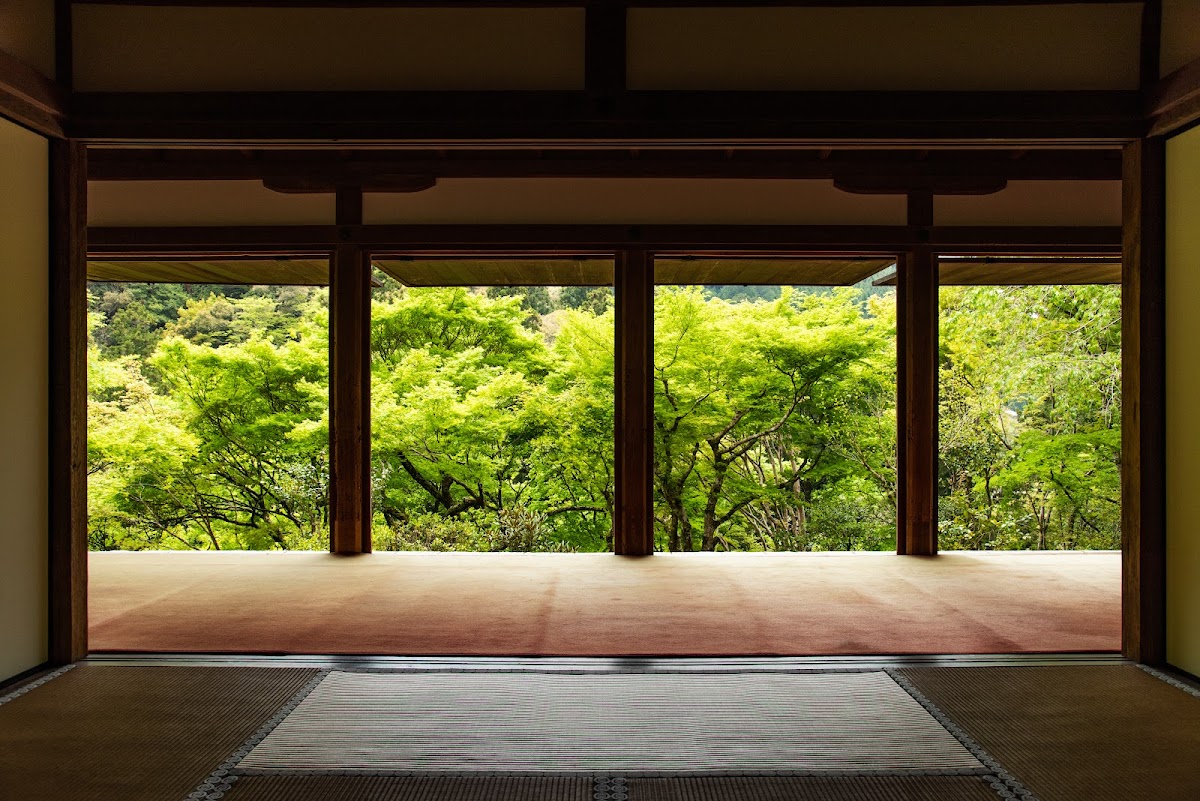
Sekisui-in is an architectural style that follows the Shinden-zukuri style, skillfully utilizing the natural terrain. A wide veranda faces south, offering a panoramic view of the beautiful nature of Toganoo. The interior is simple yet refined, reflecting Myōe Shōnin’s Zen aesthetic sensibilities.
View from the Veranda
The greatest charm of Sekisui-in is the view from the veranda on the south side. Below flows the Kiyotaki River, and the surrounding mountains display different expressions throughout the seasons. Especially during the autumn foliage season, the trees, dyed in red and yellow, create a spectacular view.
It is said that Myōe Shōnin sat on this veranda, meditating while gazing at nature. This space is a precious place where one can experience Zen-like tranquility and a sense of oneness with nature.
Statue of Zenzai Dōji
Within Ishisui-in Temple, there is a statue of Zenzai Dōji, whom Myōe Shōnin deeply revered. Zenzai Dōji is a seeker of enlightenment who appears in the Avatamsaka Sutra, and represented the ideal practitioner that Myōe Shōnin envisioned.
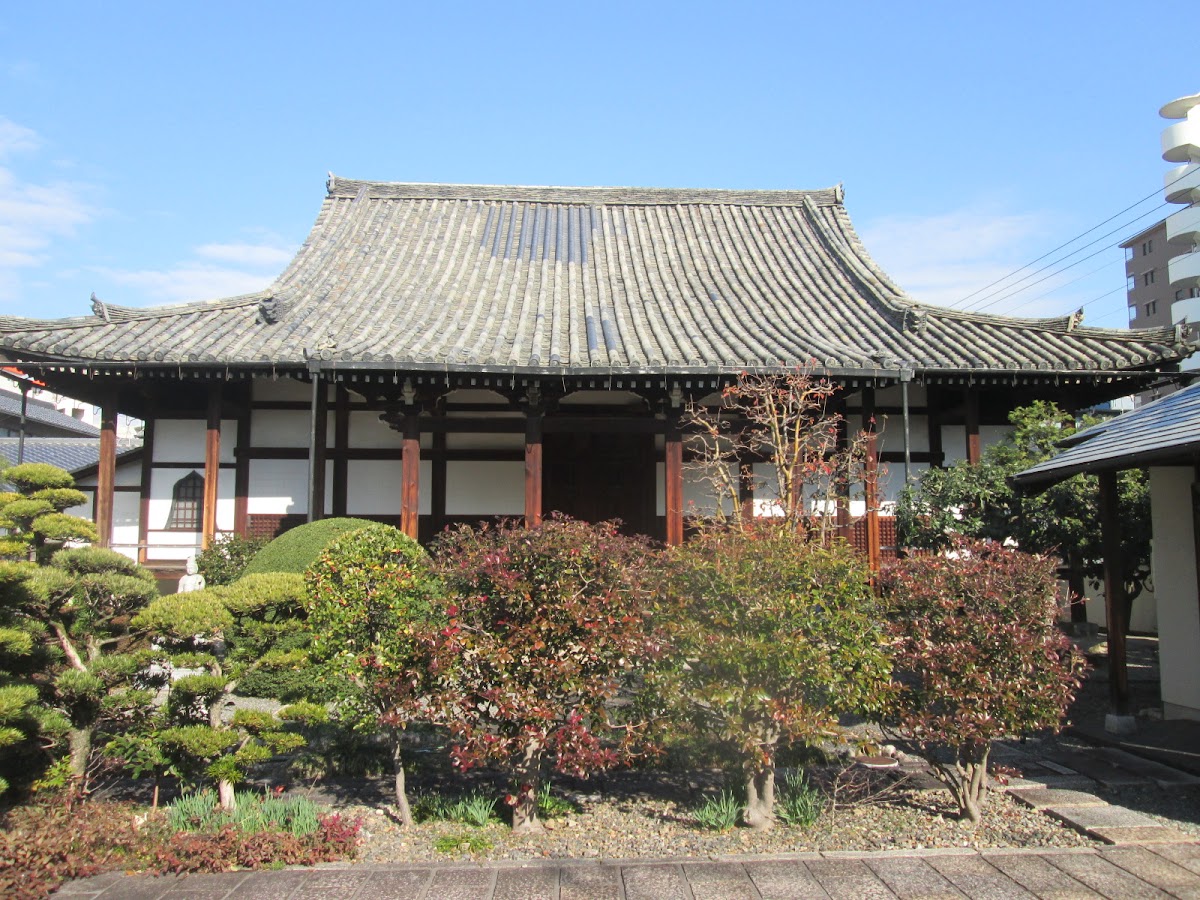
Main Hall
The current Main Hall was rebuilt in 1634 during the Edo period and houses the principal image, a seated statue of Shakyamuni Buddha. After being destroyed in the Ōnin War, memorial services were held in a temporary hall for a long time, but it was rebuilt with the support of the Edo Shogunate.
The architectural style is an eclectic style influenced by Zen Buddhism, simple yet dignified in appearance.
Kaisandō (Founder’s Hall)
The Kaisandō is a hall dedicated to Myōe Shōnin, and houses a wooden statue of him. Every year on January 19th, the anniversary of Myōe Shōnin’s death, the Kaisanki (Founder’s Memorial Service) is held, attracting many worshippers.
Japan’s Oldest Tea Plantation
Within the grounds of Kōzan-ji Temple is Japan’s oldest tea plantation. Myōe Shōnin planted tea seeds given to him by Zen Master Eisai in this area, beginning tea cultivation. This is considered the beginning of full-scale tea cultivation in Japan.
Tea cultivated in Toganoo was called “Honcha” (true tea) and was highly prized as the highest quality tea. Tea from other regions was called “Hicha” (non-tea), and Toganoo tea was used as the standard.
Tea plantations still remain on the temple grounds, and tea picking takes place every May. It is a precious place that conveys the origins of Japanese tea culture.
Approach and Nature
The approach to Kōzan-ji Temple is a mountain path that follows the Kiyotaki River. The moss-covered stone steps and tree-lined paths are filled with a tranquility that makes you forget the hustle and bustle of the city.
The entire temple grounds are enveloped in a deep forest, allowing you to enjoy the beauty of nature in every season. Spring brings fresh greenery, summer brings deep green, autumn brings colorful foliage, and winter brings snowscapes, each season displaying a different face.
National Treasures and Cultural Properties
Kōzan-ji Temple is known as a “treasure trove of cultural properties,” housing 9 national treasures and over 10,000 important cultural properties.
Chōjū-jinbutsu-giga (National Treasure)
The representative cultural property of Kōzan-ji Temple is the national treasure “Chōjū-jinbutsu-giga” (Scrolls of Frolicking Animals and People). Also known as “Chōjū-jinbutsu-giga” (Scrolls of Frolicking Animals), this picture scroll, considered the oldest manga in Japan, is one of the most important works in the history of Japanese art.
Composition and Content
Chōjū-jinbutsu-giga consists of four scrolls and is believed to have been created from the late Heian period to the Kamakura period.
- Scroll A: The most famous scroll, depicting anthropomorphic animals. Rabbits, frogs, monkeys, and other animals are shown playing, wrestling, and playing in the water like humans, vividly depicted using only ink lines.
- Scroll B: Real and imaginary animals are depicted like in an illustrated encyclopedia.
- Scroll C: The first half depicts human games, and the second half depicts anthropomorphic animals.
- Scroll D: Depicts human religious ceremonies and games.
Artistic Value
The greatest characteristic of Chōjū-jinbutsu-giga is its dynamic expression, drawn solely with ink lines. Without using color, the movements and expressions of animals and people are masterfully captured solely through variations in brushstrokes.
Along with its humorous depiction, it is also interpreted as containing social satire and Buddhist allegory of the time, making it a work with profound meaning that transcends mere caricature.
About the Artist
There are various theories regarding the artist. The most famous theory attributes it to Toba Sojo Kakuyu, but there is no conclusive evidence. Currently, the theory that it was created by multiple artists is considered the most likely.
The original is currently on deposit at the Tokyo National Museum and the Kyoto National Museum, while a replica is on display at Kozan-ji Temple.
Portrait of Myōe Shōnin (National Treasure)
The portrait of Myōe Shōnin, known as the “Seated Meditation Portrait in a Tree,” is a masterpiece of Kamakura period portraiture. It depicts Myōe Shōnin sitting in meditation atop a pine tree, symbolically representing his ascetic attitude of seeking oneness with nature.
Illustrated Biographies of the Founders of the Kegon School (National Treasure)
This illustrated scroll depicts the biographies of the founders of the Kegon school, showcasing the high level of painting technique during the Kamakura period.
Kegon Sutra (National Treasure)
Kozan-ji Temple houses numerous manuscripts of the Kegon Sutra, including ancient manuscripts from the Nara period. These are valuable resources for the study of Kegon Buddhism.
Classical Texts and Ancient Documents
A vast collection of classical texts and ancient documents collected and compiled by Myōe Shōnin remain. These documents, including those written in the Shōnin’s own hand and those conveying the state of Buddhist studies during the Kamakura period, are of extremely high academic value.
“Myōe Shōnin’s Dream Diary” is a dream diary kept by the Shōnin for over 40 years, and is a valuable resource for understanding the spiritual world of the medieval period.
Other Cultural Properties
- Buddha-Eye Buddha Mother Image (National Treasure): A masterpiece of esoteric Buddhist painting
- Hōsōge Kalavinka Makie Scroll Box (National Treasure): A craftwork from the Heian period
- Gilt Bronze Pagoda (Important Cultural Property): A metalwork from the Kamakura period
Many of these cultural properties are deposited at the Kyoto National Museum and the Tokyo National Museum, and are sometimes displayed in special exhibitions.
As a Famous Spot for Autumn Foliage
Kōzan-ji Temple is known as one of Kyoto’s premier spots for viewing autumn foliage. The Toganoo area, one of the “Three Tails,” has long been a popular spot for viewing autumn leaves.
Best Time to See Autumn Leaves
The best time to see the autumn leaves is usually from early November to late November. Due to its high altitude, the leaves begin to change color earlier than in Kyoto city.
Highlights of the Autumn Foliage
- Approach to the Temple: The approach to the temple along the Kiyotaki River is covered in autumn leaves from both sides, creating a tunnel-like effect.
- View from Ishisui-in: The view of the autumn foliage in the valley from the veranda is spectacular.
- Entire Temple Grounds: Maple and other trees adorn the temple grounds, allowing you to enjoy beautiful autumn colors wherever you walk.
Connection to “A Woman Alone”
The area became famous as a tourist destination because “Takao” appears in the lyrics of Duke Aces’ famous song “A Woman Alone.” Following the lyrics “Kyoto, Ohara, Sanzen-in, a woman weary of love…”, the second verse mentions “Kyoto, Toganoo, Kōzan-ji.”
Visiting Information
Visiting Hours
- Gate Opening Hours: 8:30 AM – 5:00 PM (Open all year round)
- Sekisui-in Temple Visiting Hours: 8:30 AM – 5:00 PM
Admission Fee
- Entrance Fee: Free (Entry to the temple grounds is free)
- Sekisui-in Temple Visiting Fee: 800 yen (An additional 500 yen entrance fee may be required during the autumn foliage season)
Access
Public Transportation
- JR Bus: Approximately 50 minutes from JR Kyoto Station on the “Takao/Keihoku Line,” get off at the “Toganoo” bus stop, and it’s a short walk.
- City Bus: Take Kyoto City Bus Route 8 towards “Takao,” get off at “Toganoo.”
- Subway and Bus: Take City Bus Route 8 from Shijo Station on the Karasuma Subway Line.
By Private Car
- Approximately 30 minutes from the Kutsukake Interchange on the Kyoto Jukan Expressway
- Parking: Paid parking is available near the entrance to the temple grounds (during the autumn foliage season, it gets crowded, so using public transportation is recommended)
Notes for Visitors
- Photography is prohibited inside Ishisui-in Temple
- The temple grounds are designated as a historical site, so collecting plants or feeding animals and plants is prohibited
- As it is a temple located in the mountains, comfortable walking shoes are recommended
- It gets very crowded during the autumn foliage season, so early morning visits are recommended
Nearby Attractions
Jingoji Temple
This is an ancient Shingon Buddhist temple located about a 20-minute walk from Kozanji Temple. It is a temple associated with Kukai (Kobo Daishi) and houses the national treasures Yakushi Nyorai standing statue and the Five Great Kokuzo Bodhisattva seated statues. It is also famous as a spot for viewing autumn foliage.
Saimyoji Temple
A Shingon Buddhist temple located midway between Kozanji Temple and Jingoji Temple. As one of the “Three Taira,” it is also known for the beauty of its autumn foliage.
Kiyotaki River
A clear stream flowing in front of Kozanji Temple, it is bustling with people seeking coolness in the summer. A stroll along the river is also enjoyable.
Annual Events at Kozanji Temple
Founder’s Memorial Service (January 19th)
A memorial service held on the anniversary of the death of Myōe Shōnin. Many worshippers visit to remember the saint.
Tea Picking (May)
Tea picking takes place at Japan’s oldest tea plantation. It is sometimes open to the public.
Autumn Foliage Illumination
In recent years, special nighttime viewings have been held for a limited time during the autumn foliage season (please check the official website for details).
Kozanji Temple and its Influence on Japanese Culture
Contribution to Tea Culture
Kozanji Temple has made a significant contribution to the development of Japanese tea culture. The fact that Myōe Shōnin received tea seeds from Eisai Zenji and began cultivating them in Toganoo led to the spread of tea throughout Japan.
The origin of Uji tea is also said to have begun with the transmission of tea seeds from Kōzan-ji Temple. Kōzan-ji Temple’s role in the development of the tea ceremony is immeasurable.
Tradition as a Temple of Learning
Since Myōe Shōnin, Kōzan-ji Temple has functioned as a place of learning and training. As a research center for Kegon Buddhism, it produced many scholarly monks and contributed to the development of Japanese Buddhism.
Through the collection and preservation of a vast collection of texts and ancient documents, it has also played a pioneering role in the protection of Japanese cultural properties.
Influence on Art
The national treasure “Chōjū-jinbutsu-giga” (Scrolls of Frolicking Animals and Humans) continues to influence modern manga artists and animators as the origin of Japanese manga culture. The technique of anthropomorphizing animals to satirize society resonates with modern media.
Summary
Kozan-ji Temple is a multifaceted temple with many attractions, including its value as a World Heritage Site, its treasure trove of cultural assets such as the national treasure “Choju Jinbutsu Giga” (Scrolls of Frolicking Animals and Humans), Japan’s oldest tea plantation, and its beauty as a famous spot for autumn foliage.
For over 800 years, since Myōe Shōnin received the land of Toganoo from Emperor Go-Toba and rebuilt the temple as a revival center for the Kegon sect, this temple has functioned as a place of learning and faith, and as an important center of Japanese culture.
Located in the mountains a little distance from Kyoto city, the temple grounds are enveloped in tranquility, allowing visitors to forget the hustle and bustle of the city and experience a spiritual connection with nature. The seasonal scenery viewed from the veranda of Sekisui-in soothes the hearts of visitors and conveys the charm of this place that Myōe Shōnin loved.
While the autumn foliage season is beautiful, the fresh green season and the quiet winter months each have their own unique charm. When you visit Kyoto, be sure to extend your trip and visit this treasure trove of history and culture. Kōzan-ji Temple is an irreplaceable place where you can experience the depth and beauty of Japanese spiritual culture.