Complete Guide to Nariai-ji Temple | History, Highlights, and Access Information for the 28th Temple of the Saigoku Thirty-Three Kannon Pilgrimage
About Nariai-ji Temple
Nariai-ji Temple is a Shingon Buddhist temple located at 339 Nariai-ji, Miyazu City, Kyoto Prefecture. Its mountain name is Nariai-san, and its principal image is the Holy Kannon Bodhisattva. As the 28th temple of the Saigoku Thirty-Three Kannon Pilgrimage, it has long been visited by many pilgrims.
The temple grounds are situated on the slopes of Mt. Nariai, at an altitude of approximately 350 meters, overlooking Amanohashidate, one of Japan’s three most scenic views. Due to its spectacular scenery and deep history of faith, it is affectionately known as the “temple where wishes come true (Nariau).” In 2017, it was designated by the Agency for Cultural Affairs as one of the cultural properties constituting the “Tango Chirimen Corridor,” a Japan Heritage site.
From the panoramic observation deck within the temple grounds, visitors can enjoy a breathtaking view of the entire Amanohashidate, one of Japan’s three most scenic views, continuing to captivate visitors. In spring, it is a popular spot for cherry blossoms and rhododendrons, and in autumn, for its beautiful autumn foliage, allowing visitors to enjoy the beauty of each season.
History and Origin of Nariai-ji Temple
History of its Founding
Nariai-ji Temple is said to have been founded in the first year of Keiun (704 AD), boasting a history of over 1300 years. It is believed to have been founded by the monk Shin’o at the behest of Emperor Monmu.
There are several theories about the origin of the temple’s name, “Nariai,” but the most famous is the legend of the “Substitute Kannon.” One winter, a monk practicing asceticism in the snow-covered mountains ran out of food and was on the verge of starvation. The principal image of Kannon, out of compassion, transformed herself into deer meat to save the monk. It is said that this miracle led to the temple being named Nariai-ji, meaning “a temple where wishes are granted and where people meet.”
Role as the 28th Temple of the Saigoku Thirty-Three Kannon Pilgrimage
Nariai-ji Temple holds a significant position as the 28th temple of the Saigoku Thirty-Three Kannon Pilgrimage. Located at the northernmost point of the Saigoku pilgrimage, and situated in a region with heavy snowfall in winter, it remains a center of faith, attracting many pilgrims.
During the Edo period, the Saigoku pilgrimage became extremely popular among common people, and Nariai-ji Temple was bustling with many visitors. Even today, pilgrims and tourists continue to flock to the temple throughout the year, demonstrating the enduring legacy of its faith.
Principal Image: Holy Kannon Bodhisattva
The principal image of Nariai-ji Temple, the Holy Kannon Bodhisattva, is also known as the “Beautiful Kannon,” and it is believed that worshippers can become beautiful in both body and mind. This Kannon is deeply compassionate and is revered for granting the wishes of worshippers.
The principal image enshrined in the main hall is considered a hidden Buddha and is only unveiled on special occasions, but its presence is always a source of comfort for worshippers.
Highlights of Nariai-ji Temple
Main Hall
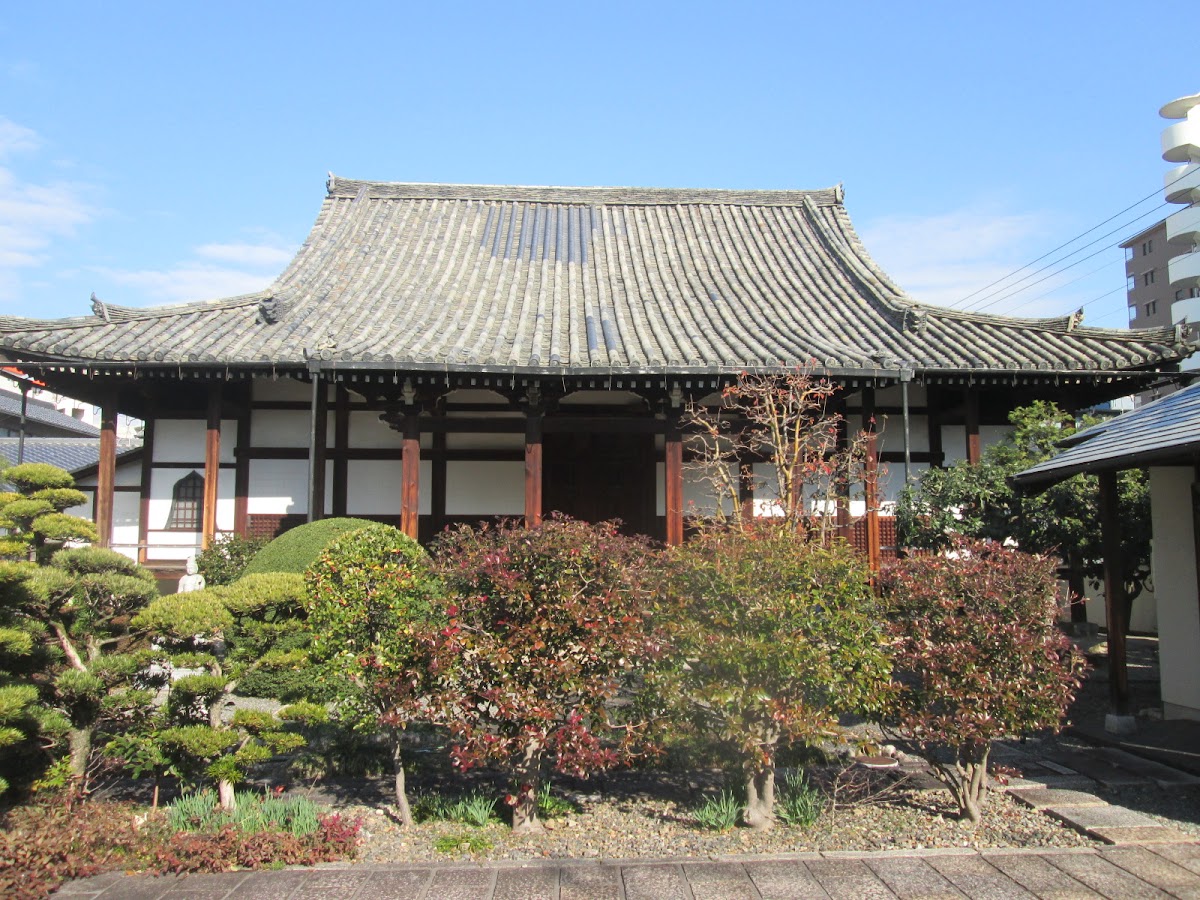
The main hall of Nariai-ji Temple is the central building housing the principal image, the Holy Kannon Bodhisattva. The current main hall was rebuilt during the Edo period, and its majestic presence welcomes worshippers.
Inside the main hall, in addition to the principal image, various Buddhist statues and temple treasures are enshrined, allowing for peaceful worship in a tranquil atmosphere. The view from in front of the main hall is also magnificent, offering a spectacular view of Amanohashidate.
Five-Storied Pagoda
The five-storied pagoda of Nariai-ji Temple is a strikingly beautiful structure within the temple grounds. Although relatively new, having been built in 1998, its majestic appearance, adhering to traditional styles, captivates many visitors.
The five-story pagoda, approximately 28 meters tall, boasts a beautiful vermilion color that stands out against the blue sky. Its harmony with the cherry blossoms in spring and the autumn foliage is particularly breathtaking. The area around the pagoda is a popular photo spot, attracting many tourists with their cameras.
Panoramic Observation Deck
One of the major attractions of Nariaiji Temple is the panoramic observation deck located within the temple grounds. From here, you can enjoy a panoramic view of Amanohashidate, one of Japan’s three most scenic views, a breathtaking sight that leaves a lasting impression on visitors.
From the observation deck, you can see not only Amanohashidate, but also Miyazu Bay, Ine Bay, and even Wakasa Bay on clear days. Especially during sunrise and sunset, you can enjoy a fantastical scene as the sea and sky are bathed in golden hues.
The landscape, with its pine trees of Amanohashidate stretching out below, the blue sea, and the surrounding mountains, is truly a quintessential Japanese scene.
The Dragon Facing Directly
The “Dragon Facing Directly,” painted on the ceiling of the main hall, is one of the representative cultural assets of Nariai-ji Temple. This dragon painting is designed so that the viewer’s gaze seems to meet the dragon’s, regardless of their viewing angle. Many visitors are amazed by its power and artistic merit.
This dragon, believed to have been painted by an Edo period artist, continues to watch over the main hall as a protector of Buddhist teachings. When visiting the interior of the main hall, be sure to look up at this dragon facing directly forward.
The One-Wish, One-Word Jizo
The One-Wish, One-Word Jizo, located within the temple grounds, is a popular Jizo statue said to grant one wish if it is expressed in a single word. Many visitors quietly clasp their hands together before this Jizo statue, offering their heartfelt wishes.
Around the One-Wish, One-Word Jizo, numerous small Jizo statues donated by people whose wishes have been granted line the grounds, a sight that speaks to the depth of faith at Nariai-ji Temple. There’s also an initiative to “build your own Jitsutama (guardian deity),” and many people’s wishes gather at this place.
The Unstriked Bell
Nariai-ji Temple has an intriguing legend about the “unstriked bell.” The sad story goes that when the bell was being cast, a child accidentally fell into the molten copper. Afterward, ringing the bell would be accompanied by the sound of a child crying, and since then, it has never been rung.
Currently, this bell is preserved on the temple grounds and is an important cultural asset that tells the history of Nariai-ji Temple.
The Legend of the Substitute Kannon
As mentioned above, Nariai-ji Temple has a legend about the Substitute Kannon. The story of Kannon sacrificing herself as deer meat in response to the plea of a monk who was on the verge of starvation due to a lack of food, deeply touches the hearts of many as it demonstrates the profound compassion of Kannon.
Because of this legend, Nariai-ji Temple has become a place of worship known as a “temple where wishes are granted,” and people with various wishes come from all over the country.
Scenery of the Four Seasons
Spring at Nariai-ji Temple
In spring, Nariai-ji Temple is adorned with cherry blossoms and rhododendrons. Especially from early to mid-April, the Somei Yoshino and mountain cherry blossoms are in full bloom, creating a beautiful landscape in harmony with the five-story pagoda and main hall.
Rhododendrons are also a representative flower of spring at Nariai-ji Temple, blooming with vibrant colors from late April to early May. The rhododendrons blooming amidst the fresh greenery evoke the joy of spring in visitors.
Summer at Nariai-ji Temple
In summer, Nariai-ji Temple is enveloped in deep green. Due to its high altitude, it is cooler than the city and is a popular summer resort. Amanohashidate, visible through the lush green trees, offers a vivid contrast unique to summer.
Autumn at Nariai-ji Temple
In autumn, Nariai-ji Temple is particularly popular as a spot for viewing autumn foliage, attracting many tourists. From early to late November, the maple and other trees on the temple grounds turn red and yellow, vividly coloring the five-story pagoda and main hall.
The combination of the autumn leaves and Amanohashidate viewed from the panoramic observation deck is truly a spectacular sight. The scenery viewed in the crisp autumn air will surely leave a lasting impression on visitors.
Nariai-ji Temple in Winter
In winter, Nariai-ji Temple is covered in snow and enveloped in silence. Located at the northernmost point of the Saigoku Kannon Pilgrimage, the snow is deep in winter, requiring caution when visiting, but the beauty of the snow-covered grounds is exceptional.
The five-story pagoda and main hall standing amidst the snow have a sumi-e (ink painting)-like quality, creating a solemn atmosphere unique to winter.
Access and Transportation Information
Access by Car
Nariai-ji Temple is most easily accessible by car. It takes approximately 30 minutes from the Miyazu-Amanohashidate Interchange on the Kyoto Jukan Expressway, or approximately 25 minutes from the Yosa-Amanohashidate Interchange on the San’in-Kinki Expressway.
There is a free parking lot on the temple grounds that can accommodate approximately 50 regular cars. However, during peak seasons such as autumn foliage season, the parking lot may be full, so it is recommended to visit with plenty of time to spare.
Access by Public Transportation
If using public transportation, first go to Amanohashidate Station or Miyazu Station on the Kyoto Tango Railway, and from there take the Tankai Bus or a sightseeing boat and cable car/lift.
Route from Amanohashidate Station:
- Take a sightseeing boat from Amanohashidate Station to Ichinomiya Pier (approx. 12 minutes)
- Take the cable car or lift from Ichinomiya Pier to Kasamatsu Park (approx. 4 minutes)
- Take the mountain bus from Kasamatsu Park to Nariaiji Temple (approx. 7 minutes)
Route from Miyazu Station:
- Take the Tankai Bus bound for “Nariaiji Temple” from Miyazu Station (approx. 30 minutes)
The route using the mountain bus and cable car allows you to enjoy the scenery of Amanohashidate while traveling, making it an attractive option for visiting the temple while appreciating the scenic beauty.
Visiting Hours and Admission Fees
Visiting Hours: 8:00 AM – 4:30 PM (Subject to change depending on the season)
Admission Fees:
- Adults: 500 yen
- Junior and Senior High School Students: 200 yen
- Elementary School Students and younger: Free
Parking: Free (Approximately 50 regular cars)
Inquiries:
- Address: 339 Nariaiji, Miyazu City, Kyoto Prefecture 629-2241
- Phone: 0772-27-0018
- FAX: 0772-27-1409
Nearby Spots and Sightseeing
Amanohashidate
Amanohashidate, visible from Nariaiji Temple, is a scenic spot known as one of Japan’s three most beautiful views. The landscape, with approximately 8,000 pine trees growing on a sandbar stretching about 3.6 kilometers, has captivated many people since ancient times.
Amanohashidate boasts numerous viewpoints, including Kasamatsu Park, famous for its “crotch-gazing” view, and Amanohashidate View Land, allowing visitors to enjoy breathtaking scenery from various angles.
Kasamatsu Park
Located along the hiking bus route to Nariaiji Temple, Kasamatsu Park is a popular viewpoint overlooking Amanohashidate. The view from here is called “Shoryukan” (Rising Dragon View), named for its resemblance to a dragon ascending to heaven.
The “crotch-gazing” view, where one gazes at Amanohashidate upside down through their legs, is a popular attraction at Kasamatsu Park, enjoyed by many tourists.
Chionji Temple
Located at the base of Amanohashidate, Chionji Temple is known as one of Japan’s three most important temples dedicated to Monju (Manjusri). It attracts many worshippers, particularly students and those aspiring to academic success, as it is revered as a Buddha of wisdom.
Motoise Kono Shrine
Located in the Ichinomiya district on the north side of Amanohashidate, Motoise Kono Shrine is a historically significant shrine where Amaterasu Omikami, enshrined at Ise Grand Shrine, is said to have once been worshipped. As the guardian shrine of the Tango region, it has long been a place of worship for the people.
Ine Boathouses
Located about 30 minutes by car from Nariai-ji Temple, the Ine Boathouses are a group of traditional buildings lined up facing the sea. They have a unique structure with a boat garage on the first floor and living space on the second floor, and have been designated as an Important Preservation District for Groups of Traditional Buildings.
Tango Local History Museum
The Tango Local History Museum, located in Miyazu City, exhibits the history and culture of the Tango region, as well as the traditional industry of Tango crepe silk. Visiting it in conjunction with Nariai-ji Temple will deepen your understanding of the region.
Memorial Services and Prayers at Nariai-ji Temple
Nariai-ji Temple accepts various memorial services and prayers. As one of the 33 temples of the Saigoku Kannon Pilgrimage, it also offers Goshuin (temple stamps), making it an important place for pilgrims.
Goshuin (Temple Seal)
The Goshuin for the 28th temple of the Saigoku Kannon Pilgrimage can be obtained at the sutra copying office next to the main hall. The carefully written Goshuin is cherished as a memento of the pilgrimage.
Prayers and Memorial Services
Nariaiji Temple accepts various prayers, including those for family safety, good health, business prosperity, and academic success. Ancestor memorial services and memorial services for stillborn babies are also performed, attracting many people seeking peace of mind.
Restaurants and Cafes near Nariaiji Temple
Before or after visiting Nariaiji Temple, you can enjoy the flavors of Tango at the surrounding restaurants and cafes.
Rest Area within Nariaiji Temple Grounds
There is a rest area within the temple grounds where you can purchase light meals and drinks. It’s perfect for taking a break during your visit.
Cuisine around Amanohashidate
There are many restaurants around Amanohashidate that serve dishes made with fresh seafood. Dishes using seasonal ingredients, especially snow crab in winter, Tango surf clams, and rock oysters, are exquisite.
Points to Note When Visiting Nariai-ji Temple
Time Required for Visit
If you want to leisurely visit the grounds of Nariai-ji Temple and enjoy the view from the panoramic observation deck, it’s a good idea to allow about 1-2 hours. Including time for taking photos and receiving a temple stamp, a relaxed schedule is recommended.
Clothing and Items to Bring
Since Nariai-ji Temple is located on the mountainside, comfortable walking shoes are recommended. Especially in winter, snow can accumulate, so warm clothing and non-slip shoes are necessary.
Even in summer, temperatures are lower than in urban areas, so it’s a good idea to bring a jacket or cardigan. A hat or parasol is also useful on sunny days.
Photo Spots
Nariai-ji Temple has many excellent photo spots. Don’t forget to bring your camera or smartphone to capture stunning photos, including shots of the five-story pagoda and Amanohashidate together, breathtaking views from the panoramic observation deck, and the scenery from in front of the main hall.
Especially early mornings and evenings offer beautiful lighting conditions, allowing you to take impressive photographs.
Ticket Information
If you plan to use the mountain bus via Kasamatsu Park, it’s convenient to purchase a set ticket including the cable car or lift and the mountain bus. Various discount tickets are available, so it’s recommended to check in advance.
Summary
Nariaiji Temple, the 28th temple of the Saigoku Kannon Pilgrimage with a history of over 1300 years, is a special temple that combines deep faith with beautiful scenery. Located in a scenic spot overlooking Amanohashidate, one of Japan’s three most scenic views, it attracts many worshippers as a “temple where wishes come true.”
With numerous attractions such as the legend of the substitute Kannon, the beautiful five-story pagoda, the dragon facing forward, and the Ichigan Ichigon Jizo, you can also enjoy the seasonal beauty of nature, including cherry blossoms and rhododendrons in spring and autumn leaves in fall. The breathtaking view from the panoramic observation deck will surely leave a lasting impression on the hearts of all who visit.
When you visit Miyazu City in Kyoto Prefecture, be sure to stop by Nariaiji Temple and experience its history, scenery, and profound faith. By quietly praying and offering your wishes, you are sure to find inner peace.