Complete Guide to Uwato Shrines: History and Highlights of the Shikinaisha Shrines Scattered Across Yamanashi Prefecture
Uwato Shrine is a venerable Shikinaisha shrine listed in the Engishiki Jinmyocho (a list of shrines compiled during the Heian period). Several Uwato Shrines exist within Yamanashi Prefecture, each with its own long history as a candidate for the Shikinaisha. This article provides a comprehensive explanation of each Uwato Shrine, including detailed information, historical background, cultural assets, and highlights for visitors.
What is Uwato Shrine?
Uwato Shrine is a Shikinaisha shrine listed in the Engishiki Jinmyocho for Koma District, Kai Province. While there are various theories regarding the origin of the name “Uwato,” it is undeniable that it has been a center of worship in this region since ancient times.
Currently, there are mainly three Uwato Shrines in Yamanashi Prefecture, all considered candidates for the Shikinaisha. Each possesses its own unique history and characteristics, and has been preserved as a center of regional faith to this day.
The Significance of the Engishiki Jinmyocho and Shikinaisha Shrines
The Engishiki Jinmyocho is a list of shrines throughout Japan compiled in the 5th year of the Engi era (927 AD) during the mid-Heian period. Only shrines recognized as official shrines by the imperial court at the time were listed, and being listed as a Shikinaisha shrine was proof of the shrine’s status and history. Twenty Shikinaisha shrines are listed in Kai Province, and Uwato Shrine holds an important position as one of them.
Uwato Shrine (Former Gosha Shrine) in Akeno-cho, Hokuto City
Basic Information
Uwato Shrine, located in Kamite, Akeno-cho, Hokuto City, is considered the most likely of the three candidate shrines to be a Shikinaisha. Its former shrine rank was Gosha (village shrine), and it has been revered as a central shrine in the region.
- Location: 937 Kamite, Akeno-cho, Hokuto City, Yamanashi Prefecture
- Deity Enshrined: Takeminakata-no-mikoto
- Former Shrine Rank: Gosha (Village Shrine)
- Annual Festival Date: October 17th
Founding and History
The founding date is very old, and the exact date is unknown, but since it is listed in the Engishiki Jinmyocho (a list of shrines compiled in the Heian period), it is thought to have existed at least by the early Heian period.
According to shrine tradition, it was rebuilt by Shinra Saburo Yoshimitsu (Minamoto no Yoshimitsu) during the Kanji era (1087-1094), and then rebuilt again in the first year of the Hogen era (1156) by Kamata Hyoe-no-jo Masakiyo. The shrine had a deep connection with the Kamata clan, and in the Middle Ages, it was the tutelary shrine of the sixteen or seventeen villages of Kamata-sho, attracting widespread devotion.
Records indicate that the shrine was granted the rank of Junior Fifth Rank, Upper Grade on March 28, 866 (Jōgan 8), suggesting a deep connection with the imperial court from ancient times.
Cultural Property: Stone Torii Gate with Jōgan 6 Inscription
The most noteworthy cultural property at Unato Shrine in Akeno-cho, Hokuto City, is the stone torii gate standing at the entrance to the shrine’s approach. This stone torii gate is designated as a Yamanashi Prefecture cultural property, and its pillars bear an inscription dating to Jōgan 6 (864).
Jōgan 6 falls in the early Heian period, making this stone torii gate extremely valuable as one of the oldest existing stone torii gates in Japan. Its low, imposing construction makes it an important historical relic that conveys ancient stonework techniques.
It was designated as a Yamanashi Prefecture Tangible Cultural Property (building) on April 8, 1971 (Showa 46), and remains well-preserved to this day. By passing through this torii gate and offering your prayers, you can feel the history of over a thousand years firsthand.
Highlights
- Jogan-era Stone Torii Gate: A prefecturally designated cultural property that preserves the stone carving techniques of the Heian period.
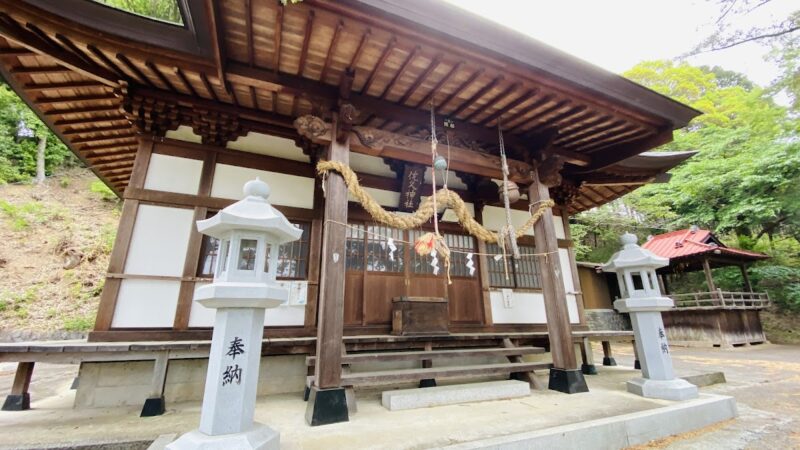
- Shrine Buildings: The main hall and worship hall have a tranquil atmosphere.
- Atmosphere of the Shrine Grounds: A peaceful space that evokes a sense of history.
- Relationship with Suwa Faith: Traces of Suwa faith, dedicated to Takeminakata-no-Mikoto.
Uwato Shrine (Former Designated Village Shrine) in Nagasaka-cho, Hokuto City
Basic Information
Uwato Shrine, located in Kamijo, Nagasaka-cho, Hokuto City (formerly Enno Village), is also one of the candidate shrines for the Shikinaisha (shrines listed in the Engishiki). Its former shrine rank was Village Shrine, and it has been cherished as the local tutelary shrine.
- Location: Kamijo, Nagasaka-cho, Hokuto City, Yamanashi Prefecture (Enno area)
- Deity Enshrined: Takeminakata-no-Mikoto
- Former Shrine Rank: Village Shrine
- Alternate Name: Suwa Daimyojin
Founding Legend
The exact founding date is unknown, but one theory suggests it was established in the second year of the Yōrō era (718 AD). According to shrine tradition, it is said that Princess Enpime, daughter of the 18th Emperor Hanzei, received a fief in this area and enshrined Suwa Daimyojin as a guardian deity, marking the beginning of the shrine.
Originally called Suwa Myōjin, it is a shrine with strong ties to the Suwa faith. Records indicate that it was granted the rank of Junior Fifth Rank, Upper Grade on March 28th, the 8th year of the Jōgan era, indicating a similar history to the Uwato Shrine in Akeno-cho.
Features
This shrine, known as “Uwato Shrine Suwa Daimyojin,” possesses a unique character, combining the status of a Shikinaisha (a shrine listed in the Engishiki, an ancient Japanese legal text) with the Suwa faith. The legend of Enhime is a distinctive feature not found in other candidate shrines, and is a valuable tradition indicating a connection to the imperial family.
Uwato Shrine (Former Village Shrine) in Miyahara-cho, Kofu City
Basic Information
Uwato Shrine, located in Miyahara-cho, Kofu City, was known as Hachiman-gu until the end of the Edo period.
- Location: Miyahara-cho, Kofu City, Yamanashi Prefecture
- Deities Enshrined: Emperor Ojin, Emperor Chuai, Empress Jingu
- Former Shrine Rank: Village Shrine
- Former Name: Hachiman-gu
History and Features
According to shrine tradition, it was established during the Kanji era by Shinra Saburo Yoshimitsu and rebuilt in the first year of the Hogen era by Kamata Hyoe-no-jo Masakiyo. This history is shared with the Uwato Shrine in Akeno-cho, and the relationship between the two shrines is noteworthy.
However, the deity enshrined at this shrine is Hachiman-jin (Emperor Ojin, Emperor Chuai, and Empress Jingu), which differs from the other two shrines that enshrine Takeminakata-no-Mikoto (Suwa-no-Kami). Since it was called Hachiman-gu until the Edo period, it is thought that Hachiman worship strengthened after the medieval period.
Located approximately 6 km south of Kofu Station, it is the closest of the three candidate shrines to the Kofu city center.
The Uwato Shrine Debate
There has long been debate as to which shrine the “Uwato Shrine” listed in the Engishiki Jinmyocho (a list of shrines compiled in the Heian period) refers to. The three shrines listed above are the main candidates, each with evidence of being a Shikinaisha (a shrine listed in the Engishiki).
Basis for Identifying Each Shrine
Hokuto City, Akeno-cho Theory:
- Physical evidence: a stone torii gate bearing the inscription of the 6th year of the Jogan era
- Consistency with the record of the granting of divine rank in the 8th year of the Jogan era
- Geographically located in the central part of Koma District
Hokuto City, Nagasaka-cho Theory:
- Unique founding history based on the legend of Enhime
- Antiquity based on the theory of its founding in the 2nd year of the Yoro era
- Strong connection to Suwa faith
Kofu City, Miyahara-cho Theory:
- Relationship with Shinra Saburo Yoshimitsu and Kamata Masakiyo
- Status as a local shrine
- Location in the Kofu Basin
Currently, the Uwato Shrine in Akeno-cho, which possesses a stone torii gate bearing the Jogan inscription, is considered the most likely candidate. However, each shrine remains a historically significant shrine with a long history and strong faith.
Suwa Faith and Uwato Shrine
One of the characteristics of Uwato Shrine is its deep connection to Suwa faith. The two shrines in Akeno-cho and Nagasaka-cho enshrine Takeminakata-no-Mikoto and have also been known as Suwa Daimyojin.
Takeminakata-no-Mikoto is a deity appearing in the Kojiki (Records of Ancient Matters) and is known as the principal deity of Suwa Grand Shrine. Kai Province borders Shinano Province (Nagano Prefecture), and Suwa faith has spread there since ancient times. In particular, Shinra Saburo Yoshimitsu had a deep connection with the Suwa clan, and the tradition of Yoshimitsu’s enshrinement and reconstruction demonstrates the spread of Suwa faith in the medieval period.
The Relationship Between Shinra Saburo Yoshimitsu and the Kamata Clan
Shinra Saburo Yoshimitsu (Minamoto no Yoshimitsu, 1045-1127), who appears in the histories of several Uwato Shrines, was a military commander in the late Heian period and a member of the Minamoto clan with deep ties to Kai Province.
Yoshimitsu played an active role in the Later Three Years’ War (1083-1087) and subsequently wielded influence in Kai Province. The tradition of the shrine’s establishment and reconstruction during the Kanji era coincides with the activities of Yoshimitsu during this period. Yoshimitsu’s descendants developed as the Kai Genji clan, later leading to the Takeda clan.
Kamata Hyoe-no-jo Masakiyo is said to have rebuilt the Uwato Shrine in the first year of the Hogen era (1156). The Kamata clan was a powerful family in Kai Province, and the Uwato Shrine, as the “main shrine and tutelary deity of the sixteen or seventeen villages of Kamata-sho,” attracted widespread devotion. It is believed that the Uwato Shrine in the medieval period strengthened its character as the tutelary deity of the Kamata clan.
Festivals and Events
The annual festival of the Uwato Shrine is held on October 17th at many of the shrines. It is a traditional festival expressing gratitude for the autumn harvest and praying for the peace and prosperity of the region.
During the annual festival, after the Shinto rituals, there may be offerings of Kagura (sacred dance and music) and festival events by local residents. In some regions, traditional performing arts such as lion dances and drumming are still practiced, playing an important role in preserving local culture.
Access
Uwato Shrine, Akeno-cho, Hokuto City
- Train: Approximately 20 minutes by bus or taxi from Nirasaki Station on the JR Chuo Main Line
- Car: Approximately 15 minutes from Nirasaki IC on the Chuo Expressway; parking available
Uwato Shrine, Nagasaka-cho, Hokuto City
- Train: Approximately 20 minutes on foot from Nagasaka Station on the JR Chuo Main Line
- Car: Approximately 10 minutes from Nagasaka IC on the Chuo Expressway; parking available
Uwato Shrine, Miyahara-cho, Kofu City
- Train: Approximately 6km south from Kofu Station on the JR Chuo Main Line; use bus or taxi
- Car: Approximately 10 minutes from Kofu Minami IC on the Chuo Expressway; parking available
Points to Note When Visiting
When Visiting Uwato Shrine in Akeno-cho
- Observation of the Stone Torii Gate: Carefully examine the inscription dated to the 6th year of the Jogan era. This is a precious opportunity to experience stonework techniques from over a thousand years ago.
- Quiet Worship: Enjoy a peaceful visit within the grounds, which possess the dignity of a local shrine.
- Exploring the Surrounding History: The area around Akeno-cho has many ancient tombs and ruins, making it ideal for historical walks.
When Visiting Uwato Shrine in Nagasaka-cho
- Traces of Suwa Faith: Worship while feeling the characteristics of the shrine as a Suwa Daimyojin (Great Deity of Suwa).
- Legend of Enhime: Reflect on the unique history involving a princess.
- Natural Environment: The surrounding natural environment is also appealing.
When Visiting Uwato Shrine in Kofu City
- Hachiman Faith: Worship with an understanding of the shrine’s unique character as a shrine dedicated to Hachiman.
- Easy Access: It is close to Kofu city center, making it easy to combine with other tourist spots. 3. Local Guardian Deity: You can experience a form of faith deeply rooted in the local community.
Recommended Nearby Spots
Around Akeno Town
- Akeno Sunflower Fields: A tourist spot where you can enjoy a field of sunflowers in the summer.
- Asao Daikon Village: The production area of Asao daikon radish, a local specialty.
- Yato Castle Ruins: The ruins of a castle related to the Takeda clan; a must-see for history buffs.
Around Nagasaka Town
- Kiyoharu Art Village: An art facility utilizing the former Kiyoharu Elementary School.
- Sanbuichi Spring: A spring selected as one of Japan’s 100 best waters.
- Yatsugatake Nature and Culture Park: A facility where you can enjoy the nature of Yatsugatake.
Around Kofu City
- Kofu Castle Ruins (Maizuru Castle Park): A castle ruins park in the center of Kofu City.
- Takeda Shrine: A famous shrine dedicated to Takeda Shingen.
- Shosenkyo Gorge: A scenic spot boasting one of Japan’s most beautiful gorges.
A Historical Walking Tour of Uwato Shrine
A historical walking tour visiting the three candidate shrines of Uwato Shrine offers a valuable experience of experiencing the ancient and medieval history of Yamanashi Prefecture.
Recommended 1-Day Course:
- Morning: Visit Uwato Shrine in Kofu City → Visit Takeda Shrine
- Lunch: Enjoy local cuisine such as Hoto noodles in Kofu City
- Afternoon: Visit Uwato Shrine in Akeno Town (focusing on the stone torii gate)
- Evening: Visit Uwato Shrine in Nagasaka Town
Traveling by car is convenient, but the distance between each shrine is about 30 minutes to 1 hour.
Value as a Shikinaisha Shrine
The value of Uwato Shrine as a Shikinaisha shrine goes beyond mere historical status. Its inclusion in the Engishiki Jinmyocho (a list of shrines compiled in the Heian period) means it was officially recognized by the imperial court during the Heian period, providing important clues to understanding the realities of ancient regional governance and religious beliefs.
The 20 Shikinaisha shrines in Kai Province represent the political and religious centers of ancient Kai Province, and Uwato Shrine was one of them, a crucial base in Koma District. The granting of divine rank during the Jōgan era (858-864) speaks to its deep connection with the imperial court.
Preservation and Transmission of Cultural Assets
The Jōgan-era stone torii gate owned by Uwato Shrine in Akeno Town is one of the oldest stone structures in Yamanashi Prefecture and is of extremely high academic importance. The preservation of such cultural assets requires the efforts of local residents and support from the government.
Currently, each Uwato Shrine is maintained by local parishioners and devotees. While there are challenges in continuing traditional festivals and maintaining the shrine grounds amidst a declining birthrate and aging population, these shrines, with their high historical value, are expected to be passed on to future generations.
Contact Information
For detailed information about Uwato Shrine and inquiries regarding visits, please contact the following:
Yamanashi Prefecture Shrine Association
- As an organization encompassing shrines within Yamanashi Prefecture, it provides information on each shrine.
- The official website offers introductions to shrines in the prefecture and downloadable information on shrines and Shinto.
Local City and Town Tourism Associations
- Hokuto City Tourism Association: Information on Uwato Shrine in Akeno-cho and Nagasaka-cho
- Kofu City Tourism Association: Information on Uwato Shrine in Kofu City
Summary
Uwato Shrine is a historically significant shrine listed in the Engishiki Jinmyocho (a list of shrines compiled in the Heian period), conveying the history and faith of Yamanashi Prefecture to the present day. The three candidate shrines in Akeno-cho, Nagasaka-cho, and Kofu City each have their own unique history and characteristics, and have attracted the faith of local people from ancient times through the Middle Ages, the early modern period, and up to the present day.
In particular, the Jogan-era stone torii gate in Akeno-cho is a must-see as a valuable cultural asset from the Heian period. Through Uwato Shrine, you can unravel the multifaceted history of Yamanashi Prefecture, including its connections to Suwa and Hachiman faiths, and its relationship with figures like Shinra Saburo Yoshimitsu and the Kamata clan.
When visiting Yamanashi Prefecture, be sure to stop by Uwato Shrine and spend some quiet time in this sacred place steeped in over a thousand years of history. With its high status as a Shikinaisha (a shrine listed in the Engishiki, an ancient Japanese legal code) and its simple, locally rooted faith, Uwato Shrine is a valuable spot where you can experience the profound depths of Japanese shrine culture.