Domyoji Tenmangu Shrine Complete Guide | A Sacred Site of Learning with 1400 Years of History, Famous Plum Blossoms, and National Treasures
Domyoji Tenmangu Shrine, located in Fujiidera City, Osaka Prefecture, is a historic shrine dedicated to Sugawara no Michizane, who is known nationwide as the god of learning. With a history spanning over 1400 years, it houses valuable cultural assets, including six national treasures, and its plum garden, boasting approximately 800 plum trees of about 80 varieties, has been selected as one of “Osaka’s 100 Best Green Spaces.” This article comprehensively introduces information you should know before visiting Domyoji Tenmangu Shrine, from its history and highlights to annual events and access information.
What is Domyoji Tenmangu Shrine? | 1400 Years of History Dedicated to the God of Learning
Domyoji Tenmangu Shrine enshrines Sugawara no Michizane, Amenohohi no Mikoto, and Kakujuni, Michizane’s aunt. Its origins are ancient, beginning with the Haji clan, who constructed the Mozu-Furuichi Kofun Group (a World Heritage Site), enshrining it as their tutelary deity.
From the Haji Clan to the Sugawara Clan | The Establishment of Tenmangu Shrine
The Haji clan was an ancient powerful family descended from Nomi no Sukune. They acquired territory in this area and enshrined their tutelary deity. Later, after changing their surname from Haji to Sugawara, it became the tutelary deity of the Sugawara clan. After the death of Sugawara no Michizane, in 947 (Tenryaku 1), Haji-dera Temple was renamed Domyoji Temple (derived from Michizane’s given name “Domyoji”), and an eleven-faced Kannon statue, said to have been carved by Michizane himself, was enshrined there. At the same time, Tenmangu Shrine was founded within the grounds of Haji Shrine.
This area is also where Michizane’s aunt, Kakuju-ni, lived, and it is considered a place of personal significance to Michizane himself, as he devoted himself to his studies from childhood to youth. Therefore, as Shinto-Buddhist syncretism progressed, the shrine began to attract worshippers as the god of learning, and the Tenmangu shrine became the central focus of the Haji Shrine.
Separation of Shinto and Buddhism and the Current State
In 1633 (Kanei 10), due to flooding of the Ishikawa River, the temple buildings were relocated to the shrine grounds on Kitaoka. Later, with the separation of Shinto and Buddhism in 1872 (Meiji 5), Ninomuro, one of the five temple buildings, became a Shinto priest’s residence, and Domyoji Temple was relocated west across the road, where it remains today. The current Domyoji Temple exists separately from the Tenmangu shrine as a nunnery of the Omuro branch of the Shingon sect.
Highlights of the Grounds | Gongen-zukuri Main Hall and Historic Buildings
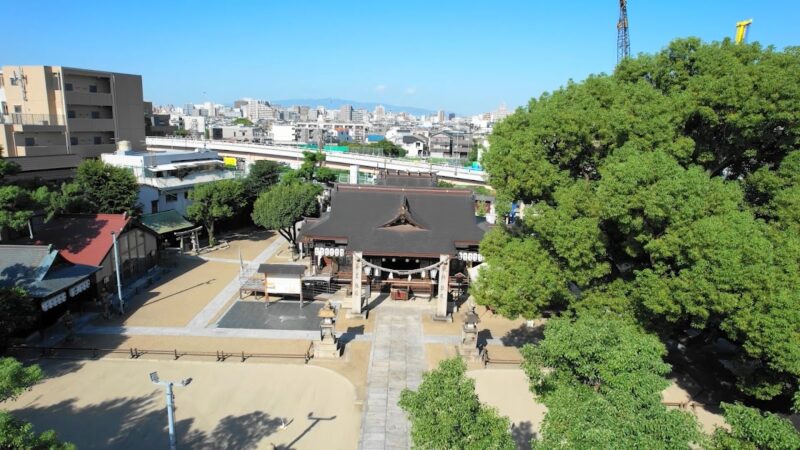
The grounds of Domyoji Tenmangu Shrine offer a space where historical buildings and nature harmonize.
Main Hall | Beautiful Gongen-zukuri Style
The main hall of Domyoji Tenmangu Shrine is built in the Gongen-zukuri style, consisting of three structures: the main hall, the offering hall, and the worship hall. The majestic atmosphere of the shrine inspires a sense of reverence in visitors. The main hall enshrines Sugawara no Michizane and his aunt, Kakuju-ni, attracting many worshippers praying for academic success and passing exams.
Plum Garden | A Famous Spot with Approximately 800 Plum Trees of 80 Varieties
One of the greatest attractions of Domyoji Tenmangu Shrine is its plum garden, planted with approximately 800 plum trees of about 80 varieties. In honor of Michizane’s love of plums, a wide variety of plum trees are planted on the grounds. Selected as one of “Osaka’s 100 Green Spaces,” this plum garden is at its best from mid-February to mid-March each year, with various varieties such as white plums, red plums, and weeping plums blooming in profusion.
During the plum blossom festival, the grounds are bustling with many visitors, and the scent of plum blossoms creates a special atmosphere that evokes the arrival of spring. Because the plum blossoms bloom at different times, from early to late, you can enjoy them for about a month.
Treasure Hall | Valuable Cultural Properties Including 6 National Treasures
The Treasure Hall of Domyoji Tenmangu Shrine houses many valuable cultural properties, including 6 National Treasures, 2 Important Cultural Properties, 1 Osaka Prefecture Designated Cultural Property, and 2 Fujidera City Designated Cultural Properties.
Of particular note are the items designated as National Treasures as “Relics of Sugawara no Michizane.” These are items said to have been cherished by Sugawara no Michizane and include a celadon inkstone, a tortoiseshell-adorned ivory comb, and the Emperor Fushimi’s Imperial Handwritten Seal Illustrated Scroll. These cultural properties are extremely important resources for understanding the life of Michizane and the culture of the Heian period.
The Treasure Hall is usually open to the public on the 25th of each month and during the Plum Blossom Festival, but it is recommended to check the official website for details.
Annual Events and Festivals | Traditional Events of Domyoji Tenmangu Shrine
Domyoji Tenmangu Shrine holds festivals throughout the year related to Sugawara no Michizane, the god of learning.
New Year’s Visit and Hatsutenjin Usokae Festival (January)
Many worshippers visit the shrine for their first shrine visit of the new year, praying for academic success and passing exams. On January 25th, the Hatsutenjin Usokae Festival is held, a popular and auspicious event where the misfortunes of the previous year are turned into good fortune. A calligraphy competition and Sagicho (Dondo-yaki) are also held.
Setsubun Exorcism Festival and Star Festival (February)
On Setsubun, the Exorcism Festival and Star Festival are held, attracting many worshippers praying for protection from evil and good health.
Plum Blossom Festival (February-March)
From mid-February to mid-March, the Plum Blossom Festival, the largest event at Domyoji Tenmangu Shrine, is held. The shrine grounds, with approximately 800 plum trees in full bloom, present a breathtakingly beautiful sight. Furthermore, on February 25th, the anniversary of Sugawara no Michizane’s death, the Plum Blossom Festival is held to commemorate him.
Rapeseed Offering Festival (March)
On March 25th, the Rapeseed Offering Festival is held. This festival commemorates a waka poem composed by Sugawara no Michizane in this area when he was exiled to Dazaifu, and is one of Domyoji Tenmangu Shrine’s important annual events.
Brush Festival/Shakuten (April)
In April, the Brush Festival is held to express gratitude for worn-out brushes. Furthermore, the Sekiten ceremony, dedicated to Confucius, is held to pray for the advancement of learning.
Sugawara no Michizane’s Birthday Festival (June)
June 25th is considered the birthday of Sugawara no Michizane, and the Sugawara no Michizane’s Birthday Festival is held.
Summer Pilgrimage and Tenjin Festival (July-August)
In summer, the Summer Pilgrimage and Tenjin Festival are held, becoming a beloved summer tradition. The Hassaku Grand Festival is also held in August.
Shichi-Go-San Pilgrimage (November)
In November, many families visit for Shichi-Go-San (a traditional Japanese rite of passage for children), praying for the healthy growth of their children.
Incense Offering Ceremony and Tenjin Offering (November-December)
The Incense Offering Ceremony is held in November, and the Tenjin Offering Ceremony is held in December, marking the end of the year.
Antique Market
An antique market is held regularly every month, attracting many antique enthusiasts.
Prayer Services | From Academic Success to Life Rituals
Domyoji Tenmangu Shrine accepts various prayers.
Academic Success and Passing Exams
As the shrine enshrines Sugawara no Michizane, the god of learning, prayers for academic success and passing exams are the most common. Especially during exam season, many students and their families from all over the country visit.
Protection from Misfortune and Directional Influence
Prayers for protection from misfortune and directional influence are also offered. These prayers ward off calamities at important life stages and pray for peaceful days.
Safe Childbirth, First Shrine Visit, and Shichi-Go-San (7-5-3 Festival)
A wide range of prayers related to life rituals are also available. Prayers are offered for the safe delivery of children, the first shrine visit (Omiyamairi) after a baby’s birth, and Shichi-Go-San (7-5-3) celebrations, all praying for the healthy growth of children. Naming services for babies are also available.
Weddings
Domyoji Tenmangu Shrine also holds Shinto wedding ceremonies, allowing you to have a traditional wedding in a solemn atmosphere.
Groundbreakings and Other Off-Site Ceremonies
We also accept off-site ceremonies, such as groundbreakings before construction. Please contact the shrine office for details.
Access and Parking Information
Domyoji Tenmangu Shrine is easily accessible by public transportation.
Access by Train
It is conveniently located about a 3-minute walk west from Domyoji Station on the Kintetsu Minami-Osaka Line. It is also easily accessible from Osaka Abenobashi Station, about 15 minutes by semi-express train and about 10 minutes by express train. Because it is close to the station, even first-time visitors can easily find it.
Access by Car
By car, it’s approximately 10 minutes from the Fujidera Interchange on the Nishi-Meihan Expressway.
Parking
While there is a parking lot for visitors on the temple grounds, it can become full during peak seasons such as the plum blossom festival and New Year’s Day. In such cases, we recommend using nearby coin-operated parking lots or public transportation.
Tourist Attractions Around Domyoji Tenmangu Shrine
When visiting Domyoji Tenmangu Shrine, we recommend also visiting the surrounding tourist attractions.
Domyoji Temple
Across the road from the Tenmangu Shrine to the west is Domyoji Temple, a nunnery of the Omuro branch of the Shingon sect. It was once integrated with the Tenmangu Shrine but separated due to the separation of Shinto and Buddhism. It is also known as the birthplace of Domyoji hoshii (dried rice).
Mozu-Furuichi Kofun Group
Fujidera City is located in the Furuichi area of the World Heritage Site “Mozu-Furuichi Kofun Group.” By visiting the burial mounds believed to have been constructed by the Haji clan, who were involved in the founding of Domyoji Tenmangu Shrine, you can feel the romance of ancient history.
Fujii-dera Temple
Fujii-dera Temple, which gives its name to Fujiidera City, is an ancient temple that houses a national treasure, a seated statue of the Thousand-Armed Kannon Bodhisattva. It is within walking distance of Domyoji Tenmangu Shrine, and many people visit both.
Manners and Points for Visiting
When visiting Domyoji Tenmangu Shrine, keeping the following points in mind will make your visit more fulfilling.
Basic Etiquette for Visiting
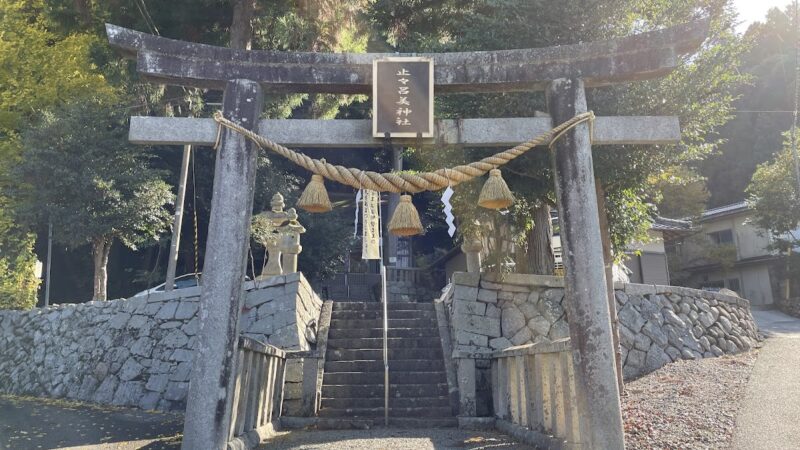
Bow before passing through the torii gate, and avoid walking in the center of the path. Cleanse your hands and mouth at the water basin before proceeding to the main hall. The basic bowing ritual is “two bows, two claps, one bow.”
Goshuin (Shrine Seal)
You can receive a goshuin at Domyoji Tenmangu Shrine. The shrine office accepts requests for Goshuin (temple/shrine stamps), and special Goshuin stamps are sometimes given out during the plum blossom season. Don’t forget to bring your Goshuincho (stamp book).
Items Available
A wide variety of items related to Sugawara no Michizane are available, including amulets for academic success, pencils for passing exams, and ema (votive tablets). These are popular souvenirs for students taking exams.
Photography
Photography is generally permitted within the shrine grounds, but may be prohibited inside the main hall and the treasure hall. Please be considerate of other visitors when taking photos.
The Charm of Domyoji Tenmangu Shrine | Why is it Loved by So Many People?
The reason Domyoji Tenmangu Shrine is loved by so many visitors lies in its deep history, the value of its cultural assets, and the natural beauty of the four seasons.
Deep Connection with Sugawara no Michizane
Domyoji Tenmangu Shrine is the place where Michizane actually lived, and where his aunt, Kakuju-ni, resided. This shrine’s special value lies not merely in its veneration of Sugawara no Michizane, but in its deep connection to his life.
National Treasure-Class Cultural Properties
The shrine’s greatest appeal is its collection of valuable cultural properties, including six national treasures. These properties are extremely important for understanding Japanese history and culture, making it a must-see spot for history enthusiasts.
Beauty as a Plum Blossom Spot
The plum garden, boasting approximately 800 plum trees of about 80 varieties, is known as one of Kansai’s premier plum blossom viewing spots. The plum blossoms that adorn the shrine grounds in early spring soothe the hearts of visitors and are a quintessential symbol of spring’s arrival.
Easy Access
Its convenient location, just a 3-minute walk from the station and close to central Osaka, is another attractive feature. Because it’s easily accessible, many students visit during exam season to pray for success.
Summary | Praying to the God of Learning at Domyoji Tenmangu Shrine
Domyoji Tenmangu Shrine boasts a history of over 1400 years and continues to attract many worshippers as a sacred site for learning, dedicated to Sugawara no Michizane. Its major attractions include valuable cultural assets, including national treasures, a beautiful plum garden with approximately 800 blooming plum trees, and traditional events held throughout the year.
It’s a shrine you’ll want to visit at various milestones in life, such as for academic success, passing exams, protection from evil, safe childbirth, and Shichi-Go-San (a traditional Japanese rite of passage for children). The scenery is especially beautiful during plum blossom season, allowing for peaceful worship in a space where history and nature harmonize.
When visiting Osaka, why not visit Domyoji Tenmangu Shrine and offer your prayers to Sugawara no Michizane, the god of learning? It’s easily accessible, just a 3-minute walk from Kintetsu Domyoji Station, making it a treasure trove of history and culture that’s easy to visit.