
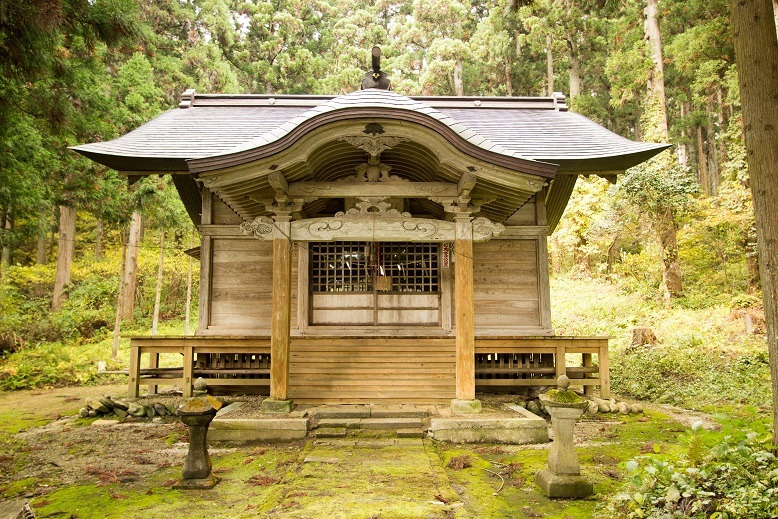
Fujikura Shrine (Akita City, Akita Prefecture) Complete Guide: History, Goshuin (Shrine Seal), and Access Information
Fujikura Shrine, located in Fujikura, Yamauchi, Akita City, Akita Prefecture, is a historic shrine that has long been a center of local faith. This article provides detailed information you should know before visiting, including the history of Fujikura Shrine, its enshrined deities, highlights, goshuin information, and access methods.
Basic Information on Fujikura Shrine
Fujikura Shrine is located in the Yamauchi Fujikura district in the northern part of Akita City, facing National Route 15 (Akita-Hachirogata Line). It still boasts a large shrine grounds and is cherished as the local guardian deity.
Location: 8 Fujikura, Yamauchi, Akita City, Akita Prefecture 010-0823
Deities Enshrined: Amaterasu Omikami, Omononushi Okami
Former Shrine Rank: Village Shrine
Pilgrimage Site: 22nd Pilgrimage Site of the Akita Six Counties Thirty-Three Kannon Pilgrimage
History and Origins of Fujikura Shrine
Founding Legend and Ancient History
Fujikura Shrine is said to have been founded by Hachiman Taro Yoshiie (Minamoto no Yoshiie). Minamoto no Yoshiie was a military commander of the late Heian period, known for fighting in the Tohoku region during the Former Nine Years’ War and the Later Three Years’ War. However, there are few historical records regarding the detailed time and circumstances of its founding, and it remains unknown.
Shrines with the legend of being founded by Hachiman Taro Yoshiie exist throughout Tohoku, and these are of significant importance as they show traces of Yoshiie’s eastern campaigns and the subsequent faith in the Minamoto clan. ### Relocation during the Bunroku Era and the Edo Period
It is believed that Fujikura Shrine was relocated to its current location during the Bunroku era (1592-1596). This period marked the completion of Toyotomi Hideyoshi’s unification of Japan, and in the Akita region, the development of shrines and temples by feudal lords was progressing.
During the Edo period, Fujikura Shrine was managed by a Betto Shugendo (a type of ascetic practice). The Betto system was a system in which a temple attached to a shrine (Betto-ji) managed and operated the shrine, a typical form of syncretism of Shinto and Buddhism.
During this period, Fujikura Shrine played an important role as the 22nd temple of the 33 Kannon pilgrimage sites in the six districts of Akita. The 33 Kannon pilgrimage sites in the six districts of Akita were a central pilgrimage route for Kannon worship in the Akita region, attracting many worshippers. As a pilgrimage site, Fujikura Shrine enshrined Kannon Bodhisattva and attracted the faith of many people.
Separation of Shinto and Buddhism and Modernization in the Meiji Era
With the arrival of the Meiji era, the Meiji government issued a decree separating Shinto and Buddhism, bringing about significant changes at shrines throughout Japan. Fujikura Shrine was no exception; the previous system of chief priests was abolished, and a purely Shinto structure was established.
During this period, elements strongly influenced by Buddhism were removed, and a Shinto form of worship was established. However, the tradition of being a Kannon pilgrimage site has been passed down to the present day.
Changes Since the Showa Era
Throughout the Showa era, Fujikura Shrine continued to attract the faith of local people as the guardian deity of the region and as a pilgrimage site. While the current shrine buildings differ from its former magnificent appearance, which included a Niomon gate, it welcomes visitors in a tranquil atmosphere.
It is said that before its reconstruction at its current location, it was a historically significant shrine with a much larger precinct and impressive buildings such as a Niomon gate. Although its scale has changed with the passage of time, its historical value and tradition of faith are still carefully preserved.
About the Deities Enshrined
Amaterasu Omikami
Amaterasu Omikami is the supreme deity in Japanese mythology, a goddess who personifies the sun. She is revered as the ancestral deity of the Imperial family and is also known as the principal deity of Ise Grand Shrine. She is believed to bestow blessings such as abundant harvests, national peace and security, and good fortune.
Omononushi Okami
Omononushi Okami is a deity whose head shrine is Omiwa Shrine in Nara Prefecture. He is worshipped as the god of nation-building and the guardian deity of agriculture, commerce, and industry. He is also known as the god of medicine and sake brewing, and is believed to possess divine blessings covering all aspects of life.
Highlights of Fujikura Shrine
Stone Komainu (Guardian Dogs)
Fujikura Shrine has stone komainu designated as a tangible cultural property of Akita City. These guardian lion-dogs (komainu) were designated as a valuable cultural property on March 23, 2012 (Heisei 24), and are important historical materials that convey stonemasonry techniques from the Edo period to the Meiji period.
Komainu are placed on shrine grounds as guardian beasts, and the komainu at Fujikura Shrine are valuable artifacts that convey the history and faith of the region to the present day.
Atmosphere of the Shrine Grounds
Fujikura Shrine is situated facing National Route 15, but stepping onto the grounds reveals a quiet and peaceful space. The spacious shrine grounds are lush with greenery, allowing visitors to experience the changing seasons while offering their prayers.
About the Akita Six Counties Thirty-Three Kannon Pilgrimage
Fujikura Shrine is the 22nd temple on the Akita Six Counties Thirty-Three Kannon Pilgrimage, and many pilgrims still visit it today. This pilgrimage route visits 33 temples and shrines within Akita Prefecture, a traditional form of faith that has continued since the Edo period.
At Fujikura Shrine, a pilgrimage site, the worship of Kannon Bodhisattva is highly valued, preserving the history of syncretism between Shinto and Buddhism. It is an important place of worship for those undertaking pilgrimages.
Goshuin (Shrine Seal) Information
Goshuin (shrine seals) can be obtained at Fujikura Shrine. In recent years, electronic goshuin have also become available, allowing for a modern way to record pilgrimages.
When requesting a goshuin, it is customary to speak to the shrine office after completing your prayers. However, since the office may not always be staffed, it is recommended to check in advance.
Goshuin for the Akita Six Counties Thirty-Three Kannon Pilgrimage are also available, so those undertaking the pilgrimage should bring their goshuin notebook.
Access Information
Location
8 Fujikura, Yamauchi, Akita City, Akita Prefecture 010-0823
Access by Public Transportation
By Bus:
- Get off at the “Fujikura” bus stop on the Akita Chuo Kotsu bus line, approximately 1 minute walk (approx. 74m)
- Very close to the bus stop and located along the national highway, making access easy.
By Train:
- Approximately 15 minutes by car from JR Ou Main Line “Akita Station”
- The nearest station is JR Ou Main Line “Izumigai Asahikawa Station”
Access by Car
Located along National Route 15 (Akita-Hachirogata Line), it is easily accessible by car. It takes approximately 10-15 minutes north from the center of Akita City.
We recommend checking the availability of parking before your visit.
Nearby Attractions
The Yamauchi district of Akita City, where Fujikura Shrine is located, is a quiet residential area in northern Akita City. The surrounding area is dotted with spots where you can experience Akita’s nature and history.
It’s also close to the center of Akita City, making it possible to visit Akita’s tourist attractions before or after visiting Fujikura Shrine. Near Akita Station, there are attractions such as Senshu Park (Kubota Castle Ruins), Akita City Red Brick Museum, and Akita Prefectural Museum of Art.
Manners and Precautions for Visiting a Shrine
Basic Worship Etiquette
- Bow before passing through the torii gate: Bow before entering the shrine grounds.
- Purify yourself at the water basin: If there is a water basin, purify your hands and mouth.
- Walk along the edge of the path: The center of the path is considered the path of the gods.
- Etiquette at the main hall: Two bows, two claps, and one bow is the basic procedure.
Precautions when visiting a shrine
- Worship quietly and be considerate of other worshippers.
- Refrain from eating, drinking, and smoking on the shrine grounds.
- Take photographs only within permitted areas and be considerate of other worshippers.
- The shrine office may be unattended, so please check in advance if you wish to receive a Goshuin (shrine stamp).
Annual Events at Fujikura Shrine
Various festivals and events are held at the shrine throughout the year. As the local guardian shrine, seasonal rituals such as the spring Kinensai (harvest festival) and the autumn Reitaisai (grand festival) are carefully preserved.
For specific festival dates, we recommend checking with the Akita Prefectural Shrine Association or local information.
Summary
Fujikura Shrine has a legend of being founded by Hachiman Taro Yoshiie and flourished as a pilgrimage site for the 33 Kannon temples of Akita’s six districts during the Edo period. Despite the separation of Shinto and Buddhism in the Meiji era and the changes of the Showa era, it continues to attract the faith of local people.
The stone guardian lion statues designated as cultural properties, the tradition as a Kannon pilgrimage site, and the tranquil atmosphere of the grounds offer peace of mind to visitors. When visiting Akita City, please be sure to stop by.
Despite its convenient location along the national highway, Fujikura Shrine offers a peaceful atmosphere once you enter the grounds. We recommend a quiet visit while feeling the history and tradition.


