Complete Guide to Fukaura Shrine (Yonago City, Tottori Prefecture) | History, Deities, Highlights, and Access Information
Fukaura Shrine, located in Gion-cho, Yonago City, Tottori Prefecture, is a historic shrine that has been cherished by the local people since the Edo period. Formerly known as “Gion Sansha Tenno” or “Gozu Tenno,” it is a venerable shrine that received a divided spirit from the Gion Shrine in Kyoto. This article provides a detailed explanation of Fukaura Shrine’s history, deities, highlights within the grounds, and access information.
Basic Information on Fukaura Shrine
Fukaura Shrine is located in the heart of Yonago City, Tottori Prefecture, and is a shrine that attracts the faith of local residents.
Location
1-83 Gion-cho, Yonago City, Tottori Prefecture 683-0047
Corporate Number
6270005003040
Access
Located within walking distance of JR Yonago Station, and easily accessible from the city center.
Main Deity
Susanoo-no-Mikoto
Former Name
Gion Sansha Tenno, Gozu Tenno
Fukaura Shrine is deeply connected to the place name Gion-cho in Yonago City and is an important shrine that conveys the history and culture of the region to the present day.
History and Origins of Fukaura Shrine
Origin of Founding
The founding date of Fukaura Shrine is unknown, but it is said to have been established in ancient times by inviting a deity from Gion Shrine (present-day Yasaka Shrine) in Kyoto. Kyoto’s Gion Shrine is a nationally renowned shrine, and Fukaura Shrine, which enshrines a分霊 (bunrei, a divided spirit) of it, was originally called “Gion Sansha Tenno” or “Gozu Tenno.”
Gozu Tenno was worshipped as a god who wards off epidemics, and Gion worship spread throughout Japan, especially during the Edo period. Fukaura Shrine, within this historical context, also garnered reverence as a guardian deity of the region.
Edo Period Records
Fukaura Shrine possesses valuable ridgepole inscriptions indicating reconstructions during the Edo period.
- Tenna 2 (1682): Record of shrine building reconstruction
- Tenmei 7 (1787): Record of second reconstruction
These ridgepole inscriptions confirm that Fukaura Shrine definitely existed at least during the early Edo period and was maintained as an important place of worship in the region. The fact that it underwent two reconstructions within approximately 100 years speaks to the importance of the shrine in the local community at that time.
Name Change During the Meiji Era
In the early Meiji period, the separation of Shinto and Buddhism led to significant changes in shrines throughout Japan. During this time, Fukaura Shrine also changed its name, adopting the current “Fukaura Shrine” name derived from the local place name “Fukaura.”
Due to the Meiji-era reforms to the shrine system, there was a nationwide shift from the Buddhist-influenced name “Gozu Tenno” to a more Shinto-influenced name. Fukaura Shrine was part of this trend and changed its name accordingly.
Merger During the Taisho Era
In November 1915 (Taisho 4), Fukaura Shrine was merged with the nearby Atago Shrine.
History of Atago Shrine
- August, 1574 (Tensho 2): Enshrined as the guardian deity when a fort was built in Iiyama.
- March, 1607 (Keicho 12): Rebuilt by the castle lord.
This Atago Shrine is deeply connected to the history of Yonago Castle from the late Sengoku period to the early Edo period, and was a shrine that attracted the faith of samurai families. Through this merger, Fukaura Shrine became a shrine that inherited both Gion faith and Atago faith, attracting a wider range of followers.
Deities and Divine Virtues
Main Deity: Susanoo-no-Mikoto
The main deity of Fukaura Shrine is Susanoo-no-Mikoto. Susanoo-no-Mikoto is a god who plays an important role in Japanese mythology and is believed to possess the following divine virtues:
Divine Virtues
- Protection from Evil and Disease: As a deity syncretized with Gozu Tenno, it has been believed since ancient times to have the power to ward off disease.
- Matchmaking and Family Safety: From the myth of defeating Yamata no Orochi and saving Kushinadahime-no-Mikoto, it is also worshipped as a god of matchmaking.
- Business Prosperity: As part of the Gion faith, it has also attracted the faith of merchants.
- Abundant Harvest: It also has an aspect as a god of agriculture.
Divine Virtues of the Enshrined Atago Deity
With the enshrinement of Atago Shrine, the divine virtue of fire prevention has also been added. Atago worship was widely practiced during the Edo period, especially as protection from fire.
Fukaura Shrine Grounds and Highlights
Features of the Shrine Buildings
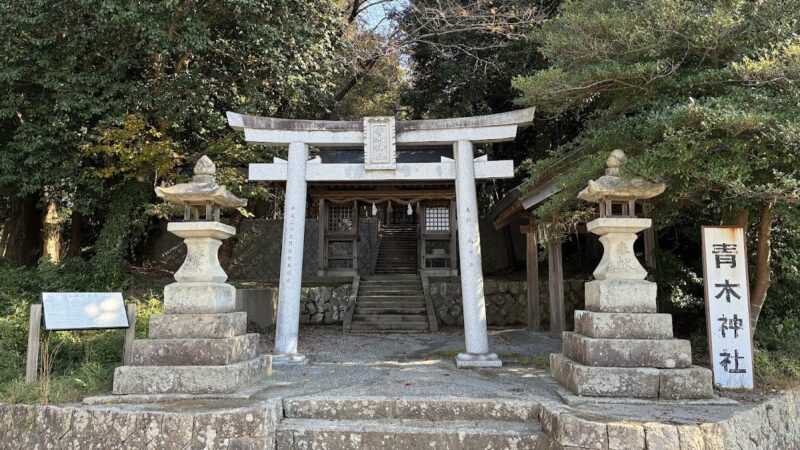
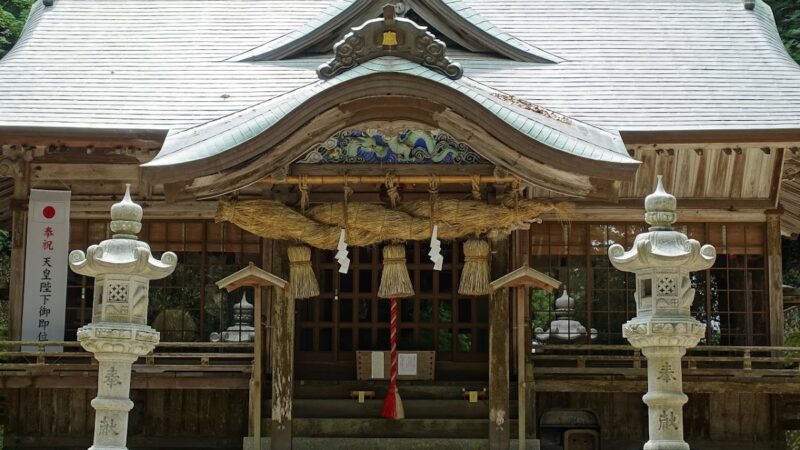
The grounds of Fukaura Shrine feature shrine buildings that evoke a sense of history. A distinctive feature of the shrine is the signpost bearing the name “Fukaura Shrine” at the entrance, and the plaque above the main hall displays the name “Gion Shrine.” This commemorates the shrine’s history as “Gion Shrine” before the Meiji era.
The main hall, rebuilt during the Edo period, retains the traditional style of shrine architecture.
Distinctive Animal Statues
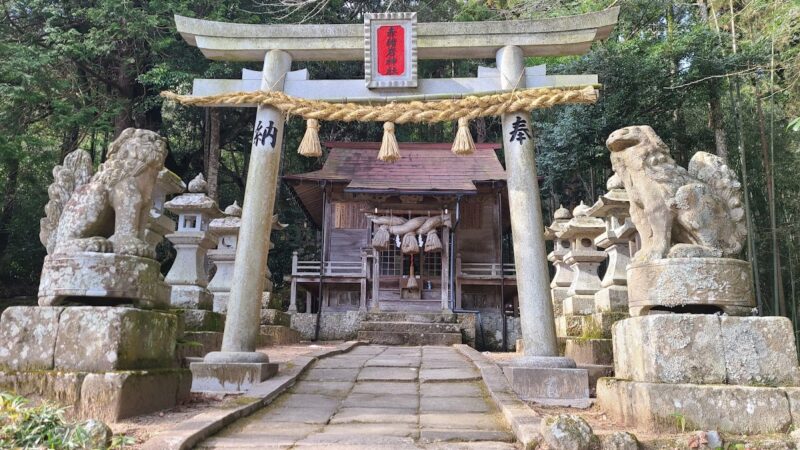
One of the most noteworthy features of the Fukaura Shrine grounds is its unique animal statues. These statues have become a topic of conversation among visitors as “quirky animal statues,” and are often featured on social media.
These animal statues are positioned as guardians of the shrine, and their unique expressions and forms delight visitors. With their distinctive atmosphere, different from typical guardian lion-dogs, these statues are one of the highlights of a visit to Fukaura Shrine.
Atmosphere of the Shrine Grounds
Despite being located in the city center of Yonago, the shrine grounds are enveloped in a tranquil atmosphere. As the name Gion-cho suggests, this area was once a bustling place for festivals such as the Gion Festival, and it remains a cherished center of local faith.
Annual Events and Festivals of Fukaura Shrine
New Year’s Visit
Fukaura Shrine is known as one of the New Year’s visit spots for Yonago citizens. From New Year’s Day to the third day of the year, worshippers visit to pray for good health and safety for their families.
Relationship with the Gion Festival
As a shrine established by inviting a deity from Kyoto’s Gion Shrine, it is believed that festivals related to the Gion Festival were once held here. Summer festivals in Gion faith are important events praying for the eradication of disease, and it is possible that Fukaura Shrine has also inherited this tradition as a local summer festival.
About Goshuin (Shrine Seals)
It is recommended to check in advance regarding the issuance of Goshuin at Fukaura Shrine. In recent years, the number of worshippers collecting Goshuin has increased, but since policies vary from shrine to shrine, it is best to inquire before visiting. ## How to Access Fukaura Shrine
Access by Train
Nearest Station
JR San’in Main Line/Hakubi Line “Yonago Station”
Fukaura Shrine is within walking distance from Yonago Station. Head towards Gion-machi from the station, and you will arrive after passing through the city center. The walk takes approximately 10-15 minutes.
Access by Car
From the Expressway
- Approximately 10 minutes from Yonago IC on the Yonago Expressway
- Approximately 15 minutes from Yonago-Nishi IC on the San’in Expressway
Parking
We recommend checking the shrine’s dedicated parking lot before your visit. There are also coin-operated parking lots nearby that you can use.
Access by Bus
There is a bus route circulating within Yonago city, with bus stops around Gion-machi. For detailed routes and timetables, please check the Yonago City bus information, such as the Dandan Bus.
Attractions Around Fukaura Shrine
Historical Spots in Yonago City
When visiting Fukaura Shrine, you can also explore the surrounding historical spots.
Yonago Castle Ruins
The site of Yonago Castle, which flourished as a strategic point in the San’in region from the Sengoku period to the Edo period. From the castle tower, you can enjoy a panoramic view of Yonago city, the Sea of Japan, and Mt. Daisen. It also has historical ties to Atago Shrine, which is enshrined together with Fukaura Shrine.
Around the Former Kamo River and Lake Nakaumi
Yonago City is also known as the “City of Water,” and is a region with beautiful waterside scenery, including the Kamo River and Lake Nakaumi.
Nearby Shrines and Temples
There are many other shrines and temples in Yonago City, allowing you to enjoy a shrine pilgrimage.
- Awashima Shrine: A shrine known as the guardian deity of women.
- Katsuta Shrine: A shrine revered as the guardian shrine of Yonago.
- Yonago Great Waterfall: A scenic spot rich in nature is a short distance away.
Etiquette and Manners for Visiting Fukaura Shrine
Basic Worship Etiquette
Worship at a shrine should be done in the following order:
- Bow before passing through the torii gate: As a sign of respect when entering the sacred area.
- Purify yourself at the water basin: Purify your left hand, right hand, and mouth in that order.
- Etiquette in front of the main hall: The basic procedure is two bows, two claps, and one bow.
- When leaving: Turn around and bow after leaving the torii gate.
Attire for Worship
There are no specific rules, but it is desirable to wear clothing that is mindful of the sacred place. Avoid excessive exposure and wear clean clothing when visiting.
Photography Etiquette
Photography is generally permitted on the shrine grounds, but photography inside the main hall and during religious ceremonies should be refrained from. Please also be considerate of other worshippers.
The Role of Fukaura Shrine in the Community
Center of the Local Community
Fukaura Shrine has served not only as a place of worship but also as a center of the local community. Through festivals and annual events, it has become a place for interaction among local residents.
History of Gion-cho, Yonago City
The name of Gion-cho, where Fukaura Shrine is located, is deeply intertwined with the history of this shrine. The fact that the area surrounding the shrine, formerly called “Gion-sha,” was named “Gion-cho” indicates that the shrine was central to the region’s identity.
History of Fukaura Shrine and Yonago
Connection to the Castle Town of Yonago
During the Edo period, Yonago developed as a castle town of the Yonago Domain. Fukaura Shrine is located in a corner of the castle town and attracted the faith of samurai and townspeople. In particular, the Atago Shrine, which is enshrined there, was revered by the castle lord and the samurai class as the guardian shrine of Yonago Castle.
Yonago as a Commercial City
Yonago flourished as a commercial center of the San’in region, and the Gion faith was widely accepted among merchants. Fukaura Shrine played an important role as a place to pray for the eradication of disease and business prosperity.
Shinto Culture and Fukaura Shrine
Characteristics of the Gion Faith
The Gion faith, which forms the basis of Fukaura Shrine, is a distinctive form of faith within Japanese Shinto culture. Originally a syncretism of the Buddhist Gozu Tenno faith and the Shinto Susanoo-no-Mikoto faith, its main purpose is the eradication of disease.
The Separation of Shinto and Buddhism in the Meiji Era and Fukaura Shrine
Due to the separation of Shinto and Buddhism in the early Meiji period, Gion shrines throughout Japan were renamed Yasaka Shrine, Susanoo Shrine, and others. Fukaura Shrine also changed its name from “Gozu Tenno” to “Fukaura Shrine,” restarting as a purely Shinto shrine.
However, its historical background is carefully preserved, as evidenced by the remaining “Gion Shrine” plaque in the worship hall. This can be considered a valuable example illustrating the changes in Japanese religious culture.
Points to Note When Visiting Fukaura Shrine
Recommended Time to Visit
Fukaura Shrine is open for worship throughout the year, but the following times are particularly recommended:
Spring (March-May)
The weather is mild and pleasant for worship. The shrine grounds are enveloped in a refreshing atmosphere during the season of fresh greenery.
Autumn (September-November)
The weather is pleasant, and the surrounding scenery is beautiful during the autumn foliage season.
New Year’s Visit (January)
Many worshippers visit to pray for the new year. It’s a time to experience the local atmosphere.
Estimated Time Required
The grounds of Fukaura Shrine are relatively compact, so a visit itself can be completed in about 15-30 minutes. If you want to take your time exploring the grounds and observing the distinctive animal statues, it’s best to allow about an hour.
Combining with Nearby Facilities
Taking advantage of its location within walking distance of Yonago Station, the following sightseeing plan is recommended:
- Morning: Visit Fukaura Shrine
- Afternoon: Visit Yonago Castle Ruins
- Evening: Explore Yonago City
Summary
Fukaura Shrine (Yonago City, Tottori Prefecture) is a shrine with a history dating back to the Edo period and a history of being established by inviting a deity from Kyoto’s Gion Shrine. From the time when it was called “Gion Sansha Tenno” and “Gozu Tenno,” through the name change in the Meiji era and the merger with Atago Shrine in the Taisho era, it continues to attract the faith of the local community.
With its convenient location within walking distance of Yonago Station, distinctive animal statues within the grounds, and the “Gion Shrine” plaque remaining in the main hall, Fukaura Shrine offers plenty to see. When visiting Yonago City, be sure to visit Fukaura Shrine and experience the local history and culture.
Fukaura Shrine, which enshrines Susanoo-no-Mikoto, who possesses a variety of divine virtues such as protection against disease, warding off evil, matchmaking, and business prosperity, is a shrine that can be a source of spiritual solace for us living in modern times. Why not join your hands in prayer in the tranquil grounds and pray for daily peace?