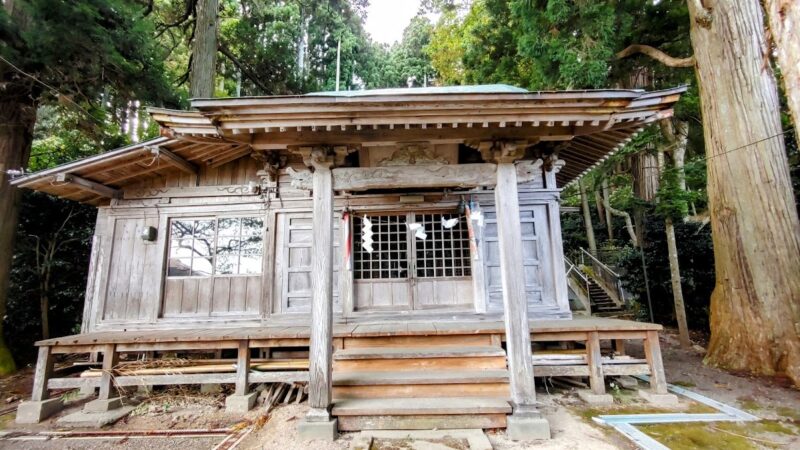
Hachiman Shrine (Nakajima, Toyoiwa Toyomaki, Akita City, Akita Prefecture) Complete Guide: History, Origins, and Access Information
Hachiman Shrine, located at 124 Nakajima, Toyoiwa Toyomaki, Akita City, Akita Prefecture, is a historic shrine that has long been cherished by the local community. This article provides detailed information you should know before visiting, including the shrine’s origins, history, enshrined deities, and access methods.
Basic Information about Hachiman Shrine
Location and Contact Information
Official Address: 124 Nakajima, Toyoiwa Toyomaki, Akita City, Akita Prefecture 010-1652
This Hachiman Shrine is located in the Toyoiwa district of Akita City and is deeply rooted in the local faith as the guardian shrine of the Toyomaki settlement. While there are many Hachiman Shrines in Akita Prefecture, the Hachiman Shrine in Nakajima, Toyoiwa Toyomaki, is known for its unique local history and origins.
Jurisdiction and Affiliation
This shrine belongs to the Akita Prefectural Shrine Association and is officially registered in the Association’s database. As one of the approximately 4,808 Hachiman shrines nationwide, it continues the tradition of Hachiman worship.
History and Origins of Hachiman Shrine
History of Founding and Reconstruction
The founding date of Hachiman Shrine is unknown, but records confirm that it was rebuilt on April 8, 1206 (Genkyu 3). This falls within the early Kamakura period, indicating that the shrine existed even before that time.
The year Genkyu 3 was the time when Minamoto no Sanetomo was the third shogun of the Kamakura shogunate, and the samurai government was beginning to stabilize nationwide. The fact that the reconstruction took place during this period suggests that there was a certain degree of social stability in the Toyoiwa region at that time.
The History of Kusanagi Sagami and the Development of the Area
During the Enpō era (1673-1681), when Kusanagi Sagami developed this area, he discovered a shrine that had stood there for many years and enshrined it as the guardian deity of the region. This tradition remains.
Kusanagi Sagami’s development took place in the mid-Edo period and is highly likely to have been part of the Akita Domain’s territorial management. The fact that he positioned an existing old shrine as a spiritual pillar for regional development and established it as a guardian deity is a good example of the importance of shrines in development projects at that time.
The Role of a Guardian Deity
A “guardian deity” refers to a shrine that protects a specific region or settlement. The Hachiman Shrine in Nakajima, Toyoiwa Toyomaki, has been closely intertwined with the lives of the local residents as the guardian deity of the Toyomaki settlement.
In agricultural communities, local shrines have played a vital role in all aspects of people’s lives, including prayers for bountiful harvests, protection from evil, and the healthy growth of children. Hachiman shrines, too, have functioned as a spiritual pillar of this region for hundreds of years.
About Hachiman Faith and its Deities
What is Hachiman?
The principal deity of Hachiman shrines is generally considered to be Emperor Ōjin. Hachiman is widely worshipped as a god of military fortune and victory, and was revered by samurai families as the tutelary deity of the Minamoto clan.
With approximately 4,808 Hachiman shrines nationwide, they are the second most numerous type of shrine after Inari shrines, occupying an extremely important position in Japanese Shinto belief. Many Hachiman shrines are located within Akita Prefecture, and the Hachiman Shrine in Toyoiwa Toyomaki Nakajima also plays a part in this traditional faith.
Hachiman Worship in Akita
Hachiman worship in Akita Prefecture developed particularly after the arrival of the Satake clan and throughout the feudal period. Hachiman Akita Shrine, located in Senshu Park in the center of Akita City, was relocated from Ota Castle in Ibaraki Prefecture as the tutelary shrine of the Satake clan and was a central figure in Hachiman worship within the samurai society of the Akita domain.
On the other hand, the Hachiman Shrine in Nakajima, Toyoiwa Toyomaki, represents a more localized, popular form of Hachiman worship, distinct from the lord’s tutelary shrine. This suggests that Hachiman worship was widespread among both the samurai and commoner classes.
Characteristics of the Toyoiwa District in Akita City
Geography and History of the Toyoiwa District
The Toyoiwa district of Akita City is located in the northern part of Akita City. It has a topography consisting of plains along the Omono River basin and surrounding hilly areas, and has long been centered on agriculture.
The place name “Toyoiwa” evokes images of fertile land and rocks (a solid foundation), reflecting the characteristics of the region’s natural environment. The Toyomaki settlement, as one of the settlements within the Toyoiwa district, has formed its own unique community.
Development and Settlement Formation
As evidenced by the development records of Kusanagi Sagami during the Enpo era, the Toyoiwa district was one of the areas that underwent significant development in the mid-Edo period. As part of the Akita Domain’s new land development policy, many settlers moved in, and a settlement was formed.
The Hachiman Shrine is closely linked to this history of development and has functioned as the spiritual center of the newly formed settlement.
How to Access Hachiman Shrine
Access by Car
When visiting by car from central Akita City, the following route is common:
- From Akita Station: Taking National Route 7 north towards Toyoiwa is convenient.
- Travel Time: Approximately 20-30 minutes from Akita Station.
- Parking: It is recommended to check the situation around the shrine in advance.
Access by Public Transportation
When using public transportation:
- Route Bus: Take a route bus from central Akita City towards Toyoiwa.
- Nearest Bus Stop: Accessible on foot from bus stops around the Toyomaki area.
- Travel Time: It is important to check the number of buses and timetables in advance.
Points to Note When Visiting
- As this shrine is cherished by local residents as the guardian shrine of the region, please be mindful of quiet worship.
- The surrounding area is a residential and agricultural area, so consideration for noise is necessary.
- For information on festival and special event dates, we recommend checking with the Akita Prefectural Shrine Association or local sources.
Comparison with other Hachiman Shrines in Akita Prefecture
Hachiman Akita Shrine (within Senshu Park)
The most famous Hachiman Shrine in Akita City is Hachiman Akita Shrine, located on the site of the former main keep of Kubota Castle within Senshu Park.
Features:
- Relocated from Ota Castle in Ibaraki Prefecture as the tutelary shrine of the Satake clan
- Merged with Akita Shrine in 1907 (Meiji 40) to become Hachiman Akita Shrine
- The main guardian shrine of Uchimachi (a samurai town)
- The shrine building was destroyed by arson in 2005 (Heisei 17), but was rebuilt in 2008 (Heisei 20)
- The historical value of the former shrine building, which was a designated Important Cultural Property
Differences from Hachiman Shrine in Nakajima, Toyoiwa Toyomaki
While Hachiman Akita Shrine was the tutelary shrine of the feudal lord and a central shrine in samurai society, Hachiman Shrine in Nakajima, Toyoiwa Toyomaki:
- Community-oriented: Functions as the guardian shrine of a specific settlement
- Popular faith: Represents Hachiman faith at the common people level
- Connection to the history of pioneering: Closely related to the history of pioneering in Kusanagi Sagami
- Long History: Record of reconstruction in Genkyu 3 (1206)
As you can see, even though they are both Hachiman shrines, their origins and roles differ greatly. Comparing these two shrines offers an interesting perspective for understanding the diversity of Hachiman worship within Akita City.
Etiquette and Manners for Visiting a Shrine
Basic Worship Method
Here’s a basic guide to worshiping at Hachiman Shrine:
- Before passing through the torii gate: Bow before entering the shrine grounds.
- Purification at the water basin:
- Hold the ladle in your right hand and purify your left hand.
- Switch the ladle to your left hand and purify your right hand.
- Switch the ladle back to your right hand, receive water in your left hand, and rinse your mouth.
- Finally, hold the ladle upright and purify the handle.
- Worship at the main hall:
- Quietly place your offering in the offering box.
- Ring the bell if there is one.
- Worship using the two bows, two claps, and one bow method.
Mindset When Visiting a Local Guardian Shrine
When visiting a local guardian shrine like Hachiman Shrine in Nakajima, Toyoiwa Toyomaki, pay particular attention to the following points:
- Consideration for local residents: Understand that this is a place where local people worship on a daily basis.
- Silent Worship: Unlike touristy shrines, this shrine maintains a quiet environment.
- Photography: Please refrain from taking photos on the shrine grounds, especially when locals are worshipping.
- Maintaining Cleanliness: Please take your trash with you and keep the shrine grounds clean.
Annual Events and Festivals of Hachiman Shrine
General Festivals of Hachiman Shrine
Specific festival dates vary by shrine, but Hachiman shrines generally hold the following annual events:
Spring Festival:
- Period: Around April to May
- Content: A festival to pray for a bountiful harvest.
Summer Festival:
- Period: Around July to August
- Content: Often held in conjunction with local summer festivals.
Autumn Festival:
- Period: Around September to October
- Content: A festival to express gratitude for the harvest.
New Year’s Eve/First Shrine Visit:
- Period: December 31st to January 3rd
- Content: Visiting Shrines During the Year-End and New Year Holidays
Connections with the Community
The festival of Hachiman Shrine, the guardian shrine of the Toyomaki settlement, is positioned as an important event for the local community. Preparation and operation of the festival are carried out through the cooperation of local residents, and it also serves as a place for intergenerational exchange.
Shrine Culture and Hachiman Faith in Akita Prefecture
Role of the Akita Prefectural Shrine Association
The Akita Prefectural Shrine Association is the organization that oversees shrines within Akita Prefecture, and Hachiman Shrine in Nakajima, Toyomaki, Toyoiwa, is under its jurisdiction. The Shrine Association has the following roles:
- Management and Operation Support of Shrines
- Training and Education of Shinto Priests
- Distribution of Jingu Taima (amulets from Ise Grand Shrine)
- Guidance on Rituals and Transmission of Traditions
- Provision of Information Regarding Shrines
Distribution of Hachiman Shrines in Akita Prefecture
Numerous Hachiman shrines are located throughout Akita Prefecture, each possessing its own unique regional history and traditions. Of the approximately 4,808 Hachiman shrines nationwide, a considerable number are distributed within Akita Prefecture, and they are deeply rooted in the religious lives of the prefectural residents.
Main Characteristics:
- Connection with the Satake clan during the feudal period
- Function as a guardian shrine in rural areas
- Close connection to the history of regional development
- Worship as a god of military fortune and victory
Attractions around Hachiman Shrines
Natural Environment of Toyoiwa District
Toyoiwa District is a naturally rich area in the northern part of Akita City. Around the shrine:
- Rural Landscape: Spreading rice paddies
- Omono River Basin: Abundant water resources
- Seasonal Changes: Fresh greenery in spring, lush greenery in summer, rice stalks in autumn, snowy landscapes in winter
Other Shrines and Temples in Akita City
When visiting Hachiman Shrine, you can also visit other shrines and temples in Akita City:
- Hachiman Akita Shrine (within Senshu Park): A shrine associated with the Satake clan, lords of the Akita domain
- Akita Prefecture Gokoku Shrine: A shrine dedicated to the war dead of the prefecture
- Hiyoshi Shrine: An ancient shrine in Akita City
- Kubota Castle Ruins: A historical site developed as Senshu Park
Shrine Maintenance and Local Community
Ujiko System and Shrine Maintenance
Hachiman Shrine, the guardian shrine of the region, is supported by local residents called ujiko (parishioners). The Ujiko system is a traditional Japanese system for maintaining Shinto shrines:
- Cleaning and Management: Cleaning and daily maintenance of the shrine grounds
- Festival Management: Preparation and implementation of annual events
- Financial Support: Bearing the costs necessary for maintaining the shrine
- Transmission of Tradition: Passing on festivals and rituals to the next generation
Modern Challenges
Many local shrines face the following challenges:
- Depopulation and Aging: Decreasing and aging of parishioners
- Maintenance Costs: Securing funds for the maintenance of the shrine buildings and grounds
- Transmission of Tradition: Passing on festivals and traditions to younger generations
- Securing Shinto Priests: The increasing number of small shrines where it is difficult to appoint full-time priests
The Hachiman Shrine in Nakajima, Toyoiwa Toyomaki, may also be facing these modern challenges. The cohesion of the local community and external understanding and support will become increasingly important in the future.
The Significance of Visiting Hachiman Shrine
Dialogue with History
Visiting Hachiman Shrine, which has records of being rebuilt in 1206 (Genkyu 3), offers an opportunity to engage in dialogue with the region’s history spanning over 800 years. You can feel the history of the lives, beliefs, and communities that people have lived in this area from the Kamakura period to the present day.
Understanding Local Culture
Shrines are not merely religious institutions, but also focal points of local culture. Festivals, annual events, architectural styles, and traditions—shrines embody the unique culture of the region. Visiting Hachiman Shrine in Nakajima, Toyoiwa Toyomaki, allows you to deepen your understanding of Akita’s local culture.
Peace of Mind
Removing the hustle and bustle of modern society and spending time in the quiet grounds of a shrine brings spiritual peace. Hachiman Shrine, as the guardian shrine of the region, also functions as such a spiritual haven.
Summary: The Value and Future of Hachiman Shrine
Located at 124 Nakajima, Toyoiwa Toyomaki, Akita City, Akita Prefecture, Hachiman Shrine is a historical shrine with a record of reconstruction dating back to 1206. Deeply connected to the pioneering efforts of Kusanagi Sagami during the Enpo era, it has served as the guardian shrine of the Toyomaki settlement, a spiritual pillar of the region for hundreds of years.
As one of approximately 4,808 Hachiman shrines nationwide, and as a representative example of community-based Hachiman worship in Akita Prefecture, this shrine holds significant cultural and historical value.
Maintaining such a local guardian shrine in modern times is not easy, but it is also essential for maintaining the local community itself. We sincerely hope that Hachiman Shrine will continue to be cherished by the local people and passed down to future generations.
If you have the opportunity to visit Akita City, we recommend venturing beyond the central tourist areas to suburban areas like Toyoiwa district to experience the deeply rooted shrine culture. There, you’ll find the real Akita, a side of it that you won’t find in guidebooks.