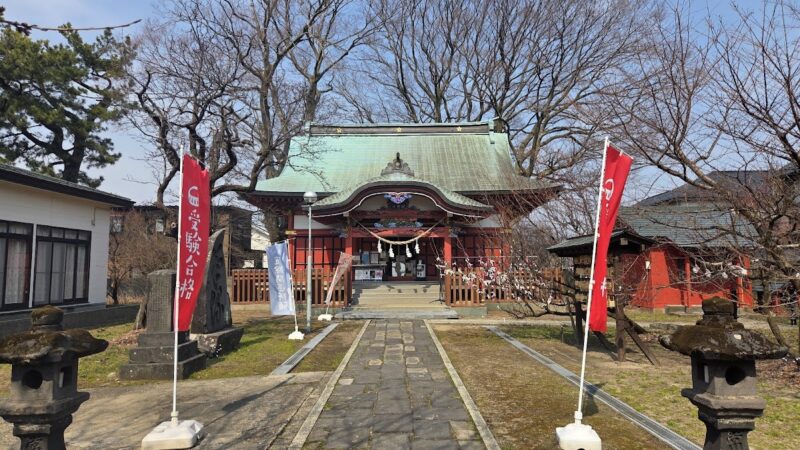
Hachiman Shrine (Osarizawa Nishinosawa, Kazuno City, Akita Prefecture) Complete Guide
Hachiman Shrine, located in Nishinosawa, Osarizawa, Kazuno City, Akita Prefecture, is a historically significant shrine deeply rooted in the local community. Records show it was rebuilt in 1680 (Enpo 8), and in 1873 (Meiji 6), it was designated a village shrine. As a venerable shrine, it has long been revered by the local people. This article provides detailed information for visitors, including the history of Hachiman Shrine, its enshrined deities, worship etiquette, and access methods.
History and Origins of Hachiman Shrine
Founding Legends and Reconstruction Records
The exact founding date of Hachiman Shrine is unknown, as only oral tradition exists. However, clear records indicate its reconstruction in 1680 (Enpo 8), indicating that it has a history dating back at least to the early Edo period.
Since its reconstruction in 1680, Hachiman Shrine has undergone several repairs and maintenance. This is evidence of the deep faith and devotion of the local people who have carefully preserved the shrine.
Ranked as a Village Shrine
In 1873 (Meiji 6), Hachiman Shrine was ranked as a village shrine. A village shrine is a rank recognized as the central shrine of a village under the Meiji-era shrine ranking system. This ranking is a historical event demonstrating the important role Hachiman Shrine has played in the Osarizawa region.
Historical Background of the Osarizawa Region
The Osarizawa region, where Hachiman Shrine is located, has a history as a thriving mining town known for the Osarizawa Mine historical site. The Osarizawa Mine, believed to have opened approximately 1300 years ago, once boasted one of the largest copper veins in Japan and greatly contributed to the development of the region.
For the people working in the mine and their families, Hachiman Shrine was likely an important place for praying for safety and as a guardian deity of the region. Hachiman Shrine conveys to the present day the history of the region where industry and faith were intertwined.
About the Deity
Hachiman-Ōkami (Emperor Ōjin)
The principal deity of Hachiman shrines is Hachiman-Ōkami. Hachiman-Ōkami is a deified form of Emperor Ōjin and is widely worshipped as the enshrined deity of numerous Hachiman shrines and Hachiman temples throughout Japan.
While known as the god of military fortune and victory, Hachiman-Ōkami has also been revered as the guardian deity of agriculture and fishing, and as a god of protection against misfortune. Furthermore, he is worshipped as a god who watches over the growth of children and is cherished as a protector of all aspects of the lives of local people.
Characteristics of Hachiman Faith
Hachiman faith is one of the representative Shinto beliefs that spread throughout Japan. Its origins lie in Usa Shrine in Ōita Prefecture, from which it was invited to various locations throughout the country. It was particularly devoutly worshipped in samurai society, and as it became known as the tutelary deity of the Minamoto clan, it spread widely not only among samurai but also among commoners.
The Hachiman Shrine in Osarizawa is also thought to have fostered a unique form of worship within this region, drawing from the tradition of Hachiman faith.
Location and Grounds of the Hachiman Shrine
Location Information
Official Location
- Address: 20 Nishinosawa, Osarizawa, Kazuno City, Akita Prefecture
- Region: Osarizawa area, Kazuno City
Osarizawa is located in the southern part of Kazuno City and serves as a gateway to Lake Towada. The Hachiman Shrine sits quietly amidst a rich natural environment.
Grounds
The grounds of the Hachiman Shrine have a calm atmosphere befitting a local shrine. The shrine building, which has undergone several restorations and repairs, reflects the faith and affection of the local people for the shrine.
The grounds also function as a place of relaxation for local residents, deepening community bonds through seasonal festivals and daily visits.
Access and Map Information
Nearest Station and Line
JR Hanawa Line, Rikuchu-Osato Station
- Approximately 22 minutes on foot from the station (approx. 1.7 km)
- Approximately 5 minutes by car from the station
The JR Hanawa Line is a local line connecting Akita and Iwate prefectures, and Rikuchu-Osato Station is the nearest station to the Osarizawa area. While it’s possible to reach the shrine on foot from the station, it’s a bit of a distance, so we recommend choosing your mode of transportation based on the weather and your physical condition.
Access by Car
Route from Major Roads
- Approximately 15 minutes from the Kazuno-Hachimantai Interchange on the Tohoku Expressway
- Accessible from National Route 282
Access by car is the most convenient. It takes approximately 10-15 minutes from the center of Kazuno City via the national highway. Located near the Osarizawa Mine historical site, it can be visited in conjunction with sightseeing.
Nearest Bus Stop and Route
While local buses within Kazuno City may be available, the number of services is limited, so it’s necessary to check the timetable in advance. For the latest information on local transportation, please check the official websites of Kazuno City Hall and Akita Prefectural Kita Bus.
View on Map
Searching for “Hachiman Shrine, 20 Nishinosawa, Osarizawa, Kazuno City, Akita Prefecture” on Google Maps will show you the exact location and route. Even when using car navigation, entering this address will allow for smooth access.
Worship Etiquette and Manners
Basic Worship Etiquette
There are traditional manners for visiting shrines. When visiting Hachiman Shrine, observing the following basic worship etiquette will allow for a more heartfelt visit.
How to Pass Through a Torii Gate
- Bow before the torii gate.
- Walk along the edge of the path, as the center is considered the path of the gods.
How to Wash Your Hands
- Hold the ladle in your right hand and wash your left hand.
- Switch the ladle to your left hand and wash your right hand.
- Switch the ladle back to your right hand, receive water in your left hand, and rinse your mouth.
- Wash your left hand once more.
- Hold the ladle upright, wash the handle, and return it to its original position.
Worship at the Main Hall
- Quietly place your offering in the offering box.
- If there is a bell, ring it.
- Two bows, two claps, one bow (two bows, two claps, one bow)
- Bow deeply twice.
- Clap your hands twice at chest height.
- Pray sincerely.
- Finally, bow deeply once.
Attire and Manners for Visiting a Shrine
No special attire is required, but it is desirable to wear clothing that reflects the sacred nature of the place. Avoid overly revealing clothing or excessively casual attire.
Photography is generally permitted, but please refrain from taking photos inside the main hall or towards the sacred object. Also, please be considerate of other worshippers.
Festivals and Annual Events
Main Festivals
Hachiman Shrine holds various festivals throughout the year. As a local shrine, Shinto rituals are performed to coincide with seasonal turning points and traditional festival days, and traditions are passed down with the participation of local residents.
Annual Festival
Many Hachiman Shrines hold their annual festival in the autumn, and it is believed that the Hachiman Shrine in Osarizawa also holds it as an important annual event for the community.
New Year’s Festival
At the start of the new year, worshippers visit for their first shrine visit of the year, praying for peace and prosperity throughout the year.
Connections with the Community
The festivals at Hachiman Shrine are not merely religious events, but also important opportunities to deepen the bonds of the local community. Through the preparation and operation of the festival, intergenerational exchanges are fostered, and the region’s traditional culture is passed down to the next generation.
Connections with other shrines in Kazuno City
Major shrines in Kazuno City
Besides Hachiman Shrine, Kazuno City has many other historical shrines.
Yasaka Shrine (Hachimantai, Kazuno City)
This shrine, located within the detached grounds of Amaterasu Omikami Shrine, is known for matchmaking. Its limited-edition amulets and goshuin (shrine stamps) are popular, and it has been attracting attention in recent years.
Shrines in the Oyu area
The Oyu area, known for Oyu Onsen (hot springs), also has shrines that protect the region.
Shrines in the Hanawa area
The Hanawa area, the center of Kazuno City, has several particularly historically significant shrines.
Relationship with the Akita Prefectural Shrine Association
Hachiman Shrine is one of the shrines belonging to the Akita Prefectural Shrine Association. The Akita Prefectural Shrine Association is an organization that oversees shrines throughout the prefecture, responsible for the maintenance and management of shrines, the training of Shinto priests, and the promotion of Shinto culture.
The Akita Prefectural Shrine Association’s official website allows you to search for information on shrines in the prefecture, and basic information about Hachiman Shrine is also available.
Nearby Tourist Attractions
Osarizawa Mine Historic Site
Located close to Hachiman Shrine, the Osarizawa Mine Historic Site is a representative tourist attraction in Kazuno City. Opened approximately 1300 years ago, it offers a tour of the mining site of one of the largest copper ore veins in Japan. The mine tunnels expose earth’s crust from approximately 9 million years ago, making it a geologically valuable site.
It is designated as a Modern Industrial Heritage site and is an important facility for learning about the history of mining in Japan. Visiting it in conjunction with a visit to Hachiman Shrine will allow you to gain a deeper understanding of the history of the Osarizawa region.
Lake Towada Area
Kazuno City is also a gateway to Lake Towada. A 30-minute drive from Hachiman Shrine will take you to a beautiful scenic spot overlooking Lake Towada.
Oyu Onsenkyo (Oyu Hot Spring Village)
Within Kazuno City lies Oyu Onsenkyo, a historic hot spring resort. Relaxing in the hot springs after your visit is highly recommended.
Significance of Visiting Hachiman Shrine
Experiencing Local History
Visiting Hachiman Shrine is a valuable opportunity to connect with the history of the Osarizawa region. With a history spanning over 340 years since its reconstruction in Enpo 8 (1670), this shrine has witnessed the changing landscape of the region.
From its prosperous mining town era, through shifts in industrial structure, and up to the present day, Hachiman Shrine has consistently been a spiritual haven for the local people.
Finding Peace of Mind
In modern society, shrines offer a precious space for finding peace of mind. Away from the hustle and bustle of daily life, spending time in the quiet grounds helps refresh your spirit.
In the tranquil atmosphere of Hachiman Shrine, you can reflect on yourself, express your gratitude and wishes to the gods, and gain new vitality.
Preservation of Local Culture
Visiting Hachiman Shrine contributes to the preservation of local culture. By visiting the shrine and showing interest in its history and traditions, you help pass on the region’s cultural heritage to future generations.
Especially for local residents, the shrine is not merely a religious facility, but an important element in forming the region’s identity. Regular visits and participation in festivals strengthen community bonds.
Precautions When Visiting
Seasonal Precautions
Winter (December-March)
Kazuno City, Akita Prefecture, is a heavy snowfall area. When visiting in winter, be sure to take sufficient precautions against snow and icy roads. Wear warm clothing and non-slip shoes.
Summer (June-August)
Summer has a relatively pleasant climate, but insect repellent is recommended for a more comfortable experience. Also, please remember to stay hydrated to prevent heatstroke.
Contact Information
For detailed information about Hachiman Shrine and festival schedules, please contact the Akita Prefectural Shrine Association or the Kazuno City Board of Education Cultural Properties Division.
Akita Prefectural Shrine Association
Provides comprehensive information about shrines within the prefecture.
Kazuno City Hall
Provides information on cultural properties and tourist attractions within the city.
Summary
Hachiman Shrine, located in Nishinosawa, Osarizawa, Kazuno City, Akita Prefecture, is a historical shrine with a record of reconstruction in Enpo 8 (1680). It was designated a village shrine in Meiji 6 (1873) and has played an important role as a center of local faith.
The enshrined deity, Hachiman Okami (Emperor Ojin), is revered not only as a god of military fortune and victory, but also as a protector of all aspects of the lives of the local residents. The shrine is approximately a 22-minute walk from Rikuchu-Osato Station on the JR Hanawa Line, or accessible by car. It can be visited in conjunction with sightseeing at sites such as the Osarizawa Mine historical site.
When visiting, please observe basic worship etiquette and be mindful of the sacred nature of the place. A visit to Hachiman Shrine will be a valuable opportunity to connect with local history and find peace of mind.
When you visit Kazuno City, be sure to stop by Hachiman Shrine and experience the atmosphere of a shrine that has been cherished by the local people for a long history.