Hachiman Shrine (Yomogita, Saku City, Nagano Prefecture) Complete Guide | History, Goshuin (Shrine Seal), and Access Information
Hachiman Shrine, located in Yomogita, Saku City, Nagano Prefecture, is a historic shrine that has protected Yawata-shuku, one of the 69 post towns on the old Nakasendo road. It is said to have been founded in 859 AD (Jogan 1), and boasts a history of over 1000 years as a center of local faith. This article provides detailed information useful for visitors, including the history of Hachiman Shrine, highlights of the grounds, information on goshuin (shrine seals), and access methods.
Basic Information about Hachiman Shrine
Official Name: Hachiman Shrine
Location: 101 Yomogita, Saku City, Nagano Prefecture
Postal Code: 384-2107
Deity: Hondawake-no-mikoto (Emperor Ojin)
Shrine Rank: Former Village Shrine
Annual Festival Date: September 15th
Parking: Available (Several spaces near the shrine grounds)
Hachiman Shrine is located approximately 6km west of Sakudaira Station, in the Yomogita area along National Route 44 (the former Nakasendo Road). It is about 500m past the Asashina Branch of the Saku City Hall, and is an important cultural heritage site that preserves the atmosphere of Hachiman-juku, a post town that once flourished on the Nakasendo Road.
History and Origins of Hachiman Shrine
Origin of Founding
Hachiman Shrine is said to have been founded in the first year of the Jōgan era (859 AD). It is believed to have been established by Shigeno Sadahide, who ruled this area at the time, and has attracted worshippers since the early Heian period. The Shigeno clan was a powerful local family in Shinano Province, deeply involved in the development and governance of this region.
Hachiman is a deity dedicated to Emperor Ōjin, and has long been revered by the samurai class as a god of military fortune and victory. He is also worshipped as a guardian deity of agriculture and transportation, and has become a spiritual pillar for the local residents along with the development of Hachiman-juku, a post town on the Nakasendō highway.
Connection to Hachiman-juku
During the Edo period, Hachiman-juku, one of the 69 post towns on the Nakasendō highway, was located in this area. Hachiman-juku was the 22nd post town from Edo, a bustling transportation hub frequented by travelers and merchants. Hachiman Shrine, as the guardian deity of this post town, attracted the faith of people praying for safe travels.
Even today, the area around the shrine retains traces of its post town past, with scattered streetscapes and historical sites, making it a popular base for historical walks. For travelers walking the Nakasendo road, Hachiman Shrine remains an important place of worship.
Changes in the Shrine Buildings
The Hachiman Shrine buildings have undergone several renovations and reconstructions throughout its long history. The existing old main hall is believed to have been built in the mid-Edo period and is designated as a cultural property of Saku City. Its intricate carvings and architectural style attest to the high level of craftsmanship of the time, making it a valuable resource for studying the architectural history of the region.
Highlights of the Shrine Grounds
Approach and Torii Gate
The grounds of Hachiman Shrine face south. A shrine name marker and the first torii gate stand a short distance from National Route 44, marking the beginning of the approach to the shrine. The approach stretches in a straight line, lined on both sides by towering trees, some hundreds of years old.
Following the approach, you are led into the shrine grounds, enveloped in a solemn atmosphere. The stone-paved path is meticulously maintained, creating an environment where visitors can appreciate the changing seasons. Especially during the autumn foliage season, the entire grounds are beautifully colored, attracting many worshippers and photography enthusiasts.
Zuishinmon Gate (Room Gate)
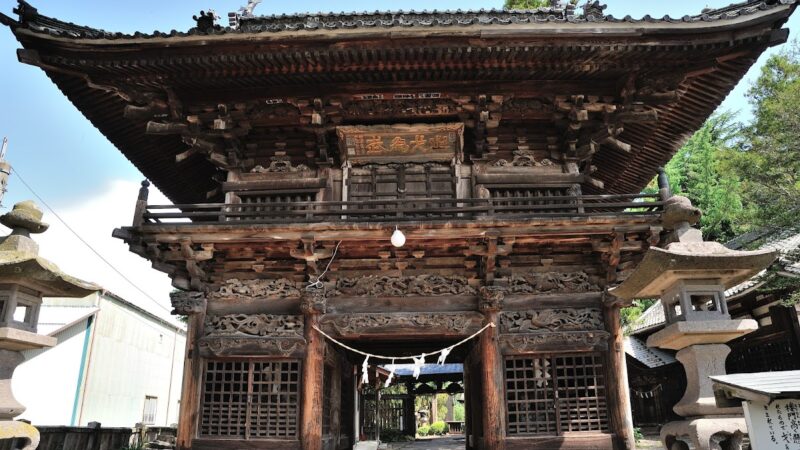
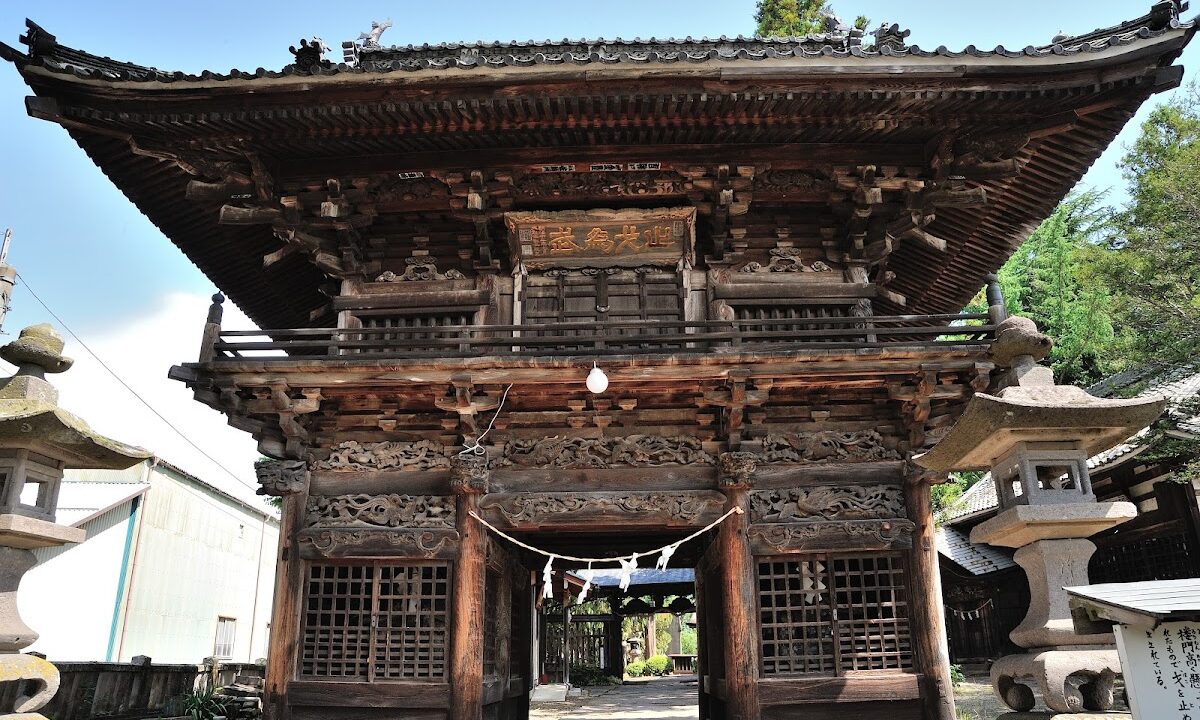
A magnificent Zuishinmon Gate (Room Gate) stands at the front of the approach. This Zuishinmon Gate is one of the symbolic structures of Hachiman Shrine, its imposing two-story structure welcoming worshippers. Guardian deity statues are enshrined on either side of the gate, protecting the sacred area.
The architectural style of the Zuishinmon Gate strongly reflects the characteristics of the late Edo period, and the detailed carvings and decorations are magnificent. You can appreciate the beauty of traditional shrine architecture, such as the curve of the roof and the brackets under the eaves. When passing through the Zuishinmon Gate, be sure to pay attention to the carvings above.
Kagura-den (Sacred Dance Hall)
After passing through the Zuishinmon Gate, the Kagura-den is located on the left. The Kagura-den is an important facility where Kagura (sacred dance) and other performing arts are performed during festivals. It has an open design and a traditional structure where the stage and viewing area are integrated.
During festivals such as the annual festival, traditional Kagura is performed by the local preservation society. This Kagura is carefully preserved as a local intangible cultural asset and is a valuable way to convey the festival culture of Hachiman Shrine to the present day.
Haiden (Worship Hall) and Honden (Main Shrine)
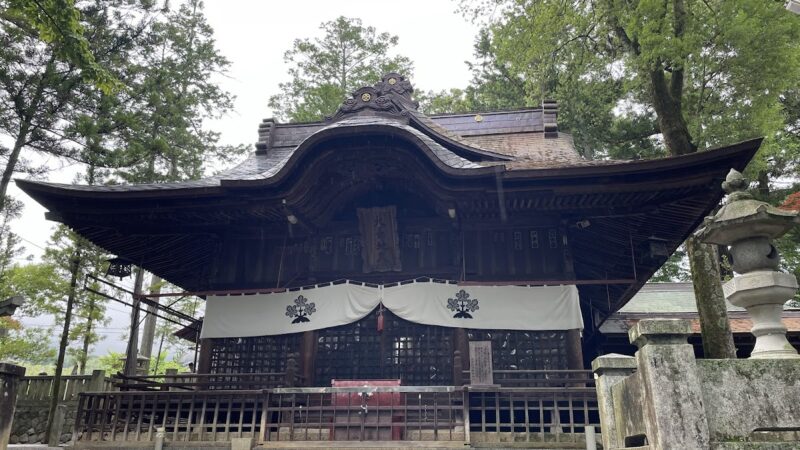
Behind the Kagura-den, in the center of the shrine grounds, are the Haiden and Honden. The Haiden is where worshippers offer prayers to the gods, and is characterized by its simple and sturdy construction. Behind the Haiden, via the Heiden (offering hall), is the Honden, where the sacred object is enshrined.
The current main shrine building was constructed relatively recently, but the old main shrine building is also preserved on the grounds. The old main shrine building is believed to have been built in the mid-Edo period and is a valuable structure with a one-bay nagare-zukuri style. It is designated as a cultural property of Saku City and features elaborate carvings and coloring.
Kora Shrine (Shrine within the grounds)
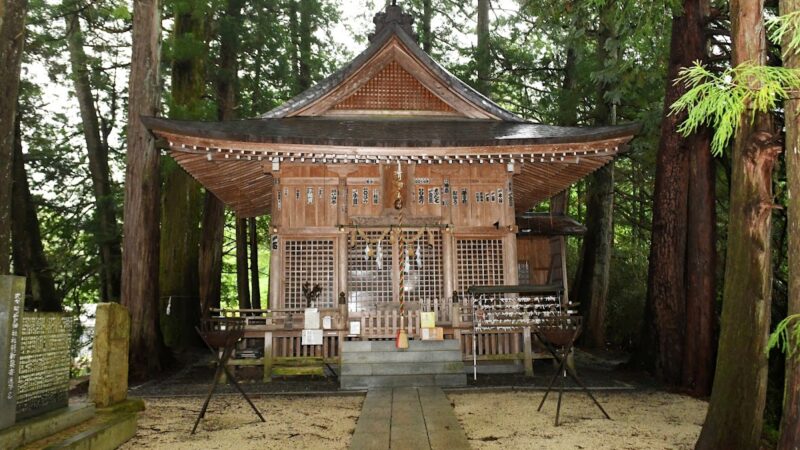
Within the grounds, the Kora Shrine is enshrined as a subsidiary shrine. The Kora Shrine is deeply connected to Hachiman worship and enshrines a deity whose head shrine is the Kora Grand Shrine in Kyushu. The Kora deity is worshipped as a god of war and a guardian deity, and is often worshipped together with the Hachiman deity.
The Kora Shrine building is also carefully constructed and, though small, possesses a beautiful architectural style. It is recommended to visit the subsidiary shrine in addition to visiting the main shrine.
Sacred Trees and Giant Trees
Several giant trees, over several hundred years old, exist within the grounds of the Hachiman Shrine. These giant trees are living witnesses to the long history of the shrine, exuding a sacred atmosphere. The majestic cedar and zelkova trees along the approach to the shrine are particularly impressive, leaving a deep impression on visitors.
Sacred trees have long been objects of worship as trees where gods reside. When visiting Hachiman Shrine, pay attention to these giant trees and feel the power and sacredness of nature.
Shrine Office
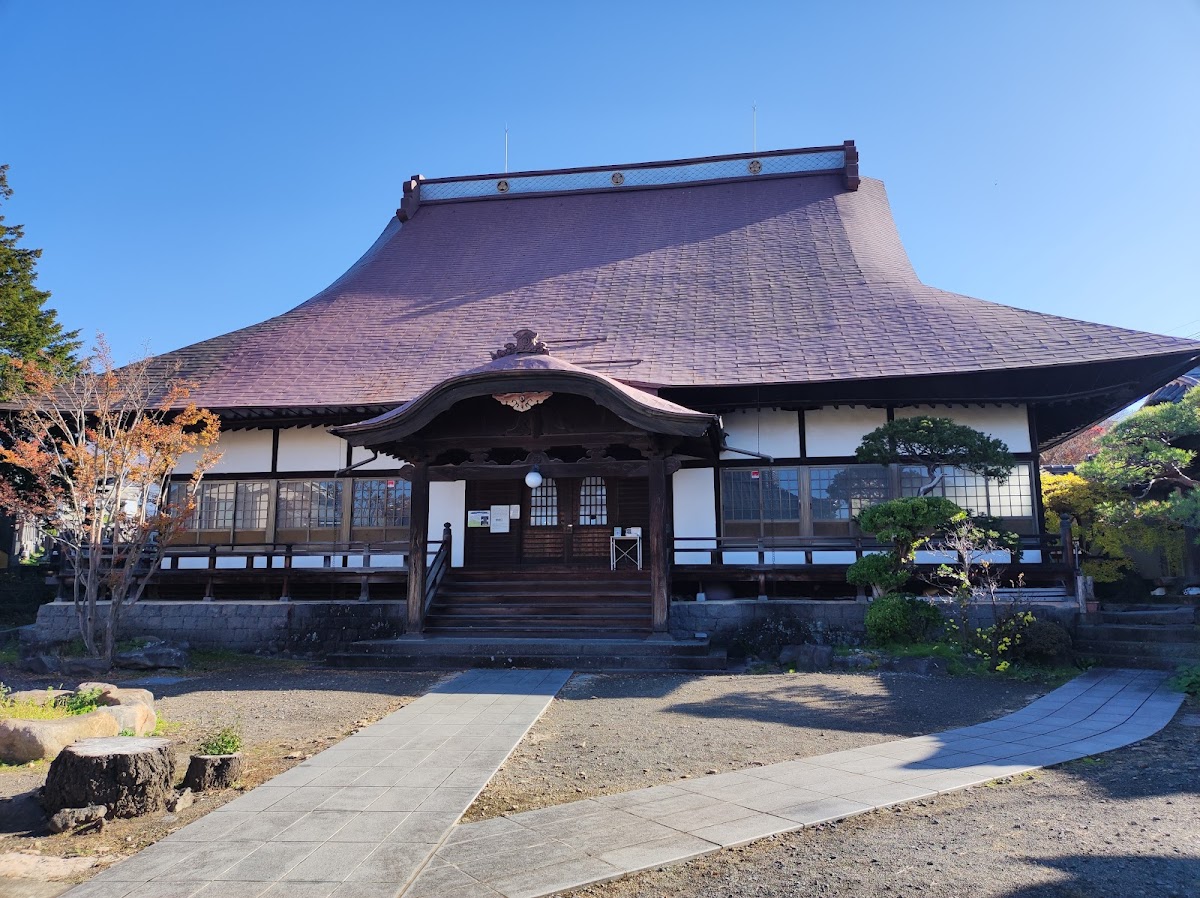
The shrine office is located on the left side of the grounds. This is where you can receive Goshuin (shrine stamps) and register for various prayers. You can also sometimes obtain documents and historical records about the shrine at the office, so it’s worth a visit if you want to learn more about Hachiman Shrine.
Goshuin Information
Hachiman Shrine offers Goshuin. Goshuin are important as proof of your visit and as a way to forge a connection with the shrine.
Goshuin Information
Hachiman Shrine offers Goshuin. Location for receiving Goshuin (temple/shrine stamp): Shrine office
Hours of availability: Approximately 9:00 AM to 4:00 PM (approximate)
Donation fee: Approximately 300-500 yen
Notes: Goshuin may not be available if the chief priest is absent. If you wish to receive a Goshuin, it is recommended to call ahead to confirm.
The Goshuin will have the words “Hachiman Shrine” written in ink and stamped with the shrine’s seal. It features a simple yet powerful calligraphy style and is a popular souvenir for visitors. Please bring your Goshuin book and receive the stamp after respectfully offering your prayers.
Access Information
Access by Train
Nearest Station: JR Koumi Line “Sakudaira Station”
Distance from Station: Approximately 6km
Travel Time: Approximately 10-15 minutes by car, approximately 1 hour 20 minutes on foot
Sakudaira Station is a major station served by the Hokuriku Shinkansen and the Koumi Line. Accessible by Shinkansen (bullet train) from Tokyo in approximately 1 hour and 10 minutes, and from Nagano in approximately 30 minutes. From the station, taking a taxi or rental car is convenient.
Access by Car
Nearest Interchange: Saku IC on the Joshinetsu Expressway
Distance from Interchange: Approximately 10km
Travel Time: Approximately 15-20 minutes
After exiting Saku IC, take National Route 142 and National Route 44 (Old Nakasendo) towards Yomogita. Using the Saku City Hall Asashina Branch as a landmark will make it easier to find. After passing the branch office, you will arrive at Hachiman Shrine in approximately 500m.
Car Navigation Settings:
Address: 101 Yomogita, Saku City, Nagano Prefecture
Phone Number: (Enter the shrine’s phone number)
Parking
There are several parking spaces near the shrine grounds. During peak times such as the annual festival, the parking lot may become full. In such cases, we recommend using nearby public parking lots or visiting at a different time.
Annual Events and Festivals
Annual Festival (September 15th)
The annual festival is the most important festival of Hachiman Shrine. Held annually on September 15th, it attracts a large number of local parishioners and worshippers. After the solemn Shinto rituals, the festival includes the dedication of Kagura (sacred dance and music) and various other events.
The annual festival is an important opportunity to unite the local community and holds great significance as a place for the transmission of traditional culture. Visiting during this time allows you to experience a lively atmosphere different from the usual.
Other Annual Events
- New Year’s Day Festival (January 1st): A festival celebrating the New Year
- Setsubun Festival (around February 3rd): Events such as bean-throwing
- Summer Purification Ceremony (June 30th): A Shinto ritual to purify oneself of the impurities accumulated over the past six months
- Shichi-Go-San Festival (November): A visit to celebrate the growth of children
These events are well-established annual events in the region, attracting many visitors.
Nearby Attractions
Historical Sites of the Old Nakasendo Hachiman Post Town
Around Hachiman Shrine, there are numerous historical sites that retain the atmosphere of the old Nakasendo road. Signs marking the sites of the main inn and wholesale market allow visitors to experience the atmosphere of an Edo-period post town. For those who enjoy historical walks, we recommend exploring the surrounding area in conjunction with a visit to the shrine.
Nature of the Asashina Area
The Asashina area of Saku City is blessed with abundant nature. The surrounding area features a rural landscape, with beautiful cherry blossoms in spring and vibrant autumn foliage. There are also scenic spots offering stunning views of Mount Asama, making it a popular area for nature lovers.
Other Shrines and Temples in Saku City
Saku City has many other shrines and temples. You can enjoy a trip visiting historical temples and shrines such as Shinkai Sansha Shrine, Teisho-ji Temple, and Ryoun-ji Temple. If you have time, consider creating a sightseeing route that visits multiple temples and shrines.
Manners and Etiquette for Visiting Shrines and Temples
Basic Etiquette for Visiting Shrines and Temples
- Bow before passing through the torii gate: As a sign of respect when entering the sacred area, bow before the torii gate.
- Walk along the edge of the path: The center of the path is considered the path of the gods, so walk along the edge.
- Purify yourself at the water basin: Purify your hands and mouth before praying.
- Etiquette at the Worship Hall: The basic procedure is two bows, two claps, and one bow.
- Bow upon Exit: Turn around and bow when leaving the torii gate.
Clothing and Belongings
There are no specific dress code requirements for visiting the shrine, but clean and modest attire is desirable. Since the shrine grounds are surrounded by nature, comfortable shoes are recommended. Also, if you wish to receive a goshuin (shrine stamp), please bring your goshuincho (stamp book).
Photography
Photography is generally permitted on the shrine grounds, but it may be prohibited in sacred areas such as inside the main hall. Consideration is also needed during festivals and Shinto rituals. Please check with the shrine office if you have any questions.
The Charm of Hachiman Shrine
The greatest charm of Hachiman Shrine (Yomogita, Saku City, Nagano Prefecture) is that, despite having a history of over 1000 years, it still functions as a center of local faith. The historical background of a post town on the old Nakasendo road, the beautiful shrine architecture, and the harmonious blend of these elements create a space that deeply moves visitors.
Away from the hustle and bustle of the city, Hachiman Shrine offers a tranquil space where one can find peace of mind, making it a precious place of healing for modern people. It is a shrine worth visiting for history buffs, architecture enthusiasts, nature lovers, and anyone seeking inner peace.
Connection to the Community
Hachiman Shrine is not merely a tourist spot; it is a central hub of the local community. It is carefully managed and operated by the local parishioners’ organization, fostering community bonds through festivals and cleaning activities.
In modern society, such a strong connection between the community and the shrine is invaluable. Visiting Hachiman Shrine provides an opportunity to understand the region’s history and culture and experience the traditional Japanese form of community.
Seasonal Expressions
Spring
In spring, the cherry blossoms in the shrine grounds bloom, painting the approach to the shrine in a delicate pink hue. In the season of fresh greenery, the young leaves of the giant trees are beautiful, creating an atmosphere full of vitality.
Summer
In summer, the shrine grounds, covered in deep green, exude a cool atmosphere. Visiting the shrine amidst the sound of cicadas evokes the quintessential Japanese summer scene.
Autumn
Autumn is the most beautiful season for Hachiman Shrine. The trees in the grounds turn red and yellow, and the atmosphere becomes lively, coinciding with the annual festival.
Winter
In winter, the tranquil shrine grounds covered in snow are fantastical. With fewer visitors, it’s a season to quietly connect with the gods.
Summary
Hachiman Shrine (101 Yomogida, Saku City, Nagano Prefecture) is a historical shrine founded in 859 AD. It has long been revered by the local community as the guardian deity of the old Nakasendo Hachiman-juku post town. Hachiman Shrine boasts numerous attractions, including the Zuishinmon Gate, Kagura-den Hall, and the former main shrine building, and the magnificent cluster of ancient trees within the grounds is truly impressive.
It’s easily accessible, approximately 15 minutes by car from Sakudaira Station and about 20 minutes from the Saku Interchange on the Joshinetsu Expressway. Goshuin (shrine stamps) are also available, making for a memorable souvenir of your visit.
Hachiman Shrine, where history, nature, and local faith harmonize, is a must-visit spot when traveling in Nagano Prefecture. It’s a highly recommended shrine for anyone exploring the old Nakasendo Road, visiting shrines in the Saku region, or simply seeking a peaceful retreat.
While we have provided accurate information based on our research, we recommend checking the latest information before your visit. We wish you a wonderful experience at Hachiman Shrine.