Himekoso Shrine (Osaka Prefecture) Complete Guide | The Full Picture of a Shikinaisha (Great Shrine) with a 2000-Year History
What is Himekoso Shrine?
Himekoso Shrine is a Shinto shrine located at 3-8-14 Higashikobashi, Higashinari-ku, Osaka City, Osaka Prefecture. It is known as one of the candidate shrines for the Shikinaisha (Great Shrine) “Himekoso Shrine (Shitateruhime Shrine)” in Higashinari-gun, Settsu Province, listed in the Engishiki Jinmyocho (Register of Shrines in the Engi Era), and its former rank was that of a village shrine.
Despite being located in an urban area within walking distance of Tsuruhashi Station, this shrine, with its long history of approximately 2000 years, remains an important sacred site that attracts the faith of local people even today. Its quiet presence amidst a residential area provides a healing space that allows visitors to forget the hustle and bustle of the city, offering peace of mind to worshippers.
History of Himekosho Shrine
Founding and Ancient History
The founding of Himekosho Shrine is said to date back to the second year of Emperor Suinin’s reign (28 BC). According to tradition, its origin lies in the enshrinement of Shita-teruhime-no-Mikoto on Akumeyama Mountain. If this is true, it would be an extremely old shrine with a history of approximately 2000 years.
The Nihon Shoki (Chronicles of Japan), in the entry for the third month of the third year of Emperor Suinin’s reign, describes how Prince Amenohiboko of Silla, upon arriving in Naniwa, stayed in Naniwa and attempted to marry Akaruhime-no-Kami, who resided at “Himekosho Shrine.” There is a theory that this “Himekosho Shrine” refers to our shrine, and this is attracting attention as historical evidence demonstrating the shrine’s importance in ancient times.
Empress Suiko’s Visit and the Grand Relocation
In the 15th year of Empress Suiko’s reign (607 AD), the grand relocation of the shrine took place, and it is said that Empress Suiko made a visit at this time. This imperial visit is an important event that demonstrates the high regard in which Himekosho Shrine was held by the imperial court at the time. This period was the Asuka period, when Prince Shotoku was active as regent, and Shintoism, along with the introduction of Buddhism, was also considered important.
Position in the Engishiki
The Engishiki Jinmyocho (Register of Shrines in the Engi Era), completed in the 5th year of the Engi era (927 AD) during the Heian period, lists Himekosho Shrine as “Myojin Taisha” (Great Shrine of Myojin) in the section for Higashinari District, Settsu Province. Myojin Taisha was a rank of shrine highly valued by the imperial court for its particularly remarkable spiritual power, and was the subject of the Myojin Festival, a special festival.
Records indicate that the shrine’s rank was elevated to Junior Fourth Rank in the first year of the Jōgan era (859), demonstrating its reverence for the imperial court throughout the Heian period. This promotion in rank is important evidence of the shrine’s high status.
Transition from the Medieval to the Early Modern Period
After the medieval period, there was a period when the location of Himekosho Shrine was unknown. Despite its history as a Shikinaisha (a shrine listed in the Engishiki), its exact location became unclear due to wars and social changes.
Around the eighth year of the Tenmei era (1788) in the late Edo period, the Gozu Tennōsha shrine in Higashiobase was identified as the Shikinaisha Himekosho Shrine, and efforts were made to restore it. A central figure in this process was Jakumon Seikan, who was responsible for compiling the shrine’s history and secret texts. These documents are now designated as cultural properties of Osaka City, known as the “Himekosho Shrine Documents.”
History Since the Modern Era
In the Meiji era’s shrine ranking system, Himekosho Shrine was ranked as a village shrine. While this was a modest rank compared to the ancient status of a Shikinaisha (a major shrine listed in the Engishiki), it continued to attract the faith of the people as the local tutelary deity.
During World War II, the shrine suffered significant damage from the Osaka air raids, including major damage to its buildings. However, after the war, reconstruction progressed thanks to the efforts of parishioners and devotees, resulting in the current shrine buildings. The history of overcoming numerous wars and disasters, and being preserved and passed down by the people, is one of the shrine’s greatest attractions.
Deities and Mythology
Main Deity: Shitateluhime-no-Mikoto
The main deity of Himekosho Shrine is Shitateluhime-no-Mikoto. She is also known as Shitateluhime-no-Mikoto and Takahime-no-Mikoto.
Shita-teruhime-no-Mikoto is a deity appearing in the Kojiki and Nihon Shoki, and is said to be the daughter of Okuninushi-no-Kami. According to the Kojiki, before Ninigi-no-Mikoto, the grandson of Amaterasu-Omikami, descended to earth, she married Ame-no-Wakahiko, who was sent from Takamagahara (the High Plain of Heaven).
Ame-no-Wakahiko was originally sent as an envoy to pressure Okuninushi-no-Kami to relinquish his land, but after marrying Shita-teruhime-no-Mikoto, he enjoyed life on earth and forgot his mission. When Ame-no-Wakahiko was struck and killed by an arrow shot from Takamagahara, who had grown impatient, Shita-teruhime-no-Mikoto grieved deeply, and it is said that her cries reached the heavens.
Enshrined Deities
Along with Shita-teruhime-no-Mikoto, the following deities are enshrined:
- Amaterasu-Ōkami: The supreme deity in Japanese mythology, the sun goddess
- Kasuga-Ōkami: A deity known as the tutelary deity of the Fujiwara clan
- Sumiyoshi-Ōkami: A deity worshipped as the guardian deity of seafaring
- Hachiman-Ōkami: A deity revered as a god of war and national protection
These enshrined deities are thought to have been added to the shrine over time, indicating the spread of faith at the shrine.
Relationship with Akaruhime-no-Kami
There is a theory that Akaruhime-no-Kami, who appears in the aforementioned description in the *Nihon Shoki*, is the same deity as Shita-teruhime-no-Mikoto. This is because “Akaru” means “bright,” and it has similarities to the names “Shita-teru” and “Shita-hikari.”
If this theory is correct, Himekosho Shrine would have connections to ancient immigrants, increasing the likelihood that it was a center of faith in Naniwa, an international port area.
Himekosho Shrine Grounds
Layout and Atmosphere of the Grounds
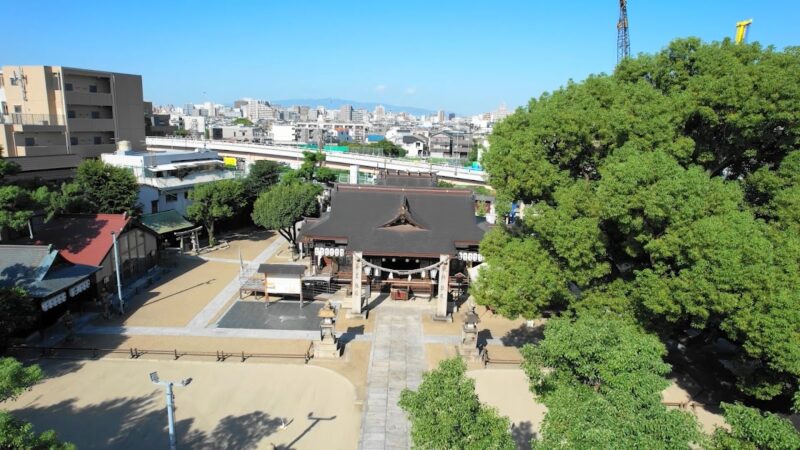
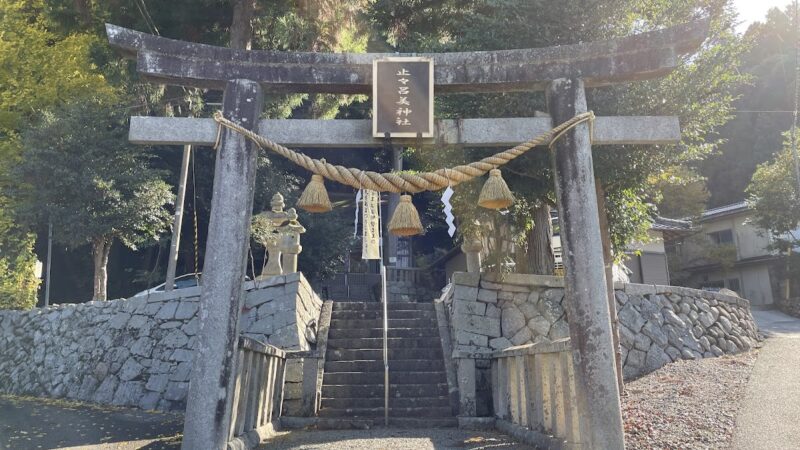
Despite being located in a residential area of an urban center, the grounds of Himekosho Shrine are enveloped in a tranquil atmosphere. While just a few minutes’ walk from Tsuruhashi Station, stepping through the torii gate gives you a sense of entering a different world.
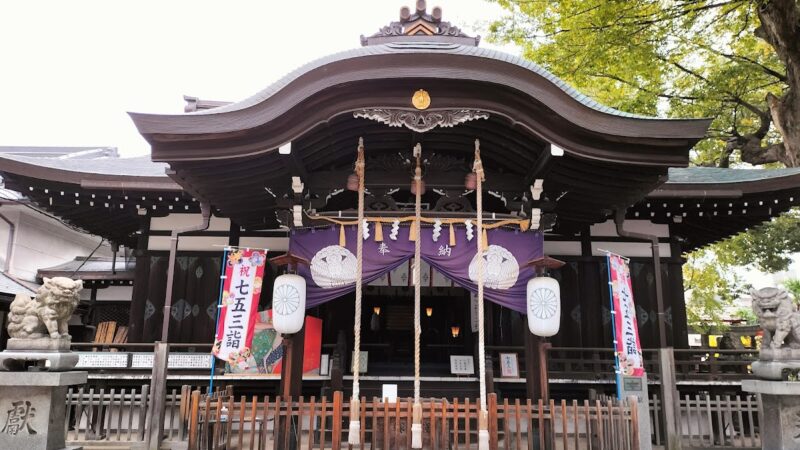
The grounds are not particularly large, but the meticulously maintained space is refreshing and warmly welcomes visitors. The shrine buildings were rebuilt after the war, maintaining the style of traditional shrine architecture while incorporating modern features.
Shrine Buildings and Structures
The main hall is built in the nagare-zukuri style and, along with the worship hall, is located in the center of the grounds. The current shrine buildings, constructed after the reconstruction following war damage, exhibit a simple yet dignified presence.
The shrine grounds are equipped with a purification fountain and a shrine office, ensuring a comfortable visit for worshippers. Trees are also planted, creating a small oasis in the city.
Stone Monuments and Memorials
Within the shrine grounds are stone monuments indicating its status as a Shikinaisha (a shrine listed in the Engishiki, an ancient Japanese legal text), and information boards detailing the shrine’s history. These play an important role in helping worshippers understand the shrine’s history.
Cultural Properties
Himekosho Shrine Documents (Osaka City Designated Cultural Property)
The “Himekosho Shrine Documents,” held by Himekosho Shrine, are designated as an Osaka City designated cultural property (ancient documents). This collection of 52 documents primarily consists of the shrine’s origins and secret texts from the late 18th century.
These historical materials are believed to have been compiled around 1788 (Tenmei 8), during the process of re-establishing Himekosho Shrine, a Shikinaisha whose whereabouts had been unknown, as it was identified as the Gozu Tenno Shrine in Higashi-Kobashi. These documents were compiled primarily by Jakumon Seikan during this process. These documents are highly valued from the perspectives of history and folklore, as they are invaluable materials illustrating the cultural activities of identifying Shikinaisha (shrines listed in the Engishiki) and reconstructing the history of shrines during the late Edo period. They contain a wide range of content, including the shrine’s origins, the procedures of Shinto rituals, and the lineage of Shinto priests, providing important clues to understanding the actual state of shrine management and faith at the time.
Historical Value
The Himekosho Shrine documents are not merely records of the shrine, but also historical materials reflecting the trends in national studies and Shinto research during the Edo period. At that time, the identification of Shikinaisha was carried out in various regions, and many origin stories and historical records were created in the process. The Himekosho Shrine documents are a representative example and are valuable materials that convey the state of shrine history research in the early modern period.
Shikinaisha Debate
Another Debate: Takatsu-gu Shrine Subsidiary, Himekosho Shrine
There are currently two debates regarding the location of “Himekosho Shrine” listed in the Engishiki Jinmyocho (Register of Shrines in the Engi Era). One is the Himekoso Shrine in Higashinari Ward, Osaka City, which is the subject of this article, and the other is the Himekoso Shrine, a subsidiary shrine of Takatsu-gu Shrine in Chuo Ward, Osaka City.
The Himekoso Shrine of Takatsu-gu Shrine also enshrines Shita-teruhime-no-Mikoto and claims to be the legitimate successor to the Shikinaisha (shrines listed in the Engishiki). Both shrines have some basis in fact, and a definitive conclusion has not yet been reached.
Background of the Debate Issue
The reason why the location of Shikinaisha became unknown is due to various historical factors, including wars and disasters in the medieval period, and the shrine consolidation policy of the Meiji era. Osaka, in particular, was a region that suffered repeated wars, forcing many shrines to relocate or be abolished.
From the late Edo period to the Meiji era, scholars of Japanese classics and Shinto priests actively worked to identify Shikinaisha, but when conclusive evidence was lost, multiple candidate locations came to be considered as debates.
Evidence for the Higashinari Ward Theory
The following points are cited as evidence that Himekosho Shrine in Higashinari Ward is a Shikinaisha (a shrine listed in the Engishiki):
- Geographical location: It matches the description in the Engishiki as being in Higashinari District, Settsu Province.
- Existence of an ancient belief as a Gozu Tenno shrine.
- Historical documents such as Himekosho Shrine documents.
- Continuity of local traditions.
However, these points are not conclusive, and academically, the general stance is that both theories are possible.
Goshuin (Shrine Seal) and Visiting Information
About Goshuin (Shrine Seals)
Himekosho Shrine offers goshuin. The goshuin bears the name of the shrine, “Himekosho Shrine,” and the words “Shikinaisha (a shrine listed in the Engishiki),” reflecting the shrine’s deep history.
Goshuin can be received at the shrine office, but since priests may not always be present, it is recommended to contact them in advance if you wish to be sure to receive one. If you bring your goshuincho (seal book), they will write it directly in ink. ### Etiquette for Visiting a Shrine
Please observe basic shrine etiquette:
- Bow before passing through the torii gate.
- Avoid walking in the center of the path (the center is the path of the gods).
- Purify your body and mind at the water basin.
- Bow twice, clap twice, and bow once before the main hall.
- Be quiet within the shrine grounds and be considerate of other visitors.
Annual Festivals and Events
The annual festival of Himekosho Shrine is held on October 16th. This is the most important festival of the year, and local people gather to pray for the prosperity of the shrine and the peace of the community.
In addition, various Shinto rituals are held throughout the year, including the New Year’s Day festival, the Setsubun festival, and the summer purification ceremony.
Access and Location Information
Basic Information
- Location: 3-8-14 Higashikobashi, Higashinari-ku, Osaka City, Osaka Prefecture
- Phone Number: Please check the latest information before visiting
- Shrine Rank: Shikinaisha (Myojin Taisha), Former Village Shrine
- Deities Enshrined: Shitateluhime-no-Mikoto and five other deities
Access by Train
Himekosho Shrine is easily accessible by public transportation:
From JR Loop Line/Osaka Metro Sennichimae Line “Tsuruhashi Station”
- Approximately 5 minutes on foot
- Tsuruhashi Station is a major station with multiple lines, making it easily accessible from various parts of Osaka City.
From Kintetsu Osaka Line “Tsuruhashi Station”
- Approximately 5 minutes on foot
- Also convenient for access from Nara area
From Osaka Metro Sennichimae Line/Imazatosuji Line “Imazato Station”
- Approximately 10 minutes on foot
From Tsuruhashi Station, exit the station and head northeast towards the shrine, which is nestled in a residential area. Using road signs or a map app will make it easier to find.
Access by Car and Parking
While it is possible to visit by car, dedicated parking is limited due to its urban location. There are coin-operated parking lots nearby, which you will need to use.
Access from the Hanshin Expressway is also possible, but the surrounding roads are narrow in some places due to being in a residential area. For first-time visitors, we recommend using public transportation.
Nearby Attractions
The area surrounding Himekosho Shrine is Tsuruhashi, a fascinating area where multiple cultures coexist:
- Tsuruhashi Koreatown: Known as one of Japan’s largest Koreatowns, it boasts numerous Korean restaurants and grocery stores.
- Ikuno Koreatown: Within walking distance of Tsuruhashi, offering an immersive Korean cultural experience.
- Miyukimori Tenjin Shrine: A nearby shrine, recommended for a combined visit.
The Charm and Power Spot Aspects of Himekosho Shrine
A Healing Space in the City
The greatest charm of Himekosho Shrine lies in its quiet and peaceful atmosphere, despite being located in the heart of the metropolis of Osaka. Situated in a residential area slightly removed from the bustling Tsuruhashi district, stepping through the torii gate reveals a world away from the hustle and bustle.
It is a space where people can escape the daily grind and find peace of mind during their visit, beloved not only by locals but also by visitors from afar.
Experiencing the Romance of History
Himekosho Shrine, with its long history of approximately 2000 years, embodies the continuous history of Japanese faith from ancient times to the present day. Ancient legends recorded in the *Nihon Shoki*, the visit of Empress Suiko, its status as a Shikinaisha (a shrine listed in the Engishiki), and its history of being preserved and passed down through generations despite the ravages of war—all of these are condensed within this small shrine.
Standing on the shrine grounds, visitors can feel the passage of time and the devotion of those who have continuously protected the shrine throughout it.
As a Guardian Deity of Women
The main deity, Shita-teruhime-no-Mikoto, is a goddess and has been worshipped as a guardian deity of women since ancient times. Historically, various wishes related to women’s life stages, such as matchmaking, family safety, fertility, and safe childbirth, have been associated with this shrine.
Even today, many women visit the shrine at important turning points in their lives, and a quiet yet fervent faith continues.
A Faith Rooted in the Community
Himekosho Shrine is a central hub for the local community in Higashinari Ward. Annual events, including the festival, provide opportunities for local residents to gather and deepen their bonds.
Even in today’s increasingly urbanized world, the continuation of such community-based faith demonstrates the importance of the social function of shrines.
Points to Note When Visiting
Visiting Hours
Please visit the shrine grounds during daylight hours. The shrine office’s operating hours may be limited, so it is recommended to check in advance if you wish to obtain a Goshuin (shrine stamp) or other items.
Photography
Photography is generally permitted on the shrine grounds, but please refrain from taking pictures in sacred areas such as inside the main hall. Also, please be considerate of other visitors and take pictures quietly.
Dress Code
There are no specific dress code regulations, but please be mindful that this is a sacred place and dress cleanly and appropriately.
Summary: The Value of Himekosho Shrine
Himekosho Shrine is a rare shrine with a long and rich history of approximately 2000 years, despite being located in the urban area of Higashinari Ward, Osaka City. Its status as a Shikinaisha (a shrine listed in the Engishiki, an ancient Japanese legal code), the ancient legends recorded in the Nihon Shoki (Chronicles of Japan), the visit of Empress Suiko, and its history of being preserved and passed down through generations despite the ravages of war—all of these speak to the immeasurable value of this shrine.
The main deity, Shitateluhime-no-Mikoto, is a goddess appearing in the Kojiki mythology, and her story still resonates with many people today. Despite being amidst the hustle and bustle of the city, the quietly standing shrine buildings offer visitors a sense of peace and a profound sense of history.
Its convenient location in Tsuruhashi is another attractive feature, making it easily accessible for worship. When visiting Osaka, why not take a visit to this historic shrine and reflect on the passage of time and the history of people’s faith?
Himekosho Shrine is not a large shrine. However, within its small grounds, Japan’s history, culture, and people’s prayers are condensed. That is the true value of this shrine, and the reason why it continues to attract so many people.