Hiyoshi Hachiman Shrine (Akita Prefecture) Complete Guide | The History, Goshuin (Shrine Seal), and Charm of the Three-Storied Pagoda of Yabashi’s Sanno-san
Hiyoshi Hachiman Shrine, located in Yabashi Honmachi, Akita City, Akita Prefecture, is a venerable shrine affectionately known locally as “Yabashi’s Sanno-san.” Despite its central location in Akita City, the shrine grounds are lush with greenery and feature the only wooden three-storied pagoda in Akita Prefecture, creating a solemn atmosphere. This article comprehensively introduces information you should know before visiting Hiyoshi Hachiman Shrine, including its history, highlights, access information, and goshuin (shrine seal).
What is Hiyoshi Hachiman Shrine? | The Guardian Shrine of the Outer Town, “Yabashi’s Sanno-san”
Hiyoshi Hachiman Shrine was revered as the guardian deity of merchants and craftsmen living in the outer town (tomachi) of Kubota Castle town during the Edo period. The outer town refers to the area where townspeople lived, as opposed to the inner town where samurai resided. Even today, it is affectionately known as “Yabashi no Sanno-san” by local residents and, despite being located in the city center north of Akita City’s Yabashi Sports Park, maintains a sacred space enveloped in tranquility.
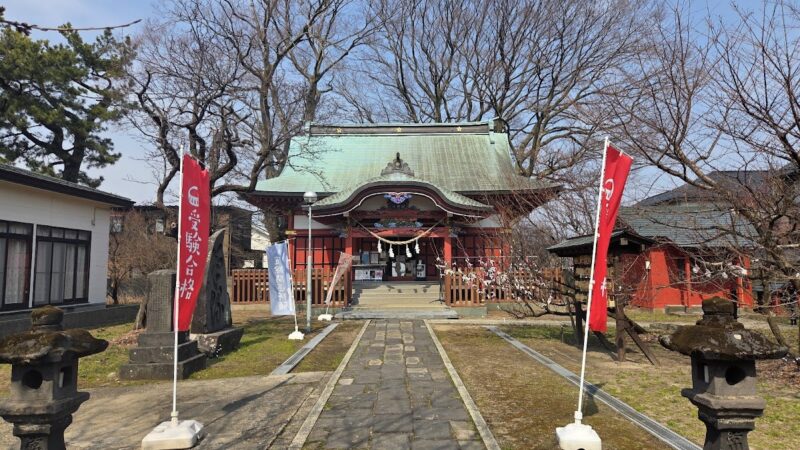
Within the shrine grounds, many structures, including a beautiful vermilion-lacquered three-story pagoda, the main hall, worship hall, dance hall, and guardian gate, are designated as Akita Prefecture Tangible Cultural Properties, making it a shrine of high historical and cultural value.
History and Origins of Hiyoshi Hachiman Shrine
Origins of its Founding and Ancient Legends
Several legends remain regarding the founding of Hiyoshi Hachiman Shrine. According to ancient tradition, in the late Heian period, Abe no Muneto, son of Abe no Yorito (who was defeated by Minamoto no Yoshiie in the Former Nine Years’ War), became a Shugendo practitioner at Mount Hiei. In his later years, he invited the deities of Hiyoshiyama (Hiyoshi Taisha) and Iwashimizu Hachimangu from Omi Province and established the Shugendo temple “Hiyoshiyama Enmeiji Muryo-ji” in Sasaoka, Sotoasakawa.
Transition from Medieval to Early Modern Period
In 1322 (Genkyo 2), the lord of Shinjo Castle constructed Hiyoshiyama Hachimangu Shrine at the site. Later, in 1395 (Oei 2), the novice monk Yasumune moved the shrine to the site of the present-day Kamishinjo Junior High School. In 1589 (Tensho 17), when Ando Sanesue of Hiyama defeated Ando Michisue of Tsuchizaki Minato, the shrine was moved to Iijima as a guardian deity.
In 1602 (Keicho 7), Satake Yoshinobu, who entered Akita, also deeply revered Hiyoshi Hachiman Shrine, and in 1615 (Genna 1), the shrine was relocated to Yatsuyanagi Kitsunemori. A new shrine building was constructed in 1625 (Kanei 2), but in the spring of 1642 (Kanei 19), a flood of the Omono River caused a major disaster, washing away most of the shrine buildings.
Relocation to the Current Location
After the Omono River flood, the shrine was rebuilt in the same year at its current location in Yatsuhashi Honmachi, and the relocation was completed in 1662 (Kanbun 2). Since then, it has continued to attract the faith of merchants and craftsmen as the guardian shrine of the outer town. Throughout the Edo period, it received protection from the Kubota Domain, and even after the Meiji era, it has continued to be a spiritual pillar of the region to this day.
Deities and Divine Virtues
The following deities are enshrined at Hiyoshi Hachiman Shrine: ### Main Deities
- Oyamakui-no-kami: The deity enshrined at Hiyoshi Taisha Shrine, known as the god of mountains and the earth, and the guardian deity of agriculture and industry.
- Honda-wake-no-mikoto: A deified form of Emperor Ojin, the Hachiman deity, the god of military success, victory in competitions, and protection against evil.
Divine Virtues
Hiyoshi Hachiman Shrine is believed to offer a wide range of divine virtues, including business prosperity, family safety, protection from evil, traffic safety, and academic success. Due to its history of being revered as the guardian deity of merchants and craftsmen in the outer town, many visitors come to pray for business prosperity and success.
Highlights of the Shrine Grounds
Akita Prefecture’s Only Wooden Three-Storied Pagoda
The biggest highlight of Hiyoshi Hachiman Shrine is the vermilion-painted three-storied pagoda that stands tall within the shrine grounds. This three-story pagoda is the only wooden multi-story building in Akita Prefecture and is designated as an Akita Prefecture Tangible Cultural Property.
Its elegant form, approximately 18 meters tall, harmonizes beautifully with the greenery of the temple grounds, captivating visitors. The vibrant vermilion color and exquisite wooden construction techniques make it a valuable cultural asset that conveys the skills of Edo-period craftsmen. The three-story pagoda also holds significant value as a building that shows the remnants of the syncretism of Shinto and Buddhism.
Main Hall, Worship Hall, and Dance Hall
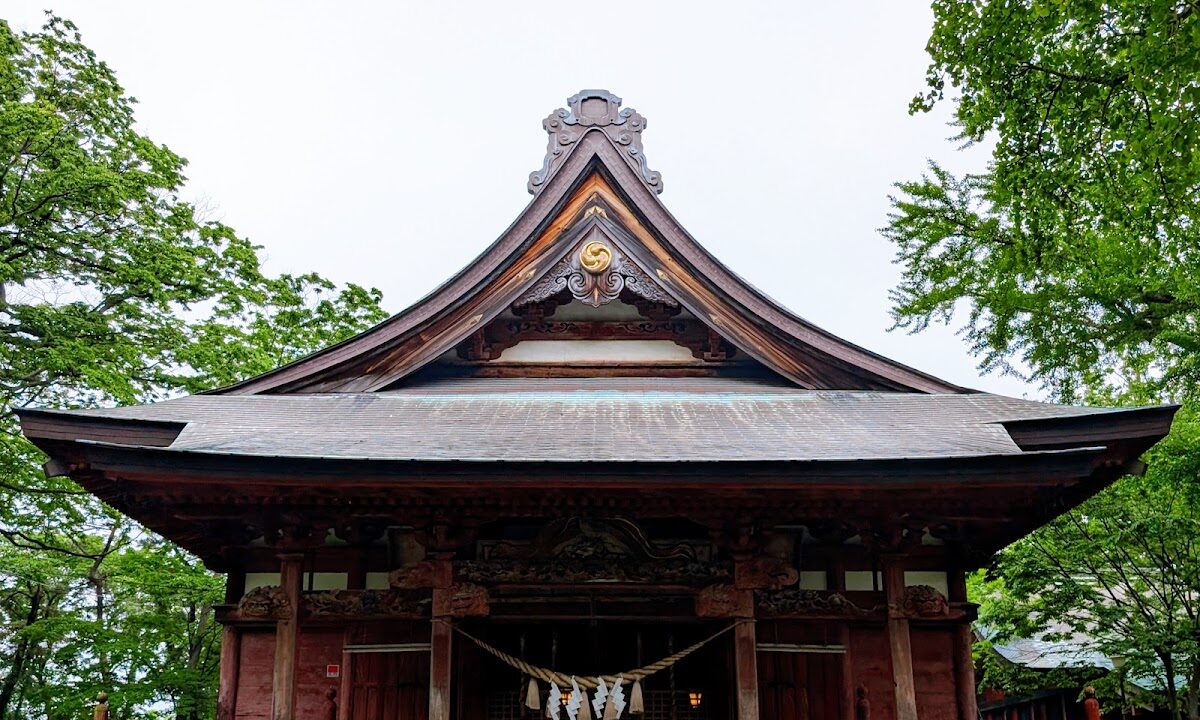
The three buildings—the main hall, worship hall, and dance hall—are also designated as Akita Prefecture Tangible Cultural Properties. The main hall maintains the traditional style of shrine architecture and features intricate carvings. The worship hall exudes a solemn atmosphere as a place where worshippers offer prayers. In the dance hall, kagura (sacred dance) and other performances are offered during Shinto rituals, serving as a place for the transmission of traditional culture.
Zuishinmon Gate and Sacred Bridge
The Zuishinmon Gate, which serves as the entrance to the shrine grounds, is a magnificent gate flanked by guardian deities (gate gods), guiding worshippers into the sacred realm. Within the grounds are also a sacred bridge and a floating bridge, both designated as cultural properties. Twelve structures within the grounds, including the bronze torii gate, are designated as Akita Prefecture Tangible Cultural Properties, making the entire grounds a treasure trove of historical buildings.
The Beauty of Nature in Every Season
The grounds of Hiyoshi Hachiman Shrine are one of Akita City’s leading flower viewing spots, with many flowers such as cherry blossoms, plum blossoms, and wisteria blooming in every season. The cherry blossoms in spring are particularly magnificent, creating a breathtaking spectacle as the entire grounds are bathed in a soft pink hue. The fragrance of plum blossoms, the purple clusters of wisteria, the refreshing greenery of spring, and the beauty of autumn leaves all offer different expressions in each season.
The shrine grounds, lush with trees, maintain a rich natural environment despite being located in the city, providing a peaceful space for worship. The sounds of birdsong and rustling trees create a healing space that allows you to forget the hustle and bustle of the city.
Goshuin Information
Goshuin (shrine stamps) are available at Hiyoshi Hachiman Shrine. They are available at the shrine office, and many visitors receive them as a memento of their visit.
Features of the Goshuin
The goshuin features the calligraphy of “Hiyoshi Hachiman Shrine” and the shrine’s seal. It is characterized by its simple yet powerful brushstrokes and is cherished as proof of worship. If you bring your goshuincho (stamp book), it will be written directly on it (though in some cases, a pre-written stamp may be provided).
Reception Hours and Offering Fee
Goshuin reception hours are the same as the shrine office’s opening hours. Generally, the hours are from 9:00 AM to around 4:00 PM, but these may vary depending on religious ceremonies and events. Therefore, if you want to be sure to receive a Goshuin (temple/shrine stamp), it is recommended to inquire in advance. The offering fee is similar to that of most shrines, around 300 to 500 yen.
Annual Events and Festivals
Hiyoshi Hachiman Shrine holds various religious ceremonies and festivals throughout the year.
Main Annual Events
- New Year’s Day Festival (January 1st): A Shinto ritual celebrating the New Year
- Setsubun Festival (around February 3rd): A ritual to ward off evil spirits by scattering beans
- Spring Grand Festival (April): The grand spring festival
- Summer Purification Ceremony (June 30th): A ceremony to cleanse oneself of sins and impurities accumulated over the past six months
- Autumn Grand Festival (September): The most important annual event
- Shichi-Go-San Festival (November): A celebration of children’s growth
- Year-End Purification Ceremony (December 31st): A ceremony to cleanse oneself of sins and impurities accumulated over the past year
The Autumn Grand Festival, in particular, is a grand event, attracting many worshippers. Traditional festival events such as the portable shrine procession and the dedication of Kagura (sacred dance) are held, making it an important opportunity to pass on the region’s culture to the next generation.
Basic Information and Access
Basic Information
- Official Name: Hiyoshi Hachiman Shrine
- Address: 1-4-1 Yabase Honmachi, Akita City, Akita Prefecture 010-0973
- Phone Number: 018-862-5967
- Visiting Hours: Grounds are freely accessible (Shrine office is generally open from 9:00 to 16:00)
- Admission Fee: Free
- Parking: Available (Free)
- Official Website: https://www.hiehatiman-jinjya.info/
Access Method
Access by Public Transportation
- From JR Akita Station: Approximately 25 minutes on foot
- By Bus: Get off at “Yabase Sports Park” bus stop (Akita Chuo Kotsu Bus), then walk approximately 3 minutes.
If walking from Akita Station, you will pass through the center of Akita City towards the Yabase area. Along the way, you will see the Akita Prefectural Government and Akita City Hall, allowing you to enjoy the atmosphere of the city while visiting the shrine.
Access by Car
- From Akita Chuo IC on the Akita Expressway: Approximately 10 minutes
- From Akita Airport: Approximately 40 minutes
The shrine is located north of Yabase Sports Park, so using the park as a landmark will make it easy to find. If using a car navigation system, searching by address or phone number will provide accurate directions.
Parking Information
There is a free parking lot for visitors on the shrine grounds. There are spaces for several regular cars, but congestion is expected during events such as the annual festival, so please consider using public transportation.
Nearby Tourist Attractions
When visiting Hiyoshi Hachiman Shrine, we recommend also visiting nearby tourist attractions.
Yabase Sports Park
Located just south of the shrine, this comprehensive sports park features sports facilities such as a baseball field, athletics track, and tennis courts. The vast grounds also include walking paths, making it a popular recreational spot for citizens.
Akita Prefectural Museum of Art
This museum, within walking distance of Akita Station, primarily exhibits works by Tsuguharu Fujita. The building itself, designed by architect Tadao Ando, is also a highlight.
Senshu Park (Kubota Castle Ruins)
This park, developed on the site of the castle of the Satake clan, the lords of the Akita domain, is known for its cherry blossoms. A corner turret has been restored on the site of the main keep, offering panoramic views of Akita city.
Akita Citizens’ Market
Located near Akita Station, this market is a local hub where you can enjoy fresh seafood, local produce, and regional cuisine. It’s also a popular breakfast spot.
Manners and Points for Visiting a Shrine
Basic Worship Etiquette
- Bow before passing through the torii gate: As a sign of respect before entering the sacred area.
- Purify yourself at the water basin: Purify your left hand, then your right hand, then your mouth, and finally your left hand.
- Avoid the center of the path: The center is considered the path of the gods.
- Worship at the main hall: Two bows, two claps, one bow (two bows, two claps, one bow).
Photography
Photography is generally permitted within the shrine grounds, but may be restricted inside the main hall or during religious ceremonies. The three-story pagoda is a particularly popular photo spot, but please be considerate of other visitors.
Clothing
There are no strict dress code regulations, but it is desirable to wear clothing appropriate for a sacred place. For formal worship or prayers, it is recommended to wear appropriate attire.
Photography is generally permitted within the shrine grounds, but may be restricted inside the main hall or during religious ceremonies. ## Cultural Value of Hiyoshi Hachiman Shrine
Hiyoshi Hachiman Shrine holds a significant position in the cultural property preservation of Akita Prefecture. A total of 12 structures, including the main hall, worship hall, dance hall, and guardian gate (four buildings), the three-story pagoda, sacred bridge, floating bridge, and bronze torii gate, are designated as Akita Prefecture Tangible Cultural Properties. These are valuable cultural heritage sites that convey architectural techniques from the Edo to Meiji periods.
The three-story pagoda, in particular, is extremely important from an architectural history perspective as the only wooden multi-story building in Akita Prefecture. It is also highly valued from a religious history perspective as a structure that strongly retains the remnants of the Shinto-Buddhist syncretism era.
Summary | The Charm of Hiyoshi Hachiman Shrine
Located in the heart of Akita City, Hiyoshi Hachiman Shrine is a special space where rich nature and historical buildings harmonize. Known as “Yabashi no Sanno-san,” it has continued to attract deeply rooted faith in the community and has a history of over 400 years as the guardian deity of merchants and craftsmen in the outer district.
Hiyoshi Hachiman Shrine, home to Akita Prefecture’s only wooden three-story pagoda and numerous other cultural treasures, boasts a tranquil atmosphere with flowers blooming in every season, offering visitors peace and solace. When visiting Akita City, be sure to stop by Hiyoshi Hachiman Shrine and experience its history and charm.
Receiving a Goshuin (shrine stamp), being captivated by the beauty of the three-story pagoda, and finding peace in the natural surroundings—a visit to Hiyoshi Hachiman Shrine will undoubtedly become an unforgettable memory of your Akita trip. Its convenient access and numerous nearby attractions make it an ideal base for exploring Akita.
Why not spend some precious time quietly offering prayers at this historic shrine and experiencing Akita’s culture and traditions?