Complete Guide to Iidaka Kannon (Ena City, Gifu Prefecture) | History, Benefits, and Access Information for One of Japan’s Three Great Kannon Temples
Iidaka Kannon, located in Babayamada, Yamaoka-cho, Ena City, Gifu Prefecture, is a historic temple counted as one of Japan’s three great Kannon temples. Its official name is “Iidaka-san Mansho-ji,” and it is widely revered as a Kannon for warding off evil, particularly in the Tono region. This article comprehensively introduces information useful for visiting Iidaka Kannon, including its history, highlights, annual events, and access methods.
What is Iidaka Kannon (Mansho-ji)?
Iidaka Kannon is a temple belonging to the Myoshin-ji branch of the Rinzai school of Zen Buddhism. Its mountain name is Iidaka-san, and its temple name is Mansho-ji. Affectionately known as “Iidaka Kannon-san,” it is a deeply rooted place of worship in the Tono region, so much so that it’s considered a place for New Year’s visits.
Location and Basic Information
Address: 175 Babayamada, Yamaoka-cho, Ena City, Gifu Prefecture 509-7602
Phone Number: 0573-56-2810
FAX: 0573-56-3991
Sect: Rinzai Zen Myoshinji School
Principal Image: Thousand-Armed Kannon Bodhisattva (Hidden Buddha)
Pilgrimage Site: Tokai Hakuju Thirty-Three Kannon Pilgrimage Site, No. 25
History and Origin of Iitaka Kannon
Founding and Founder
According to temple tradition, the founding of Iitaka-san Manshoji Temple dates back to the early Heian period, approximately 1,200 years ago. It is said to have been founded by Jikaku Daishi Ennin, the third head priest of Enryaku-ji Temple on Mount Hiei.
Originally belonging to the Tendai sect, it was called “Manshoji Temple.” Jikaku Daishi Ennin was a highly respected monk who served as the third head of the Tendai sect at Mount Hiei and is also known for founding numerous temples, primarily in the Tohoku region.
Changes in Sectarianism
During the Edo period, Manshoji Temple changed its sect from Tendai to Rinzai. While the detailed circumstances of this period are unclear, it has managed to preserve its valuable Buddhist statues and temple treasures, which survived the ravages of war during the Sengoku period, leading to its current form.
One of Japan’s Three Great Kannon Temples
Iitaka Kannon is counted as one of Japan’s three great Kannon temples. As a Kannon believed to ward off evil and misfortune, it is a sacred site visited by many worshippers not only from Ena City, Gifu Prefecture, but also from Aichi Prefecture and other prefectures.
Principal Image: Thousand-Armed Kannon Bodhisattva
The principal image of Iitaka Kannon is the Thousand-Armed Kannon Bodhisattva. This statue is said to have been carved by Jikaku Daishi Ennin himself and is carefully enshrined as a hidden Buddha.
As its name suggests, the Thousand-Armed Kannon is said to have a thousand arms and is worshipped as a compassionate Buddha who extends a helping hand in all directions. The Thousand-Armed Kannon statue at Iitaka Kannon is a valuable cultural asset that survived war, and has continued to attract the faith of people throughout its long history.
Benefits of Iitaka Kannon
Iitaka Kannon is particularly known for the following benefits:
Protection from Misfortune
The most famous benefit of Iitaka Kannon is “protection from misfortune.” People facing their unlucky years come from all over the country to pray for protection from misfortune, and it enjoys immense faith as a Kannon for warding off evil. Many people visit not only those in their unlucky years, but also those at significant life milestones or times of anxiety.
Protection from Misfortune
Alongside protection from misfortune, it is believed that one can also receive protection from misfortune. Kannon is worshipped as a deity who protects against various calamities, including traffic safety, recovery from illness, and accident prevention.
Family Safety
Prayers for the health and safety of all family members are frequently offered. Especially during Setsubun (bean-throwing festival) and New Year’s visits, many families visit to pray for family safety.
Other Benefits
- Business Prosperity
- Academic Success
- Recovery from Illness
- Traffic Safety
- Fulfillment of Wishes
Annual Events and Festivals
Iitaka Kannon holds various events throughout the year.
New Year’s Visit
In the Tono region, Iitaka Kannon Temple is so popular for New Year’s visits that it’s said, “When you think of New Year’s visits, you think of Iitaka Kannon.” Many worshippers visit to pray for protection from evil, family safety, and a safe year, filling the temple grounds with the vibrant energy of the New Year.
Typical Attendance: Thousands of worshippers visit. It gets especially crowded from New Year’s Day to the third day of the year, so it’s recommended to allow ample time for your visit.
Setsubun Festival
The Setsubun Festival, held annually around Setsubun in February, is one of Iitaka Kannon Temple’s main events.
Date: February 2nd or 3rd (may vary each year)
Contents:
- Prayers for protection from evil and family safety
- Bean-throwing with lucky draws
- Mochi-throwing show
- Free serving of amazake and shiruko (subject to change)
Those wishing to receive prayers should contact the temple in advance. The Setsubun Festival is a well-established local tradition and attracts many families.
Other Annual Events
At Iitaka Kannon, various Buddhist ceremonies and events are held throughout the year in accordance with Buddhist traditions. For detailed schedules, we recommend contacting the temple directly.
Highlights of the Temple Grounds
Main Hall
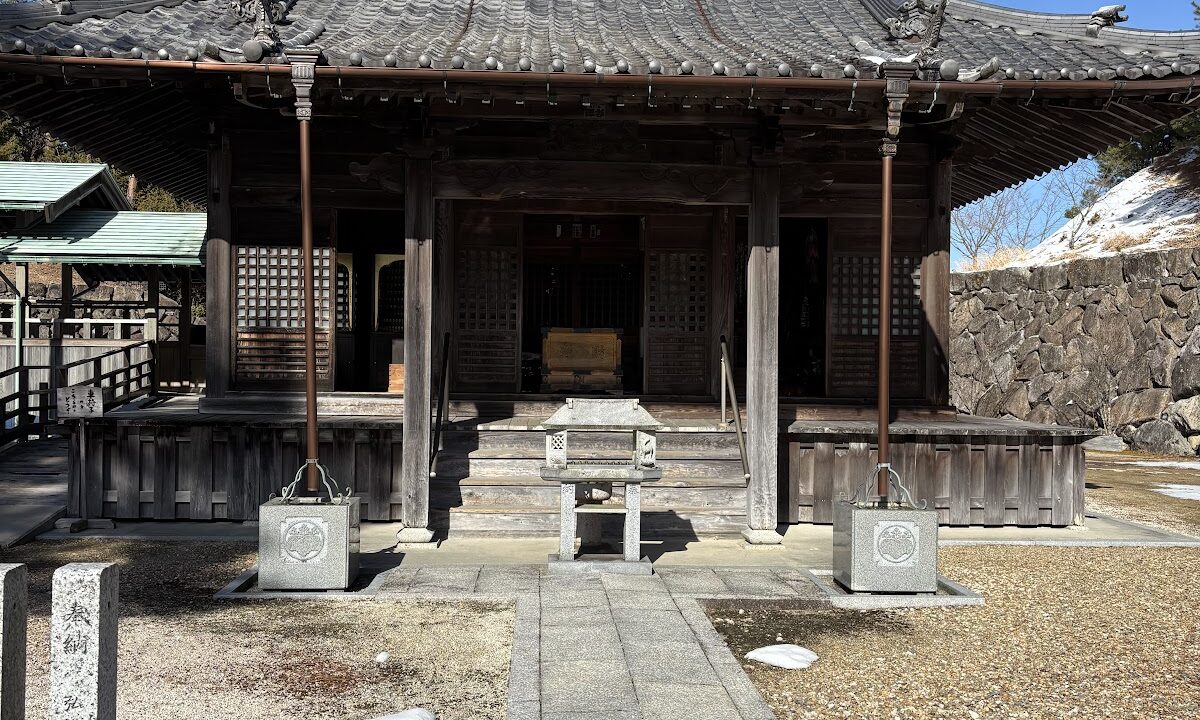
The main hall, which houses the hidden Buddha, the Thousand-Armed Kannon Bodhisattva, is the central building for worship. You can quietly offer your prayers in a solemn atmosphere.
Cherry Blossoms at the Horse Riding Ground
Cherry trees are planted where the horse riding ground of Manshoji Temple once stood, and they are in full bloom from early to mid-April each year. During spring visits, you can enjoy the beautiful cherry blossoms, attracting many worshippers and cherry blossom viewers.
Tranquil Mountain Environment
Iitaka Kannon is located in the mountains of Yamaoka Town, characterized by its quiet and peaceful environment. It is a space where you can escape the hustle and bustle of the city and worship in a calm and peaceful atmosphere. ## About Goshuin (Temple Seals)
Goshuin (temple seals) are available at Iitaka Kannon Temple. As the 25th temple of the Tokai Hakuju Thirty-Three Kannon Pilgrimage, a special goshuin is also available, making it popular among pilgrims.
When receiving a goshuin, please bring your goshuincho (stamp book) and speak to someone at the main hall or the goshuin office after your visit. The goshuin is proof of your visit and a precious memento. Please handle it with care.
Access
Access to Iitaka Kannon Temple is most convenient by car.
Access by Car
From Ena IC on the Chuo Expressway
Approximately 25 minutes by car from Ena IC
Take National Routes 19 and 257 towards Yamaoka-cho
From Mizunami IC on the Chuo Expressway
Approximately 30 minutes by car from Mizunami IC
Take National Route 19 and a prefectural road towards Yamaoka-cho
Parking: There is a parking lot for visitors on the temple grounds. During events such as New Year’s visits and Setsubun festivals, crowds are expected, so please allow ample time for your visit.
Access by Public Transportation
Nearest Station: Hanashiro Onsen Station, Akechi Railway
While it is possible to walk from Hanashiro Onsen Station, the distance is considerable, so using a taxi or car is recommended.
If using public transportation, we recommend checking the timetable and travel time in advance.
Address and Car Navigation Settings
Address: 175 Babayamada, Yamaoka-cho, Ena City, Gifu Prefecture 509-7602
Please enter the above address or phone number (0573-56-2810) into your car navigation system.
Etiquette and Manners for Visiting a Shrine
Basic Etiquette for Visiting a Shrine
- Bow at the Temple Gate: Before entering the temple grounds, bow at the temple gate.
- Purify yourself at the water basin: If there is a water basin, purify your hands and mouth.
- Worship at the main hall: Quietly clasp your hands together in prayer in front of the main hall and offer your prayers.
- Offering a donation: Offer your donation quietly.
- Bow upon leaving: When leaving the temple grounds, turn around and bow.
Attire for Visiting
There are no specific dress code requirements, but as it is a sacred place, clean and subdued attire is desirable. Especially if you are receiving a prayer, somewhat formal attire is preferable.
Photography
Photography of the temple grounds is generally permitted, but photography inside the main hall or of Buddha statues may be prohibited. Please check before taking photos, or refrain from taking photos if unsure.
Nearby Tourist Attractions
Tourist Attractions in Ena City
When visiting Iitaka Kannon, why not also visit other tourist attractions in Ena City?
Iwamura Castle Ruins
One of Japan’s three great mountain castles, this castle ruin boasts beautiful stone walls. Recommended for history buffs.
Iwamura Castle Town
A castle town that retains the atmosphere of the Edo period, where you can stroll through the old streets.
Ena Gorge
A scenic spot where you can enjoy the beauty of the Kiso River gorge, with sightseeing boats also operating.
Yamaoka Agar-Agar
Yamaoka town is famous as a production area for agar-agar. You can also enjoy local agar-agar dishes.
Hot Spring Facilities
Along the Akechi Railway line, there are hot spring facilities such as “Hanashiro Onsen,” making it a great place to relax in a hot spring after visiting the temple.
The Charm of Iitaka Kannon
Experience 1,200 Years of History
Iitaka Kannon has a long history dating back to the Heian period. Founded by the renowned monk Jikaku Daishi Ennin, it possesses extremely high historical value. Standing on the temple grounds, you can feel the weight of the prayers offered by countless people over many years.
A Faith Rooted in the Community
In the Tono region, Iitaka Kannon is so deeply rooted in the lives of the local people that it’s said, “When you think of New Year’s visits, you think of Iitaka Kannon.” The faith in it as a Kannon that wards off evil remains unchanged, and it remains a place many people visit at important turning points in their lives.
A Peaceful Environment for Healing
Located in a quiet mountain setting, Iitaka Kannon is the perfect place to escape the hustle and bustle of the city and find peace of mind. You can spend time peacefully in the temple grounds surrounded by nature.
Beauty in Every Season
Iitaka Kannon displays different expressions in each of the four seasons: cherry blossoms in spring, lush greenery in summer, vibrant autumn leaves, and the tranquility of winter. There is a joy to be found in every season.
Points to Note When Visiting
Crowds During Events
The temple gets crowded with many visitors during New Year’s visits (January 1st to 3rd) and Setsubun festivals. The parking lot may be full, so we recommend visiting with plenty of time to spare.
Snow and Icy Roads in Winter
Located in a mountainous area of Ena City, Gifu Prefecture, there is a possibility of snow and icy roads in winter. When visiting in winter, please ensure you have snow tires and take adequate precautions against the cold.
Opening Hours and Visiting Hours
Regular visits are recommended during daylight hours. For prayers or consultations, please contact us by phone in advance for smoother service.
About Unlucky Years
Iitaka Kannon is known as a Kannon for warding off evil, so many people in their unlucky years visit. Here’s a brief explanation of unlucky years.
What are Unlucky Years?
Unlucky years are ages in life when misfortune and disaster are considered more likely to occur. It is a long-standing Japanese custom to receive prayers for warding off evil at shrines and temples during these years.
Main Years of Misfortune (by traditional Japanese age counting system)
Years of Misfortune for Men
- 25 years old (Pre-misfortune: 24 years old, Post-misfortune: 26 years old)
- 42 years old (Pre-misfortune: 41 years old, Post-misfortune: 43 years old) *Major Misfortune*
- 61 years old (Pre-misfortune: 60 years old, Post-misfortune: 62 years old)
Years of Misfortune for Women
- 19 years old (Pre-misfortune: 18 years old, Post-misfortune: 20 years old)
- 33 years old (Pre-misfortune: 32 years old, Post-misfortune: 34 years old) *Major Misfortune*
- 37 years old (Pre-misfortune: 36 years old, Post-misfortune: 38 years old)
- 61 years old (Pre-misfortune: 60 years old, Post-misfortune: 62 years old)
If you are in a year of misfortune, we recommend receiving a prayer for protection against misfortune at Iitaka Kannon Temple.
About Prayers and Supplications
Iitaka Kannon Temple accepts various prayers and supplications.
Types of Prayers
- Protection from Evil Spirits
- Family Safety
- Business Prosperity
- Traffic Safety
- Recovery from Illness
- Academic Success
- Fulfillment of Wishes
- Other Various Prayers
How to Apply for Prayers
If you wish to have prayers performed, we recommend contacting us by phone in advance. While same-day registration may be possible, advance reservations are recommended during busy periods or events.
Phone Number: 0573-56-2810
Inquiries
For inquiries regarding Iitaka Kannon (Iitaka-san Manshoji Temple), please contact the following:
Iidaka-san Manshoji Temple (Iidaka Kannon)
Address: 175 Babayamada, Yamaoka-cho, Ena City, Gifu Prefecture 509-7602
Phone Number: 0573-56-2810
FAX: 0573-56-3991
Official Website: https://www.iidakakannon.com/
Examples of Inquiries
- Prayer Reservations/Consultations
- Confirmation of Annual Event Schedule
- Detailed Access Information
- Parking Information
- Information on Goshuin (Temple Seals)
- Other Inquiries
When contacting us by phone, daytime hours (9:00 AM to 5:00 PM) are the most convenient times to reach us.
Summary
Iitaka Kannon (Iitaka-san Manshoji Temple), located in Ena City, Gifu Prefecture, is one of Japan’s three great Kannon temples with a 1,200-year history. It is widely revered as a Kannon that wards off evil and misfortune. This ancient temple, said to have been founded by Jikaku Daishi Ennin, is so familiar to the people of the Tono region that it’s often said, “When we think of New Year’s visits, we think of Iitaka Kannon.”
With the Thousand-Armed Kannon Bodhisattva as its principal deity, it offers blessings for protection against evil, family safety, and business prosperity. Many worshippers visit during annual events such as New Year’s visits and Setsubun festivals, which have become established local traditions.
It is easily accessible, about 25-30 minutes by car from the Ena IC or Mizunami IC on the Chuo Expressway, allowing for a peaceful visit in a tranquil mountain setting. In spring, the cherry blossoms bloom beautifully, allowing visitors to enjoy the changing seasons.
If you are facing a year of misfortune, a milestone in your life, seeking peace of mind, or simply visiting Ena City in Gifu Prefecture, please consider visiting Iitaka Kannon. The Kannon statue, which has received the prayers of countless people throughout its long history, will surely hear your wishes as well.
When visiting, please refer to the access information and etiquette guidelines provided in this article, and enjoy a peaceful and serene experience.