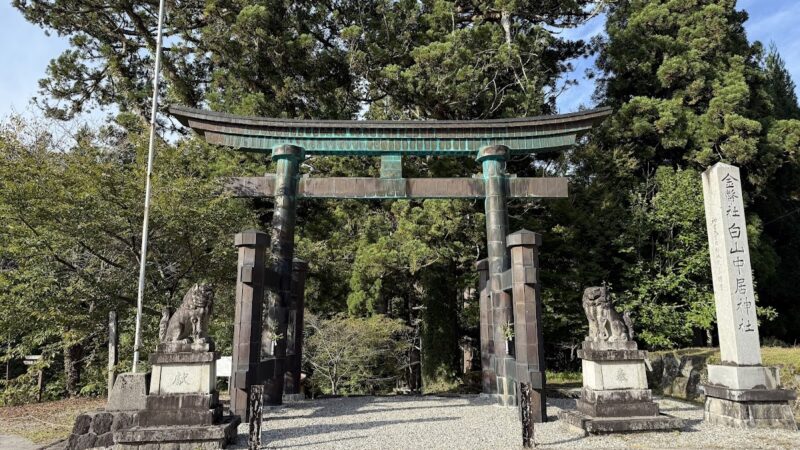
Complete Guide to Seikyu-ji Temple (Ena City, Gifu Prefecture) | The Charm of a Soto Zen Temple and the Garyuume Plum Tree
About Seikyu-ji Temple
Seikyu-ji Temple is a Soto Zen temple located in Babayamada, Yamaoka-cho, Ena City, Gifu Prefecture. Its mountain name is Toganzan, and its principal image is Nyoirin Kannon. It is a beloved temple in the region, preserving the history and culture of Ena City.
Located at 968 Babayamada, Yamaoka-cho, Ena City, Gifu Prefecture, it is known as a venerable temple nestled in the quiet mountains of Yamaoka-cho. While upholding the teachings of the Soto Zen sect, it has played a vital role as a center of faith in the region.
Within the temple grounds is the Garyuume plum tree, a designated natural monument of Ena City, attracting many worshippers and tourists in the spring. While functioning as a training ground for the Soto Zen sect, it is also a beloved spiritual center for local residents. ## History
The history of Seikyu-ji Temple’s founding and development is an important element in illustrating the development of Buddhist culture in this region. Its establishment as a Soto Zen temple required the efforts of many high-ranking priests and the support of the local community.
From its founding to the present day, the temple has undergone numerous changes, yet has consistently upheld the traditions of the Soto Zen sect. Particularly during the Sengoku and Edo periods, it flourished under the patronage of influential local figures, establishing itself as a main temple with many branch temples.
Despite the impact of the anti-Buddhist movement after the Meiji Restoration, it survived thanks to the deep faith of the local residents, and continues to preserve its Buddhist teachings to this day. Even in modern times, it has played an important role as a center of the region’s spiritual culture.
First Abbot: Taigan Unjo
The first abbot of Seikyu-ji Temple, Taigan Unjo, was a high-ranking priest who laid the foundation for the temple. He deeply understood the teachings of the Soto Zen sect and founded the temple in this area. Taigan Unsho was known for his rigorous training and compassionate teachings, and he nurtured many disciples. His teachings have been passed down to later abbots and form the spiritual foundation of Seikyu-ji Temple. His achievements as the temple’s founder still hold a special place in the temple’s history.
Second Abbot: Sekishitsu Zenkyu (Zenkyu)
The second abbot, Sekishitsu Zenkyu (also known as Zenkyu), was a renowned monk who inherited and developed the teachings of the temple’s founder. During Sekishitsu Zenkyu’s time, the temple’s foundation was further strengthened, and its influence in the region expanded.
Zenkyu possessed profound learning and guided many monks. Through his educational activities, Seikyu-ji Temple’s reputation spread to the surrounding area, attracting many followers. His achievements as the second abbot marked a crucial turning point in the temple’s development.
Third Abbot: Ryuzan Choun
The third abbot, Ryuzan Choun, is known as a high-ranking monk who deepened the teachings of Seikyu-ji Temple. During his time, the temple’s religious activities were further enhanced, and its function as a training ground was strengthened.
Choun emphasized the practice of Zen and nurtured many excellent monks through rigorous training. His leadership helped Seikyu-ji Temple establish itself as an important center of the Soto Zen sect.
Fourth Abbot: Hakuhō Rinta
The fourth abbot, Hakuhō Rinta, was abbot who reorganized the temple’s structure and strengthened its relationships with branch temples. During Hakuhō Rinta’s time, the role of Seikyu-ji Temple as the head temple was clarified, and it became the center of the regional temple network.
Rinta also possessed excellent administrative skills and succeeded in stabilizing the temple’s economic foundation. His achievements allowed Seikyu-ji Temple to lay the foundation for long-term development.
Sixth Abbot: Kaishin Sokei
The sixth abbot, Kaishin Sokei, is recorded as a priest who promoted the cultural activities of the temple. During his time, he focused on spreading Buddhist culture and strengthening ties with the local community.
Sokei was also enthusiastic about educational activities, opening the temple as a place of learning. His progressive stance contributed to expanding the social role of Seikyu-ji Temple.
Seventh Abbot: Setsugen Ganryo
The seventh abbot, Setsugen Ganryo, was a highly esteemed monk known for his rigorous training and profound scholarship. During Setsugen Ganryo’s time, Zen training deepened further, and many monks honed their skills at Seikyu-ji Temple.
Ganryo was also an accomplished writer, leaving behind many documents on the doctrines of the Soto Zen school. His academic achievements greatly contributed to the formation of Seikyu-ji Temple’s intellectual tradition.
Eighth Abbot: Chitō Ryōzen
The eighth abbot, Chitō Ryōzen, dedicated himself to the maintenance and management of the temple. During his time, the temple’s architecture was restored and the grounds were improved, establishing the basic form of the current Seikyūji Temple.
Ryōzen possessed excellent practical skills, streamlining the temple’s financial management and organizational operations. His abilities enabled Seikyūji Temple to establish a stable operational foundation.
Twelfth Abbot: Jikai Gendō
The twelfth abbot, Jikai Gendō, played a crucial role in the development of Seikyūji Temple in the early modern period. During Jikai Gendō’s time, the temple’s social influence further expanded, establishing its position as a spiritual leader in the region.
Gendō emphasized interaction with the local community and devoted himself to educating the people. His approachable personality and deep religious insight earned him the affection of many followers.
The 15th Abbot, Rentō Zenpō
The 15th Abbot, Rentō Zenpō, was a chief priest who supported Seikyūji Temple during the late Edo period. During Rentō Zenpō’s time, the temple’s educational function was strengthened, and many young monks devoted themselves to their training.
Zenpō encouraged learning and made the temple a center of intellectual activity. His educational policies resulted in the emergence of many outstanding monks from Seikyūji Temple.
The 17th Abbot, Taishin Dokkō
The 17th Abbot, Taishin Dokkō, led Seikyūji Temple from the end of the Edo period through the Meiji Restoration. During Taishin Dokkō’s time, the temple was protected amidst turbulent times, and efforts were made to adapt to modernization.
While preserving tradition, Dokkō flexibly adapted to the changing times, successfully ensuring the temple’s survival even amidst the storm of anti-Buddhist movements. His foresight and leadership enabled the modernization of Seikyu-ji Temple.
Designated Cultural Properties and Natural Monuments
Seiku-ji Temple preserves valuable cultural properties and natural monuments, playing an important role in conveying the history and culture of Ena City to the present day.
Ena City Designated Natural Monuments
Within the grounds of Seikyu-ji Temple are valuable natural heritage sites designated as Ena City Designated Natural Monuments. These are regional treasures that have been carefully protected throughout a long history.
Garyu-bai (Sleeping Dragon Plum)
The Garyu-bai (Sleeping Dragon Plum) is Seikyu-ji Temple’s most famous natural monument. As its name suggests, it is an ancient tree with a unique shape resembling a sleeping dragon, and is designated as an Ena City Designated Natural Monument.
It is said to be several hundred years old, and in spring it blooms with magnificent flowers. The sight of its branches spreading along the ground is breathtaking, making it a popular spot for many worshippers and photography enthusiasts. The Garyuume plum tree is a symbol of Seikyu-ji Temple and is beloved by the local people.
During its blooming season, it displays exceptional beauty and fills the temple grounds with its fragrance. This plum tree can be considered a living witness, having watched over the history of Seikyu-ji Temple.
Legends
Seikyu-ji Temple has many legends passed down from ancient times, which are an integral part of the local folk culture. These legends are a valuable oral tradition that tells the story of the temple’s history and its relationship with the local community.
A variety of legends have been passed down, including legends about the temple’s founding, mysterious anecdotes about successive head priests, and tales of miraculous events within the temple grounds. These legends are not merely folktales, but important cultural heritage that reflects the faith and values of the local people.
The legend of the Garyuume plum tree is particularly famous, and this plum tree has a history of being revered as a sacred tree protecting the temple. Furthermore, many miraculous tales related to the principal image, Nyoirin Kannon, have been passed down, and it has been deeply revered as an object of faith.
Head Temple
Morihisa-ji Temple, as a Soto Zen temple, has a deep relationship with its head temple (honzan). It is connected to the lineage of Eihei-ji and Soji-ji, the two major head temples of the Soto Zen sect, and has faithfully preserved and transmitted their teachings.
This relationship with the head temple is not merely a religious connection, but also forms the basis of personal and cultural exchange. Successive abbots have entered Morihisa-ji after training at the head temple, spreading the orthodox teachings of the Soto Zen sect throughout the region.
With guidance and support from the head temple, Morihisa-ji has developed as a center of the Soto Zen sect in the region. This relationship is an important element that guarantees the religious authority of the temple and the purity of its doctrines.
Branch Temples
Morihisa-ji also functions as a head temple and formerly had several branch temples. Its relationship with these branch temples played a crucial role in the formation of the regional Buddhist network.
Through guidance and support for its branch temples, Morihisa-ji has gained widespread religious influence. Many of the head priests of the branch temples underwent training at Seikyu-ji Temple, ensuring doctrinal unity and the continuation of tradition.
During the Edo period, Seikyu-ji Temple held an important position within the head-branch temple system, deeply rooted in the local community through its relationships with branch temples. Even today, its historical ties with former branch temples remain significant within the regional temple network.
Architecture and Grounds of Seikyu-ji Temple
While Seikyu-ji Temple’s layout follows the typical configuration of a Soto Zen temple, it also exhibits unique characteristics reflecting the local area. The main buildings, including the main hall, priest’s quarters, and temple gate, are neatly arranged, creating a serene atmosphere befitting a Zen temple.
The temple grounds feature beautifully maintained gardens, allowing visitors to enjoy the changing seasons. Many visitors come, especially in spring when the Garyu-ume plum blossoms are in bloom and in autumn when the leaves change color.
While the architectural style is based on traditional Japanese architecture, the temple’s characteristics from various periods are layered through restorations and renovations from the Edo period to the modern era. These buildings are valuable resources for studying the architectural history of the region.
Annual Events and Memorial Services
At Seikyu-ji Temple, various annual events and memorial services are held in accordance with the traditions of the Soto Zen sect. These events serve as important opportunities to connect the temple with the local community.
Many parishioners attend seasonal memorial services, such as the spring equinox service, the Obon memorial service, and the autumn equinox service. Memorial services for the temple’s founder and successive chief priests are also solemnly observed, ensuring the continuation of the temple’s history and traditions.
Zen meditation sessions and sutra copying sessions are also held regularly, providing opportunities for the general public to experience the teachings of Zen. Through these activities, Seikyu-ji Temple also plays a role as a spiritual haven in modern society.
Access and Visiting Information
Morihisa-ji Temple is located in a quiet mountainous area of Yamaoka-cho, Ena City, making it most convenient to visit by car. From the nearest station, you will need to take a taxi or bus.
Visiting hours are similar to those of most temples, but may change during religious services or events. It is recommended to check in advance.
Parking is available on or around the temple grounds. During the blooming season of the Garyuume plum tree, many visitors come, so visiting earlier in the day is recommended.
The Role of Morihisa-ji Temple in the Community
Morihisa-ji Temple is not merely a religious facility; it plays an important role in the local community as a symbol of the history and culture of Yamaoka-cho, Ena City.
As a spiritual pillar of the community, it has been deeply involved in people’s ceremonies and annual events, supporting community unity. Furthermore, through cultural assets such as the Garyuume plum tree, it also serves as a tourist resource, contributing to the revitalization of the region.
Its educational function is also important, providing opportunities for local children to visit the temple and learn about its history and culture. In this way, Seikyu-ji Temple continues to contribute to the local community through its multifaceted roles.
The Teachings of the Soto Zen School and Seikyu-ji Temple
As a Soto Zen temple, Seikyu-ji Temple is based on the teachings of Zen Master Dogen and Zen Master Keizan. The spirit of “Shikantaza” (just sitting), a characteristic of the Soto Zen school, is central to the practice at Seikyu-ji Temple.
The Soto Zen practice of self-reflection and attaining enlightenment through zazen (seated meditation) is deeply meaningful for modern people. Seikyu-ji Temple transmits this traditional method of practice to the present day, offering the teachings of Zen to many people.
The teachings of the Soto Zen school emphasize practice in daily life. Through these teachings, Seikyu-ji Temple supports people seeking inner peace and spiritual fulfillment in modern society.
The Cultural Value of Seikyu-ji Temple
Seiku-ji Temple holds high cultural value as a cultural heritage site of Ena City. A diverse range of cultural elements, including historical buildings, natural monuments, and religious traditions, are preserved in a complex manner.
In particular, the Garyuume plum tree is a precious heritage site where nature and culture are fused, and it has become an integral part of the region’s identity. Furthermore, the documents and records left by successive chief priests are important resources for local history research.
The temple architecture, Buddhist statues, and Buddhist implements are also valuable cultural assets that demonstrate the level of art and craftsmanship of their respective eras. Their preservation and transmission are of crucial importance in maintaining the region’s culture.
Seikyu-ji Temple in the Modern Era
In modern society, Seikyu-ji Temple, while preserving its traditions, is undertaking new initiatives to meet the needs of the times. Through activities such as Zen meditation sessions and Dharma talks, it is developing programs that address the spiritual concerns of modern people.
Information is also disseminated using the internet and social media, with efforts being made to convey the temple’s activities and Zen teachings to a wider audience.
At the same time, efforts are being made to protect cultural properties and maintain the temple grounds, continuing activities to pass on this valuable heritage to future generations. Balancing tradition and innovation, Seikyu-ji Temple is exploring a new role for temples in modern society.
References
To deepen your research and understanding of Seikyu-ji Temple, the following documents and materials are helpful:
The Ena City History and Yamaoka Town History contain detailed descriptions of Seikyu-ji Temple’s history, allowing you to understand its place within local history. Furthermore, documents concerning the history of Soto Zen temples provide insight into Seikyu-ji Temple’s role within the entire sect.
The Gifu Prefecture Cultural Properties and Natural Monuments Survey Reports contain detailed information about Seikyu-ji Temple’s valuable assets, including the Garyuume plum tree.
Research by local historians and ancient documents preserved by the temple itself are also important resources for understanding Seikyu-ji Temple’s history. Through these documents, you can understand the multifaceted value of Seikyu-ji Temple.
Summary
Seiku-ji Temple, located in Yamaoka-cho, Ena City, Gifu Prefecture, is an ancient Soto Zen temple with a long history and rich cultural heritage. Its mountain name is Toganzan, and its principal image is Nyoirin Kannon, attracting the faith of the local community.
From its founder, Taigan Unjo, to successive head priests, many high-ranking monks have upheld the Dharma lineage of Seikyu-ji Temple and passed down the teachings of the Soto Zen sect. The Garyuume plum tree, a designated natural monument of Ena City, is widely known as a symbol of the temple and attracts many visitors in the spring.
Facing its function as a main temple and once boasting numerous branch temples, Seikyu-ji Temple has played a vital role as the center of regional Buddhist culture. Even today, it continues to uphold tradition while responding to the needs of the new era, remaining an indispensable presence in the community.
From its history, cultural assets, legends, and modern activities, Seikyu-ji Temple, with its multifaceted appeal, remains a valuable cultural heritage of Ena City.