Inari Shrines (Kanda Ogawacho, Chiyoda-ku, Tokyo) Complete Guide | History, Benefits, and Access Information
Kanda Ogawacho in Chiyoda-ku, Tokyo, is known as an area that retains a historic townscape dating back to the Edo period. Several Inari shrines are located in this area, each with its own unique history and beliefs, and are cherished by local residents as guardian deities of the town. This article provides a detailed explanation of the history, benefits, and visiting information for the major Inari shrines located in Kanda Ogawacho.
Overview of Inari Shrines in Kanda Ogawacho
The following are the main Inari shrines located in Kanda Ogawacho, Chiyoda-ku:
- Igo Inari Shrine (Eiju Inari Shrine) – 3-9-1 Kanda Ogawacho
- Kotoku Inari Shrine – Northern Kanda Ogawacho area
- Onjuku Inari Shrine – Around Kanda Ogawacho
These Inari shrines have a long history dating back to the early Edo period, and each has its own unique origins and blessings. As centers of local faith and valuable cultural assets that convey the history of Tokyo, they continue to welcome many worshippers.
Details of Igo Inari Shrine (Eiju Inari Shrine)
History and Origins
Igo Inari Shrine, also known as “Eiju Inari Shrine,” is a representative Inari shrine of Kanda Ogawacho. Its founding dates back to the Keicho era (1596-1615), and it is believed to have originated from the enshrinement of a divided spirit from Fushimi Inari Taisha in Kyoto.
In the early Edo period, this Inari Shrine was known for its blessings of safe childbirth and attracted fervent devotion from the Tokugawa family. Records show that members of the Edo shogunate’s shogunate visited to pray for safe childbirth, indicating its high status even at that time.
During the Shotoku era (1711-1716), this area became the residence of the Toda family, the lords of the Ashikaga domain. When Toda Nagato-no-kami received this land, the Inari Shrine continued to be worshipped as the Toda family’s tutelary deity. The Toda family also enshrined the Inari Okami, which they had previously worshipped at the former Gojinya Omon in Yukiwa-cho, Ashikaga territory, at this shrine, and began using the name “Eiju Inari.”
Even after the Toda family moved away in 1892 (Meiji 25), the Inari Shrine continued to be carefully preserved by local residents as the guardian deity of the town. Although its former shrine rank is unranked, it welcomes a wide range of worshippers as a revered shrine without a designated parish area. ### Deities and Blessings
The deities enshrined at Iso Inari Shrine are Inari Okami, centered around Ukanomitama-no-kami. As it is a branch shrine of Fushimi Inari Taisha, in addition to the original blessings of abundant harvests and business prosperity, it is particularly known for the following blessings:
Main Blessings:
- Safe Childbirth Protection – A miraculous power for safe childbirth, worshipped by the Tokugawa family since the Edo period
- Fertility – The blessing of being blessed with children
- Family Safety – Health and peace for the family
- Business Prosperity – The original blessing of Inari
- Abundant Harvest – Bringing abundant harvests
The blessing of safe childbirth, in particular, has been widely known since the Edo period, and even today, many pregnant women and their families visit the shrine to pray for safe childbirth.
Highlights of the Shrine and Grounds
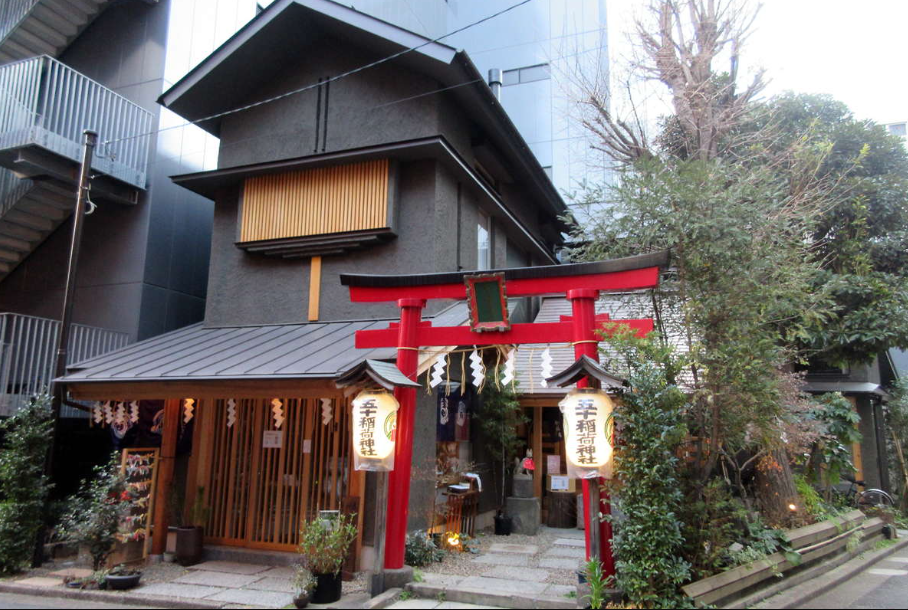
Despite its central location in the city, the grounds of Igo Inari Shrine maintain a tranquil atmosphere. Passing through the vermilion torii gate, one is greeted by a compact yet meticulously maintained shrine grounds.
The shrine building is built in the traditional Inari style, boasting a beautiful appearance with vermilion as its dominant color. Fox statues are placed throughout the grounds, creating an authentic Inari shrine atmosphere. A shrine office is also located on the grounds, where goshuin (shrine stamps) are available.
In recent years, the shrine has actively disseminated information on social media, with information on limited-edition and monthly goshuin being posted on its official account. Occasionally, cats can be seen at the shrine office, providing a calming presence for visitors.
Location and Access
Address: 3-9-1 Kanda Ogawacho, Chiyoda-ku, Tokyo
Postal Code: 101-0052
Access Method:
- Approximately 8 minutes on foot from Ochanomizu Station on the JR Chuo and Sobu Lines
- Approximately 5 minutes on foot from Awajicho Station on the Tokyo Metro Marunouchi Line
- Approximately 5 minutes on foot from Shin-Ochanomizu Station on the Tokyo Metro Chiyoda Line
- Approximately 5 minutes on foot from Ogawamachi Station on the Toei Shinjuku Line
It’s easy to find if you use MIZUNO TOKYO on Yasukuni Street as a landmark; the shrine is located behind it.
Details of Kōtoku Inari Shrine
History and Origin
Kōtoku Inari Shrine is an Inari shrine located in the northern part of Kanda Ogawacho. During the Edo period, this shrine was a household deity enshrined within the Edo residence of the Inaba family, the lords of the Yodo Domain in Yamashiro Province (present-day Yodo-cho, Fushimi-ku, Kyoto Prefecture).
The Inaba family was a daimyo family with a domain of 102,000 koku, and Inaba Tango-no-kami was a descendant of Kasuga no Tsubone, known as the wet nurse of the third shogun, Tokugawa Iemitsu. At the time, this Inari shrine was called “Kajiya Inari” (Blacksmith Inari), and prayers for abundant harvests and lasting military fortune were offered there for generations. As befitting a samurai family’s household deity, it was deeply revered as a god protecting military fortune.
After the Meiji Restoration, the Inaba family’s residence was dismantled, and the land became a townhouse. However, faith in the Inari shrine did not die down, and it is said that a new shrine was built, with the deity invited from Fushimi Inari Taisha, to serve as the guardian deity of the town. As a result, while its role shifted from guardian deity of samurai residences to guardian deity of the town, it has continued to be a central figure in local faith to this day.
Deities and Blessings
The deities enshrined at Kōtoku Inari Shrine are Inari Ōkami, centered around Ukanomitama-no-kami. Due to its history as a guardian deity of samurai residences, it is believed to offer the following blessings:
Main Blessings:
- Long-lasting Military Fortune – Improved luck in competitions and careers
- Abundant Harvest – Abundant harvests
- Business Prosperity – Business development
- Family Safety – Peace and health of the family
- Protection from Evil – Warding off misfortune
In particular, due to its history as a guardian deity of samurai, many worshippers visit the shrine to pray for success in competitions and careers.
Location and Access
Kōtoku Inari Shrine is managed by the Kanda Ogawacho North 2-chome Neighborhood Association and is a beloved local shrine. Like Igo Inari Shrine, it is within walking distance of Ochanomizu Station, Awajicho Station, Shin-Ochanomizu Station, and Ogawacho Station on various train lines.
Details of Onyado Inari Shrine
History and Origin
Onyado Inari Shrine is an Inari shrine with a history related to Tokugawa Ieyasu. In 1590, Tokugawa Ieyasu was transferred to the Kanto region by order of Toyotomi Hideyoshi. At that time, there was a small shrine enshrined in the residence where Ieyasu stayed on his way to Edo.
It is said that Ieyasu named this small shrine “Onyado Inari Shrine” and granted it land as a memorial to his stay in this area. Due to its direct connection to the historically important figure Tokugawa Ieyasu, the shrine was recognized as a highly prestigious shrine throughout the Edo period.
Although the shrine building was completely destroyed by fire during the war in 1945, fortunately, the sacred object was safely preserved. The shrine building was rebuilt in 1956, and the current building was constructed in 2007. Its history of surviving war and continuing to the present day speaks to the deep faith of the local residents.
Deity and Benefits
The deity enshrined at Onjuku Inari Shrine is Inari Okami. As a shrine associated with Tokugawa Ieyasu, it is believed to offer the following benefits:
Main Benefits:
- Good Fortune and Prosperity – Attracting good luck
- Career Advancement and Good Luck – Career advancement
- Business Prosperity – Business success
- Safe Travel – Safe journey
- Family Safety – Family peace
Due to its history of being visited by Tokugawa Ieyasu during his travels, it is particularly popular for prayers for safe travels and new beginnings.
Characteristics of Inari Faith in Kanda Ogawacho
Inheritance of Faith from the Edo Period
The Inari shrines in Kanda Ogawacho all have a long history dating back to the early Edo period. These shrines, worshipped since the Keicho era, the founding period of the Edo shogunate, have developed alongside the city of Edo.
Initially, they began as guardian deities of samurai residences or as shrines that attracted the faith of the Tokugawa family, but after the Meiji Restoration, they were protected by local residents as guardian deities of the town. This transition from “household deity to town guardian deity” symbolizes the shift from Edo to Tokyo.
Deep Connection with Fushimi Inari Taisha
Many Inari shrines in Kanda Ogawacho received their divided spirits from Fushimi Inari Taisha in Kyoto. Fushimi Inari Taisha is the head shrine of all Inari shrines nationwide, and receiving its divided spirit demonstrated the shrine’s status and legitimacy.
During the Edo period, within the cultural and religious network connecting Kyoto and Edo, divided spirits from Fushimi Inari Taisha spread to various regions. The Inari shrines in Kanda Ogawacho were positioned as part of this network, playing a role in transmitting Kyoto’s faith to Edo.
Center for Safe Childbirth Worship
In particular, Iso Inari Shrine (Eiju Inari Shrine) was known for its miraculous powers in safe childbirth since the Edo period. Records indicating that it was also worshipped by the Tokugawa family demonstrate the importance of safe childbirth worship in society at the time.
During the Edo period, childbirth was a life-threatening act, and the desire for a safe delivery was deeply cherished. The Inari Shrine in Kanda Ogawacho served as a place to receive these prayers. Even today, the large number of worshippers visiting for safe childbirth demonstrates that this tradition continues to thrive.
Etiquette and Guidelines for Worship
Basic Worship Method
The basic etiquette for visiting an Inari Shrine is the same as for visiting any other shrine.
- Bow before passing through the torii gate – As a sign of respect before entering the sacred area.
- Purify yourself at the water basin – Purify your left hand, then your right hand, then your mouth.
- Avoid walking in the center of the approach to the shrine – The center is the path for the gods.
- Bow twice, clap twice, and bow once in front of the main hall – Basic worship etiquette.
- Bow once when leaving the shrine grounds – With gratitude.
Points specific to worshipping at Inari shrines
Inari shrines have stone statues of foxes. These represent the fox, the messenger of the Inari god, and it is important to show respect to the fox when worshipping. Also, it is common to offer fried tofu and rice stalks at Inari shrines.
About Goshuin (Shrine Seals)
Goshuin are available at Igo Inari Shrine. Since the opening hours of the shrine office are irregular, it is recommended to check their official social media accounts. Limited edition and monthly changing goshuin (temple/shrine stamps) are sometimes offered, making it popular with goshuin collectors.
Nearby Attractions and Tourist Information
History and Culture of Kanda Ogawacho
Kanda Ogawacho is known as a district of used bookstores and sporting goods stores that has existed since the Edo period. Since the Meiji era, it has also developed as a student town, attracting many publishing houses and bookstores. Even today, used bookstores and specialty bookstores line the streets, maintaining a unique cultural atmosphere.
After visiting the Inari Shrine, it is recommended to enjoy browsing these bookstores. Also, there are many sporting goods stores along Yasukuni Street, making it famous as a specialty sporting goods district.
Nearby Shrines and Temples
Many other shrines and temples are scattered around the Kanda Ogawacho area.
- Kanda Myojin – The general guardian shrine of Edo, within walking distance.
- Yushima Tenmangu – Famous as the god of learning.
- Tsukudo Shrine – An ancient shrine located in Kudankita.
Visiting these shrines together will allow you to enjoy a more fulfilling shrine pilgrimage.
Gourmet and Shopping
The area around Kanda Ogawacho is also an office district, so there are a variety of restaurants. From long-established soba noodle shops to set meal restaurants and cafes, you won’t have any trouble finding a place to eat after your shrine visit. Also, there are many musical instrument shops around Ochanomizu Station, making it an attractive area for music lovers.
Annual Events and Festivals
Hatsuumasai Festival
The most important festival of Inari shrines is the Hatsuumasai Festival, held on the first day of the horse in February. This day is considered the day when Inari-sama descended, and festivals are held at Inari shrines throughout Japan. Many worshippers visit the Inari shrine in Kanda Ogawacho for the Hatsuumasai Festival.
Annual Grand Festival
Each shrine holds its own annual grand festival. This is the most important festival for a shrine, usually held once a year on a specific auspicious day. On this day, special rituals are performed, and local residents gather to celebrate the shrine.
Monthly Festival
Sometimes, a monthly festival is held on a specific day each month. This is a festival to express gratitude to the gods for their blessings and to pray for their continued protection.
Inari Faith in Modern Times
Faith Preserved Amidst Urbanization
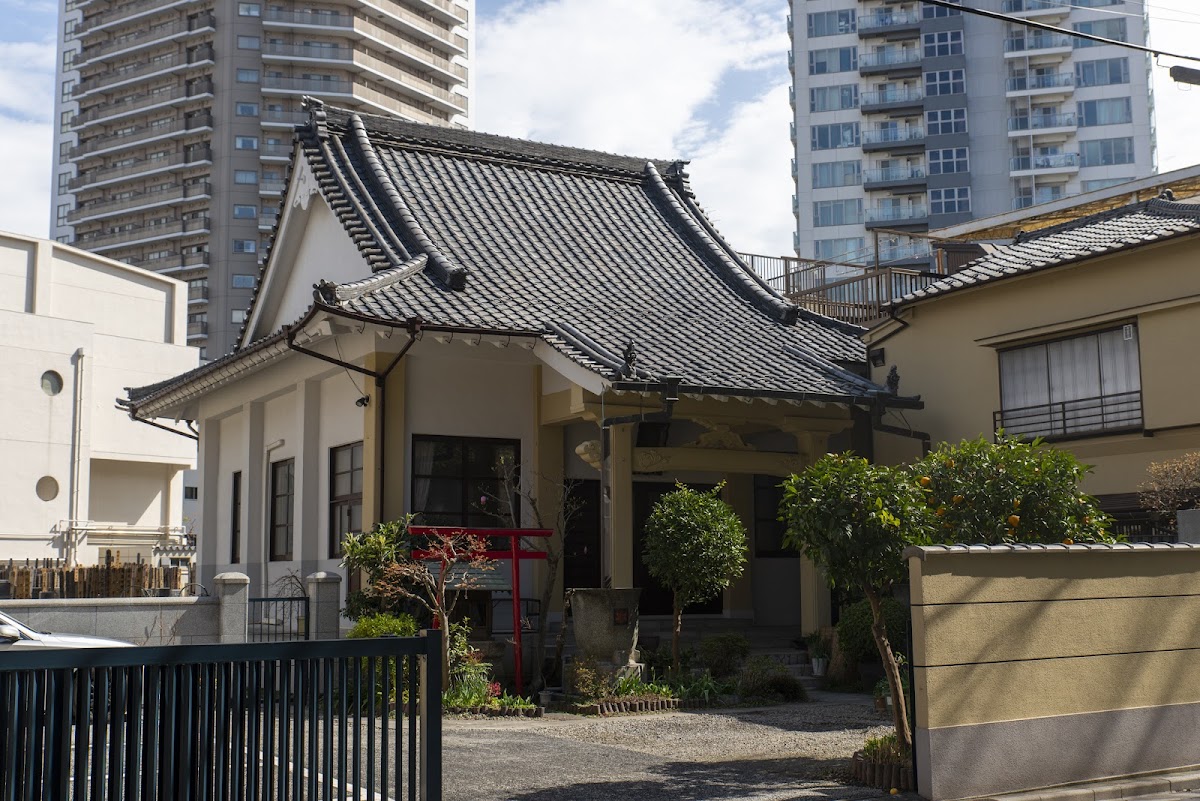
Kanda Ogawacho in central Tokyo is a highly urbanized area. In modern Tokyo, where skyscrapers line the streets and countless people come and go, it is remarkable that Inari shrines dating back to the Edo period are still carefully preserved.
Thanks to the efforts of local residents and neighborhood associations, these shrines are maintained, and their faith continues to be passed down to the present day. The small shrines nestled between buildings serve as oases in the city and witnesses to history, offering solace to visitors.
Social Media and Modern Shrine Visiting Culture
In recent years, an increasing number of shrines, like the Iso Inari Shrine, are using social media to disseminate information. Information on limited-edition goshuin (shrine stamps), festival schedules, and shrine office opening hours is being shared in real time, making it easier for more people to visit the shrines.
Furthermore, the boom in collecting goshuin has become established as a new form of shrine visitation. By fusing traditional beliefs with modern communication methods, shrines are creating a new era of shrine visiting culture.
As a Core of Local Communities
Inari shrines also function as a core of local communities. During festivals, local residents gather, forming communities centered around the shrine. In today’s increasingly urbanized society, where human relationships tend to become weaker, shrines play a vital role in connecting people.
Summary: The Significance of Visiting Inari Shrines in Kanda Ogawacho
The Inari shrines located in Kanda Ogawacho, Chiyoda-ku, Tokyo, each possess their own unique history and traditions, while functioning as places of worship from the Edo period to the present day. The unique characteristics of each Inari shrine—such as the protection of safe childbirth at Iso Inari Shrine (Eiju Inari Shrine), the long-lasting military fortune at Kotoku Inari Shrine, and the historical connection to Tokugawa Ieyasu at Onjuku Inari Shrine—are invaluable cultural heritage that tell the story of Edo/Tokyo’s history.
The history of these prestigious shrines, which received a divided spirit from Fushimi Inari Taisha and attracted the faith of the Tokugawa and daimyo families, and which were protected by local residents as guardian deities of their towns after the Meiji Restoration, symbolizes the process of Japan’s modernization.
In modern Tokyo, these Inari shrines are not merely tourist spots, but living places of faith that convey local history, serve as spiritual anchors for people, and function as the core of the community. By visiting these shrines, quietly nestled amidst the city’s skyscrapers, we can connect with the tradition of faith that has continued since the Edo period and find peace of mind in our modern lives.
When you visit Kanda Ogawacho, be sure to stop by these Inari shrines and reflect on their history and faith. In this tranquil space amidst the hustle and bustle of the city, you will be able to feel the depth of Japan’s traditional culture and history.