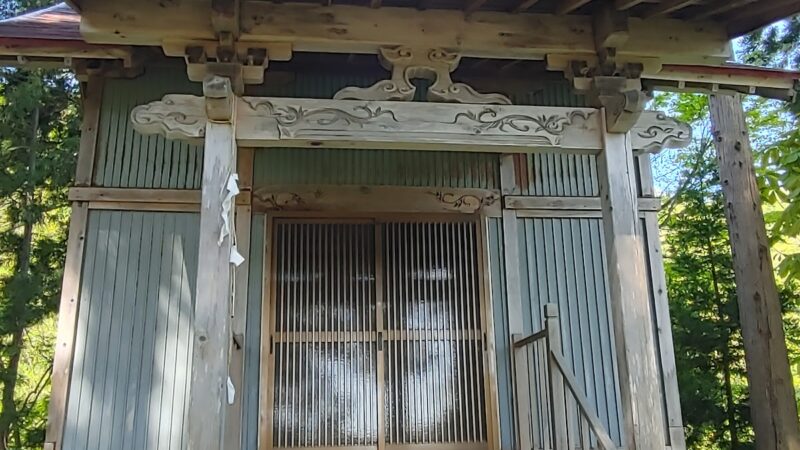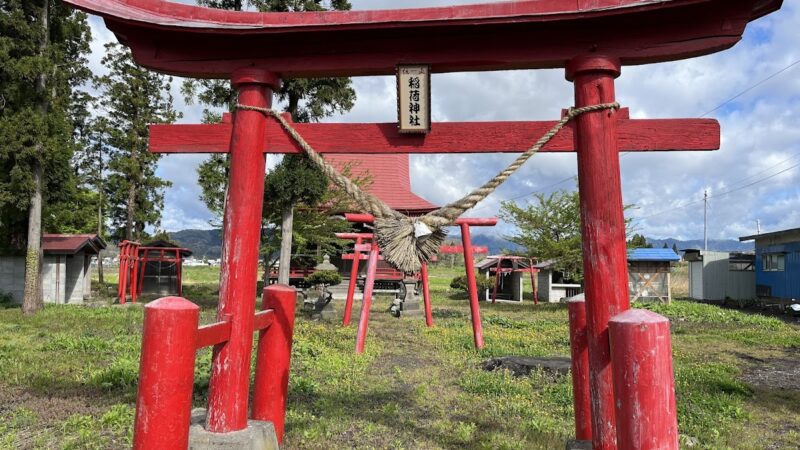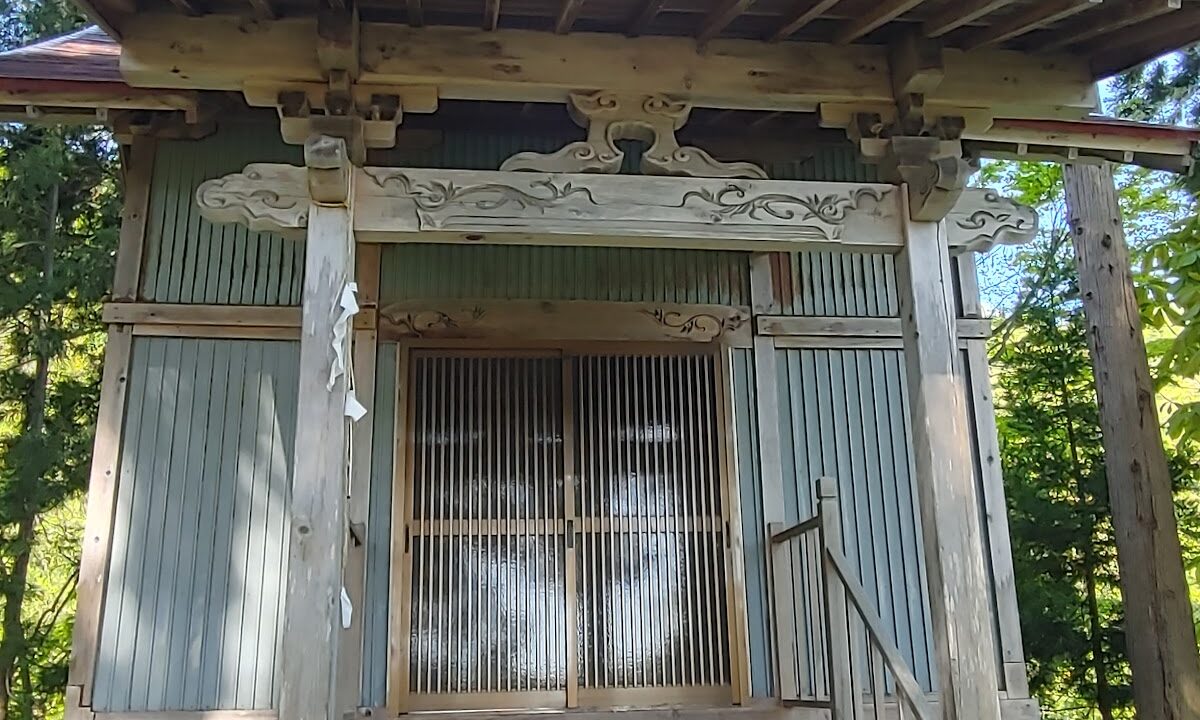
Inari Shrine (Omorino, Hanaoka-cho, Odate City, Akita Prefecture) Complete Guide
The Inari Shrine, located in Omorino, Hanaoka-cho, Odate City, Akita Prefecture, is a shrine that has been cherished by the local people for centuries. This article provides a comprehensive explanation, from detailed information about the Inari Shrine to the overall picture of shrine worship in Odate City and the shrine culture of the surrounding area.
Basic Information about Inari Shrine
Location and Postal Code
The Inari Shrine is located in Omorino, Hanaoka-cho, Odate City, Akita Prefecture. Hanaoka-cho is a region located northeast of the center of Odate City and is a historical town that once developed around the Hanaoka Mine.
The Omorino area is located in a naturally rich area within Hanaoka-cho, surrounded by residential areas and farmland. The postal code for this area is 〒017-0005, and it belongs to the Hanaoka-cho area of Odate City.
About the Name “Inari Shrine”
The name “Inari Shrine” is one of the most common shrine names in Japan. There are approximately 2,655 Inari shrines throughout Japan, ranking second in the nation for the total number of shrines. This demonstrates the widespread influence of Inari worship throughout the country.
The deity enshrined at Inari shrines is generally Ukanomitama-no-kami, believed to bestow blessings such as abundant harvests, business prosperity, and family safety. In areas where agriculture and commerce flourished, Inari worship has been closely intertwined with people’s lives.
Shrine Culture and Inari Worship in Odate City
Total Number of Shrines in Odate City
There are a total of 83 shrines in Odate City, Akita Prefecture. This is a relatively large number compared to other municipalities in Akita Prefecture, reflecting Odate City’s historical and cultural background.
Odate City is located in northern Akita Prefecture and has long been known as a production area for Akita cedar. It was also a region where mining and agriculture prospered. Along with the development of these industries, shrines were built in various areas, serving as spiritual centers for local communities.
Major Inari Shrines in Odate City
Besides the Inari Shrine in Omorino, Hanaoka-cho, Odate City, there are several other Inari shrines in the city.
Inari Shrine in Tsuchimeuchi, Hanaoka-cho
- Address: 145 Tsuchimeuchi, Hanaoka-cho, Odate City, Akita Prefecture
- Postal Code: 〒017-0005
- Corporate Code: 2410005002997
This Inari shrine is registered as a religious corporation and serves as a central place of worship in the region.
Inari Shrine in Kangamori, Shonin-dome
- Location: 101 Kangamori, Shonin-dome, Odate City, Akita Prefecture
- Postal Code: 〒017-0011
Inari Shrine in Inaridai, Iwase
- Location: 75 Inaridai, Iwase, Odate City, Akita Prefecture
As you can see, Inari shrines are scattered throughout various areas of Odate City, each attracting the faith of local residents.
History and Regional Characteristics of Hanaoka Town
Hanaoka Mine and Regional Development
Hanaoka Town was once a mining town that developed around the Hanaoka Mine (Hanaoka Copper Mine). Mining took place at the Hanaoka Mine from the Edo period, and it flourished as a copper producing area from the Meiji era onward. At its peak, many workers gathered, and the town was bustling.
Along with the development of the mine, various shrines were built in the region. Mine workers and their families visited shrines to pray for safety in their dangerous work and for a prosperous life. It is believed that Inari shrines, in this context, have also attracted local faith.
Geography and Settlement Structure of Hanaoka Town
Hanaoka Town is composed of several districts (aza). The main districts include:
- Omorino
- Omorikamidai
- Omorishita
- Omoriyamashita
- Tsuchimeuchi
- Neishita
- Izumida
- Ubasawa
- Aseishi
- Oishizawa
The Omorino district is a particularly well-preserved area with a rich natural environment, and its addresses include 4, 5, 22, 25, 31, 33, 59, 62, 73, 74, 78, 79, 81, 82, 83, 88, 91, 100, 101, and 107.
Other Major Shrines in Odate City
Shrines in Hanaoka-cho
In addition to Inari Shrine, there are several other shrines in Hanaoka-cho.
Shrines in Neishita District
- Location: 284, 285, and 286 Neishita, Hanaoka-cho, Odate City, Akita Prefecture
This shrine spans multiple addresses, suggesting it is a relatively large shrine.
Shrines in Iwase District
Mitakeyama Shrine
- Location: 34 Kami-Iwase, Iwase, Odate City, Akita Prefecture
- Postal Code: 〒018-3501
Kami-Iwase Inari Shrine
- Location: Iwase District, Odate City, Akita Prefecture
The Iwase district is one of the areas in Odate City with a high concentration of shrines, reflecting the deep faith of the local residents.
Shrine Culture in Akita Prefecture
Total Number of Shrines in Akita Prefecture
There are approximately 1,138 shrines throughout Akita Prefecture. Akita Prefecture is large in area and has diverse topography, including mountainous and coastal regions, which has led to the development of unique shrine cultures in each area.
Distribution of Shrines by Municipality in Akita Prefecture
The municipalities with the most shrines in Akita Prefecture are as follows:
- Akita City: As the prefectural capital, it has the most shrines.
- Yokote City: The central city of the southern part of the prefecture, with numerous shrines.
- Odate City: With 83 shrines, it is a central hub in the northern part of the prefecture.
- Yurihonjo City: With a vast area, shrines are scattered throughout the region.
- Yuzawa City: As a historic hot spring resort, shrine culture has flourished.
Characteristics of Shrines in Akita Prefecture
Shrines in Akita Prefecture have the following characteristics:
1. Connection to Nature Worship
Akita Prefecture is blessed with a rich natural environment, and beliefs that worship nature, such as mountain worship and water source worship, remain deeply rooted.
2. Worship as Agricultural Deities
Known as a rice-producing region, Akita Prefecture has many shrines dedicated to praying for abundant harvests, and Inari worship is also popular.
3. Connection to Mining and Forestry
In areas where mining and forestry flourished, such as Odate City, shrines were built to pray for safety and prosperity in the workplace.
4. Harsh Winter Climate
In Akita Prefecture, a heavy snowfall region, festivals praying for safety during winter and the arrival of spring have been held at various shrines.
How to Access Inari Shrines
Access by Public Transportation
Inari Shrine in Omorino, Hanaoka-cho, Odate City can be accessed by the following methods:
Nearest Station
- The nearest major station is JR Hanawa Line’s “Odate Station”.
- From Odate Station, take a local bus or taxi to Hanaoka-cho.
Access by Bus
- Take a local bus operating within Odate City towards Hanaoka.
- The nearest bus stop is “Omori” (approximately 204m from Inari Shrine).
Access by Car
Route from Major Roads
- Approximately 15 minutes from Akita Expressway’s “Odate Kita IC”.
- From National Route 7, take a prefectural road to Hanaoka-cho.
- Approximately 20 minutes by car from the center of Odate City.
Parking Information
- The availability of parking spaces varies depending on the size and location of the shrine. It is recommended to check in advance before visiting.
Landmarks in the Surrounding Area
Omori-no, Hanaoka-cho, is an area where residential and agricultural land are mixed. The following facilities are located in the surrounding area:
- Hanaoka District Community Center
- Hanaoka Elementary School (possibly closed due to school consolidation)
- Local Meeting Hall
Manners and Etiquette for Worship
Basic Worship Method
The following are basic manners for visiting any shrine, not just Inari shrines.
1. Bow Before Passing Through the Torii Gate
The torii gate is the entrance to the sacred area. Bow before passing through to show respect.
2. How to Walk Along the Approach
The center of the approach is considered the path of the gods, so it is polite to walk along the side.
3. Purification at the Water Basin
- Take the ladle with your right hand and purify your left hand.
- Switch the ladle to your left hand and purify your right hand.
- Switch the ladle back to your right hand, receive water in your left hand, and rinse your mouth.
- Finally, hold the ladle upright and purify the handle.
4. Worship at the Main Hall
- Quietly place your offering in the offering box.
- Ring the bell if there is one.
- Two bows, two claps, one bow (may vary depending on the shrine).
Unique Worship Etiquette at Inari Shrines
At Inari shrines, foxes are considered messengers of the gods. Fox statues are often placed on the shrine grounds, and these are also objects of worship.
Furthermore, Inari shrines sometimes feature a “thousand torii gates” (a row of red torii gates) (in the case of large shrines). This originated from the custom of donating torii gates as a token of gratitude for wishes being granted.
Annual Events and Festivals
Main Festivals of Inari Shrines
Various festivals are held at Inari shrines throughout the year. The general annual events at Inari shrines are as follows:
Hatsuumasai (First Horse Day in February)
This is the most important festival at Inari shrines. The first Horse Day is considered the day Inari Okami descended, and many worshippers visit on this day.
Spring Grand Festival (April-May)
This festival celebrates the arrival of spring and prays for a bountiful harvest.
Summer Purification Ceremony (June 30th)
This Shinto ritual purifies and cleanses away the sins and impurities accumulated over the past six months.
Autumn Grand Festival (September-October)
This festival expresses gratitude for the harvest and celebrates a good harvest. In some regions, this is the most grand festival.
Year-End Purification Ceremony (December 31st)
This is a Shinto ritual to cleanse away the sins and impurities of the past year and welcome the new year with a fresh start.
Festival Culture of Odate City
In Odate City, each shrine holds its own unique festival. Especially during the autumn grand festival, local residents participate in carrying portable shrines and various performances are offered.
Odate City has a traditional performing art called “Odate Bayashi,” which is sometimes performed during festivals. Also, a characteristic of Akita Prefecture as a whole is the festival culture involving the use of poles, exemplified by the Kanto Festival.
Goshuin and Souvenirs
About Goshuin
In recent years, “Goshuin pilgrimages,” where people collect Goshuin (shrine stamps), have become popular. Goshuin are given at shrines as proof of worship. They feature the shrine’s name and date of visit written in ink, and stamped with a red seal.
Whether or not a Goshuin (temple/shrine stamp) is available at the Inari Shrine in Omorino, Hanaoka-cho depends on the size and management of the shrine. Smaller shrines may not have a resident priest and may not offer Goshuin.
If you wish to receive a Goshuin, it is recommended to check in advance or inquire at major shrines in Odate City.
Items Offered (Amulets and Talismans)
Inari shrines generally offer the following items:
- Business Prosperity Amulet: An amulet for the prosperity of your business
- Abundant Harvest Amulet: An amulet for a bountiful harvest
- Family Safety Amulet: An amulet for the health and safety of your family
- Traffic Safety Amulet: An amulet for safety when driving or cycling
- Academic Success Amulet: An amulet for academic success
However, smaller shrines may not offer these items.
Nearby Tourist Attractions and Points of Interest
Major Tourist Attractions in Odate City
Here are some tourist spots in Odate City that you can visit after paying your respects at Inari Shrine.
Akita Dog Village
Odate City is known as the birthplace of the Akita dog. At “Akita Dog Village,” you can see exhibits about Akita dogs and even interact with them.
Odate Jukai Dome
This is one of the world’s largest wooden domes, a building that makes extensive use of Akita cedar.
Odate Local History Museum
This museum allows you to learn about the history and culture of Odate City. There are also exhibits on the history of the Hanaoka Mine.
Birthplace of Kiritanpo
Odate City is considered the birthplace of kiritanpo. There are many kiritanpo specialty restaurants in the city.
Points of Interest Around Hanaoka Town
Hanaoka Mine Ruins
This is an industrial heritage site that tells the history of Hanaoka Town. Although the mine is now closed, some facilities that retain the atmosphere of the time remain.
Nature Walking Trails
The area around Hanaoka-cho retains beautiful natural scenery, allowing you to enjoy the beauty of each season.
Model Course for Visiting Shrines in Odate City
Half-Day Course: Visiting Shrines in Hanaoka-cho
This is a model course for visiting shrines around Hanaoka-cho in half a day.
Morning
- Inari Shrine in Omorino, Hanaoka-cho (30 min)
- Inari Shrine in Tsuchimeuchi, Hanaoka-cho (30 min)
- Shrine in Neishita, Hanaoka-cho (30 min)
Lunch
Enjoy Kiritanpo Nabe (rice dumpling hot pot) in Odate City
Afternoon
- Akita Dog Village (1 hour)
- Odate Local History Museum (1 hour)
Full-Day Course: Visiting Shrines in Odate City
This is a course for visiting major shrines in Odate City in one day.
Morning
- Inari Shrines in Hanaoka-cho (2 hours)
- Mitakeyama Shrine and Kami-Iwase Inari Shrine in Iwase District (1 hour)
Lunch
Local cuisine at a local restaurant
Afternoon
- Inari Shrine in Kan-ga-mori, Shonin-dome (30 minutes)
- Major shrines in central Odate City (2 hours)
- Visit to Odate Jukai Dome (1 hour)
Shrine Visits in the Digital Age
Utilizing Online Map Services
Nowadays, you can easily check the location of shrines using online map services such as Yahoo! Maps and NAVITIME. These services provide the following information:
- Accurate location and map of the shrine
- Route guidance from your current location
- Information on nearby facilities
- Reviews and photos
Utilizing QR Codes
At some shrines, you can access detailed information and history by scanning a QR code installed on the grounds with your smartphone.
Sharing Information on Social Media
More and more people are sharing their shrine visits on social media. However, since shrines are sacred places, please be mindful of the following:
- Be considerate of other worshippers.
- Do not take photos in areas where photography is prohibited.
- Maintain silence.
- Avoid posting anything that would damage the dignity of the shrine.
History of Shrine Worship in Akita Prefecture
Ancient Beliefs
The history of shrine worship in Akita Prefecture is long, dating back to ancient times. Shrines were established early in the Akita region, formerly known as Dewa Province.
Ancient Shrines
- Dewa Shrine (located in present-day Yamagata Prefecture)
- Taiheizan Miyoshi Shrine (Akita City)
- Karamatsu Shrine (Daisen City)
These ancient shrines continue to attract many worshippers as centers of local faith.
Development in the Medieval and Early Modern Periods
From the medieval to the early modern period, the Akita region came under the rule of the Satake clan. The Satake clan protected shrines, and many were maintained.
Furthermore, with the development of agriculture, Inari worship spread, and Inari shrines were built throughout the country. In areas where mining flourished, shrines were built as guardian deities of the mines.
Changes since the Modern Era
The Meiji-era decree separating Shinto and Buddhism clearly separated shrines and temples. The shrine consolidation policy also led to the merger of some small shrines.
After World War II, the establishment of the Association of Shinto Shrines organized shrines nationwide. Currently, many shrines belong to the Association of Shinto Shrines, but independent shrines also exist.
Local Communities and Shrines
The Connection Between Shrines and Communities
Japanese shrines have played a role not only as religious institutions but also as centers of local communities.
The Ujiko System
Shrines have an organization of local residents called “ujiko.” Ujiko cooperate in the maintenance and management of the shrine and the operation of festivals.
A Place for Community Events
Shrine grounds have been used not only for festivals but also for various community events such as local sports days, Bon Odori dances, and cleaning activities.
A Spiritual Sanctuary
By visiting shrines at important life events (such as a baby’s first shrine visit, Shichi-Go-San celebration, exorcism, and weddings), shrines have become a spiritual sanctuary for local residents.
Depopulation and Challenges for Shrines
In recent years, the depopulation of rural areas has led to an increasing number of cases where maintaining and managing shrines is becoming difficult.
Main Challenges
- Decreasing number of parishioners
- Shortage of people to carry out festivals
- Deterioration of shrine buildings and repair costs
- Absence of Shinto priests
Initiatives
- One Shinto priest overseeing multiple shrines
- Volunteer participation from outside the region
- Funding for repairs through crowdfunding
- Utilization as a tourist resource
Nationwide spread of Inari worship
Origins of Inari worship
The head shrine of Inari worship is Fushimi Inari Taisha in Kyoto. It is said to have been founded in 711 (Wado 4), and has a history of over 1300 years.
Inari worship originally began as a deity of agriculture (god of rice cultivation), but over time it came to be worshipped as a god of commerce and industry as well.
Inari Shrines Nationwide
As mentioned above, there are approximately 2,655 Inari shrines nationwide, making it the third largest number after Hachiman shrines (approximately 44,000) and Ise shrines (approximately 18,000) (※Statistics on the number of shrines vary depending on the survey method).
Major Inari Shrines
- Fushimi Inari Taisha (Kyoto Prefecture)
- Toyokawa Inari (Aichi Prefecture) ※Formally a temple
- Yutoku Inari Shrine (Saga Prefecture)
- Kasama Inari Shrine (Ibaraki Prefecture)
- Takekoma Shrine (Miyagi Prefecture)
Characteristics of Inari Worship
Relationship with Foxes
Foxes are considered divine messengers at Inari shrines. This is because foxes are thought to be protectors of agriculture, as they exterminate pests (such as rats) in fields.
Red Torii Gates
The torii gates of Inari shrines are often painted red (vermilion). This color is considered to symbolize protection against evil and abundance.
Diverse Benefits
It is believed to offer a variety of benefits, including abundant harvests, business prosperity, family safety, and improvement in performing arts, attracting worshippers from a wide range of backgrounds.
Summary
The Inari Shrine located in Omorino, Hanaoka-cho, Odate City, Akita Prefecture, is an important presence embodying the history and culture of the region. In this area, which developed alongside the prosperity of the Hanaoka Mine, the shrine has served as a spiritual support for the people.
Odate City has as many as 83 shrines, each functioning as a center of its local community. Inari worship is widespread throughout Japan, and several Inari shrines are scattered throughout Odate City.
Even in modern times, shrines remain closely intertwined with people’s lives through events such as New Year’s visits and festivals. Despite facing the challenge of depopulation, the traditions of the shrines continue to be preserved through the efforts of local residents and those involved.
When visiting Odate City, please be sure to visit the local shrines. There, you’ll find the local faith and culture nurtured over a long history. A moment of prayer in the tranquil grounds will be a precious experience that allows you to forget the hustle and bustle of modern life.
The rich natural beauty of Akita Prefecture, the history of Odate City, and the faith of the local people—all of these are condensed in the local shrines, including the Inari Shrine in Omorino, Hanaoka-cho. We hope that through visiting these shrines, you will rediscover the traditional culture of Japan and the charm of the region.