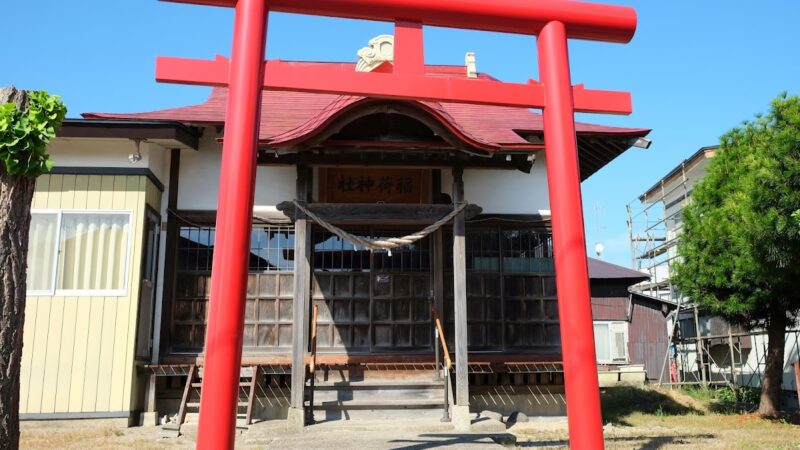
Inari Shrine (Teppoba, Odate City, Akita Prefecture) Complete Guide | History, Access, and Nearby Shrine Information
Located at 70 Teppoba, Odate City, Akita Prefecture, the Inari Shrine is a historic shrine revered by local residents. Among the 2,655 Inari shrines nationwide, it is an indispensable presence when discussing the culture and history of Odate City. This article provides a comprehensive overview, from detailed information about this shrine to the shrine culture of Odate City and even the overall shrine situation in Akita Prefecture.
Basic Information on Inari Shrine (Teppoba)
Location and Basic Data
Address: 70 Teppoba, Odate City, Akita Prefecture 017-0882
Corporate Code: 7410005003000
Classification: Shrine
Deity: Inari worship with Ukanomitama-no-Mikoto as the main deity
Inari shrines boast an overwhelming number of shrines, ranking second nationwide in shrine name rankings (2,655 shrines). Known for blessings such as business prosperity, abundant harvests, and family safety, they are deeply rooted in the lives of Japanese people.
Origin of the Place Name Teppoba
The place name Teppoba in Odate City is said to originate from the fact that there was a gun training ground of the domain during the Edo period. This area is located on the outskirts of Odate Castle town and is a historical area that still conveys the remnants of samurai culture. The postal code is 017-0882, and it is conveniently located near the center of Odate City.
History and Characteristics of Inari Worship
Inari Shrines Spreading Nationwide
With Fushimi Inari Taisha in Kyoto as its head shrine, there are said to be approximately 30,000 Inari shrines throughout Japan. Even just the Inari shrines registered with the Association of Shinto Shrines number 2,655, making it the second largest number in Japan after Hachiman shrines.
Originally, Inari worship had the characteristics of an agricultural deity, but from the medieval period onward, its aspect as a commerce deity was emphasized, and it spread explosively within townspeople’s culture during the Edo period. The shrines are characterized by their vermilion torii gates and fox statues, making them visually striking.
Inari Worship in Akita Prefecture
Akita Prefecture is a rich agricultural region, and an agricultural culture centered on rice cultivation has developed there. Therefore, Inari worship, which presides over abundant harvests, has deeply permeated the region, and Inari shrines have been built throughout. The Inari Shrine in Odate City also has a history of watching over the development of local agriculture and commerce.
Shrine Culture and History of Odate City
Overview of Odate City
Odate City is a city with a population of approximately 70,000 located in the northern part of Akita Prefecture. It once flourished as a castle town of Odate Castle, and later developed as a center for Akita cedar and a mining town. It is also nationally known as the birthplace of Hachiko, the loyal dog.
The city area is vast, with diverse topography ranging from mountainous areas to plains, and each region has its own unique beliefs and culture. Shrines have also played an important role as centers of local communities.
Major Shrines in Odate City
There are a total of 83 shrines in Odate City. Major shrines include the following:
Odate Shinmei Shrine: Located in the center of Odate City, it is a prestigious shrine descended from Ise Grand Shrine. It is cherished as the guardian shrine of the city’s residents.
Hachiman Shrines: These shrines exist in multiple locations and serve as guardian deities of the region, enshrining Hachiman, the god of war.
Yama Shrines: These shrines are based on mountain worship and tell the story of Odate City’s history as a thriving forestry area.
Inari Shrines: Besides the Inari Shrine in Aza-Teppoba, Inari shrines are scattered throughout the city, each worshipped in its own region.
These 83 shrines are distributed at a density of approximately one shrine per 11 square kilometers of Odate City’s area (913.22 square kilometers).
List of Shrines by Municipality in Akita Prefecture (1,138 Shrines)
Across Akita Prefecture, there are 1,138 shrines registered with the Association of Shinto Shrines. While this places it in the middle of the national ranking of shrines by prefecture, the high density per capita and per area reveals a deep level of religious faith.
Number of Shrines by Major Municipality
Akita City: Approximately 150 shrines – Boasting the highest number of shrines as a prefectural capital. Many famous shrines exist, including Taiheizan Miyoshi Shrine and Yataka Shrine.
Yokote City: Approximately 120 shrines – Yokote City, famous for its Kamakura Festival, has many shrines reflecting the beliefs of a snowy region.
Odate City: 83 shrines – A diverse range of shrines are distributed throughout the city, including the Inari Shrine featured in this article.
Noshiro City: Approximately 70 shrines – Features maritime worship unique to a region facing the Sea of Japan.
Yurihonjo City: Approximately 110 shrines – Many shrines are scattered throughout the vast city area.
Daisen City: Approximately 90 shrines – A region famous for the Omagari Fireworks Festival, with numerous shrines dedicated to agricultural deities.
Semboku City: Approximately 60 shrines – A tourist destination known for the samurai residences of Kakunodate and Lake Tazawa, with many historical shrines remaining.
Nikaho City: Approximately 50 shrines – Home to shrines that serve as centers of Chokaisan mountain worship.
Kitaakita City: Approximately 65 shrines – A region where mountain worship and agricultural worship coexist.
Katagami City: Approximately 40 shrines – A relatively new city, but with many historically significant shrines.
Kazuno City: Approximately 55 shrines – Characterized by nature worship around Lake Towada.
Oga City: Approximately 45 shrines – The Oga Peninsula, famous for its Namahage (demon-like figures), has unique folk beliefs.
Yuzawa City: Approximately 70 shrines – Historical shrines remain in this area associated with the legend of Ono no Komachi.
Distribution of Shrines in Rural Areas
Kazuno District (Kosaka Town): Approximately 25 shrines
Kitaakita District (Kami-Koani Village): Approximately 15 shrines
Yamamoto District (Fujisato Town, Mitane Town, Happo Town): Approximately 60 shrines
Minamiakita District (Gojome Town, Hachirogata Town, Ikawa Town, Ogata Village): Approximately 70 shrines
Senboku District (Misato Town): Approximately 35 shrines
Ogachi District (Ugo Town, Higashinaruse Village): Approximately 40 shrines
These shrines possess unique forms of worship reflecting the history, industry, and natural environment of each region. Akita Prefecture’s shrine culture can be described as a crystallization of people’s prayers and gratitude, nurtured in the harsh natural environment of a heavy snowfall region.
List of Shrines in Neighboring Prefectures
Looking at the shrine situation in prefectures adjacent to Akita Prefecture provides a clearer picture of the characteristics of shrine culture in the Tohoku region.
Shrines in Aomori Prefecture (Approximately 1,100)
Aomori Prefecture has approximately 1,100 shrines, roughly the same number as Akita Prefecture. Famous shrines include Iwaki-san Shrine, Kushihiki Hachimangu Shrine, and Utou Shrine. The Tsugaru and Nanbu regions have distinct cultural spheres, resulting in differences in shrine styles and forms of worship.
Shrines in Iwate Prefecture (Approximately 900)
Iwate Prefecture has approximately 900 shrines. Many historically important shrines exist, such as Morioka Hachimangu Shrine, Komagata Shrine, and Hakusan Shrine adjacent to Chusonji Temple’s Golden Hall. The shrine culture is characterized by a strong influence from the Nanbu domain.
Shrines in Yamagata Prefecture (Approximately 1,500)
Yamagata Prefecture has approximately 1,500 shrines, a relatively large number for the Tohoku region. It is famous for its mountain worship of the Dewa Sanzan (Mt. Haguro, Mt. Gassan, and Mt. Yudono), and the tradition of Shugendo (mountain asceticism) remains strong. The Shonai, Mogami, and Okitama regions each have their own distinctive shrine cultures.
Shrines in Miyagi Prefecture (approximately 900)
Miyagi Prefecture has approximately 900 shrines. As the prefecture home to Sendai, the central city of Tohoku, it boasts many prestigious shrines, including Shiogama Shrine, Osaki Hachimangu Shrine, and Takekoma Shrine. Many shrines also received patronage from the Date clan.
Shrines in Hokkaido (approximately 600)
Because Hokkaido’s history of settlement is relatively recent, the number of shrines is relatively small at approximately 600. However, shrines that attracted the faith of the settlers, such as Hokkaido Shrine, were built throughout the region. The relationship with Ainu beliefs is also an interesting subject of research.
Shrines in Fukushima Prefecture (approximately 3,100)
Fukushima Prefecture has the largest number of shrines in the Tohoku region, with approximately 3,100. The Aizu, Nakadori, and Hamadori regions each have their own unique shrine cultures. There are many historically important shrines, such as Isasumi Shrine and Kaiseizan Grand Shrine.
Access to Teppōba, Ōdate City
Access by Public Transportation
From Ōdate Station on the JR Ōu Main Line:
- Approximately 20 minutes on foot from the station
- Approximately 5 minutes by taxi
- Approximately 10 minutes by city loop bus to the nearest bus stop
Access by Car
From the Akita Expressway:
- Approximately 10 minutes from Ōdate Kita IC
- Approximately 15 minutes from Ōdate Minami IC
From National Route 7:
- Approximately 5 minutes from the center of Ōdate City
Parking availability varies depending on the size of the shrine; smaller Inari shrines may not have dedicated parking. Please be mindful of surrounding traffic conditions when visiting.
How to Visit and Etiquette at an Inari Shrine
Basic Worship Etiquette
- Bow before passing through the torii gate: This is an important courtesy before entering the sacred area.
- Purify yourself at the water basin: Purify your left hand, then your right hand, then your mouth.
- How to walk along the approach: The center is considered the path of the gods, so walk along the sides.
- Etiquette at the main hall:
- Quietly place your offering in the offering box.
- Ring the bell if there is one.
- Two bows, two claps, one bow (general shrine etiquette)
- Making a wish: It is considered good practice to state your address and name silently before making your wish.
Etiquette specific to Inari Shrines
At Inari shrines, foxes are considered messengers of the gods. Show respect to the fox statues placed in front of the main hall. Furthermore, fried tofu and inari sushi are said to be favorite foods and are sometimes chosen as offerings.
Annual Events and Festivals in Odate City
Major Shrine-Related Events
January (First Shrine Visit of the Year): Shrines are bustling with New Year’s visits. Many worshippers visit major shrines such as Odate Shinmei Shrine.
February (Setsubun Festival): Events such as bean-throwing are held at various shrines.
Spring Grand Festival (April-May): Many shrines hold their spring grand festivals, praying for a bountiful harvest.
July (Summer Festival): Summer festivals are held in various regions, including the grand festival of Odate Shinmei Shrine.
Autumn Grand Festival (September-October): Festivals giving thanks for the harvest are held at various shrines.
November (Shichi-Go-San): A celebration of children’s growth, attracting many families to shrines. ## A Sightseeing Route for Visiting Shrines in Odate City
Model Course: Half-Day Shrine Tour
Morning:
- Odate Shinmei Shrine (City Center) – 30 minutes
- Inari Shrine (Teppoba) – 20 minutes
- Hachiman Shrine – 20 minutes
Afternoon:
- Lunch and rest at Akita Inu no Sato (Tourist Facility)
- Visit 2-3 historical shrines in the city
This route allows you to efficiently visit representative shrines in Odate City and simultaneously experience the city’s history and culture.
Points to Note and Manners When Visiting Shrines
Clothing and Items to Bring
- Clothing: Clean and understated clothing is desirable. Avoid extremely flashy or revealing clothing.
- Hats: It is polite to remove your hat in front of the main hall.
- Photography: Some places prohibit photography, so check beforehand.
Visiting Shrines in Winter
Akita Prefecture is a heavy snowfall area. When visiting shrines during winter (December to March), please note the following:
- Take thorough precautions against the cold
- Wear non-slip shoes
- Be aware that the path to the shrine may be difficult to see due to snow
- Depending on snow removal conditions, it may be impossible to reach the shrine
The Relationship Between Odate City’s History and Shrines
Development as a Castle Town
Odate City has developed as a castle town since the construction of Odate Castle during the Sengoku period. During the Edo period, it came under the control of the Satake clan and became an important base for the Akita Domain.
With the formation of the castle town, many shrines were built as places of worship for samurai and townspeople. It is highly likely that Inari Shrine (Teppoba) was also enshrined as a local guardian deity during this period.
A Town of Mines and Forestry
Since the Meiji era, Odate City has prospered greatly from mining development, such as the Hanaoka Mine, and the Akita cedar forestry industry. With the development of these industries, faith in the safety of workers and the prosperity of businesses flourished, and it is believed that devotion to Inari shrines also deepened.
Characteristics of Shrine Architecture in Akita Prefecture
Architectural Style Unique to Heavy Snowfall Regions
Shrine architecture in Akita Prefecture has unique characteristics adapted to the environment of heavy snowfall regions:
Steeply Sloping Roofs: Designed to allow snow to slide off easily.
Roofs with Sturdy Structures: Uses strong pillars and beams that can withstand the weight of snow.
Snow Protection: Snow protection is installed to protect the building during winter.
Utilization of Akita Cedar
Akita Prefecture is known as a production area for high-quality Akita cedar, and Akita cedar is used in many shrine buildings. Akita cedar has beautiful grain and excellent durability, making it ideal as a material for shrine architecture.
Inari Shrines and Local Communities
Places that Forge Community Bonds
Shrines are not merely religious facilities, but also play a role as the center of local communities. Through festivals and cleaning activities, it serves as a place for residents to interact with each other.
The Inari Shrine in Jiteppōba also has a history of being protected and passed down by local residents. The maintenance and management of the shrine by the parishioners (local believers) is an important activity that passes on the region’s traditions and culture to the next generation.
The Role of Shrines in Modern Times
In rural cities facing depopulation and an aging population, maintaining shrines is a major challenge. However, at the same time, the roles that shrines play are diversifying, including the preservation of traditional culture, utilization as a tourist resource, and function as a spiritual haven.
Tourist Spots and Shrine Visits in Ōdate City
Spots to Visit Alongside Shrine Visits
Akita Dog Village: A facility unique to Ōdate City, the birthplace of Hachiko, the loyal dog. It features exhibits about Akita dogs and a space where you can actually interact with them.
Ōdate Jukai Dome: One of the world’s largest wooden dome structures. A magnificent building that makes extensive use of Akita cedar.
Odate Local History Museum: A facility where you can learn about the history and culture of Odate City. It also exhibits materials related to shrines and temples.
Birthplace of Kiritanpo: Odate City is the birthplace of “kiritanpo.” Enjoying local cuisine after visiting the shrine is highly recommended.
Naganeyama Sports Park: Known as a famous cherry blossom viewing spot, it is bustling with many flower viewers in spring.
About Goshuin (Shrine/Temple Seals)
What are Goshuin?
Goshuin are seals given as proof of visiting a shrine or temple. In recent years, collecting goshuin has become popular, and many visitors bring goshuin notebooks when visiting shrines.
Manners When Receiving a Goshuin
- After completing your prayers: Since goshuin are proof of your prayers, be sure to receive them only after completing your prayers.
- Prepare a Goshuin notebook: It is common to prepare a dedicated goshuin notebook. 3. Offering Fee: Usually around 300-500 yen. Please prepare the exact amount to avoid needing change.
- Reception Hours: Reception hours vary depending on the shrine. Smaller shrines may not have a resident priest.
Goshuin (Shrine Seals) at Shrines in Odate City
You can receive Goshuin at major shrines in Odate City, but smaller shrines may not. For Inari Shrine (Teppoba), it is recommended to check in advance.
Akita Prefecture Shrine Statistics
Akita Prefecture Shrines in Numbers
Total Number of Shrines: 1,138 (Registered with the Association of Shinto Shrines)
Number of Shrines per Population: Approximately 1 shrine for every 900 people (Higher than the national average)
Number of Shrines per Area: Approximately 1 shrine for every 10.2 square kilometers
Most Frequent Shrine Names: Hachiman Shrine, Inari Shrine, Shinmei Shrine (in that order)
Odate City Shrine Statistics
Total Number of Shrines: 83
City Area: 913.22 square kilometers
Population: Approximately 70,000 people
Number of Shrines per Population: Approximately 1 shrine for every 843 people
Number of Shrines per Area: Approximately 1 shrine for every 11 square kilometers
These figures show that Odate City has a relatively high density of shrines within Akita Prefecture.
Summary: The Charm of Inari Shrine (Teppoba)
Located at 70 Teppoba, Odate City, Akita Prefecture, Inari Shrine is one of 2,655 Inari shrines nationwide, preserving the local faith and culture to this day.
Odate City has 83 shrines, each deeply intertwined with the region’s history. The history of Odate City, which developed as a castle town and a mining and forestry town, is intertwined with the history of its shrines.
Visiting a shrine is not merely sightseeing; it’s a valuable opportunity to connect with local history and culture, and to re-examine the relationship between nature and humanity. When visiting Akita Prefecture, be sure to tour the shrines of Odate City and experience its rich religious culture.
The shrines of Odate City, including Inari Shrine, symbolize the bonds of the region that continue from the past to the present and into the future. The forms of faith nurtured in the harsh natural environment of a heavy snowfall region offer many lessons for us living in the modern age.