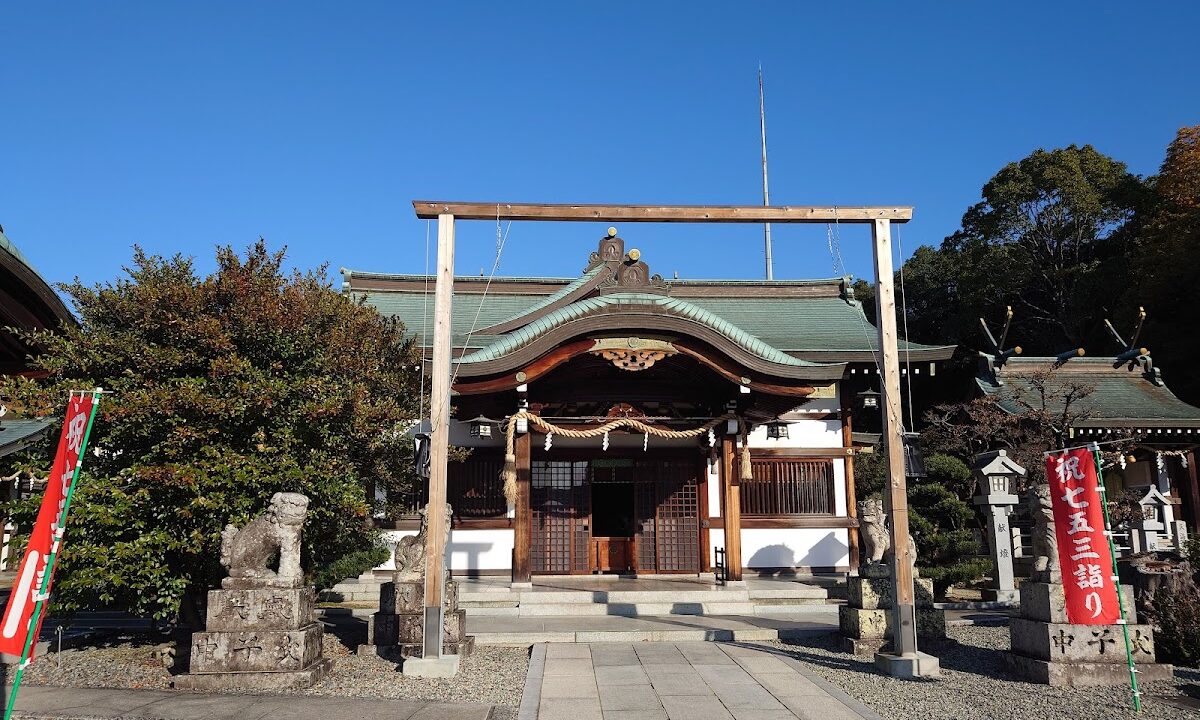
Inatsuhiko Shrine (Minoh City, Osaka Prefecture) Complete Guide: History of the Shikinaisha Shrine and Goshuin Information
Inatsuhiko Shrine is an ancient shrine located in Ishimaru, Minoh City, Osaka Prefecture. It is a historically significant shrine listed in the Engishiki Jinmyocho (a list of shrines compiled in the Heian period) and is affectionately known locally as “Kayano no Omiya.” This article provides a detailed introduction to the shrine, including its history, enshrined deities, highlights of the grounds, and information on its Goshuin (shrine stamps).
Basic Information on Inatsuhiko Shrine
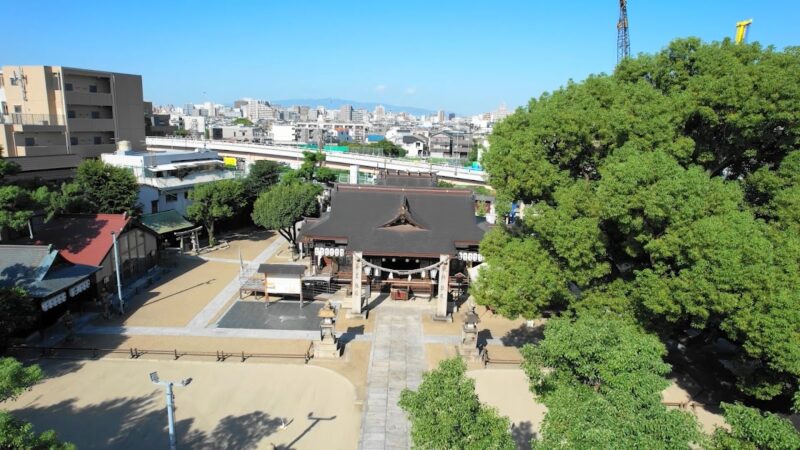
Inatsuhiko Shrine is a Shikinaisha shrine belonging to Toshima District, Settsu Province, and its former shrine rank was Village Shrine. Its current address is 2-10-1 Ishimaru, Minoh City, Osaka Prefecture, and despite being located in a residential area, it boasts a vast shrine grounds.
Basic Data
- Shrine Name: Inatsuhiko Shrine (為那都比古神社)
- Reading: Inatsuhiko Jinja
- Former Shrine Rank: Shikinaisha (Shrine listed in the Engishiki), Village Shrine
- Common Name: Kayano no Omiya
- Former Name: Gozu Tenno Shrine (Gozu Tenno Shrine)
- Location: 2-10-1 Ishimaru, Minoh City, Osaka Prefecture
- Former Province/County: Ishimaru Village, Toshima District, Settsu Province
About the Deities Enshrined
The deities enshrined at Inatsuhiko Shrine are primarily the two gods whose names are also part of the shrine’s name.
Main Deities
Inatsuhiko-no-Okami
Inatsuhime-no-Okami
These two deities are the central deities of our shrine and are listed in the *Engishiki Jinmyocho* (a list of shrines compiled in the Heian period) as “Inatsuhiko Shrine, two deities.” The name “Inatsu” is thought to be related to ancient place names such as Inanoagata and Inabe.
Enshrined Deities
In addition to the main deities, the following deities are also enshrined at our shrine:
- Ōyamakui-no-kami: Known as the god of mountains, and also the principal deity of Hiyoshi Taisha Shrine.
- Amenokoyane-no-mikoto: The principal deity of Kasuga Taisha Shrine and the ancestral deity of the Nakatomi clan.
- Hinokagutsuchi-no-kami: A god worshipped as the god of fire.
These deities are thought to have been enshrined together during the consolidation of local shrines and the changes in religious beliefs.
History of Inatsuhiko Shrine
Founding and Ancient Beliefs
The founding date of Inatsuhiko Shrine is unclear, but since it is listed in the “Engishiki Jinmyōchō” (compiled in 927), it is certain that it already existed before the mid-Heian period.
Regarding the origin of this shrine, a connection to a large rock called “Iōiwa” (Medical King Rock) located within the shrine grounds has been pointed out. This Iō-iwa rock is a massive rock reaching approximately 25 meters in height and has been worshipped since ancient times as a dwelling place for a deity. The worship of giant rocks is one of Japan’s primitive forms of belief, and these rocks were revered as places where gods descended. It is speculated that the origins of Inatsuhiko Shrine may have begun with the worship of this Iō-iwa rock.
Connection to Ina-no-agata
The sound “Inatsu” in the shrine’s name is thought to have a deep connection to the ancient place names “Ina-no-agata” and “Inabe.”
The *Nihon Shoki* (Chronicles of Japan) contains descriptions of Ina-no-agata and Ina-no-agata-nushi, suggesting that this region played an important role in ancient times. Ina-no-agata is believed to correspond to the area from present-day Kawanishi City in Hyogo Prefecture to Ikeda City, Toyonaka City, and Minoo City in Osaka Prefecture, and this shrine may have been one of the centers of worship in Ina-no-agata.
The Inabe were a group within the ancient bemin system, believed to be associated with people who lived in the Inagawa River basin. There is a theory that Inatsuhiko-no-Okami and Inatsuhime-no-Okami are deified chieftains or ancestral deities who pioneered and ruled these regions.
Changes Since the Middle Ages
Since the Middle Ages, this shrine has also been called “Gozu Tenno-sha” (or “Gozu Tenno-sha”). Gozu Tenno was worshipped as a god who wards off epidemics and became widespread throughout Japan, linked to the Gion faith. He is often syncretized with Susanoo-no-Mikoto, and it is thought that this shrine was also influenced by the syncretism of Shinto and Buddhism.
During the Edo period, it was revered by the local people as the tutelary deity of Ishimaru Village and was designated as a village shrine. With the Meiji-era separation of Shinto and Buddhism, Buddhist elements were removed, and the shrine’s name was restored to its ancient “Inatsuhiko Shrine.”
Modern Era
During the Meiji era’s shrine ranking system, it was ranked as a village shrine and has been maintained as a local shrine. After the post-war reforms to the shrine system, it continues to be cherished by local residents as the tutelary shrine of the Ishimaru district in Minoh City, and as “Kayano no Omiya.”
Highlights of the Shrine Grounds
The grounds of Inatsuhiko Shrine are vast and maintain a tranquil atmosphere despite being located in a residential area. A parking lot for visitors is available, and it becomes bustling with many worshippers during New Year’s visits and Shichi-Go-San (a traditional Japanese rite of passage for children).
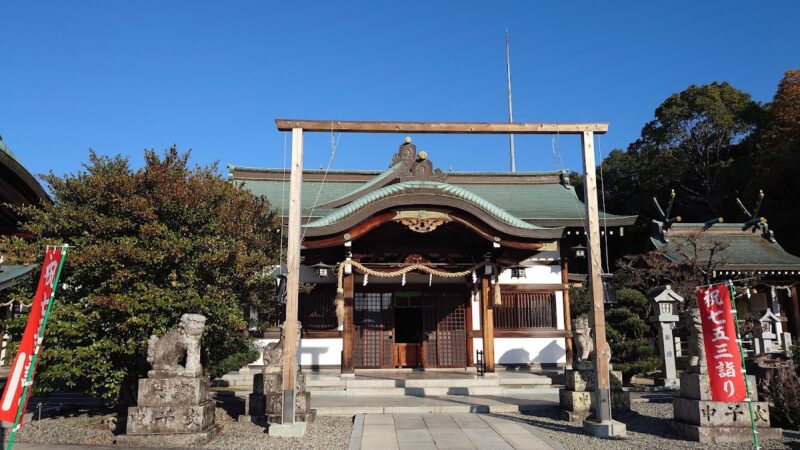
Main Hall and Worship Hall
The main hall is built in the traditional shrine architectural style and is carefully maintained. The worship hall is also designed for easy worship and plays a central role in the community’s faith.
Io-iwa (Medicine King Rock)
One of the biggest highlights of the shrine grounds is the giant rock “Io-iwa,” approximately 25 meters tall. This rock is a sacred place connected to the origins of our shrine, and has been revered since ancient times as a vessel for the descent of gods. Even today, it is protected as a sacred area and is a valuable relic that conveys a primal form of nature worship.
While giant rock worship is a form of faith found throughout Japan, it is rare to find such a large sacred rock preserved near a city, enhancing the historical value of our shrine.
Komainu (Guardian Lion-Dogs)
Several guardian lion-dogs (komainu) are placed within the shrine grounds, delighting visitors. Each was dedicated in a different era, allowing us to see the evolution of stone sculpture from the Edo period to the modern era. This is a point of interest for komainu enthusiasts.
Subsidiary Shrines
In addition to the main shrine, several subsidiary shrines are enshrined within the grounds.
Tenmangu Shrine
A Tenmangu shrine, dedicated to Sugawara no Michizane, the god of learning, is located within the grounds. During exam season, many students and their parents visit to pray for success.
In addition, numerous small shrines rooted in local beliefs are scattered throughout the area, telling the story of the shrine’s long history intertwined with the local community.
About Goshuin (Shrine Seals) and Goshuincho (Shrine Seal Books)
Goshuin are available at Inatsuhiko Shrine. Goshuin are popular among many visitors as a memento of their visit and as proof of their faith.
Features of the Goshuin
Our shrine’s goshuin features the name “Inatsuhiko Shrine” written in ink and stamped with the shrine’s seal. It is a carefully crafted goshuin that reflects the status of a Shikinaisha (a shrine listed in the Engishiki, an ancient Japanese legal code). The calligraphy and seal impressions vary from shrine to shrine, making them popular among goshuin collectors.
How to Obtain a Goshuin
Goshuin are available at the shrine office, but since priests may not always be present, it is best to contact the shrine in advance or choose a day when priests are usually present, such as during New Year’s or the annual festival, to ensure you receive one.
When receiving a Goshuin (temple/shrine stamp), please observe the following etiquette:
- Complete your prayers first before receiving the Goshuin.
- Bring a Goshuincho (stamp book) (avoid using notepads or colored paper).
- Prepare the Goshuin fee (offering) (generally around 300-500 yen).
- Don’t forget to express your gratitude to the Shinto priest.
About Goshuincho
While it’s necessary to confirm whether Inatsuhiko Shrine offers its own original Goshuincho, you can have your stamped in a standard Goshuincho. For those starting a shrine pilgrimage, obtaining a Goshuincho at your first shrine is a nice memento.
Annual Events and Festivals
Inatsuhiko Shrine holds various festivals and events throughout the year.
Main Annual Events
Hatsumode (January 1st-3rd)
Many local residents visit the shrine for Hatsumode to welcome the New Year. Prayers are offered for family safety, business prosperity, and academic success.
Setsubun Festival (around February 3rd) Shinto rituals, such as bean-throwing, are performed to ward off evil and bring good fortune.
Spring Grand Festival The spring festival is held to pray for a bountiful harvest and peace in the community.
Shichi-Go-San (around November 15th) The Shichi-Go-San festival, celebrating children’s growth, attracts many families. The spacious grounds and well-maintained environment are ideal for commemorative photos.
Autumn Grand Festival This festival, giving thanks for the autumn harvest, is one of the important events in the community.
Access Information
Location
2-10-1 Ishimaru, Minoh City, Osaka Prefecture 562-0027
Access by Public Transportation
By Train
- Take a Hankyu Bus from Senri-Chuo Station on the Kita-Osaka Kyuko Line or Osaka Monorail
- Approximately 20 minutes on foot or by bus from Kita-Senri Station on the Hankyu Senri Line
The nearest station is Kita-Senri Station, but it’s a bit of a distance, so taking the bus is more convenient. Get off at the Ishimaru bus stop on the Hankyu Bus and it’s about a 5-minute walk.
Access by Car
- Approximately 15 minutes from Ibaraki IC on the Meishin Expressway
- Approximately 20 minutes from Chugoku-Suita IC on the Chugoku Expressway
The temple grounds have a parking lot for visitors with space for several regular cars. On days when crowds are expected, such as New Year’s Day or festivals, we recommend using public transportation.
Nearby Attractions
Minoh City is a region rich in nature, and there are many attractions scattered around Inatsuhiko Shrine.
Minoh Great Waterfall
A representative tourist spot in Minoh City, it has been selected as one of “Japan’s Top 100 Waterfalls.” It is also known as a famous spot for autumn foliage, and is bustling with tourists in the fall. It is about a 15-minute drive from our location.
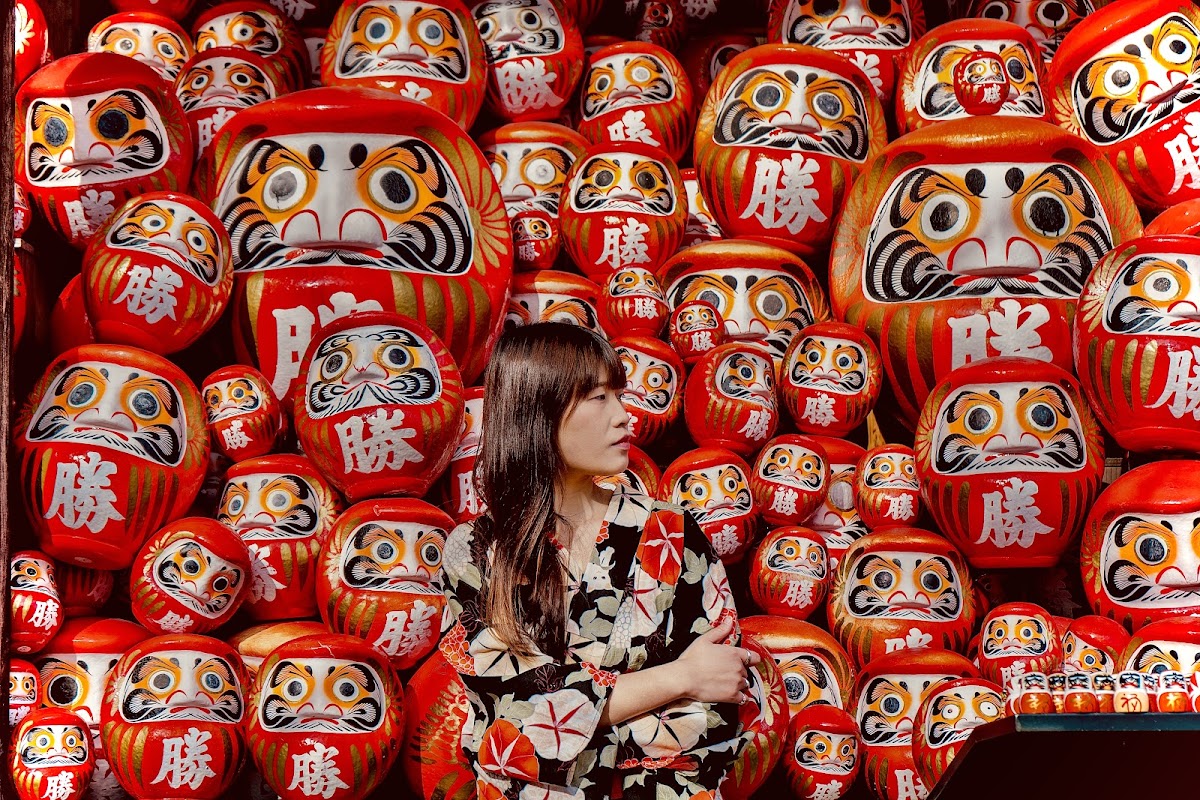
Katsuoji Temple
A temple of the Koyasan Shingon sect, famous as a temple for praying for victory and good fortune. Countless Daruma dolls are dedicated within the temple grounds, creating a unique landscape.
Other Shrines and Temples in Minoh City
There are many other historical shrines and temples scattered throughout Minoh City, allowing visitors to enjoy a shrine pilgrimage.
Manners and Precautions for Visiting a Shrine
Basic Manners for Visiting a Shrine
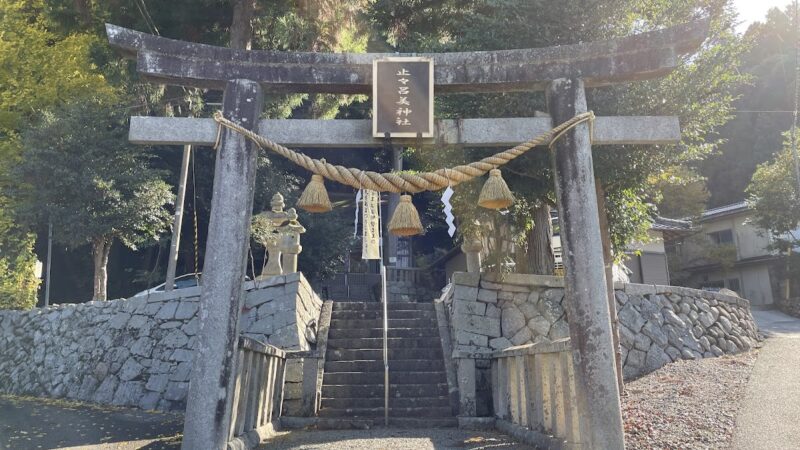
- Bow before passing through the torii gate: This is a sign of respect when entering the sacred area.
- Avoid walking in the center of the path: The center is considered the path of the gods.
- Purify yourself at the water basin: Purify your left hand, then your right hand, then your mouth.
- Etiquette at the main hall: Two bows, two claps, and one bow are the basic rituals.
- Maintain silence: Be mindful that this is a sacred place.
Photography
Photography is generally permitted on the shrine grounds, but you should refrain from taking pictures inside the main hall or during Shinto rituals. Also, be considerate of other visitors.
Attire
Everyday clothing is acceptable for visiting a shrine, but it is advisable to avoid revealing or overly flashy clothing. Especially when formally visiting a shrine or receiving prayers, dress appropriately.
Cultural Value of Inatsuhiko Shrine
Value as a Shikinaisha Shrine
Shikinaisha shrines, listed in the Engishiki Jinmyocho (a list of shrines compiled in the Heian period), are prestigious shrines recognized by the imperial court during the Heian period. Approximately 3,000 such shrines are listed nationwide, and Inatsuhiko Shrine is one of them, possessing historical and cultural value.
The number of Shikinaisha shrines in Toshima District, Settsu Province, is limited, making this shrine important for studying the ancient history of the region.
Importance in Place Name Research
The place name “Ina” is a historically significant place name dating back to ancient times, and the name of the enshrined deity at this shrine suggests a connection to this place name. Inatsuhiko Shrine provides valuable clues for studying ancient regional governance and the distribution of clans.
Remains of Giant Rock Worship
Iō-iwa (a rock formation) is a valuable remains that conveys a form of primitive nature worship in Japan. In today’s increasingly urbanized world, the preservation of such massive rocks as a sacred site is significant from the perspective of cultural property protection.
Connection to the Community
Inatsuhiko Shrine, known as “Kayano’s Grand Shrine,” serves as a spiritual anchor for local residents. The custom of visiting the shrine at life’s milestones, such as New Year’s Day, Shichi-Go-San (a traditional rite of passage for children), and for warding off evil, continues to this day, making it a central hub for the local community.
During local festivals, parishioners and residents cooperate to support the shrine, maintaining the connection between traditional faith and the local community. The existence of such a community-oriented shrine is invaluable in modern society.
Summary
Inatsuhiko Shrine is a fascinating shrine with two facets: its status as a Shikinaisha (a shrine listed in the Engishiki, an ancient Japanese legal code) and its familiarity as a community-rooted shrine. It possesses multifaceted value as a relic of the Iō-iwa (a massive rock) worship, its historical connection to Inagata, and its beloved presence as “Kayano’s Grand Shrine” among local residents.
When visiting Minoh City in Osaka Prefecture, be sure to stop by Inatsuhiko Shrine. The tranquil grounds offer a peaceful retreat, and the time spent contemplating its ancient history will surely be meaningful. Receiving a Goshuin (shrine stamp) can also serve as a memento of your visit.
Its historical value as a Shikinaisha (shrine listed in the Engishiki), the Iō-iwa rock formation which preserves a primal form of nature worship, and its deep connection to the local community—all of these factors make Inatsuhiko Shrine a special place. It’s a recommended shrine not only for those who enjoy visiting shrines, but also for those interested in history and culture, and anyone seeking a quiet place to find peace of mind.