Jinmuji Temple Complete Guide: History, Highlights, and Visiting Information for an Ancient Temple Founded in the Nara Period
Jinmuji Temple, located in Numama, Zushi City, Kanagawa Prefecture, is an ancient Tendai sect temple with a history of approximately 1300 years, dating back to the Nara period. Its official name is “Iōzan Raigōin Jinmuji,” and it is known as the first pilgrimage site of the Miura Yakushi Nyorai pilgrimage route. This article provides a detailed introduction to Jinmuji Temple, including its history, highlights, access methods, and visiting information.
History of Jinmuji Temple: A Place of Faith Continuing from the Nara Period
Founding and Gyōki Bodhisattva
Jinmuji Temple was founded in January of the first year of the Jinki era (724 AD) by Gyōki Bodhisattva at the request of Emperor Shōmu. It is said that Gyōki carved and enshrined the three statues of Eleven-faced Kannon, Yakushi Nyorai, and Shakyamuni Buddha, and founded the temple as a place of prayer for the Emperor’s well-being, peace throughout the world, and prosperity for all people.
Gyōki’s temple construction during the Nara period aimed at the salvation of the people through Buddhism and the peace and security of the nation. Jinmuji Temple, as part of this effort, functioned as an important religious center on the Miura Peninsula.
Restoration and Conversion to the Tendai Sect in the Heian Period
In the Heian period, Jinmuji Temple was restored by Ennin (Jikaku Daishi). At this time, it was converted to the Tendai sect, and has remained a Tendai temple ever since. Ennin is known as the third head of the Tendai sect and was a high-ranking priest who greatly contributed to the development of Enryaku-ji Temple on Mount Hiei.
Ennin’s restoration brought the teachings and training system of the Tendai sect to Jinmuji Temple, raising its status as a temple. From this period onward, Jinmuji Temple increasingly took on the characteristics of a place of mountain worship and esoteric Buddhist practice.
The Kamakura Period and the Minamoto Clan’s Faith
During the Kamakura period, key figures of the Kamakura shogunate, such as Minamoto no Yoritomo and Hojo Masako, were devout followers of Jinmuji Temple. The *Azuma Kagami* records that Minamoto no Sanetomo visited Jinmuji Temple, indicating its deep connection with the Kamakura shogunate.
There is also a record that in 1192, Minamoto no Yoritomo ordered a blessing ceremony at Jinmuji Temple to pray for the safe delivery of Masako’s child. Located in Numahama-go, Kamakura-gun (present-day Numama, Zushi City), Jinmuji Temple was very close to Kamakura and played an important role as a place of prayer for the samurai government.
Changes from the Medieval Period Onward
Due to the wars of the Sengoku period, Jinmuji Temple temporarily declined, but it was restored during the Edo period. Under the patronage of the Tokugawa Shogunate, the temple’s land holdings were restored and its buildings were repaired.
Despite the impact of the anti-Buddhist movement after the Meiji Restoration, the temple has continued to preserve its traditions thanks to the support of its parishioners, and continues to this day.
Highlights and Cultural Properties of Jinmuji Temple
Yakushido (Main Hall)
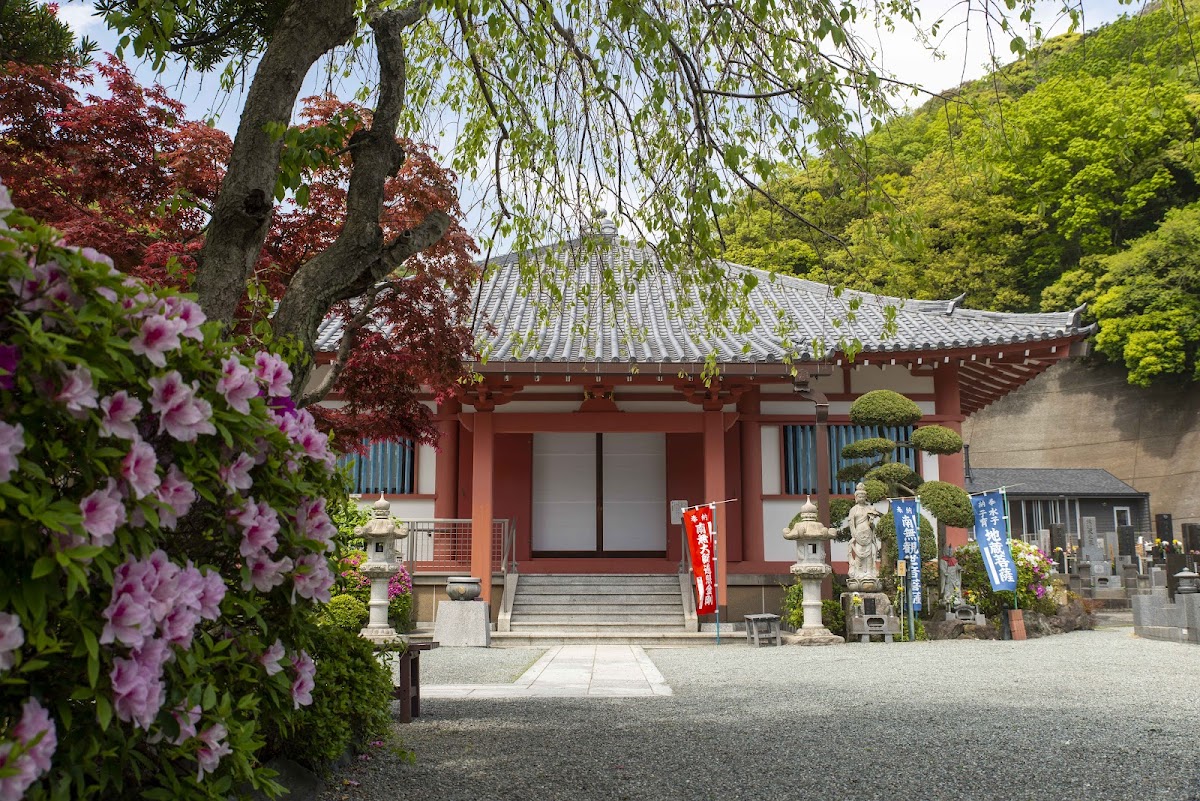
The Yakushido, the main hall of Jinmuji Temple, is designated as an Important Cultural Property of Kanagawa Prefecture. It is a valuable building that conveys the architectural style of the Muromachi period, characterized by its elegant form with a three-bay, pyramidal roof and shingle roofing.
The principal image, Yakushi Nyorai (Medicine Buddha), is enshrined inside the Yakushido, and is usually kept as a hidden Buddha in a shrine. During special openings, it can be viewed directly. The ceiling paintings and decorations inside the hall are also magnificent, conveying the essence of medieval Buddhist temple architecture.
Cultural Properties of Buddhist Statues and Paintings
Jinmuji Temple possesses numerous valuable cultural properties.
Kanagawa Prefecture Designated Important Cultural Property:
- Image of Daiitoku Myoo
- Image of Senju Kannon
Zushi City Designated Important Cultural Property:
- Yakushi Triad
- Fudo Myoo Statue
- Eleven-faced Kannon Bodhisattva Statue
These Buddhist statues and paintings were created during the Kamakura and Muromachi periods, demonstrating the high level of Buddhist art at that time. Some are entrusted to the Kamakura National Treasure Museum for preservation and public display.
The Nanjamonja Tree
Within the grounds of Jinmuji Temple stands a rare tree known as the “Nanjamonja Tree.” This is a species of Chionanthus retusus, which blooms with white flowers around May.
It is said to have been named “Nanjamonja” (meaning “What is the name of this tree?”) because it is a rare tree in the Kanto region. During its blooming season, it is a popular attraction for many worshippers and nature lovers.
Bell Tower and the “Evening Bell of Jinmuji Temple”
The bell of Jinmuji Temple is selected as one of the “Eight Scenic Views of the Miura Peninsula,” specifically as “The Evening Bell of Jinmuji Temple.” The sound of the bell ringing at dusk has long been cherished by the people of the surrounding area.
The view from the bell tower is also magnificent, offering a panoramic view of the town of Zushi and Sagami Bay.
50 Scenic Spots of Kanagawa
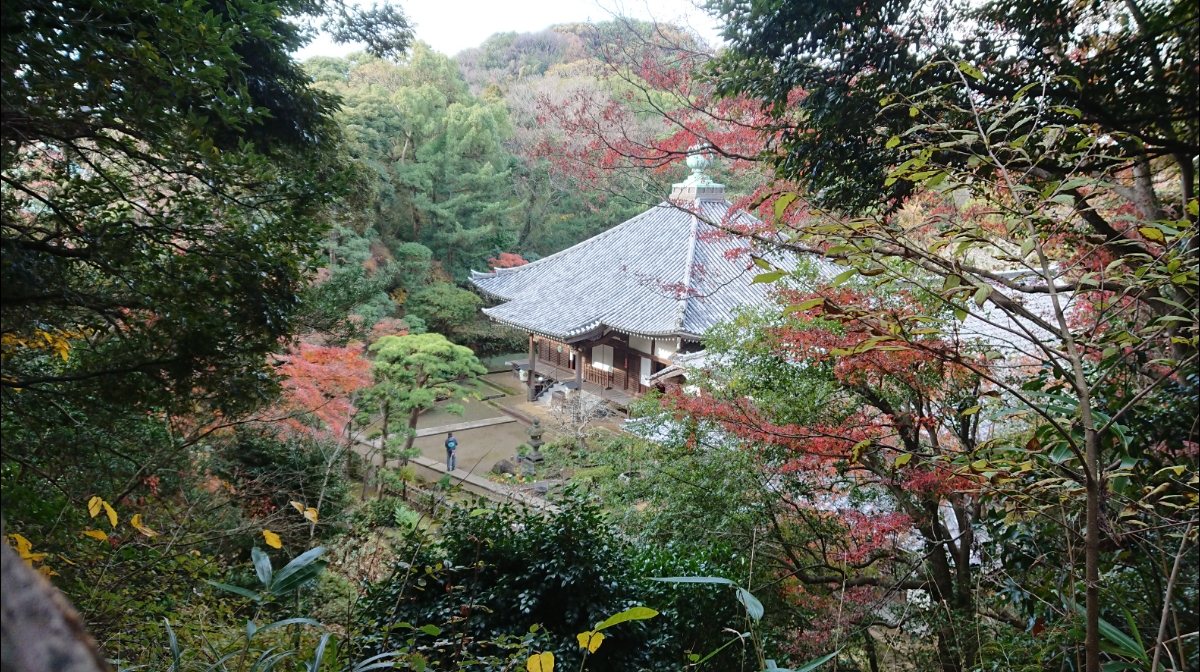
Jinmuji Temple is also selected as one of the “50 Scenic Spots of Kanagawa,” and is known for the beauty of the views from its grounds. Especially during the autumn foliage season, the approach to the temple and the grounds are dyed in red and yellow, captivating many visitors.
About Kanzoin Temple
Kanzoin Temple is just as important as Jinmuji Temple. Kanzoin Temple is the 23rd temple on the Miura Kannon Pilgrimage and, together with Jinmuji Temple, is supported by its parishioners.
The principal image of Kanzoin Temple is Kannon Bodhisattva, and the image is unveiled periodically. A special unveiling is planned for 2026 (Reiwa 8), offering a rare opportunity to directly worship the principal image, which is not usually open to the public.
Jinmuji Temple and Kanzoin Temple are operated as a single entity, and visiting both temples provides a deeper religious experience.
Jinmuji Hiking Course and Nature
Back and Front Approaches
Jinmuji Temple has two approaches: the front approach and the back approach.
Front Approach: Approximately 15 minutes on foot from Jinmuji Station on the JR Yokosuka Line. It’s a relatively gentle uphill path, making it easy even for beginners.
Back Approach: This route comes from the direction of Ikego Shinmei Shrine. Walk along the railway tracks for two bus stops, then enter the mountain path next to the junior high school. After passing a nursing home, a pleasant mountain path begins. This route is rich in nature, allowing you to enjoy a forest bath while visiting the temple.
Takatori-yama and Jinmuji Hiking Course
Jinmuji Temple is a popular part of the Takatori-yama hiking course. Starting from Jinmuji Station, the course passes through Jinmuji Temple and continues to Takatori-yama. This popular hiking route allows you to fully enjoy the nature of the Miura Peninsula.
The entire course takes approximately 2-3 hours, with moderate ups and downs, making it enjoyable for beginners to intermediate hikers. From the summit of Takatori-yama, you can enjoy views of Sagami Bay and Mount Fuji.
Nature Through the Seasons
The grounds and approach to Jinmuji Temple offer beautiful scenery throughout the four seasons.
- Spring: Cherry blossoms and Chionanthus retusus trees in bloom
- Summer: Deep green foliage and cool shade
- Autumn: The beauty of autumn leaves
- Winter: A tranquil atmosphere and crisp air
The autumn foliage season, in particular, sees many visitors and hikers.
Visiting Information and Access
Basic Information
Location: 2-1402 Numama, Zushi City, Kanagawa Prefecture 249-0004
Phone: 046-871-4565
Sect: Tendai Sect
Mountain Name: Iōzan
Temple Name: Raikōin
Principal Image: Yakushi Nyorai (Medicine Buddha)
Pilgrimage Site: Miura Yakushi Nyorai Pilgrimage Site No. 1, Miura Kannon Pilgrimage Site No. 23 (Kanzōin)
Access Methods
Access by Train:
- Get off at “Jinmuji Station” on the JR Yokosuka Line, approximately 15 minutes on foot
- Get off at “Jinmuji Station” on the Keihin Kyuko Line, approximately 20 minutes on foot
Access by Bus:
- From JR Zushi Station or Keikyu Zushi-Hayama Station, take the Keikyu Bus bound for “Ikego” or “Takatori,” get off at the “Jinmuji” bus stop, and walk for about 10 minutes.
Access by Car:
- Approximately 10 minutes from the Zushi Interchange on the Yokohama-Yokosuka Expressway
- Parking: Available (limited number of spaces, for visitors only)
Visiting Hours and Admission Fee
Visiting Hours: Grounds are freely accessible (the interior of the Yakushi-do Hall is usually closed to the public)
Admission Fee: Free (separate fees apply for special viewings)
Special Opening: The principal image of Yakushi Nyorai is specially opened to the public several times a year. Please check the official website for dates.
Annual Events
Shimotsuki-e Memorial Service: An important memorial service held in November. A cleaning of the grounds and the unveiling of the principal image may take place. Many visitors, including parishioners, attend.
Enlightenment Ceremony: A Buddhist event organized by the Zushi Buddhist Association. Lectures and other events may also be held.
Other Events: Various Buddhist services and events are held throughout the year, including New Year’s visits and spring and autumn equinox services.
Manners for Visiting
Jinmuji Temple is still a functioning place of worship. Please observe the following points when visiting:
- Please be quiet within the temple grounds and avoid disturbing other visitors.
- Photography is permitted, but photography inside the main hall and of Buddha statues may be prohibited.
- Even when visiting as a hiker, remember that it is a temple and show respect.
- Please take your trash with you.
Nearby Attractions
Ikego Shinmei Shrine
A shrine located near the back approach to Jinmuji Temple, famous for its humorous-looking guardian lion-dogs. It can be visited in conjunction with a visit to Jinmuji Temple.
Takatori Mountain
A mountain with an elevation of 139m, connected to Jinmuji Temple by a hiking trail. A giant rock-carved Buddha statue stands at the summit, offering stunning views of Sagami Bay.
Zushi City
The area around Zushi Station boasts numerous restaurants and cafes, making it convenient for meals and rest after visiting the temple. Zushi Beach is also nearby, allowing you to enjoy both the sea and the mountains.
Kamakura
Kamakura is approximately 10 minutes from Jinmuji Temple by train. A plan combining a visit to Kamakura’s temples and shrines is highly recommended.
The Charm of Jinmuji Temple: Why You Should Visit
Depth of History
Jinmuji Temple, with a history of nearly 1300 years, is a place of worship dating back to the Nara period. It has connections to important historical figures such as Gyoki, Ennin, and Minamoto no Yoritomo, occupying a significant position in the history of Japanese Buddhism.
Value of Cultural Properties
Jinmuji Temple houses numerous important cultural properties designated by the prefecture and city, allowing visitors to experience medieval Buddhist art up close. During special openings, you can view rare Buddhist statues and paintings not usually on display.
Harmony with Nature
Surrounded by the rich natural beauty of the Miura Peninsula, Jinmuji Temple showcases the beauty of each season. Combining hiking with temple visits offers a refreshing experience for both mind and body.
Easy Access
Its easy accessibility, approximately one hour from central Tokyo, is another attractive feature. It’s perfect for a day trip or a weekend getaway.
Tranquil Atmosphere
Unlike popular tourist destinations, it maintains a quiet environment for worship. It’s especially recommended for those seeking peace and tranquility away from the hustle and bustle.
Summary: Experience History and Nature at Jinmuji Temple
Jinmuji Temple is a representative temple of the Miura Peninsula, combining a long history dating back to the Nara period, valuable cultural properties, beautiful nature, and its continued function as a place of worship.
Founded by Gyōki 1300 years ago, restored by Ennin, supported by the Minamoto clan, and sustained by parishioners to this day—the Dharma flame preserved throughout this long history continues to shine quietly.
With its easy access for those who enjoy hiking, the beauty of nature in every season, and above all, the atmosphere of the temple grounds imbued with a sense of history, Jinmuji Temple offers a different kind of charm to each visitor.
Located about an hour from central Tokyo, Jinmuji Temple offers a deep history and abundant nature. Why not pay a visit? In its tranquil grounds, you’ll surely feel the history of prayer that has continued for over a thousand years.
When visiting, we recommend checking the official website for the latest information (dates of special openings, event schedules, etc.). Especially on special occasions such as the unveiling of the main image or the Shimotsuki-e memorial service, you’ll be able to see Jinmuji Temple in a way not usually seen.