Jufuku-ji Temple (Kamakura City, Kanagawa Prefecture) Complete Guide | The Charm of its History and Beautiful Approach, Ranked Third Among the Five Great Zen Temples of Kamakura
Located in the quiet valley of Ogigayatsu, about a 10-minute walk from Kamakura Station, Jufuku-ji Temple is a prestigious Rinzai Zen temple of the Kencho-ji school, ranked third among the Five Great Zen Temples of Kamakura. Founded by Hojo Masako on the site of the residence of Minamoto no Yoshitomo, father of Minamoto no Yoritomo, this ancient temple continues to fascinate many tourists and history enthusiasts with its beautiful approach, considered one of the finest in Kamakura, and its rich history from the early days of the Kamakura Shogunate.
This article comprehensively introduces everything you need to know before visiting Jufuku-ji Temple, from its historical background and highlights to access information and visiting details.
Basic Information about Jufuku-ji Temple
Official Name: Kikokusan Jufuku Kongo Zenji
Sect: Rinzai Zen Kenchoji School
Principal Image: Shakyamuni Buddha
Founder: Hojo Masako
First Abbot: Eisai (Myōan Eisai)
Founded: Shōji 2 (1200)
Mountain Name: Kikokusan
Temple Rank: Third of the Five Great Zen Temples of Kamakura
Address: 1-17-7 Ōgigayatsu, Kamakura City, Kanagawa Prefecture
Designated Cultural Properties: National Historic Site, Kamakura City Designated Tangible Cultural Property (Building), Kamakura City Designated Natural Monument
Pilgrimage Site: 24th of the 33 Kannon Pilgrimage of Kamakura, 18th of the 24 Jizo Pilgrimage of Kamakura
The History and Founding Background of Jufuku-ji Temple
Historical Significance: The Site of Minamoto no Yoshitomo’s Residence
The site of Jufuku-ji Temple in Ōgigayatsu is said to be the location of the residence of Minamoto no Yoshitomo, the father of Minamoto no Yoritomo. Yoshitomo was defeated by Taira no Kiyomori in the Heiji Rebellion (1159) and met a tragic end in Owari Province. Afterward, this site remained vacant for a long time.
Even after Yoritomo established the Kamakura Shogunate, this location, which held special significance as the site of his father’s former residence, did not lead to the construction of a large temple. However, after Yoritomo’s death, his wife, Hōjō Masako, decided to build a temple on this historically significant site to commemorate her husband.
Founded by Hojo Masako
In 1200, the year after the death of Minamoto no Yoritomo, Hojo Masako invited Eisai (Myōan Eisai), a high-ranking monk who was spreading Zen Buddhism in Japan at the time, to be the founding abbot of Jufuku-ji Temple. Eisai is known for introducing Rinzai Zen to Japan after returning from Song China in 1191, and is also the founder of Kennin-ji Temple in Kyoto.
The reasons for Hojo Masako’s choice of Eisai as the founding abbot are thought to include Yoritomo’s respect for Eisai during his lifetime, and the fact that Zen Buddhism was well-suited to the samurai spirit. The founding of Jufuku-ji Temple is also significant as it marks the beginning of a full-fledged Zen Buddhist temple in Kamakura.
Ranked Third in the Kamakura Five Mountains
After its founding, Jufuku-ji Temple was successively headed by prominent Zen Buddhist monks of the time, including Taiko Gyoyu, Rankei Doryu, and Daikyu Shonen. Towards the end of the Kamakura period, it was counted as one of the Kamakura Five Mountains, and when Ashikaga Yoshimitsu established the Five Mountains system in 1386, it was ranked third among the Kamakura Five Mountains.
The Kamakura Five Mountains is a ranking system for Rinzai Zen temples, with the highest rankings being Kencho-ji, Engaku-ji, Jufuku-ji, Jochi-ji, and Jomyo-ji. This high status reflects Jufuku-ji’s central role in Zen Buddhism in Kamakura.
Changes Since the Edo Period
From the Muromachi period to the Sengoku period, Jufuku-ji, like other temples in Kamakura, experienced a period of decline. However, it was revived during the Edo period and continues to uphold its traditions as a temple of the Kencho-ji branch of the Rinzai sect to this day.
Within the temple grounds, buildings such as the Buddha Hall and the temple’s living quarters, rebuilt during the Edo period, remain and are designated as tangible cultural properties of Kamakura City. Furthermore, the entire temple grounds are designated as a national historic site, recognizing its historical value from the Kamakura period.
Highlights of Jufuku-ji Temple
Kamakura’s Most Beautiful Approach
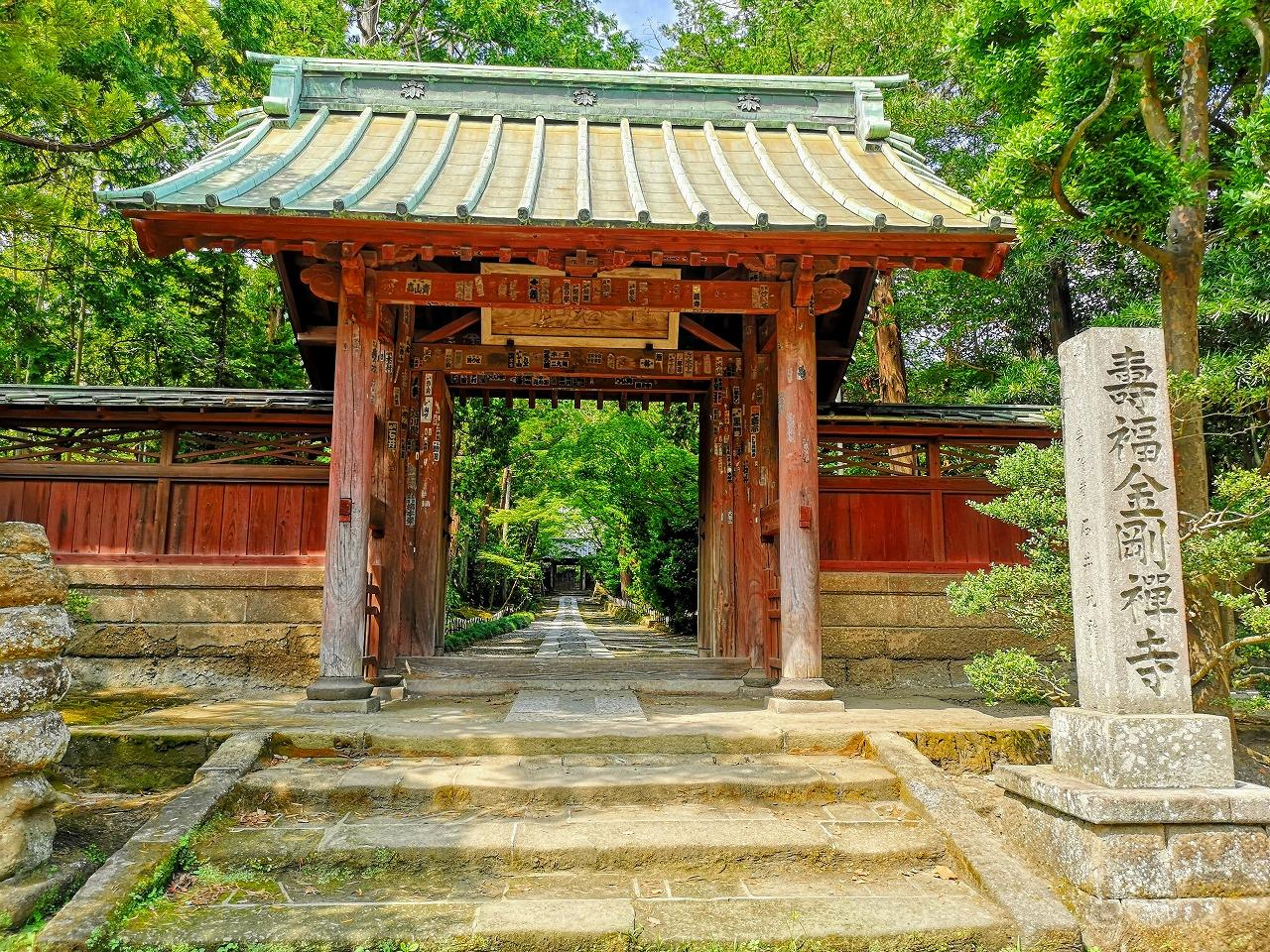
The greatest highlight of Jufuku-ji Temple is the approximately 50-meter-long stone-paved approach leading from the main gate to the middle gate. This approach is hailed as “the most beautiful in Kamakura” and attracts many photographers and tourists.
On both sides of the approach, tall cedar and yew trees, some said to be hundreds of years old, stand in neat rows, creating a majestic atmosphere like a green tunnel. The stone pavement is laid using a technique called “Katsura-shiki,” and the beauty of the stone pavement when wet with rain is exceptional.
The temple’s charm lies in its ever-changing seasonal beauty: the fresh greenery of spring, the deep green of summer, the vibrant autumn foliage, and the tranquility of winter. Visiting in the quiet early morning hours allows you to experience the serene atmosphere characteristic of a Zen temple.
Access to the Middle Gate and Temple Grounds
Because Jufuku-ji Temple still functions as a training ground, general visitors are only allowed from the approach to the middle gate. The temple grounds beyond the middle gate, including the Buddha Hall and the abbot’s quarters, are usually closed to the public.
However, even just the approach and the middle gate offer a profound sense of Jufuku-ji’s dignity and beauty. Beyond the middle gate, you can see the main hall and the temple’s living quarters, and beyond that, a panoramic view of the Kamakura mountains.
No donation (entrance fee) is required, and you are free to stroll along the approach. However, it is expected that visitors will respectfully observe the temple’s history as a training ground and observe quiet and respectful conduct.
The Burial Site (Yagura) of Hojo Masako and Minamoto no Sanetomo
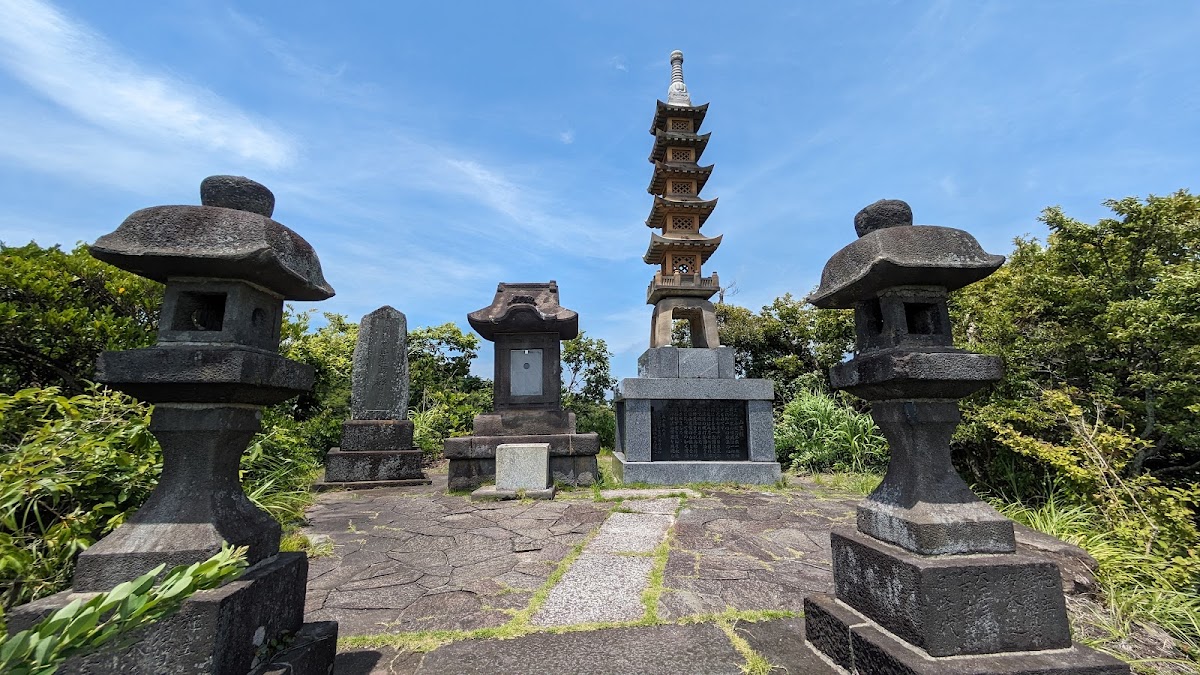
To the right and rear of the approach to the temple, on the hillside behind the temple grounds, lies a group of yagura (burial mounds) believed to be the tombs of Hojo Masako and Minamoto no Sanetomo, including a five-tiered pagoda. This site is open to visitors and is an important place to reflect on the history of the Kamakura Shogunate.
A yagura is a type of horizontal-chambered tomb unique to the Kamakura period, carved into the slopes or cliffs of mountains. The yagura group at Jufuku-ji Temple is large in scale and is believed to contain the remains of members of the Hojo family and influential figures of the shogunate.
The five-tiered pagoda believed to be the tomb of Hojo Masako attracts many visitors as the resting place of the “Nun Shogun” who secretly supported the Kamakura Shogunate. The tomb of the third shogun, Minamoto no Sanetomo, is also located nearby, allowing visitors to remember the tragic shogun who was assassinated at a young age.
To reach the yagura (cave tomb), follow the small path beside the main approach to the temple. Since some areas are uneven, comfortable walking shoes are recommended.
The Graves of Takahama Kyoshi and Osaragi Jiro
The temple grounds contain the graves of many prominent cultural figures. Particularly famous are the graves of the haiku poet Takahama Kyoshi and the writer Osaragi Jiro.
Takahama Kyoshi presided over the haiku magazine “Hototogisu” and made significant contributions to the development of modern haiku. A lover of Kamakura, he spent his later years there and wished to be buried at Jufuku-ji Temple.
Osaragi Jiro was a writer known for works such as “Kurama Tengu” and was a leading figure among Kamakura writers. He left behind many works set in Kamakura, and his deep connection to the city led to his burial at Jufuku-ji Temple.
These graves are also open to the public and are must-see spots for literature lovers.
About Goshuin (Temple Seals)
Goshuin are available at Jufuku-ji Temple. Currently, they are available as pre-printed seals and can be obtained at the reception area along the approach to the temple.
The goshuin features the calligraphy of “Shakyamuni Buddha” and the vermilion seal of Jufuku-ji Temple, giving it a dignified finish that reflects its status as the third-ranked temple of the Kamakura Five Mountains. Goshuin are also available for the 24th temple of the Kamakura Thirty-Three Kannon Pilgrimage and the 18th temple of the Kamakura Twenty-Four Jizo Pilgrimage.
When receiving a goshuin, please offer an appropriate donation. Generally, 300 to 500 yen is a guideline.
Natural Monument Trees
Within the temple grounds are ancient trees designated as natural monuments by Kamakura City. These giant trees along the approach to the temple have a history of several hundred years, watching over the long history of Jufuku-ji Temple.
These trees are not merely scenic elements, but are protected as valuable relics that tell the story of Kamakura’s natural history. The rows of cedar and cypress trees that create the atmosphere of the approach to the temple are a symbol of Jufuku-ji Temple.
Access Methods
Access by Train
Approximately 10 minutes on foot from JR Yokosuka Line/Enoshima Electric Railway “Kamakura Station”
Exit the west exit of Kamakura Station and head towards Kamakura City Hall. Turn left at the intersection in front of City Hall and proceed towards Ogigayatsu. You will see the main gate of Jufuku-ji Temple on your right. The path is relatively flat, and there are well-maintained tourist signs, so you are unlikely to get lost.
Kamakura Station is easily accessible, about 1 hour from Tokyo Station and about 30 minutes from Yokohama Station, making it ideal for day trips.
Access by Bus
If using the bus from Kamakura Station, take the Keihin Kyuko Bus from “Kamakura Station” and get off at the “Ogigayatsu” bus stop. It’s about a 3-minute walk from there. However, since it’s close to Kamakura Station, we recommend visiting on foot.
Access by Car and Parking
Approximately 20 minutes from the Asahina Interchange on the Yokohama-Yokosuka Expressway
Jufuku-ji Temple does not have its own parking lot. We recommend using nearby coin-operated parking lots or parking your car in a parking lot near Kamakura Station and visiting on foot.
Kamakura’s roads are narrow and traffic is heavy during peak tourist season, so using public transportation is recommended.
Visiting Information
Visiting Hours: Free access to the grounds (from the approach to the main gate)
Admission Fee: Voluntary donation (free)
Area of Access: Approach and up to the main gate (grounds are not open to the public)
Grave Visit: Possible (graves of Hojo Masako, Minamoto no Sanetomo, etc.)
Goshuin (temple stamp) Reception: Office along the approach (pre-printed stamps available)
Closed: None
Estimated Time Required: Approximately 20-30 minutes
Notes on Visiting
- Jufuku-ji Temple still functions as a training hall, therefore the grounds beyond the main gate are not open to the public.
- Please visit quietly and be considerate so as not to disturb the training.
- Photography is permitted, but please refrain from using flash or speaking loudly.
- The path to the yagura (graves) has uneven ground in some places, so comfortable shoes are recommended.
- We recommend checking in advance regarding pet policies.
Nearby Tourist Attractions
Many of Kamakura’s most representative tourist attractions are scattered around Jufuku-ji Temple.
Tsurugaoka Hachimangu Shrine (approx. 15-minute walk)
Tsurugaoka Hachimangu Shrine, a symbol of Kamakura, is the central shrine of Kamakura, developed by Minamoto no Yoritomo. It’s about a 15-minute walk from Jufuku-ji Temple via Wakamiya-oji Street.
Eisho-ji Temple (approx. 5-minute walk)
Eisho-ji Temple, located very close to Jufuku-ji Temple, is known as Kamakura’s only nunnery. Founded by Okatsu-no-kata, a concubine of Tokugawa Ieyasu, it boasts a beautiful bamboo grove.
Zeniarai Benzaiten Ugafuku Shrine (approx. 10-minute walk)
Zeniarai Benzaiten is a shrine famous for the belief that washing money in the sacred water inside the cave will bring good fortune. It can be reached by walking deep into the Ogigayatsu valley from Jufuku-ji Temple.
Kaizo-ji Temple (approx. 8-minute walk)
Kaizo-ji Temple, known as the “Temple of Flowers,” is a quiet temple with beautiful seasonal flowers. The crabapple blossoms in spring and the irises in early summer are particularly magnificent.
Jokomyo-ji Temple (approx. 7-minute walk)
Jokomyo-ji Temple, which houses the Amida Triad statue (a nationally important cultural property), is a valuable temple where you can appreciate Buddhist art from the Kamakura period.
Best Season to Visit Jufuku-ji Temple
Spring (March-May)
In the season of fresh greenery, the trees along the approach to the temple are dyed a vibrant green, offering a landscape full of life. The cherry blossoms in the surrounding area are also beautiful during cherry blossom season, making it perfect for a spring stroll in Kamakura.
Summer (June-August)
The deep green approach to the temple is cool and refreshing, making you forget the summer heat. The stone pavement, wet with rain during the rainy season, is especially beautiful, creating a tranquil atmosphere.
Autumn (September – November)
The autumn foliage season is one of the most beautiful times to visit Jufuku-ji Temple. The trees along the approach to the temple change color, creating a magnificent contrast with the stone pavement. The best time to see the autumn leaves is from late November to early December.
Winter (December – February)
Winter at Jufuku-ji Temple is less crowded, making it the season when you can best experience the tranquil atmosphere of a Zen temple. The air is clear, and the mountain range visible beyond the approach to the temple is also beautiful.
Model Kamakura Sightseeing Course
Here is a model Kamakura sightseeing course that includes Jufuku-ji Temple.
Morning:
9:00 Arrive at Kamakura Station
9:15 Visit Jufuku-ji Temple (30 minutes)
9:50 Visit Eisho-ji Temple (30 minutes)
10:30 Visit Zeniarai Benzaiten Shrine (40 minutes)
11:20 Stroll through Genjiyama Park (40 minutes)
Afternoon:
12:00 Lunch near Kamakura Station (60 minutes)
13:00 Visit Tsurugaoka Hachimangu Shrine (60 minutes)
14:00 Stroll and shopping on Komachi Street (60 minutes)
15:00 Break at a cafe near Kamakura Station (60 minutes)
16:00 Depart from Kamakura Station
This course allows you to efficiently visit major tourist spots in Kamakura, starting from Jufuku-ji Temple.
Cultural Properties and Designations of Jufuku-ji Temple
Jufuku-ji Temple possesses many cultural properties, and their historical value is recognized.
National Historic Site
The entire temple grounds are designated as a national historic site and are protected as valuable remains that convey the appearance of a Kamakura period temple.
Kamakura City Designated Tangible Cultural Property (Buildings)
Buildings such as the Buddha Hall and the priest’s quarters, rebuilt during the Edo period, are designated as tangible cultural properties of Kamakura City.
Kamakura City Designated Natural Monument
The ancient trees on the temple grounds are designated as natural monuments and play an important role in preserving Kamakura’s natural environment.
Component of Japan Heritage
Jufuku-ji Temple is recognized as a component of the “Iza, Kamakura” Japan Heritage site and is considered one of the temples symbolizing Kamakura, the birthplace of samurai culture.
Photography Tips at Jufuku-ji Temple
Photography of the Approach
The classic angle is looking from the main gate towards the middle gate. The soft morning light and the wet stone pavement after rain make for particularly beautiful photographs.
Seasonal Expressions
By capturing the ever-changing expressions of the temple’s approach throughout the seasons—fresh greenery, autumn leaves, snowscapes, and more—you can photograph different aspects of its charm.
Depth of the Temple Grounds and the Gate
Using the gate as a frame, you can create a composition with depth by photographing the temple grounds and surrounding mountains beyond.
Summary
Jufuku-ji Temple is a representative temple of Kamakura, boasting the third-highest rank among the Five Great Zen Temples of Kamakura, a history rooted in the early days of the Kamakura Shogunate (involving Minamoto no Yoritomo and Hojo Masako), and a beautiful approach considered among the finest in Kamakura.
While general visitors are restricted to the approach and the gate, this limited space condenses the dignified atmosphere of a Zen temple and the history of Kamakura. Visiting the tombs of Hojo Masako and Minamoto no Sanetomo allows you to reflect on the history of the Kamakura period.
Jufuku-ji Temple, conveniently located just a 10-minute walk from Kamakura Station, offers a tranquil escape from the hustle and bustle, providing a peaceful and calming experience. It’s a must-visit temple during your Kamakura sightseeing trip.
The temple’s approach, with its ever-changing beauty throughout the seasons, offers new discoveries with every visit. Enjoy the serene early morning, the rain-soaked cobblestones, and the vibrant autumn foliage—its diverse expressions are truly captivating.