Complete Guide to Kaishozan Shoenji Temple | History, Goshuin (Temple Seal), and Access Information for Tenkachaya’s Shoten-san
About Kaishozan Shoenji Temple
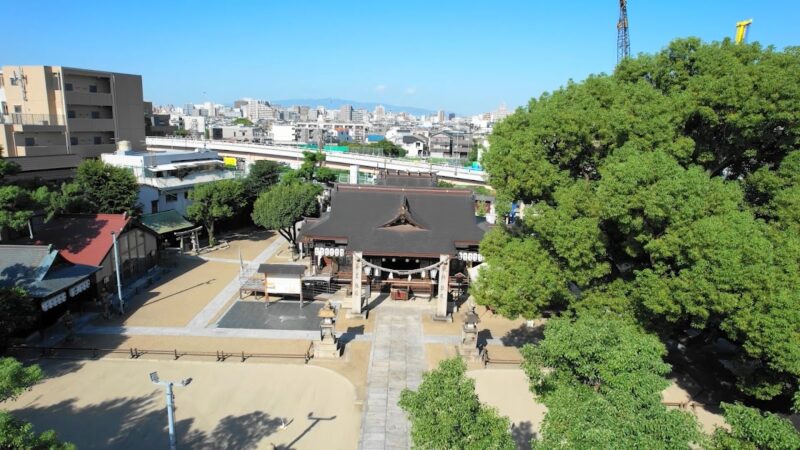
Kaishozan Shoenji Temple is an independent Shingon Buddhist temple located at 3-2-32 Matsumushi-dori, Abeno-ku, Osaka City, Osaka Prefecture. It is affectionately known locally as “Tenkachaya’s Shoten-san” and is known as a temple with a long history and unique faith.
Basic Information about Shōenji Temple
- Official Name: Kaisōzan Shōenji Temple
- Mountain Name: Kaisōzan
- Sect: Independent Shingon Sect (formerly Tōji Shingon Sect)
- Principal Image: Daishō Kanki Sōshin Tennō (Kankiten)
- Address: 3-2-32 Matsumushi-dōri, Abeno-ku, Osaka City, Osaka Prefecture 545-0043
- Phone Number: 06-6651-2727
- Common Name: Shōten-san of Tengachaya, Shōtenzan Shōenji Temple
Shōenji Temple is a sacred site visited by many pilgrims and worshippers, serving as the 32nd temple of the Settsu Eighty-Eight Temples Pilgrimage and the 2nd temple of the Osaka Thirteen Buddhas Pilgrimage.
History and Origins of Shōenji Temple
Founding and Founder
The history of Kaishozan Shōenji Temple is ancient, dating back to Tenkei 2 (939). It is said that the founder was Kōdō Oshō, making it a temple with a long history dating back to the mid-Heian period.
While records of the temple’s initial founding are limited, this period was the reign of Emperor Suzaku and a turbulent time marked by the rebellion of Taira no Masakado. Against this historical backdrop, Shōenji Temple, founded by Kōdō Oshō, developed into a center of local faith.
Relocation and Name Change during the Genroku Era
A significant turning point in the history of Shōenji Temple occurred during the Genroku Era (1688-1704). During this period, Abbot Yoshimichi relocated the temple to a scenic spot overlooking the western sea, changing its mountain name to “Kaishōzan” and its temple name to “Shōenji.”
The mountain name “Kaishōzan” means “mountain that illuminates the western sea,” indicating that the temple was located on a hill overlooking the sea at the time. This relocation and name change established the foundation of the current Shōenji.
As a Center of Shōten Worship
Shōenji has long flourished as a center of Kankiten (Shōten) worship. Kankiten is believed to bring blessings such as business prosperity, marital harmony, and good fortune, and has been particularly devoutly worshipped among merchants and common people.
The nickname “Shōten-san of Tenkachaya” speaks to the depth of Shōten worship in this region and the role that Shōenji has played in the local community.
The Principal Image and Faith
The Great Holy Joyful Twin-Bodied Heavenly King
The principal image of Shōenji Temple is the Great Holy Joyful Twin-Bodied Heavenly King, also known as Kankiten. This principal image is known as the Wooden Carving of the Great Holy Joyful Twin-Bodied Heavenly King, and its size is considered one of the largest in Japan.
Kankiten is depicted in a unique form, with two heavenly beings, a male and a female, embracing each other, each with an elephant’s head and a human body. This twin-bodied form symbolizes the profound teachings of Esoteric Buddhism: worldly desires are enlightenment, and birth and death are nirvana.
Characteristics of the Kankiten Worship
Kankiten is a deity in the Tenbu (heavenly beings) in Esoteric Buddhism, and is believed to bestow the following blessings:
- Business Prosperity: Success and prosperity in business
- Marital Harmony: Family harmony and successful relationships
- Good Fortune and Prosperity: Increased luck and the arrival of happiness
- Protection from Disaster and Bringing Good Fortune: Protection from disaster and the arrival of good fortune
- Childbearing: Blessing with children
The worship of Kankiten involves special rituals, and it is generally a deity often enshrined as a hidden Buddha. This traditional form of worship has also been preserved at Shōenji Temple.
Shōtenzan and the Five Low Mountains of Osaka
Characteristics of Shōtenzan
The small hill on which Shōenji Temple stands is called “Shōtenzan“. This Shōtenzan is actually not a mountain name, but the name of an actual mountain with an elevation of approximately 14 meters.
Shōtenzan is counted as one of the “Osaka Five Low Mountains“. The Osaka Five Low Mountains is a collective term for low-altitude mountains within Osaka City, making them a rare example of mountains recognized as “mountains” despite being located in an urban area.
About the Osaka Five Low Mountains
The Osaka Five Low Mountains include the following mountains:
- Shōtenzan (Shōenji Temple) – Elevation approximately 14m
- Tenpōzan – Elevation 4.53m (Second lowest mountain in Japan)
- Tezukayama – Elevation approximately 20m
- Mikatsuyama – Elevation approximately 14m
- Chausuyama – Elevation approximately 26m
These low mountains are valuable resources that tell the story of Osaka’s topography and history, and are also valuable as regional cultural heritage.
Shōenji Temple as a Pilgrimage Site
Second Temple of the Osaka Thirteen Buddhas Pilgrimage
Shōenji Temple is designated as the second temple of the “Osaka Thirteen Buddhas Pilgrimage“. The principal image enshrined at this temple is Shakyamuni Buddha.
The Thirteen Buddhas faith is a belief system in which 13 Buddhas, each presiding over one of the 13 memorial services for the deceased, from the seventh day after death to the 33rd anniversary, are visited. Shakyamuni Buddha, the second temple, is considered the principal image for the seventh day memorial service.
Thirty-Second Temple of the Settsu Eighty-Eight Temples Pilgrimage
Shōenji Temple is also the thirty-second temple of the “Settsu Eighty-Eight Temples“. The Settsu Eighty-Eight Temples Pilgrimage is a pilgrimage route modeled after the Shikoku Eighty-Eight Temples Pilgrimage, centered in Settsu Province (present-day northern Osaka Prefecture).
This pilgrimage route was established for people who found it difficult to travel the Shikoku pilgrimage, and it has played an important role in supporting local faith.
Goshuin (Temple Seal) Information
Regarding Receiving Goshuin
Important Notice: Due to various circumstances, Shōenji Temple is currently unable to accept regular visits or direct receipt of Goshuin.
Alternative Method of Receiving Goshuin
The Goshuin for the second temple of the Osaka Thirteen Buddhas Pilgrimage (Shakyamuni Buddha) can be obtained at the Shitennoji Temple’s Sutra Repository.
- Location of Receiving the Goshuin: Shitennoji Temple Sutra Office
- Address: 1-11-18 Shitennoji, Tennoji-ku, Osaka City
- Access: Approximately 5 minutes on foot from Shitennoji-mae Yuhigaoka Station on the Osaka Metro Tanimachi Line
Pilgrims can receive the Goshuin (temple stamp) of Shōenji Temple at Shitennoji Temple. We recommend checking in advance before visiting.
Access Information
Access by Train
It is convenient to access Shōenji Temple using public transportation.
Nearest Station
The nearest station is Kitatenkachaya Station on the Osaka Metro Sakaisuji Line.
- Approximately 5-8 minutes on foot from Kita-Tenkachaya Station
- Using Exit 4 is convenient
Other Available Stations
- Nankai Main Line “Tenkachaya Station”: Approximately 10 minutes on foot
- Hankai Tramway Uemachi Line “Kita-Tenkachaya Station”: Approximately 8 minutes on foot
- Osaka Metro Midosuji Line “Tennoji Station”: Approximately 20 minutes on foot, or by bus
Access from Major Stations
- From Umeda Station: Take the Midosuji Line to Tennoji Station, transfer to the Sakaisuji Line and get off at Kita-Tenkachaya Station (approximately 30 minutes)
- From Namba Station: Take the Midosuji Line to Dobutsuen-mae Station, transfer to the Sakaisuji Line and get off at Kita-Tenkachaya Station (approximately 15 minutes)
- From Shin-Osaka Station: Take the Midosuji Subway Line to Dobutsuen-mae Station, then transfer to the Sakaisuji Line and get off at Kitatenkachaya Station (approximately 25 minutes).
Access by Car
Since the area around Shōenji Temple is a residential area, it is necessary to check in advance whether there is a dedicated parking lot. There are several coin-operated parking lots nearby, but the number of spaces is limited.
Landmarks in the Area
Shōenji Temple is located along Matsumushi-dori Street. Matsumushi-dori Street is a major road running east-west, and there are historical sites such as “Matsumushi-zuka” in the surrounding area.
Nearby Attractions
Matsumushi-zuka
On the way to Shōenji Temple, along Matsumushi-dori Street, there is a historical site called “Matsumushi-zuka“. This is a mound originating from a tragic love legend of the Heian period, and the story of Princess Matsumushi and Princess Suzumushi is told here.
Matsumushi-zuka is a valuable historical site that conveys the history and culture of the region, and is worth visiting in conjunction with a visit to Shōenji Temple.
Temples and Shrines Around Tenkachaya
Besides Shōenji Temple, there are many other historical temples and shrines scattered around Tenkachaya.
- Manpukuji Temple: A Jōdo sect temple
- Abe Ōji Shrine: The guardian shrine of Abeno
- Abeno Shrine: A shrine dedicated to Kitabatake Akiie
By visiting these temples and shrines, you can experience the history and deep faith of the Abeno and Tenkachaya area.
Shitennoji Temple
Shitennoji Temple, which you will visit to receive a Goshuin (temple stamp), is one of the oldest official temples in Japan, built by Prince Shōtoku, and is a representative temple of Osaka. The vast grounds contain various temple buildings such as a five-story pagoda, main hall, and lecture hall, offering many sights to see.
Current Status of Shōenji Temple
Important Notice Regarding Visits
Shōenji Temple has a long history, but in recent years, due to various circumstances, normal visits have not been possible. There is also information that the temple received a decision to commence bankruptcy proceedings on June 18, 2025.
Those planning a visit are strongly advised to check the latest information beforehand. For pilgrimages to the Osaka Thirteen Buddhas or the Settsu Eighty-Eight Temples, please refer to the official information of the pilgrimage association.
Preservation of Historical Value
Shōenji Temple has a history of over 1000 years and is a religiously and culturally valuable temple, housing one of the largest wooden statues of Kankiten in Japan. Its historical value and role in the region are important legacies that should be remembered and passed down to future generations.
History and Culture of Tenkachaya
Origin of the Place Name Tenkachaya
The intriguing place name “Tenkachaya” is said to originate from the time of Toyotomi Hideyoshi. Legend says that Hideyoshi rested here on his way to Sakai and praised it as “the best tea house in the world,” hence the name.
History as a Transportation Hub
Tenkachaya has developed as a transportation hub connecting Osaka city and Sakai. During the Edo period, the Kishu Kaido road passed through it, and it flourished as a post town with many travelers passing through.
Even today, it remains a transportation hub where the Nankai Main Line, the Sakaisuji Subway Line, and the Hankai Tramway intersect, and its historical role continues.
Manners and Etiquette for Worship
Etiquette for Shōten Worship
Kankiten (Shōten) is a special deity in Esoteric Buddhism, and there are unique etiquette rules for worshipping him. The following are some general customs for worshipping Shōten:
- Maintain Purity: Cleanse your mind and body before visiting.
- Respect for Secrecy: Shōten is often considered a hidden Buddha, so respect its mystique.
- Gratitude: Express gratitude not only for your wishes but also for your daily experiences.
- Continuous Faith: It is important to visit regularly, not just once.
Pilgrimage Guidelines
When undertaking a pilgrimage to the Osaka Thirteen Buddhas or the Settsu Eighty-Eight Temples, please keep the following points in mind:
- Prepare Your Pilgrimage Notebook: Prepare a pilgrimage notebook for receiving temple stamps.
- Appropriate Attire: Dress appropriately for a pilgrimage.
- Check Times: Check the visiting hours and stamp-receiving times for each temple in advance.
- Gratitude: Remember that pilgrimage is not sightseeing, but an act of faith.
Summary
Kaishōzan Shōenji Temple is a historic temple that has attracted worshippers in Osaka for over 1000 years since its founding in 939 AD. Affectionately known locally as “Shōten-san of Tenkachaya,” it has been a center of Shōten worship, housing one of Japan’s largest wooden statues of Kankiten as its principal deity, and has attracted the faith of many people.
As the second temple of the Osaka Thirteen Buddhas Pilgrimage and the 32nd temple of the Settsu Eighty-Eight Temples Pilgrimage, it is also an important sacred site for pilgrims. Shōtenzan, at an elevation of 14 meters, is one of Osaka’s five low mountains, and is a valuable presence that conveys Osaka’s topography and history.
Currently, due to various circumstances, regular visits are difficult, but its historical value and cultural significance occupy an important place in Osaka’s religious history. Along with the place name Tenkachaya, the history of Shōenji Temple will continue to be passed down as a memory of Osaka.
Those planning a visit or pilgrimage are advised to check the latest information before visiting. You can receive a Goshuin (temple stamp) at the Shitennoji Temple Nokyosho (sutra copying office), allowing you to continue your pilgrimage to the thirteen Buddhist temples of Osaka.