Kikuri Shrine (Koshu City, Yamanashi Prefecture) Complete Guide: History, Deities, and Access Information
Kikuri Shrine is a historic shrine located in Shioyama Kami-Aono, Koshu City, Yamanashi Prefecture. Situated on a gently sloping area amidst orchards and private houses, it has been cherished by local residents. This article comprehensively explains everything you need to know before visiting Kikuri Shrine, including its detailed history, enshrined deities, annual events, and access information.
Kikuri Shrine (Kikuri Jinja) Complete Guide: History, Deities, and Access Information
Kikuri Shrine (Kikuri Jinja) is a historic shrine located in Shioyama Kami-Aono, Koshu City, Yamanashi Prefecture. ## Table of Contents
- Basic Information about Kikuri Shrine
- Origin and Changes of the Shrine Name
- Deities Enshrined (Main Deity)
- Detailed History
- Shrine Rank and Relationship with the Association of Shinto Shrines
- Festivals and Annual Events
- Highlights of the Shrine Grounds
- Access Information
- Nearby Tourist Spots
- Manners and Precautions for Visiting the Shrine
Basic Information about Kikuri Shrine
Official Name: Kikuri Shrine
Alternative Spelling: Kikuri Shrine
Location: 547 Kami-Aono, Shioyama, Koshu City, Yamanashi Prefecture
Coordinates: Approximately 35°44′N, 138°45′E
Shrine Rank, etc.: Former Village Shrine
Management: Under the Yamanashi Prefectural Association of Shinto Shrines
Nearest Station: JR Chuo Main Line, Shioyama Station Kikusato Shrine is located in the Shioyama district of Koshu City, amidst a landscape typical of Yamanashi Prefecture, surrounded by peach and vineyards. As the guardian shrine of a region where fruit cultivation thrives, it has long been revered by the local people.
Origin and Changes in the Shrine’s Name
From Hakusan Gongen Shrine to Kikusato Shrine
Kikusato Shrine has an interesting history of name changes. Before becoming the current “Kikusato Shrine,” it was called Hakusan Gongen Shrine.
The ridge beam inscription from the reconstruction in April of Kyoho 4 (1720) clearly states “Hakusan Gongen Shrine.” Hakusan Gongen is a syncretic deity based on the Hakusan faith, which considers Mount Hakusan in Ishikawa Prefecture as its sacred mountain. Shrines dedicated to Hakusan Gongen were built throughout Japan. It is believed that the Hakusan faith spread to this area of Yamanashi Prefecture, and that this shrine was founded as Hakusan Gongen Shrine.
Subsequently, on February 18, 1866 (Keio 2), the shrine was renamed to its current name, Kikuri Shrine (or Kikuri Shrine). This name change is presumed to be related to the movement for the separation of Shinto and Buddhism at the end of the Edo period and the historical context leading up to the Meiji Restoration.
Regarding the spelling of “Kikuri” and “Kikuri”
There are two ways to spell the shrine’s name: “Kikuri Shrine” and “Kikuri Shrine.” Both are pronounced “Kikuri Jinja” and refer to the same shrine. While there may be differences in official documents and regional spellings, both are recognized as official spellings. The Yamanashi Prefectural Shrine Association records seem to use the spelling “Kikuri Shrine” more frequently.
Deity (Main Deity)
The main deity of Kikuri Shrine is Kukurihime-no-Mikoto.
About Kukurihime-no-Mikoto
Kukurihime-no-Mikoto is a deity in Japanese mythology who is said to have mediated between Izanagi-no-Mikoto and Izanami-no-Mikoto. She embodies the divine meaning of “to tie” or “to unite.”
Divine Virtues of Kukurihime-no-Mikoto:
- Goddess of Matchmaking and Harmony: Connects men and women, and people with each other.
- Goddess of Mediation and Arbitration: Settles disputes and brings about reconciliation.
- Family Safety: Strengthens family bonds and brings harmony to the home.
- Business Prosperity: Connects people with each other and with business partners.
Kukurihime-no-Mikoto is a central deity of Hakusan worship, and it is clear that the deity worshipped since the time of the Hakusan Gongen Shrine has been carried over even after the name change. It is highly likely that the shrine name “Kikuri” was chosen as a phonetic equivalent to “Kikuri.”
Detailed History
Heian Period: Founding
Kikuri Shrine is believed to have been founded in July, Tentoku 3 (960 AD). This falls within the mid-Heian period, a time when the Fujiwara clan wielded great power. During this period, Hakusan Gongen was enshrined, and a shrine was built in this location.
While historical records are scarce and many details about the shrine’s founding remain unclear, it coincides with the period when Hakusan worship spread from the Hokuriku region to the Chubu region and then to the Kanto region. It is thought that Hakusan worship, linked to mountain worship and Shugendo (mountain asceticism), was also accepted in the Koshu region.
Edo Period: Protection and Reconstruction by Tokugawa Ieyasu
In March, Keicho 8 (1603), Tokugawa Ieyasu, who founded the Edo Shogunate, donated seven to two go of land to the shrine. This is evidence that Tokugawa Ieyasu valued Kai Province and implemented protective policies towards local shrines and temples. The Shioyama region, a key point on the Koshu Kaido road, was an important location connecting Edo (Tokyo) and Kofu, and the shrine received protection to ensure regional stability.
Later, in April of the 4th year of the Kyoho era (1720), the shrine building was rebuilt. The ridge beam inscription from this time still exists, making it an important historical document confirming the name “Hakusan Gongen Shrine.” The Kyoho era was the time of the eighth shogun, Tokugawa Yoshimune, and the Kyoho Reforms were being implemented.
Late Edo Period: Shrine Name Change
On February 18th, the 2nd year of the Keio era (1866), the shrine was renamed from Hakusan Gongen Shrine to Kikuri Shrine (Kikuri Jinja). This period was a time when the end of the Edo shogunate was approaching, and the movement for the separation of Shinto and Buddhism was gaining momentum. This name change, two years before the Meiji Restoration, may have been a move anticipating the coming policy of separating Shinto and Buddhism.
Meiji Era: Modern Shrine Ranking System
In 1870 (Meiji 3), the shrine lands donated by the Tokugawa family were returned to the state due to the Shrine Land Confiscation Order. This was part of the Meiji government’s land system reform.
In March 1874 (Meiji 7), the shrine was ranked as a Village Shrine under the modern shrine ranking system. A Village Shrine is a rank given to shrines revered as the tutelary deity of one or more villages, signifying the official recognition of the shrine’s importance in the region.
Showa Era and Beyond: Inheritance into the Present
In 1982 (Showa 57), the worship hall was repaired. This ensured the preservation and continuation of the shrine buildings that have existed since the Edo period.
In recent years, since the start of the Reiwa era, maintenance and management of the facilities have been continuously carried out, including the construction of a new torii gate. The construction of the torii gate using traditional techniques by a local construction company is significant in terms of the continuation of local faith and traditional techniques.
Relationship between Shrine Rank and the Association of Shinto Shrines
Kikuri Shrine is a shrine under the jurisdiction of the Yamanashi Prefectural Association of Shinto Shrines. The Yamanashi Prefectural Association of Shinto Shrines is the organization that oversees shrines within the prefecture and functions as a local branch of the Association of Shinto Shrines.
Shrine Rank: Former Village Shrine
Overseeing Organization: Yamanashi Prefectural Association of Shinto Shrines
Chief Priest: Managed by the chief priest of a neighboring shrine as a concurrently serving shrine.
Kikuri Shrine, which was ranked as a village shrine under the modern shrine ranking system of the Meiji era, still functions as the local tutelary shrine. A local residents’ parishioner organization is involved in its maintenance and management, supporting the shrine through annual events and cleaning activities.
Festivals and Annual Events
Kikuri Shrine holds various festivals throughout the year. A characteristic feature is the close connection between these events and the local agricultural calendar.
Main Annual Events
Spring Grand Festival
With the arrival of spring, a festival is held to pray for a bountiful harvest and peace in the community. As this is a region where fruit cultivation is thriving, prayers for a good harvest of peaches, grapes, and other fruits are also included.
Summer Purification Ceremony (Nagoshi no Harae)
From the end of June to the beginning of July, a Shinto ritual is performed to purify oneself of the impurities accumulated over the past six months and to pray for good health and protection from illness for the remaining half of the year.
Autumn Grand Festival
This is one of the most important festivals held during the autumn harvest season. Thanks are given for the year’s harvest, and a portable shrine procession and offering ceremonies are sometimes held. It is a traditional festival in which all residents of the community participate.
Niiname-sai (Harvest Festival)
Around November 23rd, a festival is held to offer the new harvest to the gods and express gratitude.
Year-End Purification Ceremony and First Shrine Visit of the Year
On December 31st, New Year’s Eve, the Year-End Purification Ceremony is held to cleanse away the impurities of the past year. On New Year’s Day, worshippers visit for their first shrine visit of the year to offer prayers for the new year.
Monthly Festivals
Monthly festivals are held on the 1st and 15th of each month, where prayers are offered for the safety of the community and the health of the parishioners.
Highlights of the Shrine Grounds
Torii Gate
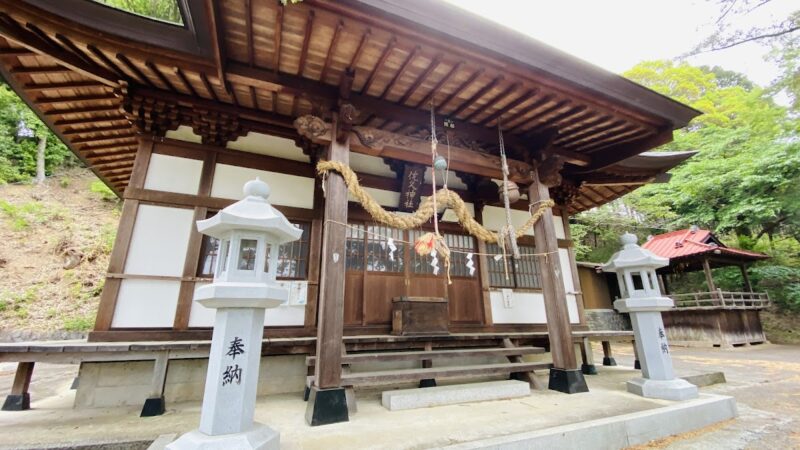
The torii gate, which marks the entrance to the shrine grounds, was recently constructed. Standing amidst orchards, the gate creates a landscape typical of Yamanashi Prefecture. Built based on traditional designs, the gate was carefully crafted by local artisans, from the selection of wood to the construction.
Shrine Building
Rebuilt in 1720 (Kyoho 4) and repaired in 1982 (Showa 57), the worship hall preserves the architectural style of the mid-Edo period. The simple yet dignified construction maintains the dignity befitting a village shrine.
The main hall is located behind the worship hall and enshrines Kukurihime-no-Mikoto.
Natural Environment of the Shrine Grounds
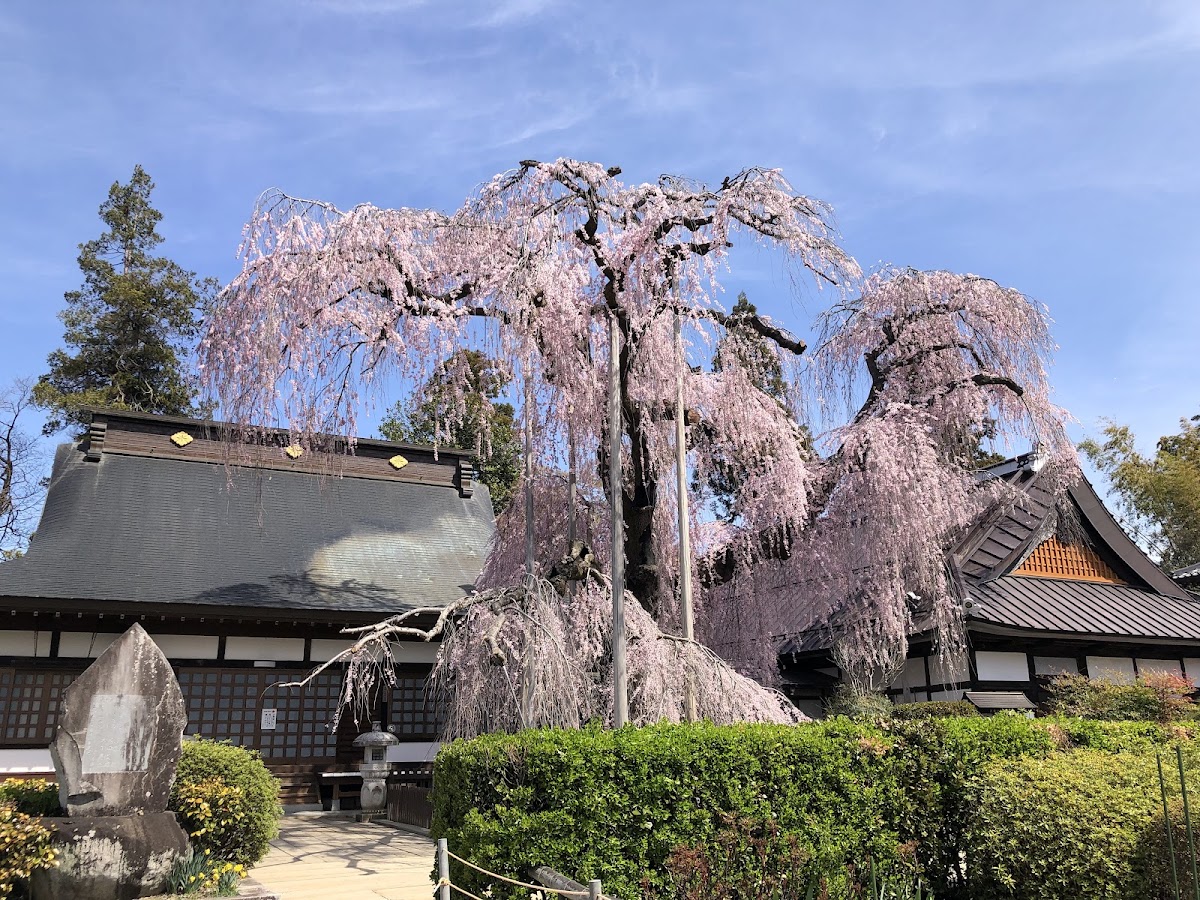
The area surrounding the shrine is surrounded by orchards, offering a unique Yamanashi landscape with peach blossoms in spring and ripe grapes in autumn. Ancient trees remain on the grounds, creating a tranquil atmosphere.
Ridgepole Inscription and Historical Documents
The ridgepole inscription from the reconstruction in 1719 (Kyoho 4) is a valuable historical document that proves the history of the shrine. This clearly confirms its history as Hakusan Gongen Shrine.
Access Information
Access by Train
Nearest Station: JR Chuo Main Line, Shioyama Station
Distance from Station: Approximately 2.5km
Walking: Approximately 27 minutes on foot from the north exit of Shioyama Station
Taxi: Approximately 5-7 minutes by taxi from Shioyama Station
Shioyama Station is a stop for the limited express trains “Kaiji” and “Azusa,” making it easily accessible from Tokyo. It takes approximately 90 minutes from Shinjuku Station by limited express train.
Access by Car
From Katsunuma IC on the Chuo Expressway: Approximately 15 minutes
From Ichinomiya-Misaka IC on the Chuo Expressway: Approximately 20 minutes
Access is possible via National Route 411 (Ome Kaido) and a prefectural road. Please enter “547 Kami-Aono, Shioyama, Koshu City, Yamanashi Prefecture” into your car navigation system.
Parking
There is some parking space on the temple grounds, but it is difficult for large vehicles to enter. During events such as the annual festival, temporary parking may be provided nearby.
Map and Location Information
Address: 547 Kami-Aono, Shioyama, Koshu City, Yamanashi Prefecture 404-0042
Coordinates: Approximately 35°44′N, 138°45′E
Searching for “Kikuri Shrine” or “Kikuri Jinja” on Google Maps or Yahoo! Maps will show the exact location.
Nearby Tourist Attractions
Erinji Temple
An ancient Rinzai Zen temple known as the family temple of Takeda Shingen. It is associated with the famous Kaikawa Kokushi, known for the saying, “If you extinguish the desires in your mind, even fire feels cool.” Approximately 10 minutes by car from Kikuri Shrine.
Shioyama Onsenkyo (Shioyama Hot Spring Village)
There are several hot spring facilities around Shioyama Station, perfect for relaxing after visiting the shrine. Many facilities offer day-use bathing.
Grape Hill
A complex of a winery and hotel operated by Koshu City. Approximately 200 types of wine can be sampled in the underground wine cellar. It also boasts a spectacular view of the Kofu Basin.
Fruit Picking Farms
Numerous tourist farms offering fruit picking (peaches, grapes, cherries, etc.) are located in the surrounding area. Enjoy the experience of picking different fruits depending on the season.
Daizenji Temple
Known as the “Grape Temple,” this ancient Shingon Buddhist temple houses the national treasure, the Yakushido (Medicine Buddha Hall). It is considered the birthplace of grape cultivation.
Manners and Precautions for Visiting a Shrine
Basic Worship Etiquette
- Bow before passing through the torii gate: This shows respect when entering the sacred area.
- Walk along the edge of the path: The center is considered the path of the gods.
- Purify yourself at the water basin: Purify your left hand, then your right hand, then your mouth.
- Etiquette in front of the main hall: Two bows, two claps, and one bow is the basic ritual.
Photography
Photography is generally permitted within the shrine grounds, but please refrain from taking photos inside the main hall or during religious ceremonies. When posting on social media, please be considerate and avoid including other worshippers in your photos.
Attire
Casual clothing is acceptable, but it is advisable to avoid revealing or overly flashy clothing. For formal events such as the annual festival, slightly more formal attire is preferable.
Best Time to Visit
While the shrine is open year-round, the spring peach blossom season (late March to early April) and the autumn harvest season (September to October) are particularly recommended due to the beautiful surrounding scenery.
Contacting the Priest
Kikuri Shrine is a subsidiary shrine, so there is no resident priest. If you wish to receive a Goshuin (shrine stamp) or prayers, it is recommended to contact the Yamanashi Prefectural Shrine Association or a nearby main shrine in advance.
The Role of Kikuri Shrine in the Community
Kikuri Shrine is not merely a historical building; it continues to play a central role in the local community.
Function as a Local Deity
As the local deity of the Shioyama Kami-Aono district, it serves as a spiritual anchor for the local residents. Ceremonies such as the first shrine visit for a newborn, Shichi-Go-San (a traditional rite of passage for children), and exorcism are held here, fostering intergenerational community bonds.
Venue for Local Events
Annual events, including the grand festival, provide valuable opportunities for local residents to gather together. Even in today’s increasingly urbanized world, these traditional events play a vital role in maintaining local communities.
Value as a Cultural Asset
The shrine buildings, with their history dating back to their reconstruction in 1720 (Kyoho 4), and the ridgepole inscriptions that convey the history from the time of the Hakusan Gongen Shrine, are valuable cultural assets for understanding the region’s history.
Potential as a Tourism Resource
In Koshu City, known for its wine and fruits, this historic shrine holds potential as a new tourism resource. The recent boom in collecting Goshuin (shrine stamps) and the popularity of historical tourism have led to an increase in visitors.
Kikusato Shrine and Hakusan Faith
Understanding the background of Hakusan faith is important for understanding Kikusato Shrine.
What is Hakusan Faith?
Hakusan faith is a mountain worship tradition that considers Mount Hakusan (2,702m above sea level), a sacred mountain located on the border of Ishikawa and Gifu prefectures, as its sacred object of worship. Mount Hakusan is counted as one of Japan’s three most famous mountains, along with Mount Fuji and Mount Tateyama.
The Spread of Hakusan Faith
Hakusan, believed to have been opened by Taichō Daishi during the Nara period, spread throughout Japan, becoming associated with Shugendō (mountain asceticism). Many Hakusan Gongen shrines were built, particularly in the Chubu and Kanto regions.
Hakusan Faith in Yamanashi Prefecture
Several Hakusan Gongen shrines exist within Yamanashi Prefecture, and Kikuri Shrine was one of them. It is thought that the faith from the Hokuriku region was brought to the Kōshū region through the movement of people along the Kōshū Kaidō and the Fujikawa River.
Separation of Shinto and Buddhism and Name Change
Due to the Meiji-era decree separating Shinto and Buddhism, Hakusan Gongen shrines throughout Japan were forced to change their names. In the case of Kikuri Shrine, the name change in 1866 (Keiō 2), just before the Meiji Restoration, can be seen as a move that anticipated the changes of the times.
The name “Kikuri” is presumed to have been chosen as an auspicious phonetic equivalent, related to “Kukuri” in the name of the enshrined deity, Kikurihime-no-Mikoto. The kanji characters “喜” (ki), “久” (kyu), and “里” (ri) all have auspicious meanings, reflecting a wish for the prosperity and longevity of the region.
History of Koshu City and Kikuri Shrine
Koshu City, where Kikuri Shrine is located, was formed in 2005 through the merger of Shioyama City, Katsunuma Town, and Yamato Village.
History of Shioyama
The name Shioyama originates from Shionoyama (elevation 553m), a symbol of the region. During the Sengoku period, it was under the control of the Takeda clan and flourished as a post town on the Koshu Kaido road.
Koshu City: A Fruit Kingdom
Koshu City is one of Japan’s leading grape and wine producing regions, and peach production is also thriving. The area around Kikuri Shrine is surrounded by orchards, demonstrating a region where agriculture and faith are closely intertwined.
A Treasure Trove of Cultural Heritage
Koshu City boasts numerous temples associated with the Takeda clan, including Erinji Temple, Daizenji Temple, and Kogakuji Temple. Kikusato Shrine is also one of these historical cultural assets, preserving the region’s history to this day.
Summary: The Charm of Kikusato Shrine
Kikusato Shrine is a venerable shrine with a history of over 1000 years since its founding in the Heian period. Originally established as Hakusan Gongen Shrine, it has continued to function as a center of local faith, even as its name was changed to Kikusato Shrine over time.
Key Features of Kikuri Shrine:
- Long History: Founded in 960 AD (Tentoku 3), boasting a history of over 1000 years.
- Deity: Kikurihime-no-Mikoto, the goddess of matchmaking and harmony.
- Shrine Rank: Ranked as a village shrine in 1874 (Meiji 7).
- Patronage of the Tokugawa Family: Shrine land was donated by Tokugawa Ieyasu in 1603 (Keicho 8).
- Tradition of Hakusan Faith: A history of renaming from Hakusan Gongen Shrine.
- Connection to the Community: Functions as the tutelary shrine of a fruit-growing region.
- Cultural Property: Shrine building and ridge beam inscription rebuilt in 1720 (Kyoho 4).
The quiet grounds, surrounded by orchards, offer a glimpse into Yamanashi’s rich nature and history. When visiting Koshu City, why not include a visit to Kikuri Shrine in your itinerary, along with wineries and fruit picking?
This small shrine, cherished by the local community, embodies the essence of Japanese shrine faith and the warmth of a local community. The time spent quietly offering prayers while feeling the history will be a precious moment away from the hustle and bustle of modern life.
Sources and References
- Yamanashi Prefectural Shrine Association, “Shrine Details”
- “Shrines of Yamanashi Prefecture,” edited by the Yamanashi Prefectural Shrine Association
- Koshu City Board of Education materials
- Shioyama City History (materials from before the merger with Koshu City)
- Field surveys and building plaque records
*The information in this article is current as of 2025. Please check for the latest information before visiting.