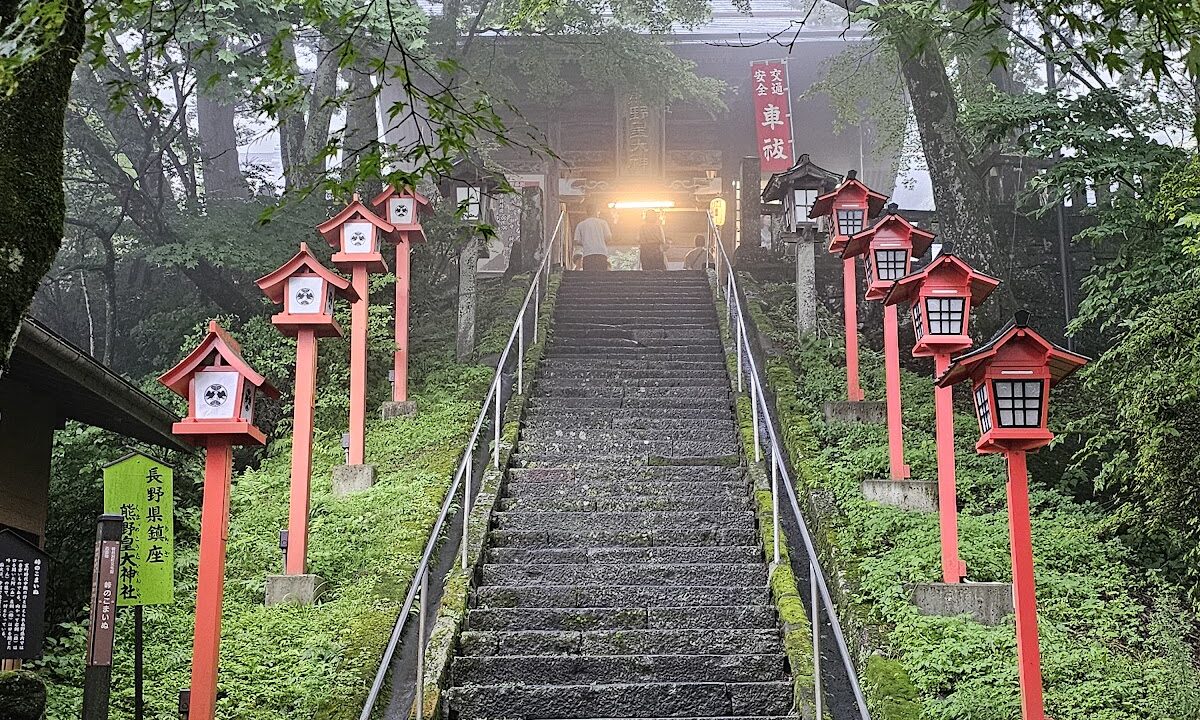
Complete Guide to Kumano Kōtaijinja Shrine (Karuizawa Town, Kita-Saku District, Nagano Prefecture) | The History and Highlights of One of Japan’s Three Great Kumano Shrines Located on the Prefectural Border
What is Kumano Kōtaijinja Shrine? | The Only Shrine in Japan Located on a Prefectural Border
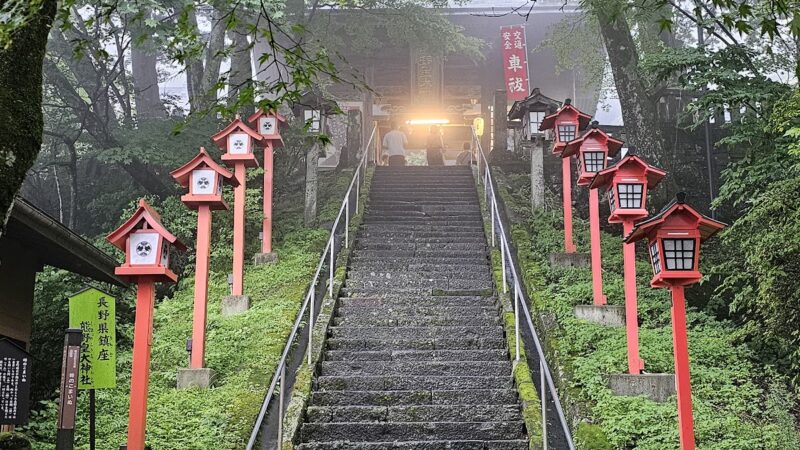
Kumano Kōtaijinja Shrine is an extremely rare shrine located on the border between Karuizawa Town, Kita-Saku District, Nagano Prefecture, and Annaka City, Gunma Prefecture. Situated at the summit of Usui Pass at an altitude of 1200 meters, its unique location is characterized by the prefectural border between Nagano and Gunma running through the center of the main shrine building.
It is counted as one of the “Three Great Kumano Shrines of Japan,” alongside the Kumano Sanzan in Wakayama Prefecture and Kumano Shrine (Nanyo City) in Yamagata Prefecture. The Nagano Prefecture side is designated as a “Special Shrine” by the Association of Shinto Shrines, making it a highly prestigious shrine. While being a single shrine, it has the unique form of having two religious corporations coexisting: “Kumano Kōtaijinja” on the Nagano Prefecture side and “Kumano Shrine” on the Gunma Prefecture side.
Located in Karuizawa, a region known as a summer resort, its history dates back to ancient times, and it is said to have been founded by Yamato Takeru no Mikoto, who appears in the legends of the Kojiki and Nihon Shoki.
History and Origins of Kumano Kōtaijinja | An Ancient Shrine from the Time of Emperor Keikō
Founding Legend and Yamato Takeru no Mikoto
The founding of Kumano Kōtaijinja is said to date back to the 40th year of Emperor Keikō’s reign (110 AD). During his eastern expedition, Yamato Takeru no Mikoto became lost in a thick fog while attempting to cross the Usui Pass. Legend says that at that time, a Yatagarasu (three-legged crow) appeared and guided him, and Yamato Takeru, grateful for this divine intervention, invited the gods of Kumano and founded a shrine in this place.
This legend shows an important historical background linking the myth of Yamato Takeru’s eastern expedition with Kumano faith, and tells the story of how Usui Pass was an important transportation route to the eastern provinces since ancient times.
Position in Shinano Province
Kumano Kōtaijinja Shrine is designated as a “Special Shrine of Shinano Province” by the Nagano Prefectural Shrine Association. A Special Shrine is a title given to shrines of particular importance in terms of historical significance and rank, indicating their religious and cultural importance in Shinano Province (present-day Nagano Prefecture).
From the medieval to the early modern period, Usui Pass was known as a difficult section of the Nakasendo road, and many travelers prayed for safe journeys at this shrine. During the Edo period, the processions of daimyo (feudal lords) on their sankin-kōtai (alternate attendance) journeys passed through the area, and Kumano Kōtaijinja Shrine was widely revered as a guardian deity of traffic safety.
The Unique Location on the Prefectural Border
With the abolition of the feudal domains and the establishment of prefectures in the Meiji era, the former national borders were reorganized into prefectural borders. The main shrine of Kumano Kōtaijinja Shrine ended up located precisely on the border between Nagano and Gunma prefectures. This resulted in the unique situation of being registered as two separate religious corporations, a single shrine in Japan.
While the Nagano Prefecture side is registered as “Kumano Kōtaijinja Shrine” and the Gunma Prefecture side as “Kumano Shrine,” each maintains its own independent religious corporation status, they have been maintained as a single, unified shrine in terms of faith to this day.
Deities and Blessings | A Power Spot for Matchmaking and Good Fortune
Main Deities
Kumano Kōtaijinja Shrine enshrines the same three deities as the Kumano Sanzan shrines:
- Izanami-no-Mikoto: The goddess of the creation myth, the mother goddess who gives birth to all things.
- Hayatamao-no-Mikoto: The god of purification and regeneration.
- Kotosakao-no-Mikoto: The god of reconciliation and harmony.
These deities form the core of Kumano faith and are revered as beings who govern the cycle of life, from birth to death and regeneration.
Main Blessings
The main blessings that can be received at Kumano Kōtaijinja Shrine are as follows:
Matchmaking: Based on the myth of the married deities Izanami-no-Mikoto and Izanagi-no-Mikoto, it is believed to bring blessings for successful relationships and marital harmony. In particular, the heart-shaped linden tree within the shrine grounds is popular with young visitors as a power spot for matchmaking.
Good Fortune and Prosperity: Located at an altitude of 1200 meters, it is believed to bring good fortune as it is close to the heavens.
Traffic Safety: Since ancient times, it has been worshipped as the guardian deity of Usui Pass and a god who protects travelers. Even today, many visitors come to pray for traffic safety.
Exorcism and Purification: Due to the purifying power of Hayatamao-no-Mikoto, it is believed to bring protection from evil and purification of mind and body.
Family Safety: Due to the power of reconciliation and harmony of Kotoshikao-no-Mikoto, it is believed to bring blessings of family harmony and safety.
Highlights of Kumano Kōtaijinja Shrine | A Thorough Explanation of the Shrine Grounds’ Charms
Main Shrine Building | A Rare Architecture Spanning the Prefectural Border
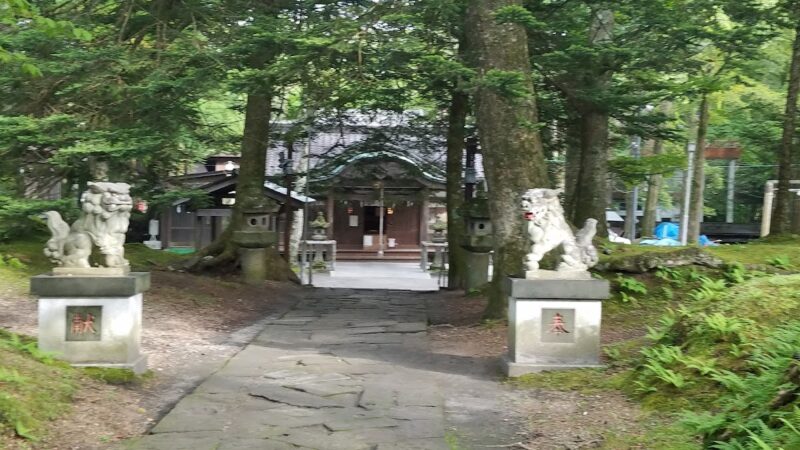
The biggest highlight of Kumano Kōtaijinja Shrine is undoubtedly the main shrine building that straddles the prefectural border. The border between Nagano and Gunma prefectures is drawn in the center of the shrine building, allowing visitors to step into both prefectures in a single visit.
A sign marking the prefectural border is located inside the shrine, making it a popular photo spot. This unusual location is unparalleled nationwide and is a valuable historical site in shrine architecture.
The architectural style is based on the Shinmei-zukuri style, creating a simple yet solemn atmosphere. Maintained over many years in the harsh natural environment of an altitude of 1200 meters, the shrine speaks to the deep faith of the local people.
Sacred Tree “Shina Tree” | Heart-Shaped Power Spot
The sacred tree “Shina Tree” towering within the shrine grounds is a giant tree estimated to be several hundred years old. Its most distinctive feature is the indentation in the center of its trunk, which, when viewed from a certain angle, appears heart-shaped.
This heart-shaped indentation is naturally formed, but as a symbol befitting a shrine known for its blessings of matchmaking, many visitors come to take photographs. This spot is particularly popular with young couples and female visitors, and is gaining attention as a power spot that’s perfect for social media photos.
The linden tree is the prefectural tree of Nagano Prefecture, and symbolizes that this area is the former Shinano Province (Nagano Prefecture). Its bark has strong fibers and has been used as a material for ropes and cloth since ancient times.
The Symbol of the Yatagarasu | Everywhere in the Shrine
The Yatagarasu, a symbol of Kumano faith, can be seen everywhere within the grounds of Kumano Kōtaijinja Shrine. The Yatagarasu is depicted as a three-legged crow and is a sacred bird that guides people as a messenger of the gods in Japanese mythology.
The Yatagarasu design is featured on various items such as ema (votive tablets), amulets, and goshuin (shrine stamps), and soccer fans sometimes visit the shrine seeking the Yatagarasu, which is also known as a symbol of the Japanese national soccer team.
On the 1st and 15th of each month, a special fortune slip called the “Flapping Yatagarasu Fortune Slip” is given out. This is a rare fortune slip featuring a Yatagarasu (three-legged crow) with a flapping wing mechanism. Because it’s only available in limited quantities, it’s very popular, and many people visit the shrine specifically on these days.
Natural Environment of Usui Pass | Seasonal Scenery
Located at an altitude of 1200 meters, Kumano Kōtaijinja Shrine is surrounded by beautiful nature that changes with the seasons.
Spring (April-May): As the snow melts, new greenery sprouts, allowing visitors to worship in refreshing air. While it’s still a bit chilly, the arrival of spring on the plateau is exceptional.
Summer (June-August): The cool climate typical of Karuizawa makes it ideal for a summer visit. Even when the lowlands are experiencing scorching heat, Usui Pass maintains a comfortable temperature.
Autumn (September-November): Known as a famous spot for autumn foliage, the leaves adorning the shrine buildings are magnificent. The best time to visit is especially from mid-October to early November, attracting many tourists.
Winter (December-March): The snow-covered grounds create a magical atmosphere. However, due to heavy snowfall and icy roads, visiting may be difficult, so prior confirmation is necessary.
Goshuin Information | Limited Edition Goshuin and Distribution Location
Regular Goshuin
Kumano Kōtaijinja Shrine offers different goshuin (shrine stamps) on the Nagano Prefecture side and the Gunma Prefecture side.
Nagano Prefecture Side (Kumano Kōtaijinja Shrine): The goshuin features the calligraphy and red seal of “Shinano Province Special Shrine Kumano Kōtaijinja Shrine.” The shrine’s seal is in the center, and the “Homage” (拝) seal is in the upper right corner.
Gunma Prefecture Side (Kumano Shrine): A calligraphic inscription and red seal of “Kumano Shrine, Kōzuke Province” will be given.
Since both seals can be received at once, it is especially popular with visitors who collect goshuin (shrine stamps). The offering fee is approximately 300 to 500 yen each.
Limited Edition Goshuin and Special Issuance Dates
Special goshuin may be given on the 1st and 15th of each month. Also, limited-edition goshuin designs may be given on special days such as New Year’s Day and the annual festival.
Goshuin notebooks featuring the Yatagarasu (three-legged crow) design are also sold and are popular as original Kumano Kōtaijinja Shrine goshuin notebooks.
Opening Hours of the Shrine Office
The opening hours of the shrine office vary depending on the season, but are generally as follows:
- April to November: 9:00 AM to 5:00 PM
- December to March: 9:00 AM to 4:00 PM (Subject to change depending on snow conditions)
Hours may be extended during the New Year holidays and Golden Week. If you want to be sure to receive a Goshuin (shrine stamp), we recommend calling ahead to confirm.
Basic Information and Access | Things to Know Before Visiting
Basic Information
Official Name: Kumano Koutaijinja Shrine
Location: 1 Toge-machi, Karuizawa-machi, Kita-Saku-gun, Nagano Prefecture
Phone Number: 0267-42-5749
Visiting Hours: Grounds are open freely (Shrine office is open from 9:00 to 17:00)
Admission Fee: Free
Parking: Available (Free, approximately 20 spaces)
Official Website: https://kumanokoutai.com/
Access by Car
From Tokyo:
- Approximately 35 minutes from Usui-Karuizawa IC on the Joshinetsu Expressway
- Approximately 1 hour via Fujioka IC on the Kanetsu Expressway
From Nagano:
- Approximately 30 minutes from Karuizawa IC on the Joshinetsu Expressway
- Via National Route 18 (Old Nakasendo Road)
The road to Usui Pass is a winding mountain road, and especially in winter, icy roads and snow cover are common, making studded tires essential. Those who are not confident drivers or visiting in winter should consider using public transportation.
Access by Public Transportation
From JR Karuizawa Station:
- By taxi: Approximately 25 minutes, fare approximately 4,000-5,000 yen
- By bus: Take the Seibu Kanko Bus bound for Kusatsu Onsen and get off at “Toge-machi,” then walk approximately 5 minutes (however, buses are infrequent, so please check beforehand)
By Shinkansen:
- From Tokyo Station to Karuizawa Station on the Hokuriku Shinkansen: Approximately 1 hour 10 minutes
- From Nagano Station to Karuizawa Station on the Hokuriku Shinkansen: Approximately 15 minutes
Public transportation access is not convenient, so we recommend considering renting a car or chartering a taxi.
Points to Note When Visiting
Clothing: Due to its high altitude of 1200 meters, the temperature is 5-10 degrees Celsius lower than in the lowlands. Even in summer, it is recommended to bring a long-sleeved jacket or cardigan. In winter, full cold-weather gear is necessary.
Time Required: Visiting the shrine grounds alone takes about 30 minutes, but if you include exploring the surrounding area, allow 1-2 hours.
Restrooms: There are public restrooms on the shrine grounds, but they may be unusable due to freezing in winter.
Food and Drink: There are no restaurants on the shrine grounds. It is recommended to eat in central Karuizawa before visiting or bring your own lunch.
Nearby Tourist Spots | Places to Visit Along with Kumano Kōtaijinja Shrine
Old Usui Pass Observation Deck
This observation deck is located about a 10-minute walk from Kumano Kōtaijinja Shrine. On a clear day, you can enjoy a panoramic view of magnificent mountains such as Mt. Asama, the Yatsugatake Mountains, and the Northern Alps. The view, especially during the autumn foliage season, is spectacular, attracting many tourists.
Usui Pass Railway Culture Village
This railway theme park tells the history of the former Shin’etsu Main Line that crossed the Usui Pass. It’s about a 20-minute drive from Kumano Kōtaijinja Shrine. Visitors can see exhibits of actual railway vehicles and experience driving a trolley train.
Karuizawa Town Center
The center of Karuizawa, famous as a summer resort, is about a 30-minute drive from Kumano Kōtaijinja Shrine. You can enjoy various activities such as shopping on Kyu-Karuizawa Ginza Street, visiting historical churches, and visiting art museums.
Shiraito Falls
One of Karuizawa’s representative tourist attractions, it’s about a 40-minute drive from Kumano Kōtaijinja Shrine. This beautiful waterfall, 3 meters high and 70 meters wide, is a healing spot full of negative ions.
Annual Events and Festivals | Kumano Kōtaijinja Shrine’s Annual Schedule
Main Annual Events
New Year’s Day Festival (January 1st): A festival celebrating the New Year, attracting many first-time visitors. However, caution is advised regarding snow and icy roads during winter.
Setsubun Festival (around February 3rd): Bean-throwing ceremonies are held, and prayers are offered for protection against evil.
Grand Festival (late July to early August): The most important festival at Kumano Kōtaijinja Shrine, featuring a portable shrine procession and other events. Local people gather to enjoy the traditional festival atmosphere.
Autumn Grand Festival (October): A festival giving thanks for a bountiful harvest. Coinciding with the autumn foliage season, it attracts many worshippers.
Grand Purification Ceremony (June 30th, December 31st): A Shinto ritual to purify and cleanse away the sins and impurities accumulated over the past six months. ### Monthly Festivals and Special Offering Days
Monthly festivals are held on the 1st and 15th of each month, and limited-edition offerings such as “Flapping Yatagarasu Fortune Slips” are sometimes available. Many devout worshippers visit the shrine specifically on these days.
The Charm of Kumano Kōtaijinja Shrine | Why So Many People Visit
Unique Location
Located on the prefectural border, Kumano Kōtaijinja Shrine’s greatest charm lies in its unique form: a single shrine coexisting with two religious corporations. This rarity goes beyond mere tourist interest, offering an interesting case study for considering the relationship between administrative divisions and religious facilities in Japan.
Prestige as One of Japan’s Three Great Kumano Shrines
The shrine’s status as one of Japan’s “Three Great Kumano Shrines,” alongside the Kumano Sanzan in Wakayama Prefecture and Kumano Shrine in Yamagata Prefecture, demonstrates its historical and religious importance. Its special position among the many Kumano shrines nationwide is one of the reasons it attracts so many worshippers.
Popularity as a Power Spot
Located at an altitude of 1200 meters, close to the heavens, it boasts many elements that meet the needs of modern power spot enthusiasts, such as a heart-shaped linden tree and the Yatagarasu (three-legged crow) symbol. In particular, the number of young visitors seeking blessings for matchmaking is increasing.
Combining with Karuizawa Sightseeing
Located in Karuizawa, a popular summer resort town, it has the advantage of being easily incorporated into sightseeing routes. You can create a fulfilling sightseeing plan by enjoying shopping and gourmet food in Karuizawa while visiting this historic shrine.
Summary | Recommendation for Visiting Kumano Kōtaijinja Shrine
Kumano Kōtaijinja Shrine is a unique shrine located on the border of prefectures, situated at the summit of Usui Pass in Karuizawa, Kita-Saku District, Nagano Prefecture. Despite its historical and religious significance—including the legend of its founding by Yamato Takeru, its status as one of Japan’s three great Kumano shrines, and its designation as a special shrine of Shinano Province—this shrine also possesses many elements that captivate modern visitors, such as the heart-shaped linden tree and the Yatagarasu (three-legged crow) symbol.
Offering various blessings including matchmaking, traffic safety, and good fortune, the shrine grounds, surrounded by the refreshing air and beautiful nature of the four seasons unique to an altitude of 1200 meters, are a place where you can refresh both mind and body.
As part of your Karuizawa sightseeing, or as a pilgrimage to a sacred site of Kumano faith, be sure to visit Kumano Kōtaijinja Shrine. The rare experience of crossing the prefectural border and the sacred atmosphere that has continued since ancient times will surely create special memories.
When visiting, please be sure to dress appropriately considering the low temperatures due to the high altitude, and in winter, be sure to check the road conditions beforehand. Receive Goshuin (temple/shrine stamps) from both prefectures, acquire a Yatagarasu (three-legged crow) amulet, and fully enjoy a unique pilgrimage experience at Kumano Kōtaijinja Shrine.